
All of Cienna's Comments + Replies
(Writing in cluelessness from the USA) I accept the argument for importance, and notice myself defaulting to considering the problem intractable because I don't know how tractable it is to meaningfully improve school safety in Uganda. Will you please share more about how hard it might be, and what it would take, to make this better?
I agree that reducing childhood trauma in the USA looks quite tractable, and that it's not as neglected as other issues. Examples of things which are happening:
1. There's already work being done to understand, prevent, and overcome Adverse Childhood Experiences (notably in California, under Surgeon General Nadine Burke Harris). ACEs are dose-dependent, with people who report more childhood trauma having worse health outcomes, including a higher risk of early death.
2. the intactivist movement appears to be making progress over the last decade on shift...
I used to do transcribing with timestamps. I met some cool people and learned a lot about the topics I was working on that way. It was a good remote flex-time freelance job for me at 20. I rarely do transcription work anymore, but I would be happy to do a call about what I learned and my setup with anyone considering this line of work.
RE #3, the company's website includes a helpful infographic. It sounds like they added an optogenetic control on the Z chromosome (I couldn't find anything more specific than that). The breeding hens contain one altered and one normal Z chromosome, and the breeding roosters are normal. Female chicks receive a normal W from their mother and a normal Z from their father and are "wild-type", but male chicks receive an edited Z chromosome from their mother and a normal Z chromosome from their father. Shining blue light on all the eggs "deactivates" the edited ...
Oooh, I'm hopeful this technology could be used for identifying insect stings too! Insect antivenom faces some similar challenges.
If you had other small predators around to keep the rodent populations in check, such as weasels and hawks, maybe you could get away with removing snakes. Rodent population booms are undesirable because rodents carry diseases which can be infect humans, pets, and livestock. Rodent poison isn't a good alternative because the poisons also kill scavengers (dogs, owls, etc.) that eat the poisoned rodents, and are harmful at sub-lethal doses. Birds of prey aren't enough to keep a rodent population in check because they can't access most of the places wher...
RE nature walks, I’ve found personally that I get a lot more perspective and relief when I’m somewhere it smells really “green”. A thickly verdant yard is better than an impoverished forest. I think it may have something to do with what the plants give off: a small, full greenhouse has that restorative effect on me without the walking.
(No biomed background, just an avid reader of science news) Maybe you already ruled this out based on your specifics, but could lab-grown mini-organs be a suitable third option for your experimental ideas? That in-between choice might offer an end-run around both the mouse-to-human translation problem and the overhead and slowness of experimenting with human subjects within the time frame of a Master’s. Caveats: your estimate of the moral status of mini-brains, the smaller existing knowledge base of how to care for them and interpret results, and possibly cost. I don’t know if there are existing mini-organ models for Alzheimer’s as there are mouse models, sorry.

I was missing something important before about the aspirational nature of a flag. While the star held something true about there being actually hard, knock-out problems to solve along the way, I think the inevitability of the star-less version is more suitably aspirational.
There is not one singular problem to solve, there are many, and the other shapes already hold that. With the star, I had put an oppositional teleology before the indefinite striving for betterment, and that was out of order. That was more 'per ardua ad astra,' "through advers...
I'm interested in writing about this with someone; anybody interested in writing arguments with me about why biodiversity matters? I don't expect it to make the leaderboard of urgent problems, but as a slow important problem I think it's a contender.
Here's a sketch of the argument that convinced me: we want our life support system to handle as many challenges as it can on its own, with as little maintenance as possible. Nature is not a closed system, so the challenges are multi-factor and co-occurring. High biodiversity provides already established stabili...
I haven’t found a communication nexus, but I’d love to hear about it if there is one! Looks like there are some Facebook groups and a LinkedIn group, but I don’t know how active they are. Most of the activity I’ve seen is in a closed Keybase group.
I’ve run into at least half a dozen other systems mindset folks who have heard a little about EA and want to know more. We tried to set up a learning discussion during Complexity Weekend but got stuck on scheduling conflicts. Cross-pollinating might look like someone who practices both presenting at a Heartbeat event, or for an EA group organizer to volunteer as a Complexity Weekend organizer.
Thank you very much for writing this up!
- This 2010 paper estimates that over 100 newborn boys die in the US annually from circumcision and related complications.
- Alexithymia, poor recognition of one's emotions, is another condition that may result from circumcision. Paper here. I wonder if the stereotype of American men being out of touch with their emotions is related to this?
- RE sentience: Intact America claims that as adults, some men still remember the experience of being circumcised as infants. Cross-check: some adults still reme...
https://www.buckinstitute.org/education/graduate/ The Buck Institute in Novato, CA, USA has some master’s programs, not sure about the duration.
I've worked in indoor air quality for three years and I'm not aware of any products that capture CO2 below the industrial scale, unfortunately. If you come across anything, I'd love to know!
I've tried the indoor plants approach and tested CO2 levels with Kitagawa tubes, and all the data showed was when the HVAC system was running... There are already lots of plants outdoors, and they're lower-maintenance there, so it's worth checking whether your HVAC system could be doing its job better of bringing outdoor plant-enrichened air to you.
- Are the filte...
Fine print question: is Manrico Sebastiano, the principal investigator, a WDA member? If not, the prizes would be $1000 and $500 respectively, per the challenge grant terms here: https://experiment.com/grants/wda2021
Fun fact for readers: if you too have a wildlife health project idea, this Wildlife Disease Association challenge grant is recurring on Experiment.com! I think this is at least the fourth time.
At time of writing, this project is in second place by number of backers (47).
If he’s seeking to work directly in Gambia on development, perhaps becoming an agricultural researcher or adviser - like an ag extension agent - would be a way for an individual to help many people in his community. According to Access Gambia’s agriculture page, 80% of the population work in agriculture. Considering the difficulty of the short rainy season, maybe he could identify additional crops, specific cultivars, cover crops, co-plantings, or techniques well-suited to the local particulars that would increase agricultural productivity.
http://www.accessgambia.com/information/farming-agriculture.html


Continuing to play with the space, light cone, time, warning light, and blue dot elements, here's another. I'm not trying to symbolize longtermism specifically here, but I do think this arrangement fits something present.
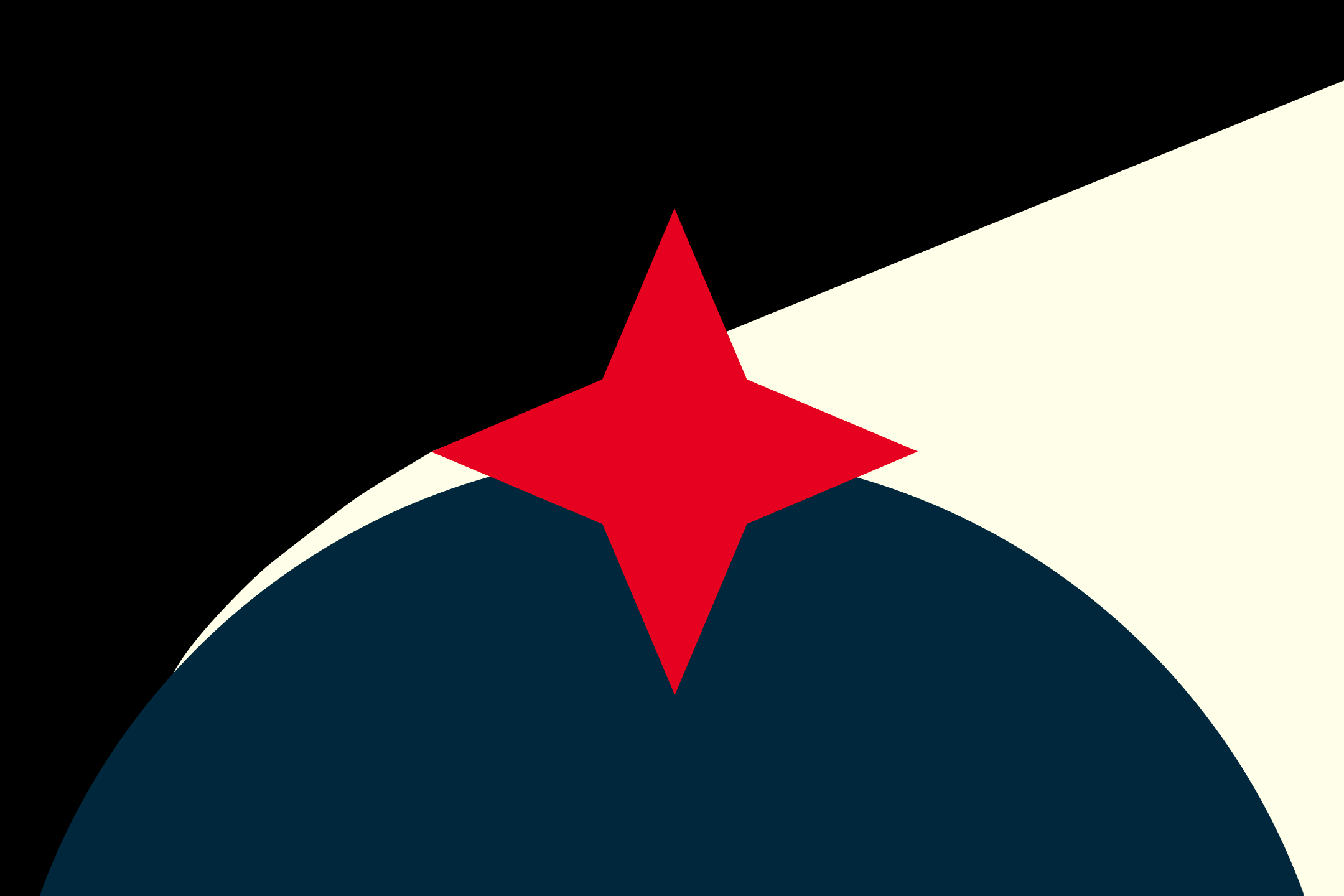
Colors
I like the thinking behind the color choices in the original, so I tried to do that too.
- Eigengrau instead of black: Eigengrau is the almost-black color humans see when we close our eyes in darkness, darkness as perceived by human vision. It's black with visual artifacts of uncountably many points of light. It rhymes with how...
I was missing something important before about the aspirational nature of a flag. While the star held something true about there being actually hard, knock-out problems to solve along the way, I think the inevitability of the star-less version is more suitably aspirational.
There is not one singular problem to solve, there are many, and the other shapes already hold that. With the star, I had put an oppositional teleology before the indefinite striving for betterment, and that was out of order. That was more 'per ardua ad astra,' "through advers...
Here's the link to the SVG. I don't think you should have to pay for an SVG. I downloaded the JPG and put it through vectorizer.io.
https://www.dropbox.com/s/4fvviw1s3yveeri/Longtermist-Flag.svg?dl=0

And here's a TED talk I really enjoyed about flag design: https://www.ted.com/talks/roman_mars_why_city_flags_may_be_the_worst_designed_thing_you_ve_never_noticed
Higher sensitivity and standards. People in these communities take life, responsibility, long-term planning, and suffering more seriously than usual. Some are waiting longer for the sake of being a better parent when they do have kids. It's emotionally intense, living in constant empathic contact with another person who has full depth of feeling and perception, but who starts out with little skill at reasoning, shielding, or emotional self-regulation. I'm told one doesn't fully grasp the seriousness and scope of the project until after the kids have arrive...
I like this project shape: trying to keep a solved problem solved. We have functioning reefs to study. We already know some of the conditions they like. Our knowledge might not have to be as thorough to protect a system that is already working at scale compared to the level of knowledge needed to design, launch, and scale a solution to an unsolved problem.
RE "Are there still people to fund... in this space?"
https://experiment.com/projects/joining-efforts-of-local-actors-to-imporove-marine-monitoring-program-of-coral-communities
Here's a small one! This Experiment.com crowdfunding project is open until 2/18. An existing reef health monitoring program seeks supplemental funding to train volunteer divers from Adventure Scientists so they can expand their area.
This may be a good opportunity to ask professionals in the area about challenges to their work, since they'll already be expecting to answer q...
A brief answer from NOAA: "Coral reefs provide coastal protection for communities, habitat for fish, and millions of dollars in recreation and tourism, among other benefits." Like jetties and quays, reefs dissipate wave energy, lessening the impact of storms on the shore and coastal investments. Young and small fish can hide from larger fish in the nooks and crevices of reefs, helping more of them to reach adulthood and build up fishery stock.
Reef Resilience has additional numbers and citations under the "Economic Value" tab if you're curious!
Another type of related existing project is government-side community engagement tools, such as https://publicinput.com/. Their software makes it easier for city governments to ask questions and seek feedback from their residents. I know Jay started out with the goal of trying to get elected representatives in direct conversational contact with their constituents, and I think it'd be worth asking him why he went this direction instead.
I think there’s another source of jadedness: things being made unnecessarily difficult. I was explicitly told in school by instructors, “we’re going to make this harder than it needs to be, in arbitrary ways, because real life is like that sometimes, and you need to figure out how to handle it psychologically. Better that you learn to deal with pointless assignments and needlessly difficult problems and petty teammates and vague instructions now than in a job.” Being forewarned made it bearable, I was even grateful for it. And then I forgot this when I cha...
The call has now concluded. 8 participants, 2 hours, one great topic. Thank you again, mwcvitkovic!
I like it! Good job finding a small one-time change that would add up to a big difference over time.
Visa, PayPal, and some others already have discounted credit card processing rates for charities. How do you plan to respond to a boilerplate reply saying they’re already providing a discount for charities? I’m concerned that the existing nominal discount will “check the box” for some people that the credit card processing companies “care”.
Do you have a plan for negotiating if you get an interested response? In my limited experience with vendor pricing nego...
Thanks for the fascinating post! This inspired me to arrange a discussion with some philosophical Meetup friends who have had similar thoughts in this direction. Anyone interested is welcome to join the conversation! It will be Sunday, November 29th at 7 PM ET.
Call link: https://meet.google.com/pck-hiva-oen
Meetup description: https://meetu.ps/e/JzK78/wGLs9/a
Update: I now think it's a problem with the first impression. A title with shorter words that stirred the imagination might perform better. I remember feeling the draw of effort to understand what the title meant.
Compared with
"Growing edible algae on the Moon"
- title was partly misleading
- raise was overfunded with plenty of time to spare
- Might have been "Assessing fresh spirulina as a space food at HI-SEAS"
"What is the ethanol resistance of lignin biocoating?"
- accurate title
- raise failed at 1/3
- Might have been "Can lignin kee...
Thanks! Now it makes sense how a decree would help. I imagine some additional culture shift would be needed to make sure that the kids weren't still under a lot of pressure, just less overt.