
Consequentialists care about the outcomes of actions and/or rules. Time-neutral consequentialists think that all outcomes count, no matter how far into the future. One often raised concern for time-neutral consequentialism is that we face considerable uncertainty about the outcomes of our actions. This is referred to as the problem of cluelessness.
One suggested solution to this problem is to focus on persistent states of the world, either avoiding negative ones or promoting positive ones. If the future is large (i.e., there is a lot of time ahead of us) then a persistently good outcome is certain to be good overall, even if it requires some sacrifice in the short term. This view is referred to as Longtermism. It says that, at least in important situations, what determines whether we should do an act is its possible effects into the far future. Proponents of longtermism argue that focusing on the far future, combined with a strategy of focusing on persistent outcomes, can help avoid the problem of cluelessness.
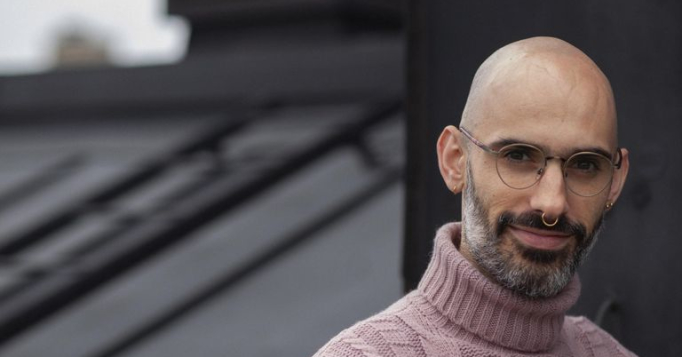
In this talk, Joe Roussos will talk about a joint project he has with Karim Jebari and will argue that this conclusion is premature, at least for the cause area most highlighted by longtermists: reducing existential risk. For most potential risks and interventions to reduce those risks, considerable uncertainty remains, even after making the usual longtermist assumptions. Focusing on the side-effects of these interventions, we can compare the relative size of the risks posed by these side-effects and the existential risks the intervention targets. Since many existential risks have tiny probabilities, the side effect risks are larger. So, with regards to most longtermists interventions, we remain clueless.
After the talk there will be time for a general discussion and Q&A.
Joe Roussos is a postdoctoral researcher at the Institute for Futures Studies, Stockholm. He leads the project Expertise in crises, and also works on two other projects: Climate ethics and future generations, and Sustainable populations in the time of climate change. He has an interest in the rational foundations of longtermism, and recently completed a research project on the topic. Joe’s work spans decision theory, social epistemology and philosophy of science. He received his PhD from the London School of Economics, with a thesis titled Policymaking under scientific uncertainty. His work has been published in Philosophy of Science, WIREs Climate Change, Ethical Theory and Moral Practice, and The LSE Public Policy Review.