Epistemic Status: Absolutely rocked by caffeine right now, terrible reading experience available below:
Do you lift?
Maybe you should lift bro, you took a second before you answered that.
Or are you a cardio junkie? Jk, I can see it in your nerd neck you’re none of the above.
No worries, I’ve got a great new machine for you, it’s called the hedonic treadmill. It doesn’t just give you gains, it makes sure you never feel them. But read on for my 3 point plan to deal with this.
Hedonic Treadmill as it currently stands:
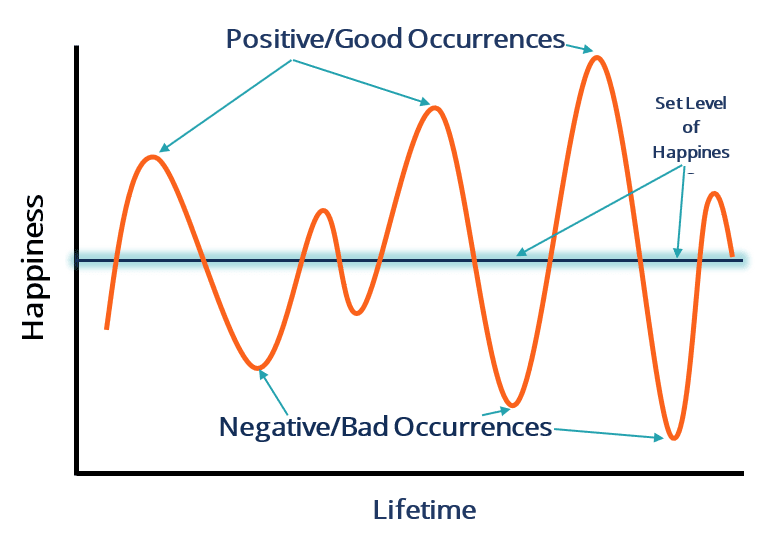
Honestly this graph isn’t really the intuition pump I hoped for, we want you to get a good workout pump goin.
Ok let’s make it configurable by me.
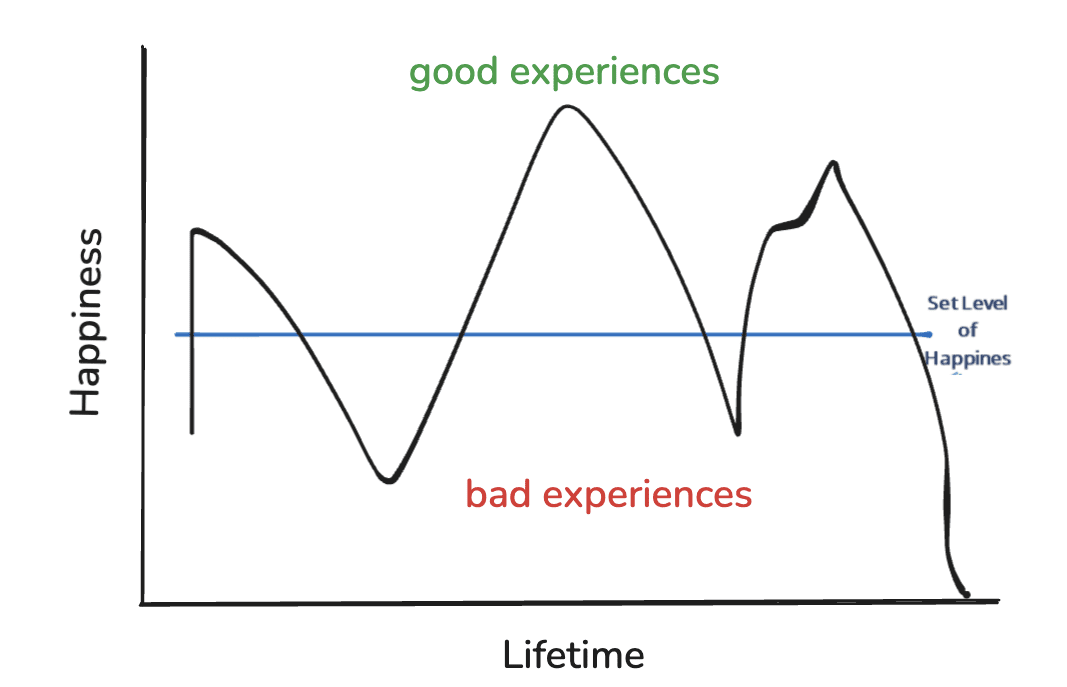
And get a pump going.
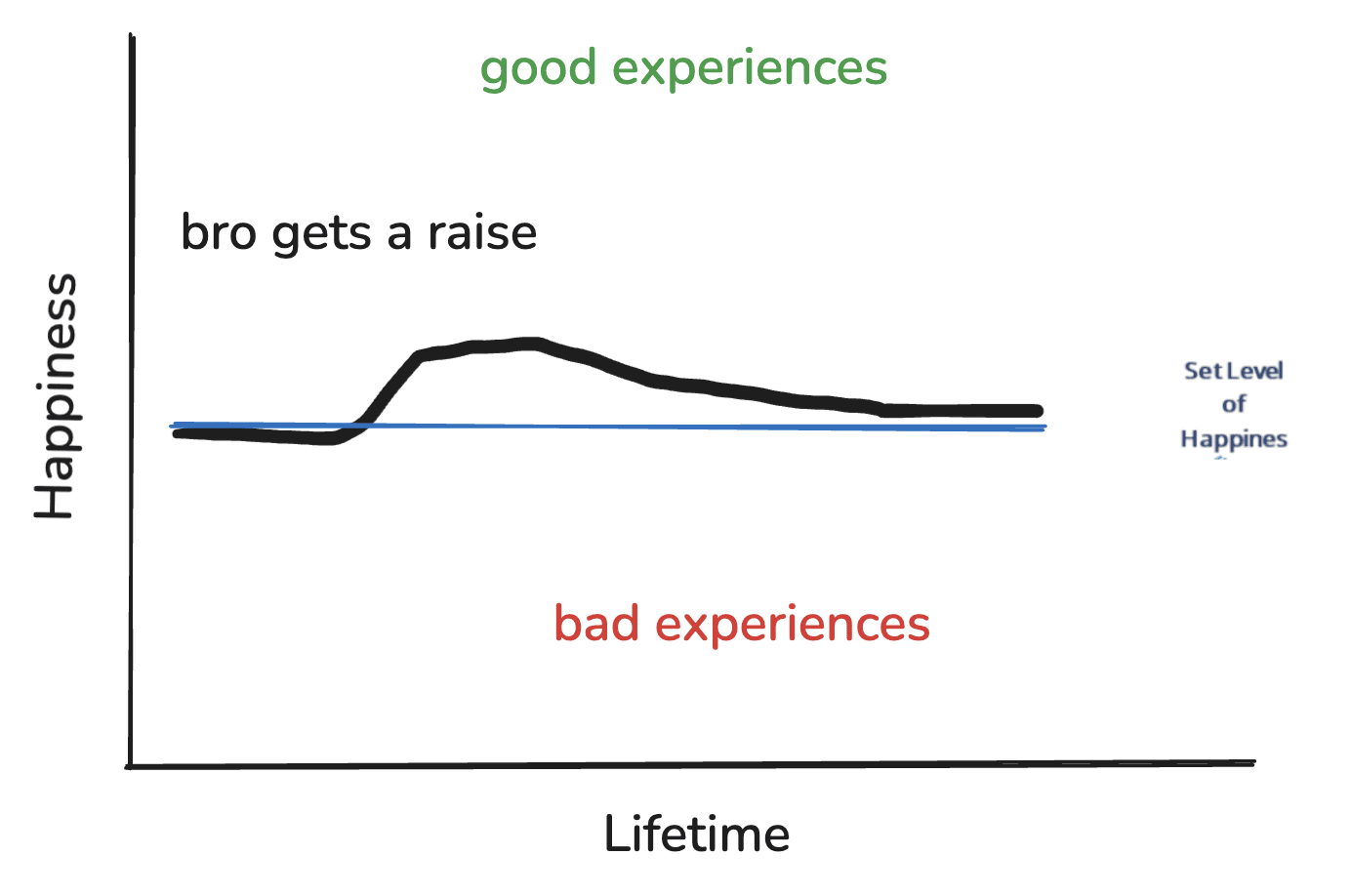
Say bro gets a raise; gains fade fast bro, remember this
Say bro gets broken up with
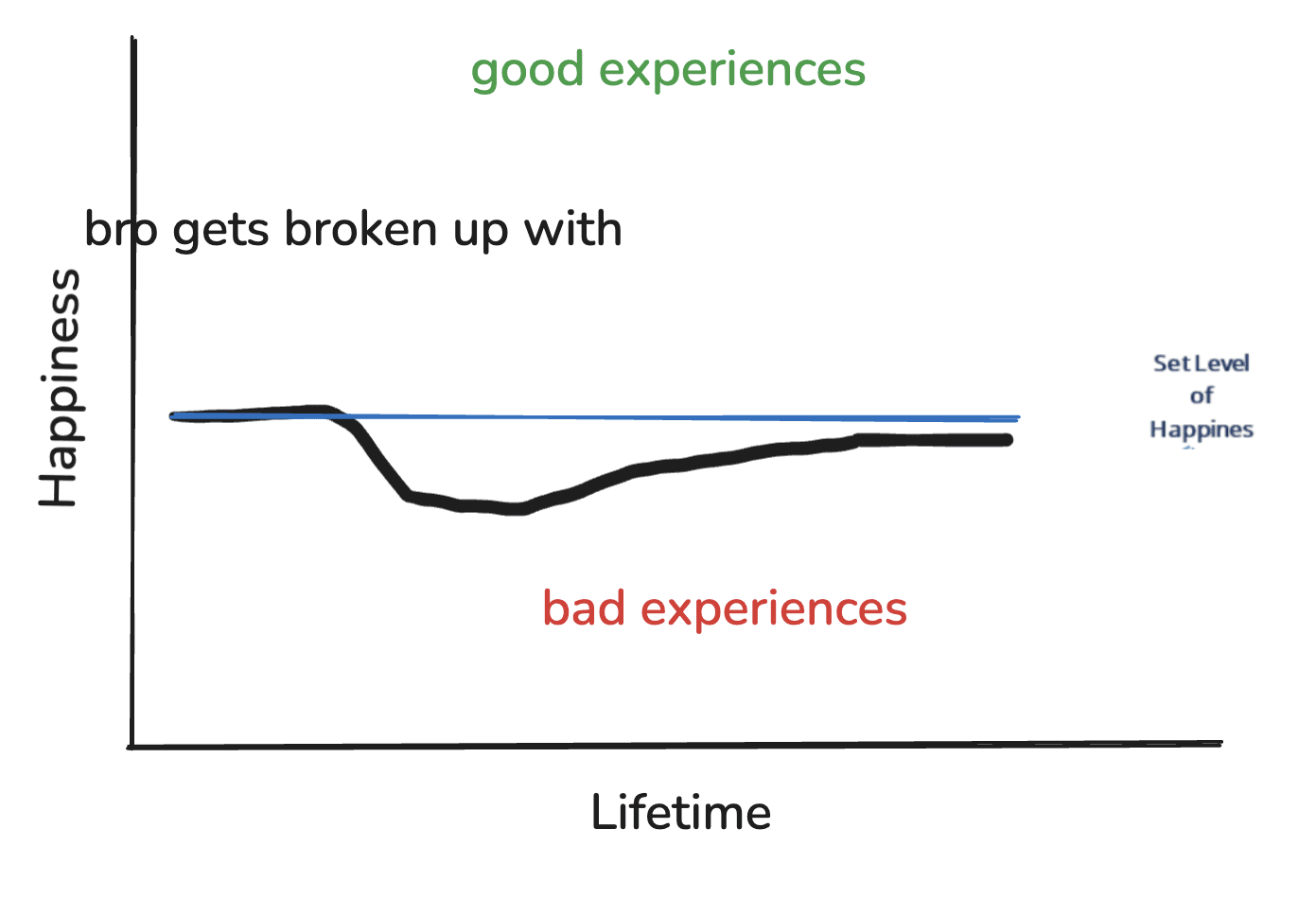
Eventually, supposedly, your happiness will just return to where it was.
Point 1: Protein
Ok, but how do we max lifetime gains? Well first of all, you’re gonna need protein (money). Even Aristotle knew how to lift (I think he said wealth is most important for happiness?). It’s what we call a good predictor of lift performance over time.
Now you can’t just max protein, it only benefits you to some limit, so-called diminishing returns. Old people in EA used to say like $100,000 was the limit but nobody’s researched this in recent times, it's hard to know.
Here have a chart to look at:
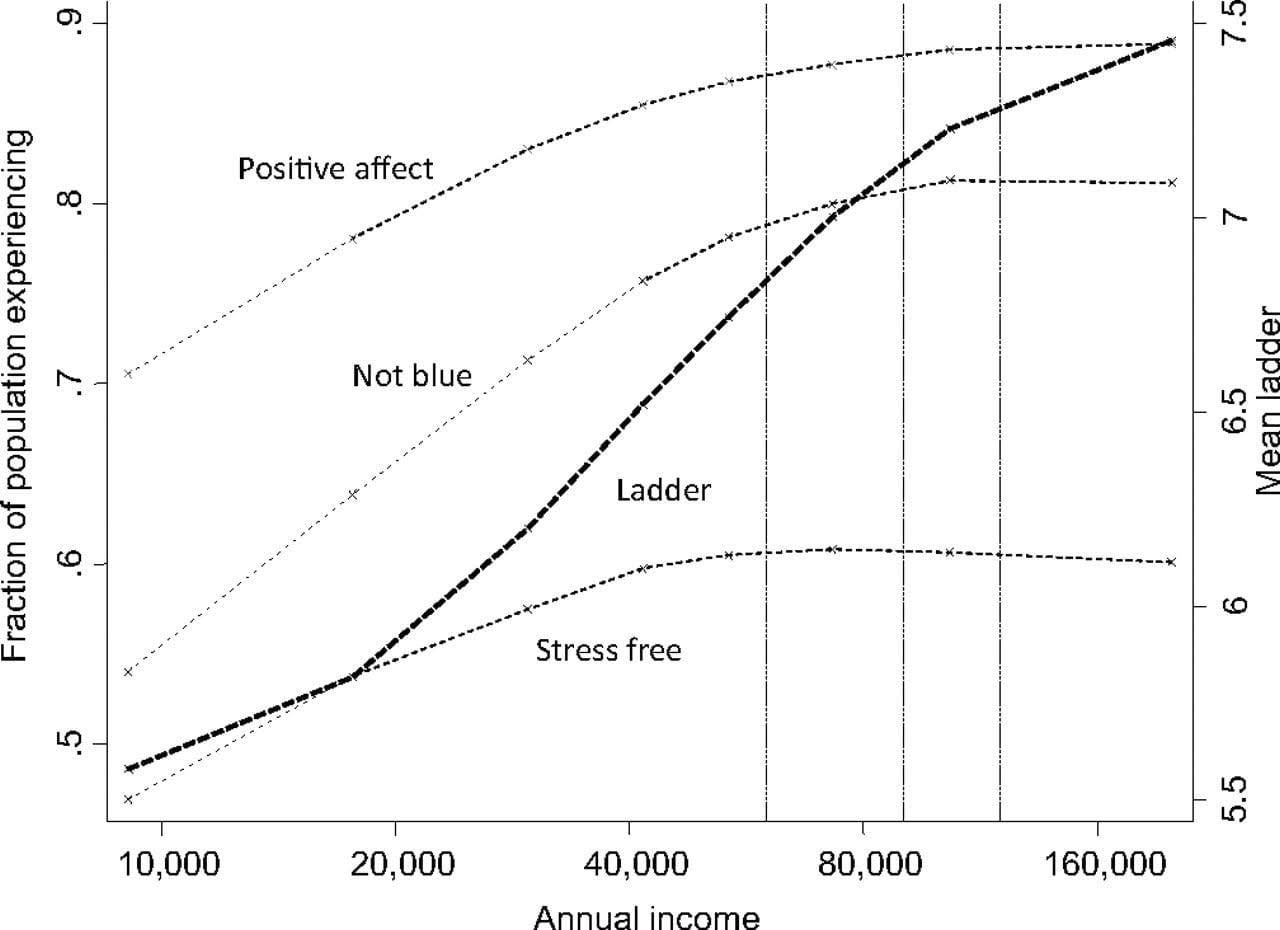
And another:
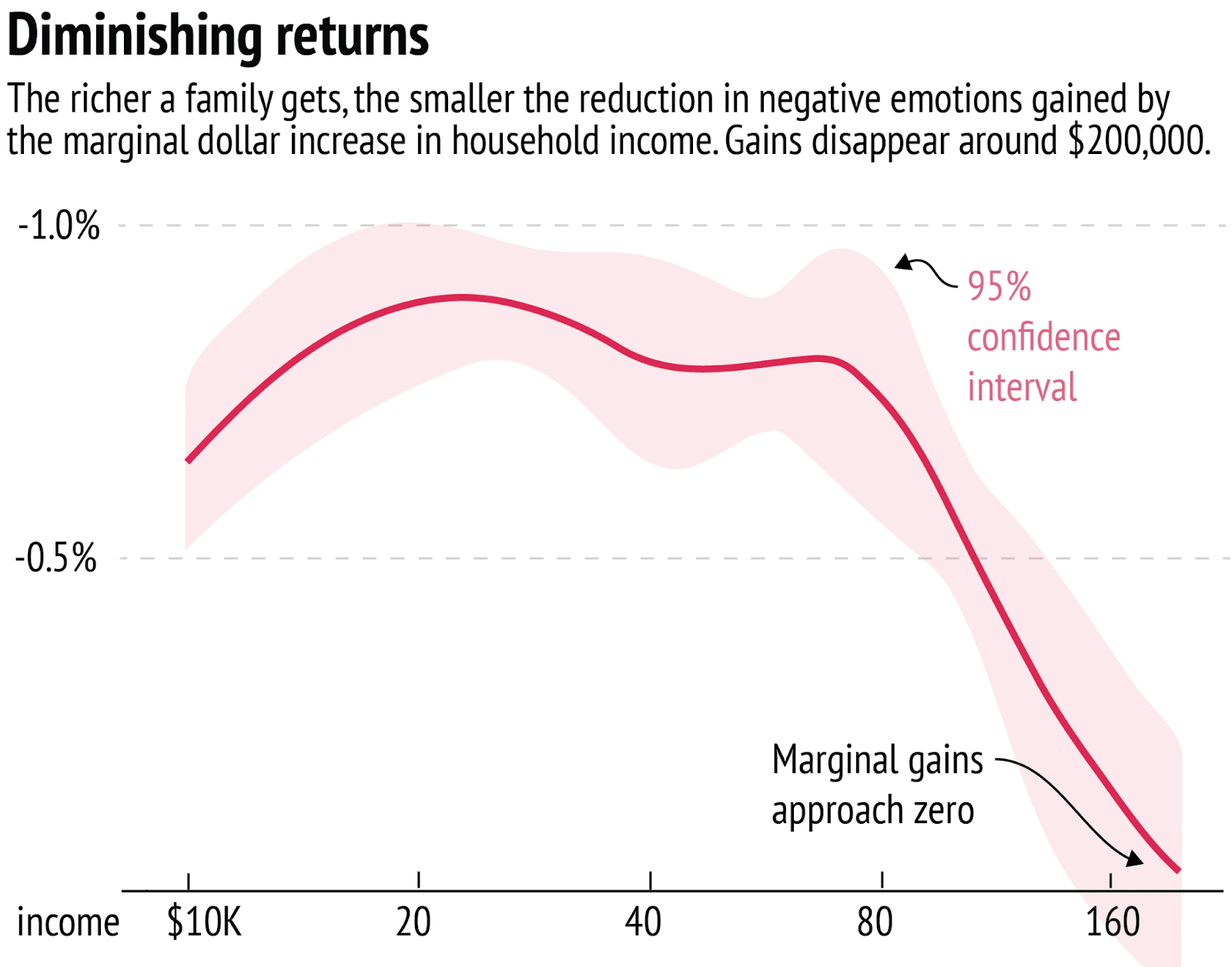
I actually actively cropped the source from this one, hahaha. Who knows what year it’s from! I'm also not giving credit to someone else's work! And did you update your beliefs enough that you’ll bring “$200,000” up in the next convo that catches on this topic?
Anyway, back to making you ripped - protein gives you returns, it gives you the substance for those muscly muscles.
Genuinely, I feel like there are a couple ways to go about maxxing your muscs:
Point 2: Cutting
We’re really just working around you building up a tolerance to happiness, you masochist you.
You could, every once in a while, try and experience something pretty bad to reset your tolerance. I think going on camping trips is a good example of this, at least for me, I won’t speak for you.
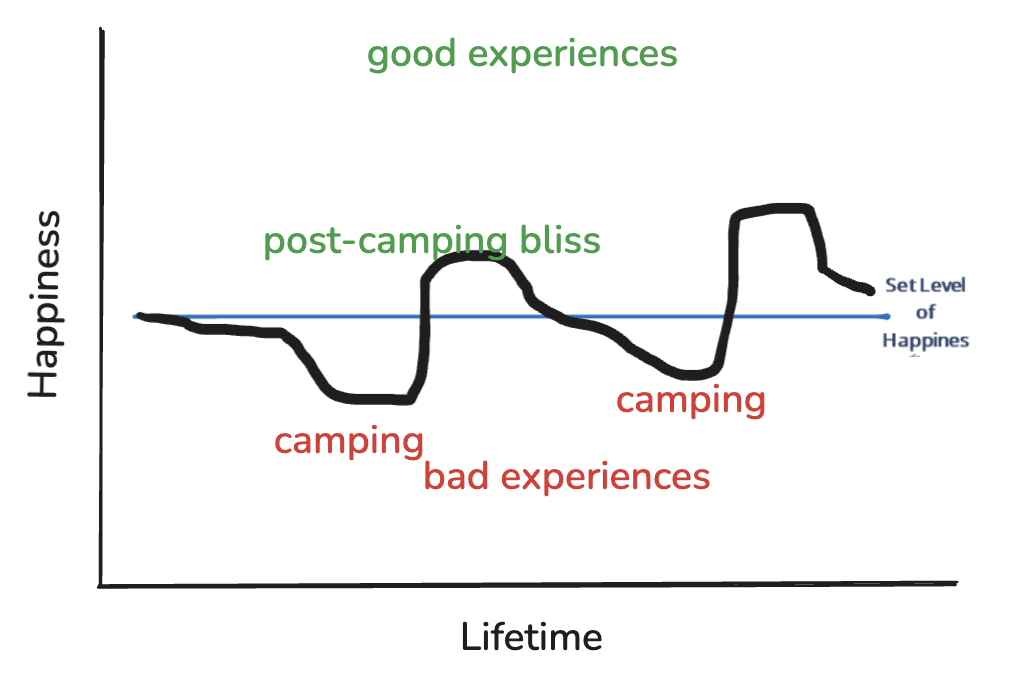
Basically we want to have a lot of control over the bad experiences, they exist only to make the positive better. Remember bro, positive is the absence of negative and vice versa. Maybe this is just confounded with things that make you happier like exercise, nature, and socializing… idk.
You subject yourself to bad sleep, bad food, bad smells from the dude next to you, general discomfort, and friction in the additional effort needed to do anything like taking a dump without plumbing. There is also nature of course but that’s just the thing that gets you outside in the first place. You do all this so that when you’re finally, finally back in the real world, and everything is actually good, you’re like, wow! Life ain’t so bad.
So we’re running the hedonic treadmill down, bringing us to new norms of, “wow I have it good.” And maybe you can build this into a habit without falling into the trap of actually starting to enjoy the backpacking. If you are taking a 3 month hiking trip on one of these coastal mountain ranges, you’ve gone too far.
I want you to think of it like exercise of all things; “no pain, no gain,” as our greatest philosophers proclaim. Your muscles are going to whine, but you’ll be stronger for it and somehow experience happiness at some point.
Point 3: Progressive overload
Alternatively, we want to slowly increase the life experience of someone over time, and minimize negative experiences. We want to on net have a generally positive experience, whenever you adjust to your new wage, your lifestyle creeping up on ya, know that you need to actually keep going. In fact, buy that car that requires the next new wage before you’ve got it to motivate you to that end.
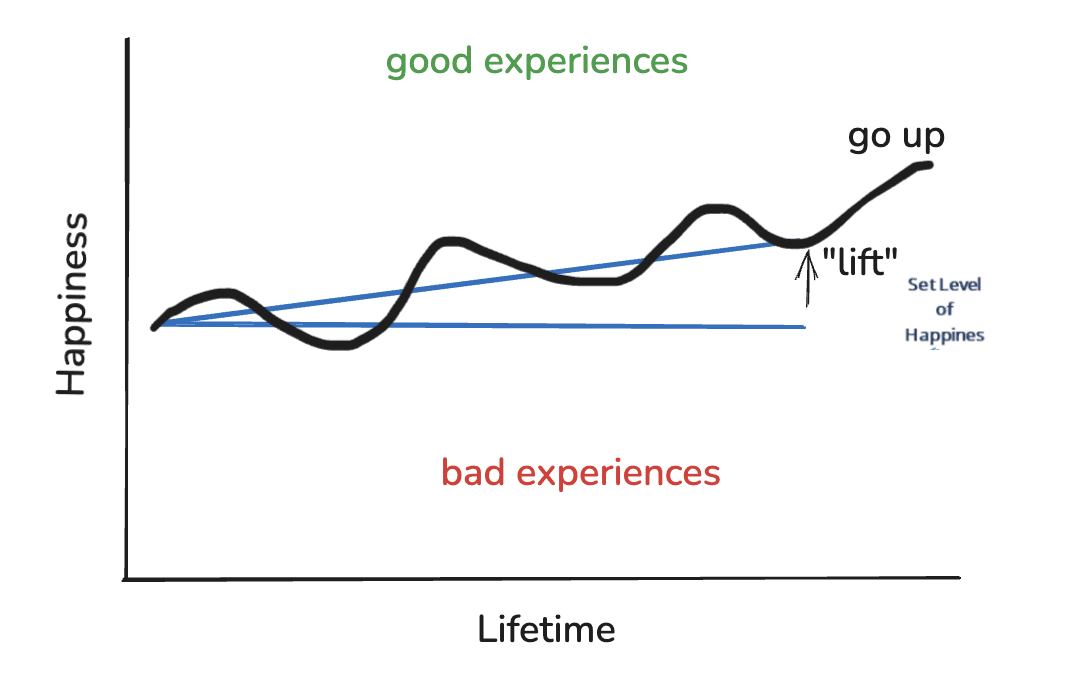
If you just extrapolate the lines on this graph...
I honestly forgot that money has diminishing returns (as your coach, I’ll always be honest with you), but it doesn’t have to for you, you know? You’re smart, you can probably figure something out. You’re built different. There aren’t diminishing returns on lives saved for those who care about that sort of thing, just make sure you feel proportionately happier when the numbers go up. Or maybe there are other imaginary axes to improve on like that nature thing, or mindfulness. I hear Jhana 10 is pretty good.
So figure out in advance the best experience you could possibly have (heroine? Your partner-for-life's embrace?) and do that only at the end of your life, and take very slow steps in that direction over your entire life.
What we really don’t want is a huge step function improvement. (Some in the community call this a compute overhang.) If you somehow manage to meet the conditions to marry young, you’ve unfortunately probably already peaked. We need to divorce you back to the slightly above average experience we want you to maintain (warning that you might experience withdrawals). Flatten the curve.
Also, another thought is to just start out really really bad, so you have all the more ground to cover from there. Taboo to say but it’s actually the optimal position to start from. The most respectable gains are made from the poorest of starting bodies.
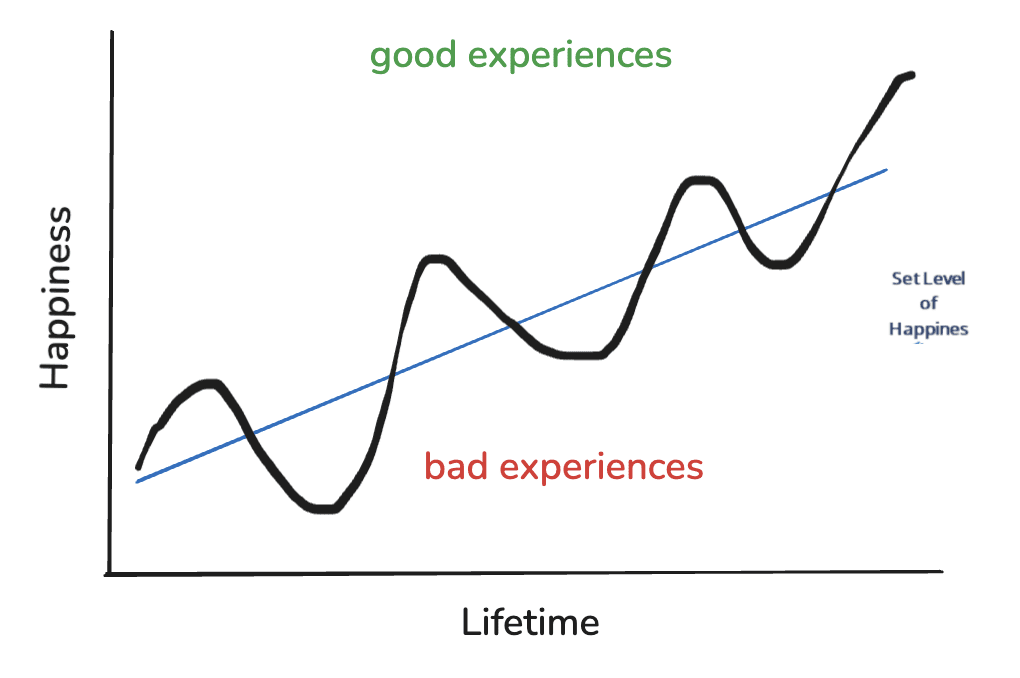
In theory you could also just do the above, just be happier. People can "just do things" afterall.
Point 4: Keep track of your lifts
Gratitude journaling seems good, try and relive and focus on the exact location of the line of your experience, recognize how the line is above that other line, the average one, for very specific reasons you should make explicit on a page. (Start an anki just to remember for once what actually makes you happier.) Think about how that’s a good thing, think about how bad it would be if your line would be below the other line for very specific reasons. Or maybe that wouldn’t be so bad because then your average would decrease? Or you somehow recognize that those things aren’t so bad? (I’m obviously quite confused, hedonic treadmills aren’t an exact science.)
Think about how maybe you can find ways to game the average line, eating your protein, subjecting yourself to controlled bouts of misery like camping, or just being happier but like slowly overtime.
With some combination of the above strategies, I think you’ll be able to make the most of your hedonic treadmill, I’ve taken the liberty of shipping it to your house as a baby shower gift (you were to be and now were the baby). Remember, your experience doesn’t have to be existentially dreadful, you can take control of the speed and do some awkward gaming of life so that you are counterfactually happier.
In Conclusion:
OK - referring to this footnote I made that you should’ve read despite the previous disincentive from 1-4 - in conclusion I think someone could start a restaurant that asks you to be in some state of ketosis or starvation before eating - whatever proof necessary for not having eaten, and then serve pretty darn good hearty food to really damn hungry people. Conceivably you could charge the starving people quite a bit for this experience they subject themselves to, and they’re paying you to keep them honest like a trainer (pretty easy with a breathalyzer, and what novelty!). And the hype for the food would be quite good because anyone who eats it was required to be in some state of starvation beforehand.
And as your trainer for hedonic treadmill maxxing, I’m charging, and I hope you check out our other products: a graph that somehow manages to perfectly portray the dual-use nature of technology that we want to minimize the risks and maximize the benefits of, and the question of whether or not life is better than it used to be.