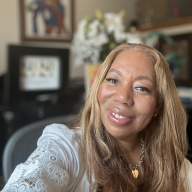
Karen Maria Alston
Generalist/Communicator/Program Manager @ We Are Hokmah
Strategist, communications expert and builder based in Washington, DC, working on public trust and AI governance. My focus: the communities with the most evidence that current AI systems aren't trustworthy (faith institutions, working-class communities, rural populations) have no seat at the governance table. I founded Hokmah to close that gap through trusted messenger network infrastructure.
Successif AI Safety Career Advisee, BlueDot Impact AGI Safety, Frontier AI Governance and CEA Career Bootcamp alum. Prior career: 20+ years building communications and civic infrastructure, including founding a national leadership platform for executive women and a decade leading communications and public affairs for a DC public charter school.
Actively searching for a governance, communications or generalist role in a AI safety organization.
How much money will be spent to rename documents, signs and more with the new name "super intelligence?"
Agreed. A rapid fire crisis communications team as well.
Will check it out and welcome I am a newbie too.
Thank you for sharing this because rejection is hard and I take it personally. I was reading the syllabus and curriculum for the In Depth EA program and saw your essay. Glad I stopped to read it and thank you for the advice.
Thank you for writing this post and I'm open to working with you or others on this problem.
I agree with you and Celia Ford that this industry mainly speaks to itself. The recent OpenAI "Summer Camp" influencer trip is one data point: it sparked a lot of discussion on social platforms specifically because the people invited weren't AI or safety experts, they were influencers with existing audiences.
On distribution: Steven Bartlett and Ezra Klein are two large platform outlets already doing this well, both reach large audiences and regularly cover AI safety on their podcasts. I'm also following Frame Fellowship's work, which could have a real impact on public outreach and on recruiting comms people into the ecosystem.
In general, we need more people doing this work. I'll get pushback for this, but I'd argue we need social media influencers as much as communications professionals: people doing short-form video, talking about AI safety on their own platforms. I'm hopeful Frame Fellowship and others are already moving on it and we will have more people talking about AI safety to the public in styles and language they can receive.
It is wonderful to read your post and see synergies of my own journey. I am 57 and doing a career pivot. A year ago, I had never heard of Effective Altruism. Now, my entire life is spent studying, reading, engaging and trying to find a job. Your story has inspired and motivated me because it is difficult and a process to find a job in the field. I reached out on on Linkedin. I would welcome your advice and feedback at your convenience. Thank you for sharing your journey.
Thank you for all of your hard work and dedication to growing the community. I finished the CEA Bootcamp earlier this year and it helped me gain clarity on my career growth. I wish you success in your future career journey. Thank you for impacting mine and many others with your dedication and hard work. Oh, and also, the Peter Wilderford quarterly review. I downloaded it and plan to use it for my own growth metrics.
Great to see you here too. I am hopeful that I will find the opportunity that allows me to have impact and utilize my skills.
Thank you for articulating something that many of us who would be considered "generalists" have experienced while trying to transition into AI safety. My path has been remarkably similar and like you, I became concerned about the societal implications of advanced AI, invested significant time in learning the field, sought guidance from people already in the ecosystem, and worked to demonstrate both commitment and alignment.
What stands out to me is the amount of persistence required simply to reach the starting line. I have watched talented professionals spend months learning, networking, volunteering, and repositioning themselves, only to become discouraged by the pace of the transition and ultimately leave for opportunities in other sectors.
That loss is not small and it's measurable. Every person who exits the field represents a loss of accumulated knowledge, motivation, and some domain expertise. These are often people with years or decades of experience in communications, operations, design, marketing, fundraising, community building, product development, or program management all skills that many organizations say they need but that are difficult to signal through traditional AI safety pathways.
One question I continue to wrestle with is whether the current system is unintentionally selecting for people who can afford extended periods of uncertainty rather than those who can make the greatest contribution. Volunteer work, public writing, networking, and continuous self-education may be reasonable signals of commitment, but they also create barriers that disproportionately affect experienced professionals with financial obligations and established careers. (One of my career mentors is leaving the field due to family obligations and a need to earn income. Her leaving the field is a tremendous loss.) I also share some skepticism about the widespread advice to "write publicly." For some roles, particularly research, policy, and communications, public writing is a strong signal. For many operational and execution-oriented roles, however, the strongest evidence of capability is often the work itself. We should be careful not to assume that every valuable contributor needs to become a public intellectual.
I remain optimistic about the field and grateful for the people who have offered guidance along the way.
It’s extremely intimidating to write in the EAForum. Normally I write my thoughts and ask Google or Claude to edit for mistakes or clarity.
This is such an important conversation that I am living through now. I wanted to add not detract from the conversation. I will go back to lurking on the EA Forum.