Have you wanted to be more politically active but struggled to find the time? I recently discovered that just 30 minutes of initial effort can create months of meaningful engagement with elected representatives.
By using AI tools like Claude, I transformed my political advocacy from something I rarely did into a streamlined, consistent process. This method helps create personalized, thoughtful emails to representatives with minimal ongoing effort.
TL;DR
- Spend 30 minutes upfront to create months of personalized emails to your representatives
- Brain dump your thoughts → Gather representative info → Generate emails with AI
- Send pre-written, personalized emails every two weeks with minimal ongoing effort
- Total time: 30 minutes setup + 5 minutes every two weeks = consistent advocacy
- Access resource templates here
Why Consistent Engagement Matters
Your representatives pay attention to constituent communication. While one-off emails might get tallied, consistent engagement on specific issues signals that you're a dedicated voter who cares deeply about particular topics.
This AI-powered method removes the friction that prevents most of us from staying engaged while ensuring your authentic voice is heard.
The Process: A Visual Overview
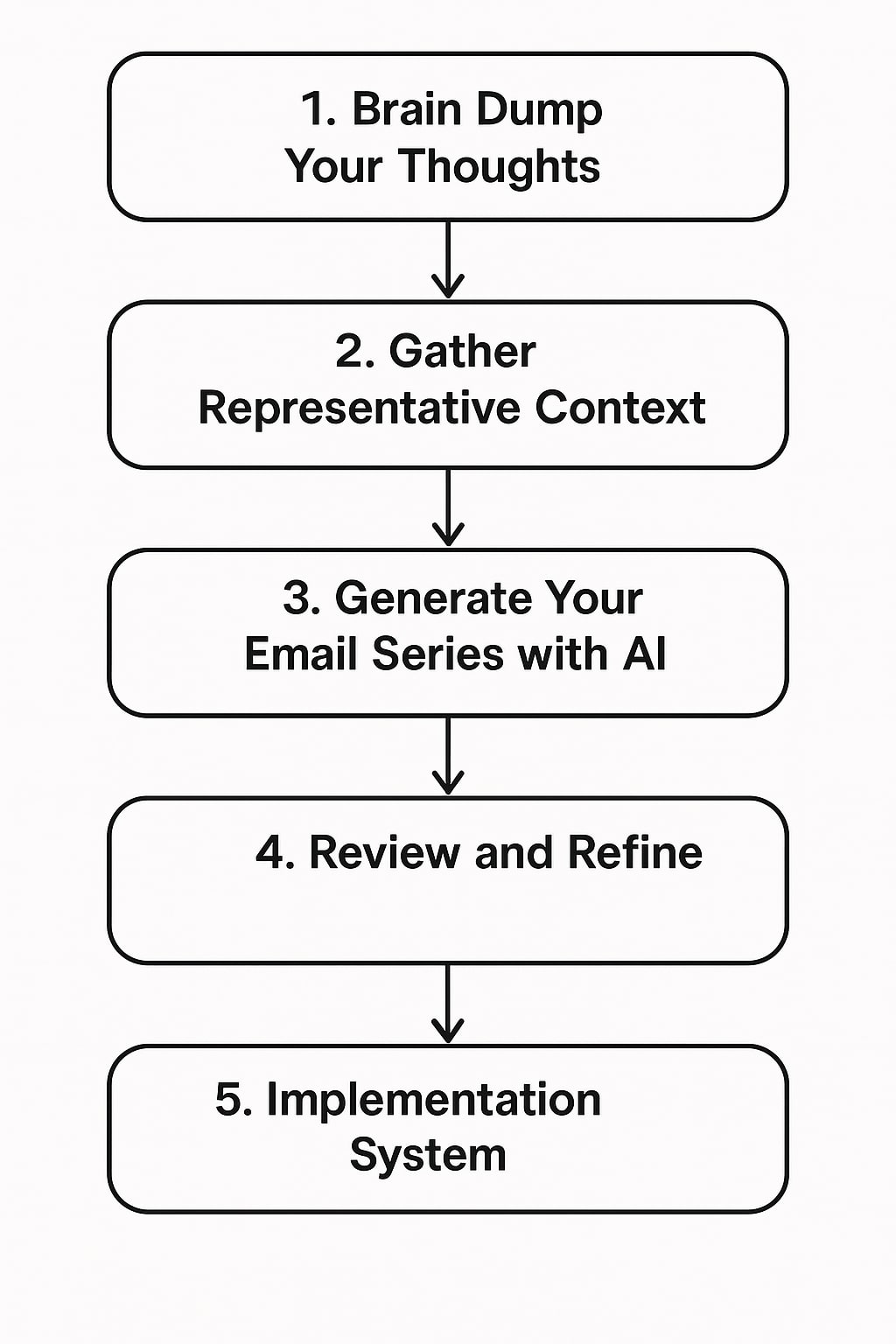
Step-by-Step Process
Step 1: Brain Dump Your Thoughts (5-10 minutes)
Start by recording your unfiltered thoughts about an issue you care about. I recommend using voice-to-text on your phone to quickly capture your ideas.
Tips:
- Leave your filter at the door – don't worry about how it sounds
- Emphasize how these issues affect your life and the lives of those you care about
- Focus on authentic expression rather than perfect phrasing
- Aim for quantity over quality at this stage
For example, when I did this for AI governance concerns, I spent about 8 minutes just speaking my thoughts into my phone, resulting in a messy but genuine collection of my views.
Step 2: Gather Representative Context (10-15 minutes)
Visit your representatives' official websites and copy relevant information that helps understand their positions and priorities.
What to collect:
- Their "About Me" page content
- Relevant issue areas (I used tech and energy pages for my AI concerns)
- Mission statements
- Committee memberships
Simply copy and paste this information into a single document or upload it directly to your AI assistant project. Don't worry about organizing it perfectly—just get it collected.
Step 3: Generate Your Email Series with AI (10 minutes)
Now, use the following prompt template with an AI assistant like Claude:
THE PROMPT:
Create an artifact with 10 email templates (subject lines and body text) for contacting my elected representatives about the issue described below.
Think step by step before starting.
Email Requirements:
* Each email should be one concise paragraph (3-5 sentences)
* Focus each email on a different aspect of my position
* Include attention-grabbing, specific subject lines
* Maintain a professional, respectful, and persuasive tone
* Design the series to progress logically (from raising concerns to suggesting actions)
* Ensure each email can stand alone (no "first communication" references)
* Make them suitable for bi-weekly communication with representatives
Here are some of my views on this issue:
[INSERT YOUR DETAILED POSITION AND KEY POINTS HERE]
After this prompt, paste:
- Your brain dump thoughts
- The representative information you collected
- Any issue-specific context (I included information about AI safety concerns)
Step 4: Review and Refine
Read over what your AI has generated to ensure it represents your views. If anything needs changing, create a simple list of modifications and ask the AI to implement them.
This step is crucial for ensuring authenticity. The goal isn't to have AI replace your voice but to help you express it more efficiently.
Step 5: Implementation System (5 minutes)
- Copy and paste your collection of emails into a document in a safe place
- Set up a recurring reminder using Google Calendar or your preferred tool
- Each time you send an email, mark it as sent by highlighting it or using another tracking method
- Spend just 5 minutes every two weeks maintaining consistent communication
Resources for Your Project
I've created a Google Drive folder with helpful templates:
- Sample prompts for generating emails
- Tips for writing effective messages to representatives
- Issue-specific resources for common concerns
Note: You'll still need to gather your own representative information from their websites.
Alternative Approaches
For free AI users: If you don't have access to a paid AI assistant that remembers context, simply save your collected information and regenerate emails every few months using the free version.
For paid AI users: Create a dedicated project where you store all your representative information and issue context, making it easy to generate new emails whenever needed.
Addressing Concerns About AI-Generated Content
Some people wonder about using AI for political communication. Is it authentic? Is it ethical?
The key is that you're reviewing everything that gets sent. The AI isn't replacing your voice—it's helping you express it more efficiently. Think of it as having a writing assistant who helps you overcome writer's block and time constraints.
This approach actually increases authentic political participation by removing barriers that prevent many people from engaging with their representatives in the first place.
Making a Difference with Limited Time
Political engagement shouldn't be limited to those with abundant free time. With this method, you can make your voice heard consistently without sacrificing your other priorities.
The next time you feel passionate about an issue, remember that just 30 minutes of setup can create months of meaningful advocacy. Your representatives work for you—make sure they know what matters to you.
Access resource templates here
