This essay was submitted to Open Philanthropy's Cause Exploration Prizes contest.
Indonesia is an archipelago country, also known as island “Emeralds around equator” strategically laid between The Pacific and Indian Oceans. Indonesia consists of several islands, cultures, tribes and languages, so Indonesia is also known as “A big house with many windows”.
The southern part of The Indonesia archipelago is bordered with The Australia continent. Taking into account various border-related issues, there are indeed vulnerabilities in the border regions of Indonesia with neighboring countries, including Australia. The sea border territory often incurs illegal fishing activities by Rote Island fishermen who got caught by The Australia for violating the Australian territorial boundary and smuggling people activities from Rote island to Australia. Rote island is located at Timor Sea which is the closest island to Australia.
It seems that the title of this narrative is contradictory, but that is what actually happened in Rote Ndao district. A district located at the southernmost tip of the Asian continent, the southernmost part of Indonesia and the southernmost part of Southeast Asia. Rote Ndao is one of the poorest districts among all districts in East Timor province in Indonesia. East Timor is also one of the poor provinces among all provinces in Indonesia.
Why has Rote Ndao been poor for so long? The islands of Java, Sumatra, Kalimantan and Sulawesi are the major islands in Indonesia that receive more attention from the central government. Papua, Ambon and Timor are the least developed provinces, even though they are part of the Republic of Indonesia, along with Java, Kalimantan and Sulawesi. Let's take a look at the things that prevent Rote Ndao from progressing and developing, which have happened and have been there for a long time.
Prior to 1974, fishermen from Rote were free to sail and fish on Ashmore Reef, a small arid island on the southern sea border between Indonesia and Australia. Basically, the main livelihood of the people of Rote is from the sea, because the majority of them are sailors. Since 1974, there has been a new maritime boundary agreement between Indonesia and Australia, called MOU BOX 1974, which made the Ashmore Reef area Australian waters.
Australia stipulates that Indonesian fishermen are not allowed to set foot on Ashmore Reef, because Ashmore Reef is Australia's maritime border. Sailboats that approach Australia's maritime border, including Ashmore Reef to search for marine products, are not allowed to use motorized engines, only traditional sailboats are allowed. This was one of the beginnings of a protracted catastrophe, rooting out the poverty that gripped the people of Rote. Why do I say that? Let's take a look at the impact this has had on the people of Rote.
A Humanitarian Crisis at Rote Ndao
- Many Rote residents are not in favor of the 1974 MOU BOX agreement, because their ancestors searched for marine products up to Ashmore Reef, there were even Rote people who were buried in Ashmore Reef. They consider this unfair to them, for the sake of the central government's political interests, they have been sacrificed. Why do Rote fishermen insist on fishing in the waters of Ashmore Reef? Because there, it is said, there are a lot of sea cucumbers and kelp and sharks for their fins to be taken. Sea cucumbers, abalone and shark fins are high-value commodities.
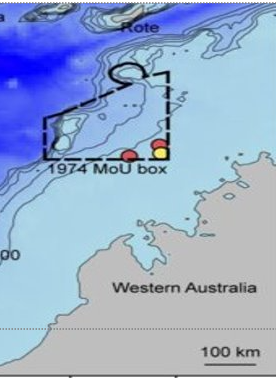
The Treaties, called AUSTRALIA-INDONESIA MARITIME DELIMITATION TREATY was published in November 1997, as an update of the MOU Box 1974. It addressed some issues of the changes to the Exclusive Economic Zone boundary near the Ashmore Islands, in regards to the ongoing issue of Indonesian traditional fisher access to Australian waters which impacts to the ecological of Australia fish stocks. The agreement refers to the Operations of Indonesian Traditional Fishermen in Areas of the Australian Fishing Zone. It recognises the access of the traditional fishermen in shared waters with the north of Australia, especially for trepang, abalone, trochus and sponge. (Government, Department of Agriculture and Water Resources, 2016).
- Rote island is located at Timor Sea which is the closest island to Australia. The fact that fishermen were broke and had no other way to earn money, tempted them to smuggle people from Rote island to Australia. The number of ships brought irregular-migrants increased in 2012- 2013, and a lot of people died on the journey. Everyone who arrived was immediately arrested. They are processed in camps on Christmas Island, Nauru and Papua New Guinea. (Lona, 2018)
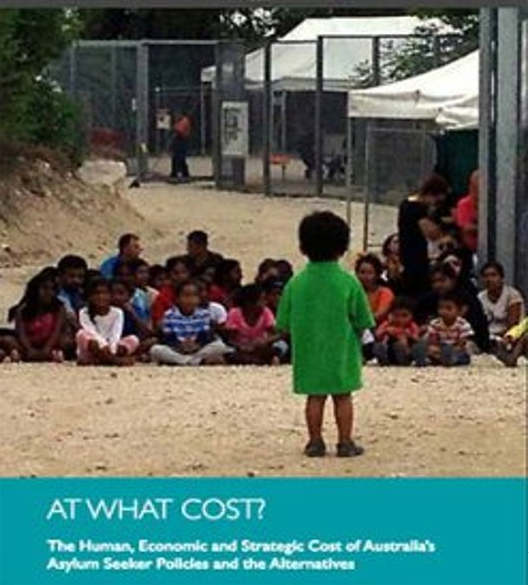
“What we are doing is saving life at sea. We are defending our national sovereignty, we are protecting our country from the evil trade of people smuggling, and by hook or by crook we will do what is necessary to keep our country safe and to keep this evil trade stopped.” Former Australian Prime Minister Tony Abbott, 12 June 2015 (Amnesty International, 2015) p.2
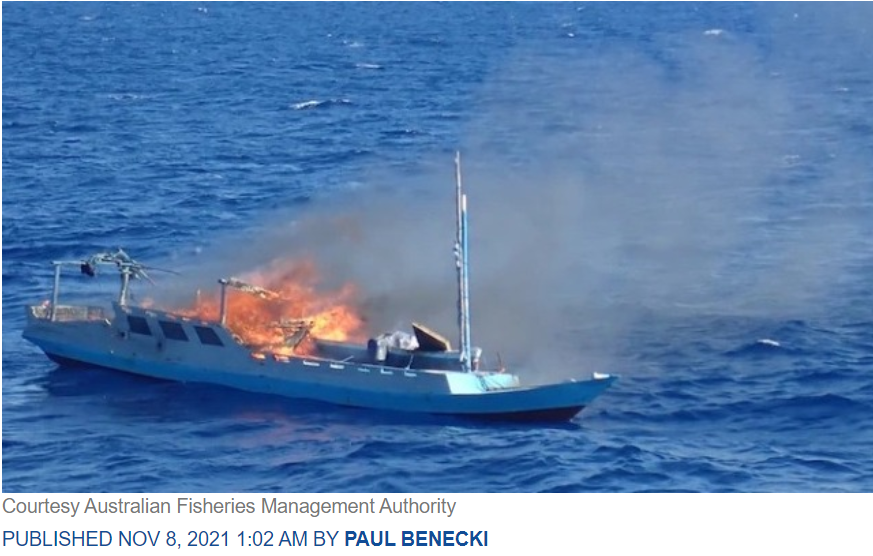
- Australian maritime border patrol force carried out a kind of act of burning motorized fishing boats on the spot to deter Rote fishermen from crossing their maritime borders, in order to maintain the security and sovereignty of Australia's maritime borders. Australian maritime border patrol will destroy any motorized boat they find on the Ashmore Reef border. Meanwhile, they bought the motorized boat by indebted to moneylenders at high interest rates. They have no other income to pay their debts. After the motorized boats of the Rote sailors were destroyed on the spot, they could be imprisoned, then returned to Indonesia after some time.
In the Australia National Security Strategy, it has eight pillars of Australia’s national security strategy, one of them is to preserve Australia’s border integrity. Indonesia is one of Australia’s neighbour country which has a significant role in regional cooperation with Australia in term of keeping a safe border security, counter terrorism and disruption of people smuggling. It is believed that the cooperation will benefit both countries well.
- For there is no other livelihood, because the majority of the population of Rote islands are uneducated, they still insist on fishing to Ashmore Reef, using traditional sailing boats,which are defined as long-line fishing techniques from non-engine wooden boats. However, each year fishermen die because accidents occur in these waters due to weather, violent waves or storms at sea. This has caused many Rote fishing families to become poor widows or lose their sons.
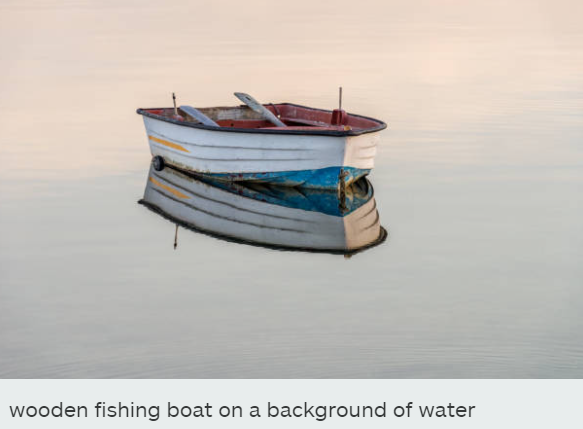
(Picture courtesy from istock photo.)
For fishermen who are heavily indebted by money lenders, some of them work as people smuggling actors, smuggling illegal migrants from different parts of the world, mostly from the Middle East, in exchange for a certain amount of money. This is strongly opposed by the Australian government, because they oppose boat people seeking refugees in Australia, which enter Australian territory illegally. Apart from the moral responsibility of helping people smuggle into Australia, this decision was taken because of economic problems. The fishermen are struggling to survive because the damage to coral reefs nearby is suffering from overfishing and environmental damage. Many fishermen accumulate debts to boat owners because of the low catch. Some people are trying to turn to traditional seaweed cultivation as an alternative, to pay off debts, but that is not enough. Their income is not enough to meet their needs, pay debts and alleviate poverty.
- There is another incident that Rote fishermen deliberately sail across Australian waters to be caught and imprisoned in Australia, usually they are imprisoned in Broome, Western Australia. What is the reason? According to them, they get proper food and accomodations in Australian prisons. Then, they are also employed and get some money. At least they are well cared for and can still earn a bit of income. (Lona, 2018)
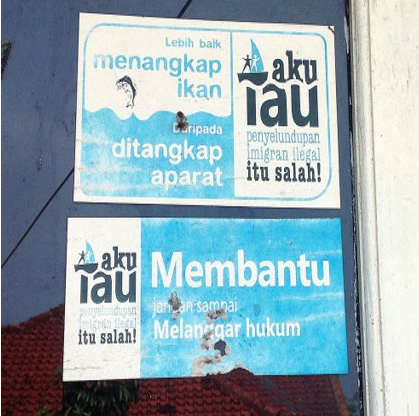
Picture translation (part of the Australian anti illegal immigrants smuggling at Rote):
It is better to catch fish than to be caught by the officer.
I know smuggling illegal immigrants is wrong.
Help don't break the law.
For almost two decades, Australia has funded an information campaign in Indonesia to protect its border from the asylum seekers. The campaign message is slightly different since 2009 which is to point to the crew boats who assist the asylum seekers. The campaign is for a broader fishermen community who turn their profession from traditional fishermen to people smuggling. Unfortunately, the assistance provided was not channeled directly to the people of Rote Ndao, and there was almost no significant result after the aid was given, according to a Rote resident.
According to James J Fox in his book (2016) Panen Lontar, Rote Island is a barren dry land that is difficult to grow plants. Rote is experiencing a longer dry season due to Australia's tropical cyclone climate so it only has low rainfall each year. Also its very remote location and less strategic to market access, making the tourism sector not an alternative, even though it has beautiful beaches.
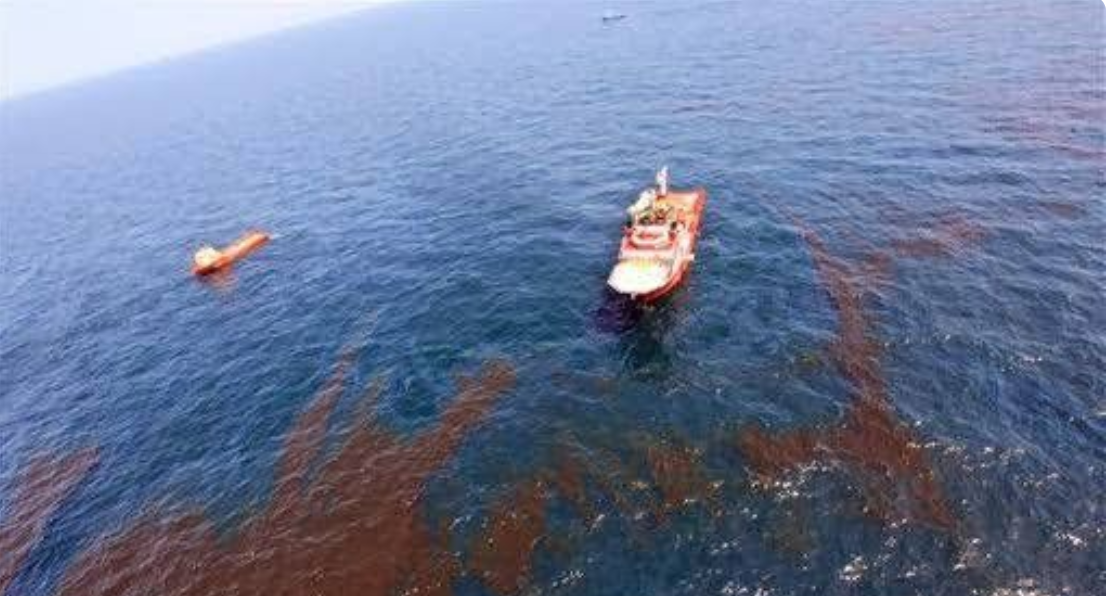
- Tragedy oil and gas leaks from Montara, Australian offshore oil drilling rigs, that occurred on 21 August - 3 November 2009, have polluted the Timor sea, adding to the difficulty of the people of Rote to earn a living, where their main livelihood is fishing and traditional seaweed cultivation.
- Indonesia, as one of the largest sending countries for workers to Malaysia who are employed in the palm oil industry sector, faces many cases of illegally sending workers to Malaysia, one of which is from the province of East Timor. There are so many poor youths from East Timor who want to work in Malaysia, because many of them have incomplete documents, so they become victims of people smuggling to Malaysia to work for below the minimum wage with inadequate accommodation.
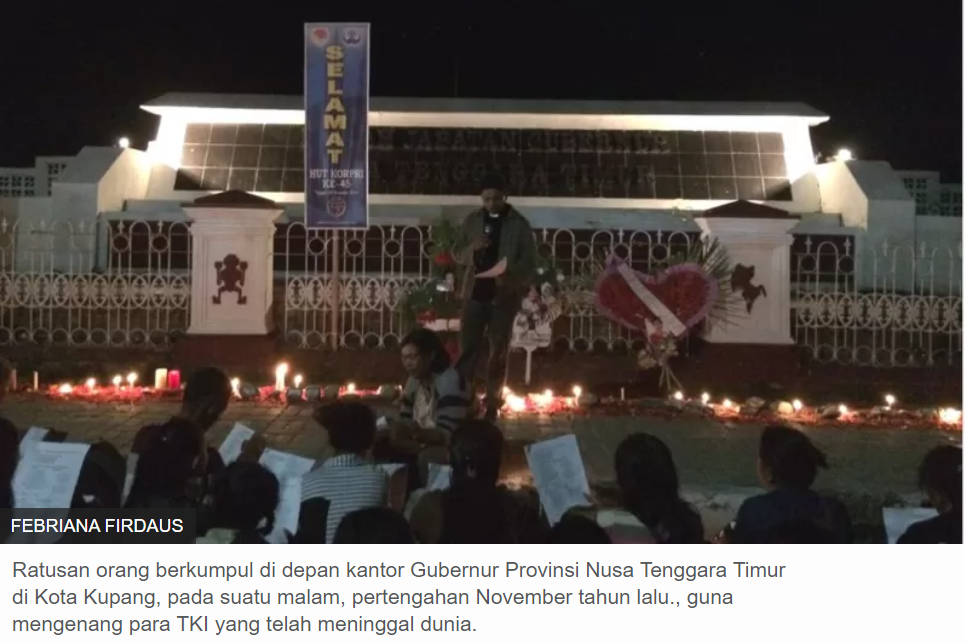
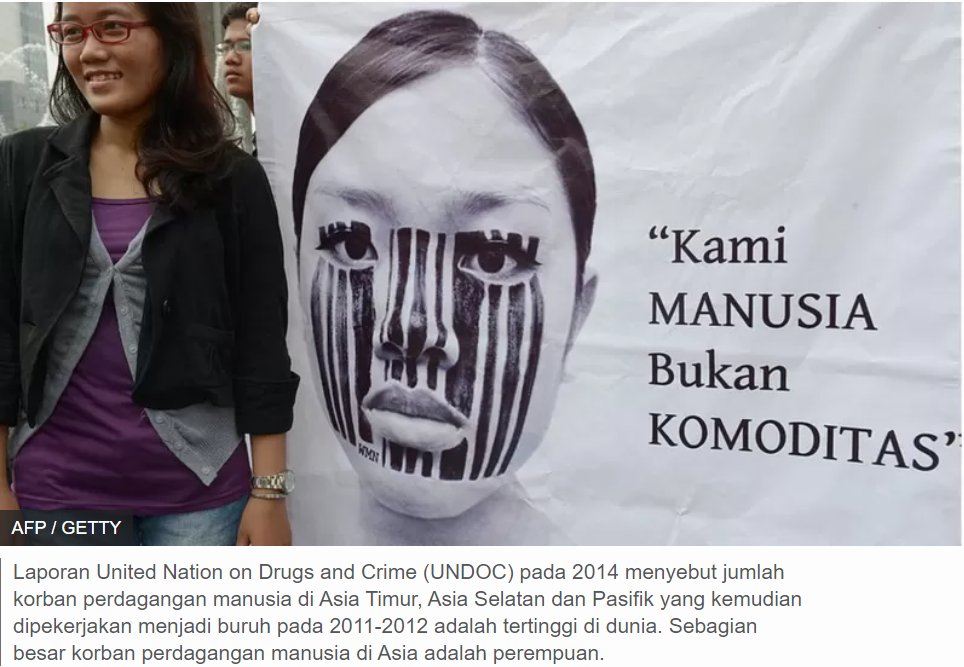
Rote youths who are sent to Malaysia to work illegally are often becoming victims of syndicates trafficking human organs for the black market. The death rate for victims of human organ trafficking that come from East Timor (including Rote) is the highest among the victims from all provinces in Indonesia. Because most of them are poor and uneducated, their voices are not heard, there is almost no justice and help for them.
Rote Ndao’s Opportunity
- Rote Island is surrounded by many small islands, both inhabited and uninhabited, geographically making the waters in Rote a strategic place to cultivate seaweed. The straits and bays in the waters of Rote Ndao make it a strategic place for seaweed cultivation. Among them are Korobafo Bay, Usu Strait, Maeoe Bay, Pepela Bay, and many more undeveloped areas. (Picture is courtesy from Wikipedia_Rote_Ndao).
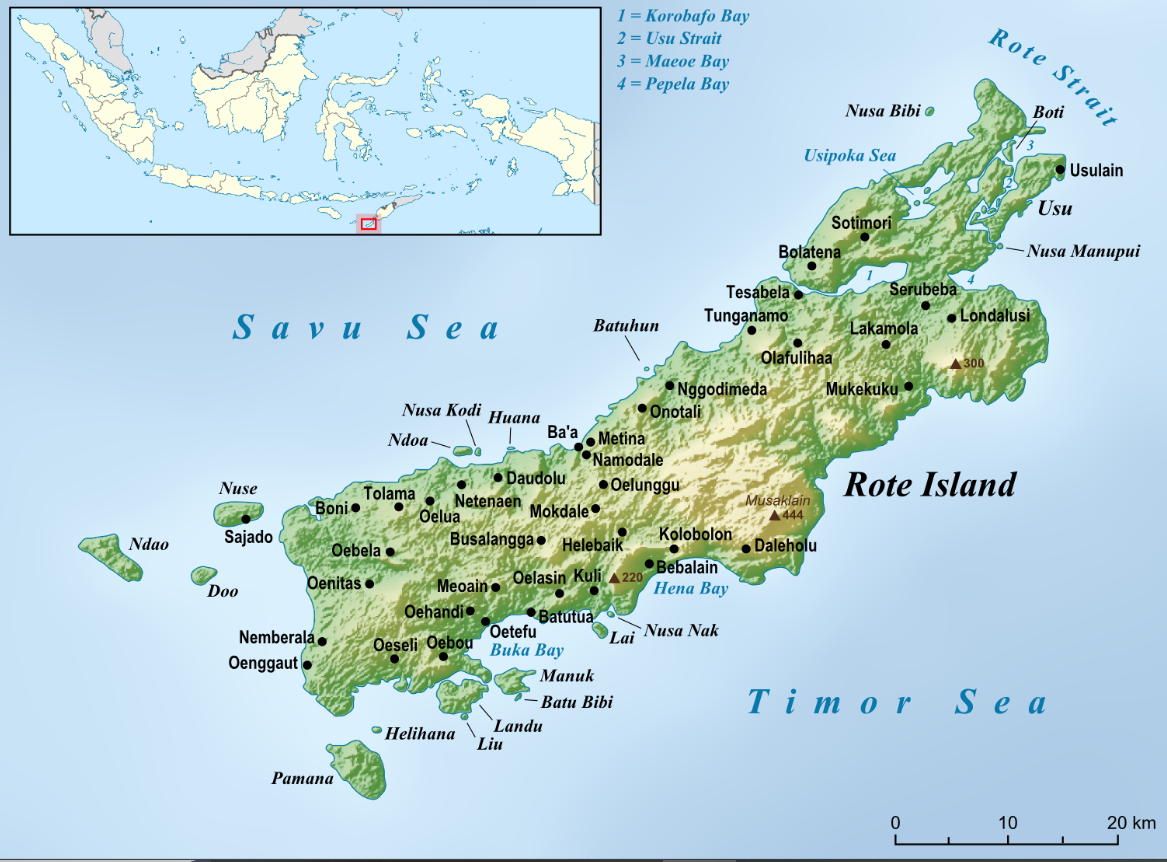
- According to one researcher from the Indonesian marine department, only four parameters are needed for spatial analysis because the range of values is suitable for seaweed cultivation. The four parameters are: depth, current speed, brightness and screen flow. The results showed that the suitability of land for seaweed cultivation in the Thousand Mouth Bay (one of the bays in Rote Ndao) reached 56% or 497.68 hectares of the 879.18 hectares of the study area. The potential harvest produced can reach up to 50 tons per cycle. This means that the potential for developing seaweed cultivation in Rote Ndao is huge.
- The location of the Rote Ndao district is 500 km or 310 miles from the Australian Coast. Based on a report by the Biophysical Profile of the Arafura and Timor Seas, sponsored by the Australian Institute Marine Science, UNDP, and UNOPS, that,
“The waters of the tropical, semi-enclosed Arafura and Timor Seas (ATS) are shared by Indonesia, Timor-Leste, Papua New Guinea (PNG) and Australia. Biogeographically, the ATS region is located at the intersection of two major Large Marine Ecosystems (LMEs), the Northern Australian Shelf (NAS) waters to the south, and the Indonesian Sea (IS) to the north. The Arafura and Timor Seas are characterized by pronounced ecological connectivity (i.e. shared fish stocks and biodiversity, strong land-sea interactions), diverse seascapes, extensive coastal wetlands and shallow-water ecosystems and globally significant populations of marine species (especially megafauna)”.
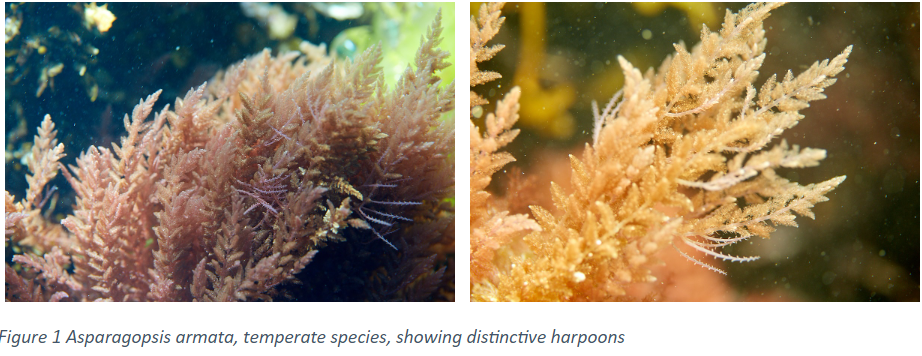
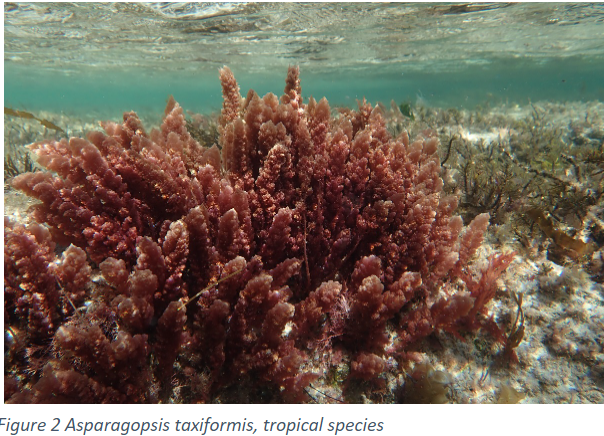
- Australian scientists have discovered a type of seaweed native to the Australian coast that can reduce emissions from livestock. According to the Department of Primary Industries and Regional Development; Fisheries, “Asparagopsis is a genus of red macroalgae or seaweed that occurs naturally in Australia. The genus contains two species; Asparagopsis taxiformis, which is found in warmer waters extending north of Perth, and Asparagopsis armata, which is a cooler-climate species and extends from Jurien Bay around the south coast to South Australia.”
(Pictures are courtesy of the Australian Department of Fisheries.)
So red seaweed or red macroalgae genus, Asparagopsis Taxiformis, allows it to be cultivated in the waters of Rote Ndao, as it shares the same waters.
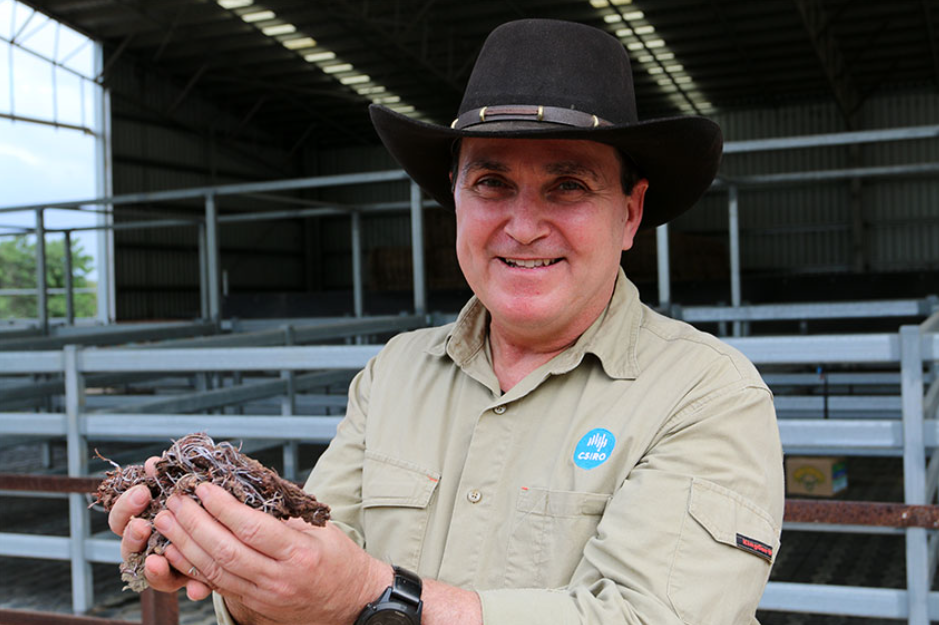
- Australian scientists have developed a patented and cost-effective fodder supplement. A start up called FutureFeed, which will sell it on the market. The solution of Australian scientists is to use the red seaweed 'Asparagopsis' which has been scientifically proven to reduce methane emissions massively. Research also shows that there is an increase in growth in cattle and sheep.
Methane produced by belching and gas by livestock produces a greenhouse gas effect 28 times stronger than that produced by carbon dioxide. It is estimated that these livestock-derived emissions contribute about 10% of Australia's greenhouse gas emissions.
PRINCE CHARLES has been introduced to a new face mask for burping cows that has already been proven to cut their methane emissions. (28th April 2022).
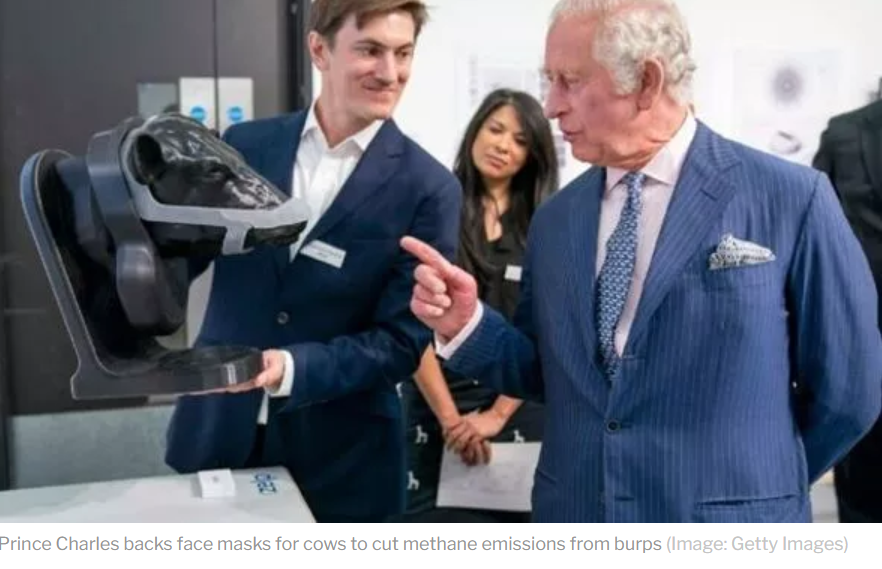
In a feedlot experiment on beef cattle that were supplemented with less than 1% supplementation of Asparagopsis FutureFeed, it showed a decrease in methane production of more than 95%, according to the Department of Climate Change Australia Website.
This phenomenon is new, unprecedented. If only 10% of farmers around the world used FutureFeed as a supplement to their animal feed ingredients, it would be like removing 100 million cars from the world.
- Professor Ermias Kebrab (Animal Science - UC Davis) who helps the cultivation of red macro algae project for cattles in California, said that, “The beauty of seaweed is, it does not take land, fresh water and fertilizer, but it takes up carbon dioxide from the sea”. Several groups around the world are aiming to grow Asparagopsis on a commercial production scale. Researchers cultivate in open ponds in Australia, New Zealand, the United States and Ireland.
- The Rote Ndao humanitarian crisis has prompted an area of poverty and inequality. A philanthropic may intervene by:
- providing aid (knowledge, funds, experience)
- to have cooperation with BRIN (Badan Riset dan Inovasi Nasional) to educate and train seaweed farmers,
- to make animal feed supplement formulas that reduce methane gas emissions from livestock,
- provide funds to purchase seeds and operational cost until harvesting,
- pay salaries for workers or working farmers,
- build seaweed processing plants for supplementing animal feed with the same quality as that produced by factories in the USA and Australia.
Quantitative measurement of the success of aid can be done through:
- The increased number of Rote children attending school (because their parents can afford to pay for education).
- The decrease of the death rate of the population caused by deaths at sea (illegal fishing).
- The decrease of deaths from being victims of syndicates ( trafficking in human organs),
- The decreased numbers of fishermen Rote captured by the Australian Border Patrol (illegal fishing).
- The decreased numbers of people smuggling illegal immigrants carried out by actors from Rote.
- The decreased death rates due to lack of nutrition and health sanitation.
By alleviating the people of Rote Ndao from poverty and providing opportunities for Rote Ndao district to become a place for commercial cultivation of Red Macroalgae and the construction of a supplement factory for animal feed ingredients to reduce the global greenhouse effect, an aid providers may have participated in achieving 12 UN Sustainable Goals and overcome the prolonged humanitarian crisis in Rote Ndao district.






Pictures are courtesy from the United Nation Sustainable Development Goals (https://sdgs.un.org/goals)
Findings:
What is happening in the Timor Sea?
- The Timor Sea suffers from overfishing.
- Then Rotenese did shark-fishing, abalone, sea- cucumber. Shark-fin price dropped.
- The Montara tragedy in 2009 polluted the Timor Sea, the Rote people can not do fishing or seaweed farming.
- Then they smuggle people to pay the debt (break the poverty cycle).
- Then the Rote’youth become the victims of human-organ trafficking syndicates.
- Since 2005-2014 it has been recorded that Australian authorities have been destroying 2,500 boats from Indonesia.
- Greediness of the money-lender to persuade the traditional fishermen to keep doing the same thing, would sustain the current problem.
- Rote Ndao has great potential to become a location for the cultivation of red macroalgae genus, Asparagopsis Taxiformis.
- Rote Ndao has potentially become a part of solving global problems in the field of climate change. Based on the potential of the waters for the cultivation of red macro algae, affordable labor, and lower operating costs than Australia.
Recommendations:
- Long-term rehabilitation; to change the livelihoods for the future generations, is needed to give education assistance for younger generations as early as possible, for them to have skills and increase the level of their education that could draw them away from fishing as a main source of income. Scholarships project for young Rotenese would be a great long-term solution.
- Short-term rehabilitation; to provide credit such as micro-finance to encourage them to do business or buying seaweed-seeds and equipment, to help them out starting a new seaweed farming with.
- Calling for foreign investment to invest in a marine-based commodity would be a great solution, whether it will be a producer, international marketing or middleman. A marine based alternative solution with support from the private sector or international aid could be explored more and is likely to be a great solution to the problem. Support from a philanthropic will allow the development of a generic model for a positive knowledge management intervention in the seaweed farming industry, from Research & Development, seeding and harvesting, processing and producing and selling for local or export markets globally. Given the global problem of greenhouse gas emissions caused by livestock, and natural solutions have been found, there is hope and potential for cultivating Asparagopsis Taxiformis in Rote waters and producing these animal feed supplements in Rote. In addition to abundant resources, affordable cost, raising the dignity and creating prosperity of the people of Rote and working with the UN to achieve sustainable goals. This can be done in several ways, including by working with the Australian government and/ or FutureFeed.
- Rote island is also famous as a natural brown sugar producer from Lontar trees. The Lontar tree is the only tree that can thrive in Rote.
- It is encouraged to maintain a strong bilateral cooperation between Indonesia and Australia protecting the sea border.
References
Amnesty International. (2015, October 29). https://www.amnestyusa.org/files/australia-by_hook_or_by_crook. pdf
Balint, R. (2005). Troubled Waters: Borders, boundaries and possession in the Timor Sea.
In Troubled Waters: Borders, boundaries and possession in the Timor Sea (pp. 1-5). Sydney Australia: Allen & Unwin.
Evans, K. (2013, November 14). ABC Radio Australia. Retrieved from Shark Slaughter Ban Drives Fishermen into People Smuggling Trade: http://www.radioaustralia.net.au/indonesian/ 2013-11-15
Fox, J. J. (1996). Panen Lontar: Perubahan Ekologi dalam Kehidupan Masyarakat Pulau Rote dan Sawu. In Panen Lontar: Perubahan Ekologi dalam Kehidupan Masyarakat Pulau Rote dan Sawu (pp. 1-10). Jakarta: Pustaka Sinar Harapan - Indonesia.
Government, A. (2013). Strong and Secure; A Strategy for Australia's National Security. Retrieved from Australia's National Security Strategy: https://www.files.ethz.ch/isn/167267/ Australia
Government, A. (2016, June 7). Department of Agriculture and Water Resources. Retrieved from Indonesia - Australia Fisheries Cooperation: http://www.agriculture.gov.au/ fisheries/international/cooperation/indonesia
Jaiteh, V. (2013, November 13). www.abc.net.au. Retrieved from Shark fishermen risking their lives in pursuit of dwindling resource: www.abc.net au
Laurie, V. (2017, November 3). The Australian. Retrieved from www.theaustralian.com.au: https://www.theaustralian.com.au/news/world/shark-fishermen-risking-their-lives-inpursuit-of-dwindling-resource/news
Lona, R. (2018, May 25 May 2018). Tribe Ruler, Humanitarian Activist, Rotenese. (Silvania, Interviewer)
Missbach, A., & McNevin, A. (2014, November 5). Inside Story. Retrieved from https://insidestory.org.au/ our-boats-our-people-our-knowledge
Refugee Council of Australia. (2016, September 26). https://www.refugeecouncil.org.au/ getfacts/seekingsafety/asylum/offshore-processing/atwhat-cost-unicef-save/
Treaties, J. S. (1997). AUSTRALIA-INDONESIA. Perth: THE PARLIAMENT OF THE COMMONWEALTH OF AUSTRALIA.
UNDP. (1994). Human Development Report; New Dimensions of Human Security (p.22-46). New York: Oxford University Press.
Wikipedia. (2018, May 26). Retrieved from MOU Box 74: en.wikipedia.org
Wikipedia. (2018, January 18). Wikipedia Ensiklopedia Bebas. Retrieved from id.wikipedia.org: https://id.wikipedia.org /wiki/suku bangsa di Indonesia
https://www.adelaidenow.com.au/ rendezview/next-montara-disaster-is-a-case-of-when-not-if/news-story
https://www.dcceew.gov.au/ climate-change/publications/from-beaches-to-burps-native-australian-seaweed-key-to-reducing-methane-emissions-from-cows
https://www.fish.wa.gov.au/ Fishing-and-Aquaculture/Aquaculture/Aquaculture-Regions/Pages/seaweed-aquaculture
https://upload.wikimedia.org/ wikipedia/commons/c/ce/Rote_Island_en
https://www.researchgate.net/ publication/328619480_IDENTIFIKASI_POTENSI_KESESUAIAN_PERAIRAN_UNTUK_BUDIDAYA_RUMPUT_LAUT_DI_TELUK_MULUT_SERIBU_ROTE
https://iwlearn.net/resolveuid/ c6d319ff-ddb0-4393-a4b5-b8a4284e3c88
Preliminary Research Proposal Strategic Issues in Defense Studies, by Silvania, presented to Professor Rouben Azizian, Doctor William Hoverd, Massey University On Friday, 12 th October 2018. “Border Protection in National Security Strategy of Australia; Case Study of Timor Sea Border Issue”.
https://www.forbes.com/ sites/jeffkart/2019/11/04/blue-ocean-barns-seaweed-supplement-makes-cows-burp-less-cuts-greenhouse-gas-emissions
https://sdgs.un.org/ goals
https://www.enbeindonesia.com/berita-terkini/ pr-1523719893/ladang-minyak-di-montara-ntt-bocor-lagi-presiden-didesak-terbitkan-aturan-tegas
https://www.bbc.com/indonesia/ indonesia-38647064
https://id.wikipedia.org/ wiki/Kabupaten_Rote_Ndao
https://maritime-executive.com/ article/australian-border-force-burns-illegal-fishing-vessels
https://www.files.ethz.ch/ isn/167267/Australia%20A%20Strategy%20for%20National%20Securit.pdf
https://sumsel.inews.id/berita/ 10-provinsi-termiskin-di-indonesia-nomor-9-banyak-tambang-dan-perkebunan
https://theconversation.com/ sailing-south-why-indonesian-fishers-risk-apprehension-in-australian-waters-173107
https://www.express.co.uk/ news/royal/1602278/prince-charles-cow-mask-methane-emissions-ont
