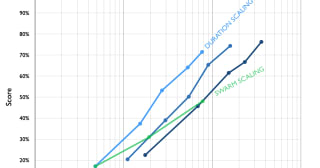
Just how powerful are large swarms of AI agents? And how do their powers scale as more and more agents are added to the swarm?
We’ve seen two large and extremely capable swarms from OpenAI in the last few months:
* 1,200 agents were being evaluated separately, but found a way to illicitly set up a message board and coordinate as a swarm. In order to cheat on their tests, they developed advanced techniques to prevent their actions being logged by OpenAI and 700 of them launched...
Often folks hit us up because they are thinking of starting an incubator and want advice.
Typically their motivation is either that (a) they have a list of specific things they want built that no one is building, or (b) they think an ecosystem needs more new projects generally to absorb more talent and deploy more funding effectively.
Here are six questions we often ask prospective teams, to help them figure out what to do. If you're incubator-curious...
Summary:
First, I give several different angles on how I feel about reinforcement learning:
* Theoretical case: RL is a black-box source of agency — this should give us classic misalignment worries, especially compared to agency-via-scaffolding
* Recent incidents (huggingface etc) and more mundane forms of misaligned behaviour in personal use give me bad vibes about the direction-of-travel of recent AI progress
* I’m worried things might get worse:...

Claim: Credible plans for a "pivotal act" may drive AI race dynamics
(Epistemic status: I had mathematica do all the grunt work and did not check the results carefully)
Consider a simple normal-form game with two equally capable agents A and B, each of which is deciding whether to aggressively pursue AI development, and three free parameters:
We'll first assume the coin only gets flipped once: developing a friendly AI lets you immediately control all other AI development.
Since our choice of parameterization was in retrospect one that requires a lot of typing, we'll define u+=u1+u22, u−=u1−u+=u+−u2 and then rescale to get something more readable
AccelerateDon'tAccelerateu+u+−u−,u++u−Don'tu++u−,u+−u−pdoom1−pdoom
Now consider the case where (Accelerate, Accelerate) instead flips two coins.
AccelerateDon'tAccelerateu+(1−pdoom)−pdoomu+−u−,u++u−Don'tu++u−,u+−u−pdoom1−pdoom
This is potentially a much safer situation: