Note: This post was crossposted from the Coefficient Giving Farm Animal Welfare Research Newsletter by the Forum team, with the author's permission. The author may not see or respond to comments on this post.
Subtitle: On vegan advocacy, effective altruism, and FIFA
I turn 40 today. Here are some hot takes.
On factory farming
1. Our biggest challenge is salience. If factory farming led the evening news, it wouldn’t last lo...
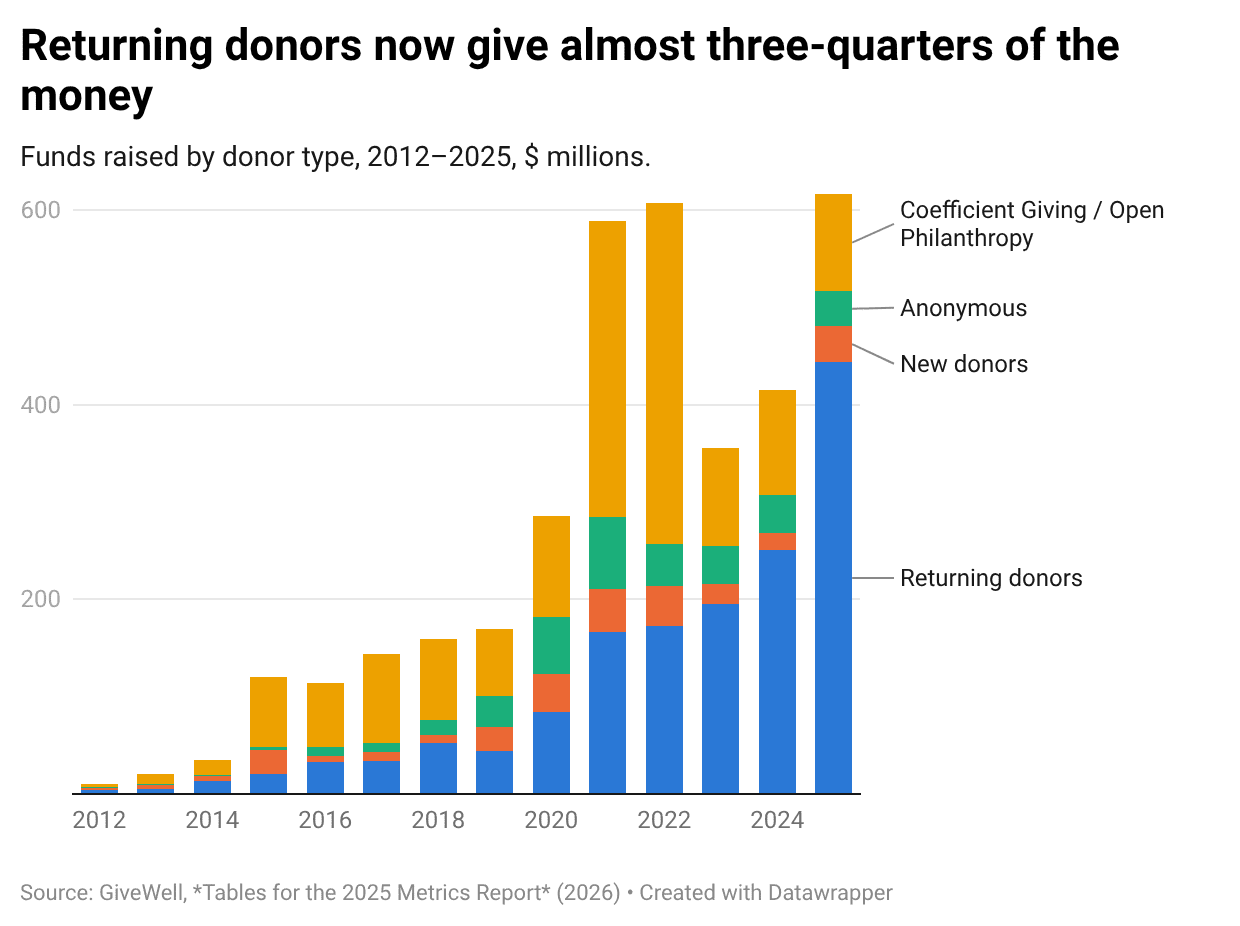
Previously: GiveWell raised less than its 10th percentile forecast in 2023 · GiveWell fundraising up 17% in 2024
GiveWell has published its...
This month effective altruism has gotten lots of attention, including a cover story in The Economist. It feels pretty surreal to be on the receiving end of it. But I feel grateful these ideas have caught on, and even more grateful for the drive, earnestness, and compassion of so many people who took strange but well-argued ideas seriously and then actually acted on them....
Could you elaborate further what you have in mind with a moral cluelessness response?
Personally, I’ll say that most of those supposed anti-consequentialist thought experiments are helpful for illustrating why you need to be thoughtful when applying consequentialism (as is the case with every moral framework), but they do nothing to refute consequentialism. For example, there are many perfectly good utilitarian reasons to not conduct organ harvesting, such as threatening trust in institutions, risking your ability to do good in the future, the fact that you are considering that option suggests you might be suffering from delusion or some other problem which impairs your ability to assess the likelihood of being discovered or the benefits of harvesting the organs, etc.