Comments
Impressive! Really encouraging to see this level of progress.
Impressive! Really encouraging to see this level of progress.
2025 was a transformational year for the Animal Welfare League. We expanded our operations to three new African countries, helped develop Ghana’s first national poultry welfare standards, secured eight cage-free corporate commitments, and had over 14 million impressions through our mass media campaigns. This report captures the milestones, lessons, and ambitions that shaped our year and outlines how we plan to build on this momentum in 2026. As always, we share this openly because we believe our partners, donors, and supporters deserve full transparency into both our achievements and our challenges.
Animal Welfare League is wholly dedicated to farmed animal welfare in Africa. The organization is focused on improving chicken and fish welfare in Africa. Our staff is divided into Outreach and Consulting teams for projects on chicken and fish welfare, a central administrative team, and an affiliated research program. We actively collaborate with stakeholders in South Africa, Egypt, Morocco, and Ghana to promote farm animal welfare in Africa.
The Animal Welfare League exists to prevent cruelty to farmed animals and advance the welfare of farmed animals through education, policy, research, and corporate engagement.
We envision a world where compassion for animals is woven into the fabric of corporate decision-making, consumer culture, and public policy.
We are creating a more independent Board of Directors to add to our Advisory Board and management. As a growing organization, we believe there should be more oversight that is not limited to advisory alone and are now seeking people that truly want to support a radical change for farmed animals in Africa to join us. We are looking for three additional people to join our board of directors to help steer our work towards a future of reduced animal suffering in Africa over the next three years. Applications are open until April 16, 2026.
This is a rewarding volunteer opportunity to support a worthy cause while helping the Animal Welfare League (AWL) achieve its strategic goals. The board is not involved in AWL’s daily operations but it is accountable for ensuring that the organization adheres to its strategic direction and works to achieve the strategic goals approved by the Board. Also, the Board monitors the policies and procedures used by the organization to fulfill its objectives and measures outcomes to ensure that goals are achieved and risks minimized.
Selorm Sikanku - Corporate Campaigns Coordinator, Ghana
Bio: Selorm is a seasoned corporate and consumer engagement professional with a focus on market communications campaigns. With experience managing varied clients across multiple African markets, I am excited to bring my skills to the corporate outreach and campaigns effort of Animal Welfare League. With a passion for nature and the environment, I want to bring lasting positive impact in farmed animal conditions.
Stella Agba Baptiste - Senior Corporate Campaigns Lead (Contractor)
Bio: Stella brings over a decade of experience as a vegan, environmental, and intersectional activist, with a strong focus on social justice. Born in France, she holds a Bachelor’s degree in Geography and a Master’s degree in Urban Planning and International Development Cooperation from the Institute of Geography and Urban Planning of Grenoble. She began her career in advocacy through fieldwork with Indigenous communities in Latin America, exploring the relationship between territory and identity, and has since expanded her work globally. She collaborates with international organizations on animal advocacy and corporate campaigns. Her work is grounded in a deep commitment to animal welfare, environmental protection, and education, alongside a personal interest in marine conservation and the interconnected well-being of animals, people, and the planet.
3. Gamal Adel - Corporate Campaigns Coordinator, Egypt
Bio: Gamal Adel is a business development and public affairs professional with more than a decade of experience working with leading international organizations such as Huawei and USAID’s Business Egypt. He specializes in building strategic partnerships, leading stakeholder engagement, and navigating complex corporate and regulatory environments. At Animal Welfare League, Gamal leads corporate outreach and campaigns in Egypt, working with companies to advance cage-free commitments and improve farmed animal welfare. He is passionate about driving practical, business-aligned solutions that create long-term impact.
4. Natasher Julius Hove- Corporate Campaigns Coordinator, South Africa
Bio: Natasher Julius Hove is a strategic communications and sustainability practitioner with over 7 years experience designing impactful campaigns and media platforms across Biodiversity Conservation and Animal Welfare, Africa’s sports, ESG, and development sectors. His work focuses on aligning brand storytelling with social impact, helping organisations translate purpose into measurable value through multi-stakeholder engagement, partnerships, and sustainability marketing. He has led and contributed to initiatives addressing systemic challenges such as youth development, environmental education, and impact communications. Natasher's approach combines strategic thinking with research and practical execution to drive both awareness and inspire action. He is drawn to animal welfare as a critical under-explored intersection of environmental sustainability, ethical responsibility, and community wellbeing, and he is committed to advancing initiatives that create lasting, humane impact.
5. Francisca Frema Owusu - Programmes Associate
Bio: Francisca Frema Owusu is a writer, researcher and development professional who believes in the power of words to inform, influence and inspire change. With an academic background in land systems and experience in leadership, she brings clarity, depth and intention to everything she writes, from research and reports to story-telling and digital content. She is passionate about animal welfare and uses the transformative power of words to shed light on the realities animals face in our world today. Through creative and engaging content, she advocates for more humane treatment, greater awareness and stronger legal and social systems that protect both animals and people. Guided by the principles of effective altruism, Francisca is intentional about focusing her efforts where they can have the greatest impact, using evidence, empathy, and strategy to drive meaningful change.
Policy Officer, Ghana
We are inviting applications for the position of Policy Officer to support our mission of advancing animal welfare through evidence-based policy and strategic reforms. This role offers an opportunity to contribute to the development and promotion of policies that improve farm animal welfare. The Policy Officer will be responsible for conducting in-depth research and analysis on animal welfare issues, developing policy positions and recommendations, and engaging with key stakeholders, including government agencies, industry actors, civil society organizations, and the media. The successful candidate will demonstrate strong analytical, research, and communication skills, along with a solid understanding of public policy processes. A background in advocacy, policy development, or a related field will be an advantage. A demonstrated commitment to animal welfare and ethical practices is essential. This is an excellent opportunity for a motivated professional to contribute to impactful, mission-driven work within the animal advocacy space.
Corporate Campaigns Coordinator, Egypt
We are inviting applications for the position of Corporate Campaigns Coordinator for Egypt to support the implementation of strategic corporate engagements in the region. This is a full time role and preference will be given to candidates who can work in Cairo. The Corporate campaigns Coordinator will directly engage with food companies to secure and implement cage-free commitments, build strong relationships with industry stakeholders and help transform the lives of laying hens, driving cage-free progress across the region. This is an excellent opportunity for a motivated professional to contribute to impactful, mission-driven work within this dynamic and growing organization.
Corporate Campaigns Coordinator, Morocco
We are inviting applications for the position of Corporate Campaigns Coordinator for Morocco to support the implementation of strategic corporate engagements in the region. This is a full-time role and preference will be given to candidates who can work in Casablanca. The Corporate campaigns Coordinator will directly engage with food companies to secure and implement cage-free commitments, build strong relationships with industry stakeholders and help transform the lives of laying hens, driving cage-free progress across the region. This is an excellent opportunity for a motivated professional to contribute to impactful, mission-driven work within this dynamic and growing organization.
Corporate Campaigns Coordinator, South Africa
We are inviting applications for the position of Corporate Campaigns Coordinator for South Africa to support the implementation of strategic corporate engagements in the region. This is a full-time role and preference will be given to candidates who can work in Casablanca. The Corporate campaigns Coordinator will directly engage with food companies to secure and implement cage-free commitments, build strong relationships with industry stakeholders and help transform the lives of laying hens, driving cage-free progress across the region. This is an excellent opportunity for a motivated professional to contribute to impactful, mission-driven work within this dynamic and growing organization.
Corporate Support Consultancies
AWL is seeking experienced professionals from the food and corporate sectors in Egypt and South Africa to serve as Corporate Support Consultants. This 3–6 month paid engagement is ideal for well-connected industry veterans who want to leverage their networks to advance farm animal welfare standards across corporate supply chains. If you have the relationships and the resolve to drive meaningful change from within, we'd love to hear from you.
Advocacy Fellowship
The AWL Advocacy Fellowship embeds driven individuals directly into live campaigns, turning research and strategy into grassroots action. We are looking for a consultant to develop and implement what becomes “our campaign engine” ensuring that every initiative AWL launches has someone/group of individuals dedicated to building the community support it needs to succeed. If you're ready to move from ideas to impact, this short-term, hands-on programme is your opportunity.
A very special shout out to Use-Friendly (through Campaigns Labs) for working with us on the content for the mass media campaign which achieved 14 million impressions on social media and televised ads.
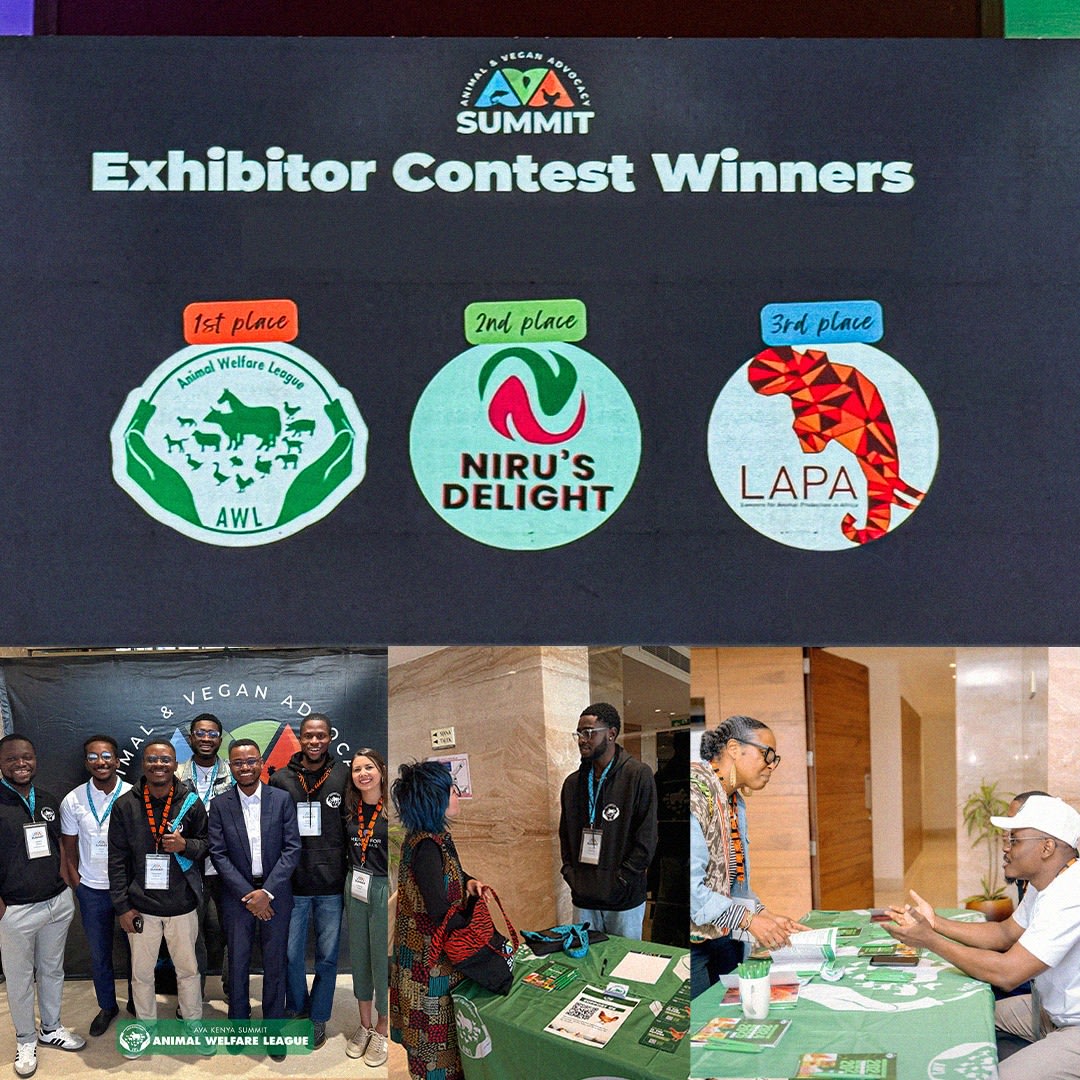
A photo collage featuring the AWL team, AWL exhibitors, and the exhibitor contest winners at the AVA Kenya
We continued to employ our four-pronged strategy: corporate outreach, egg producers’ engagement, raising consumer awareness, and advocating for policy to reduce the suffering of hens in Ghana and across Africa.
In 2025, we secured a total of eight cage-free egg sourcing commitments in Ghana. The committed companies are Oak Plaza, Sky Plus, La Palm, Africa Regent, Mövenpick Ambassador Hotel, Ibis Styles Hotel, Accra Marriott Hotel, and Fiesta Royale Hotel. The most recent commitment, from Fiesta Royale, a hotel previously ranked as ‘Dishonorable’ but now a Gold Standard, has an annual egg consumption of 144,000 eggs, directly impacting 626 hens. In total, our corporate commitments now directly impact an estimated 4,831 layer hens.
We also increased regional reporting by three global companies: Ibis Styles Hotel, Accra Marriott Hotel, and Mövenpick Ambassador Hotel. Additionally, we launched the Hotels in Ghana Cage-Free Ranking Webpage, publicly ranking hotels based on their cage-free status. This was accompanied by a published report and media coverage for the best-performing hotels. The ranking campaign served as both an accountability tool and an incentive for companies to adopt higher welfare standards.
Our outreach strategies continued to improve. We developed a national strategy for corporate campaigns, maintained consistent momentum with more physical meetings (3X last year meetings), and became more effective at securing meetings with the right executives at companies (almost three times initial meetings with manager, director or executive in-charge of the relevant department compared to last year). Making presentations became a key element of our outreach, and we introduced online/digital negative campaigns as an escalating tactic. Regular up-to-date progress updates corporate engagements are shared with all active companies.
Challenges: We encountered gaps in communications between decision makers and their lower rank staff at some companies. After successful meetings with senior-level executives, follow-up staff (procurement, quality/hygiene offices) became unresponsive, delaying progress on commitments. Some companies also insisted on completing the switch to cage-free eggs before making a public commitment, using this approach to delay the process for extended periods. Technical issues with website domains and social media access were also used by some companies to stall public statements.
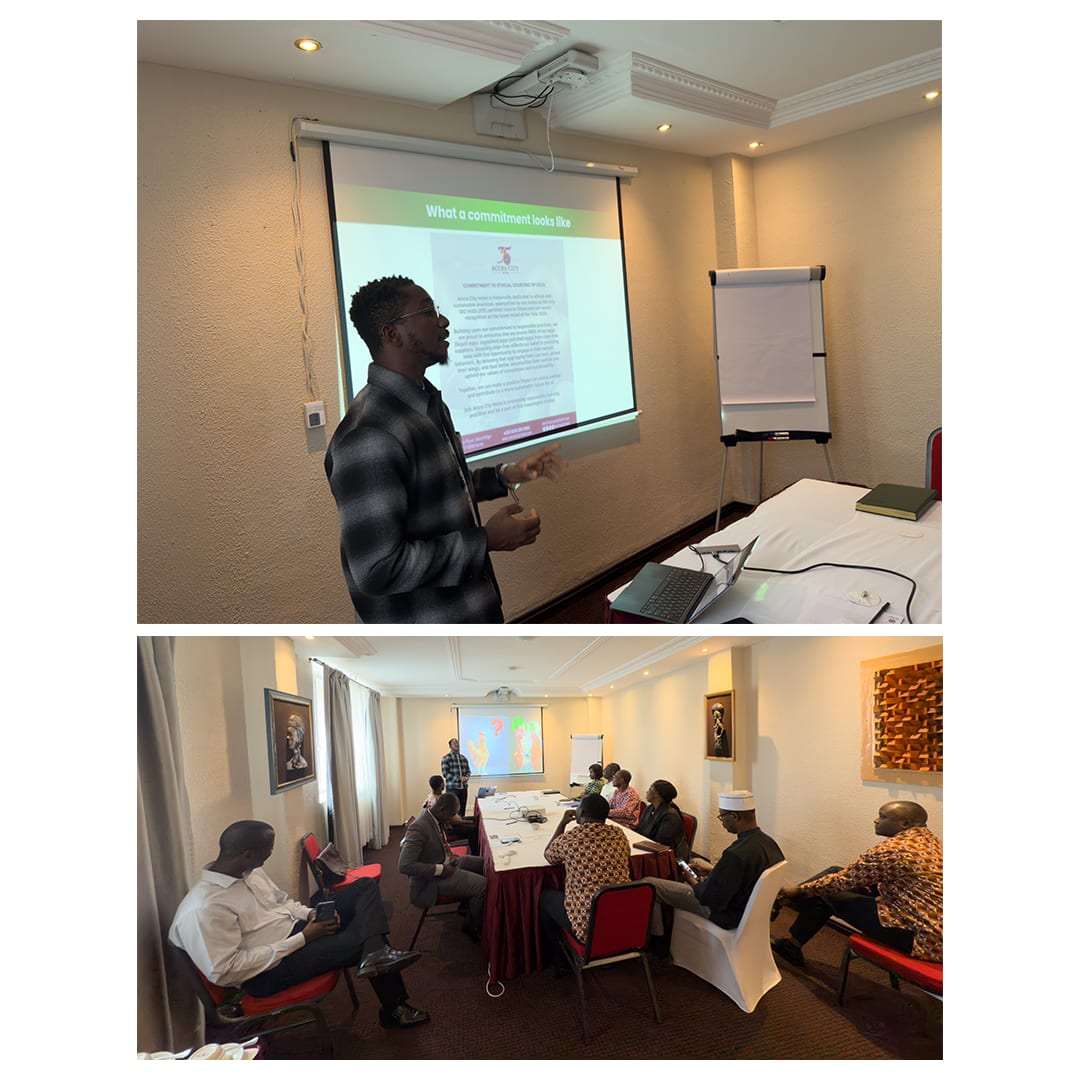
A photo of AWL corporate campaigns team’s engagement with a hotel’s management
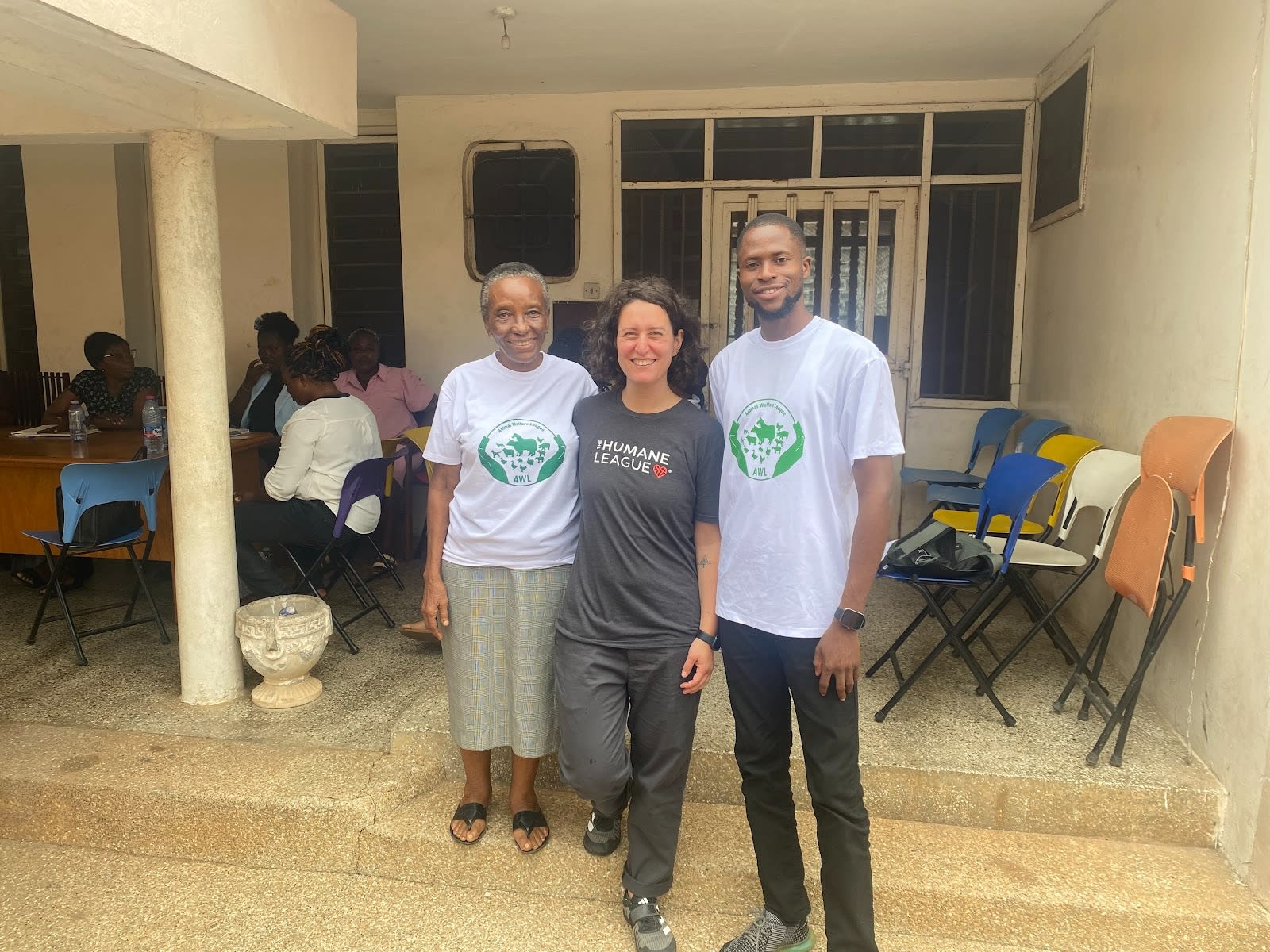
In 2025, we conducted 10 farm visitations to evaluate the cage-free status of producers on the directory. We collaborated with a staff from The Humane League (THL) for welfare assessment visits of some farms in Ghana.
We produced forum content for directory members in new formats, including audio and visual materials. Personnel in charge recorded and tracked consultation requests from directory members, strengthening the support network for cage-free producers.
Exhibitions at Ghana Poultry Day and National Farmers Day allowed direct engagement with egg producers. We also built relationships with directory members in the Bono region for egg supply to companies in Accra, strengthening the supply chain link between our producer network and corporate commitments.
Challenges: Our goal of supporting farm animal welfare certification with third party certification in Africa has been perpetually delayed due consistent Avian Influenza outbreaks in South Africa.
A photo of AWL staff and THL staff on a welfare assessment visit to some farms in Ghana.
We supported a KNUST Animal Welfare Club student activities, which included giving talks on animal welfare at two senior high schools in the Ashanti region.
In 2025, we completed our mass media consumer awareness campaign, running a 45-second advertisement on TV3 Ghana, Facebook, Youtube and 60-second Twi advertisement on UTV, two major national television channels.
In 2024, the Animal Welfare League developed an advertising video to pilot a “Mass Media Campaign for Animal Welfare” project in an African country. In 2025, we paid for the ad to be shown on morning and evening shows on two television channels— called New Day of Media General (TV3 Ghana) and United Showbiz of United Television (UTV) as well as on Meta platforms (Facebook & Instagram) and Youtube for three months.
Behavioral science indicates that altering established behaviors requires sustained efforts. The World Health Organization outlines that effective health campaigns should guide the target audience from awareness to behavior change, which requires time and repeated exposure to the campaign messages. Behavior change campaigns therefore necessitate extended durations to effectively motivate and solidify new behaviors.
In the pilot in Ghana, we focused on the first part of the spectrum: awareness. We developed a video advertisement and ran it on two national TV stations and three social media platforms for three months.
Our reasons for choosing video over other audiovisual formats
Our reasons for choosing a period of three months
We conducted an independent assessment of the above effort. Read Ben Stevenson’s analysis here: Cost-effectiveness of Animal Welfare League’s mass media intervention
Our social media presence grew significantly in 2025:
| Platform | New Followers | Total Followers |
| X (Twitter) | +65 | 140 |
| +76 | 301 | |
| +60 | 288 | |
| +349 | 1,339 |
We also increased our presence at industry events through exhibitions and launched business cards, branded apparel, and consistent online posting.
Our combined social media campaigns on television and digital platforms generated a total of 14,118,899 impressions during 2025, a significant increase from prior years.
Note: We were unable to retrieve detailed metrics for the TV advertisements. Additionally, there was no proactive solicitation of information on industry event dates initially, and print errors occurred with branding materials for the AVA exhibition.
Our partnership with the Ghana Standards Authority (GSA) achieved landmark milestones in 2025. After a nine-month period of engagements with the GSA and stakeholders in the poultry sector, we completed Phase One of our collaborative activities. Through a ten-member national working group and a sixteen-member technical committee, we developed:
These policy documents have been accepted by all sector players in the poultry industry through the collaborative development, and the gazetted documents are now published on the Ghana Standards Authority website under their Standards Catalogue and in their library for public use. When applied, these standards have the potential to impact the welfare of over several millions of hens raised for eggs in Ghana (estimated at over 70% of total egg supply in the formalised sector).
We are already seeing applications of the standards in corporate outreach: four corporate companies whose negotiations with us had stalled (including two hotels) have requested and shared the standard document with their egg suppliers as part of developing feasible transition timelines for cage-free eggs.
We also served petitions on animal welfare issues to three government agencies:
We secured three meetings with the Ghana Tourism Authority and built a consensus on the implementation of the standards. We agreed to collaborate according to a proposed memorandum of understanding covering a leadership forum, industry forums, and a legislative instrument on a national animal welfare policy applying GS 1404:2026 and other higher welfare practices in the tourism industry. We also secured meetings at MoFA and developed a Theory of Change for our policy work. A part-time staff member was hired to support policy activities. We are now hiring a full time employee to lead our policy activities.
Note: We did not receive a response from the Ghana Police Service and Ministry of Food and Agriculture regarding our petitions.
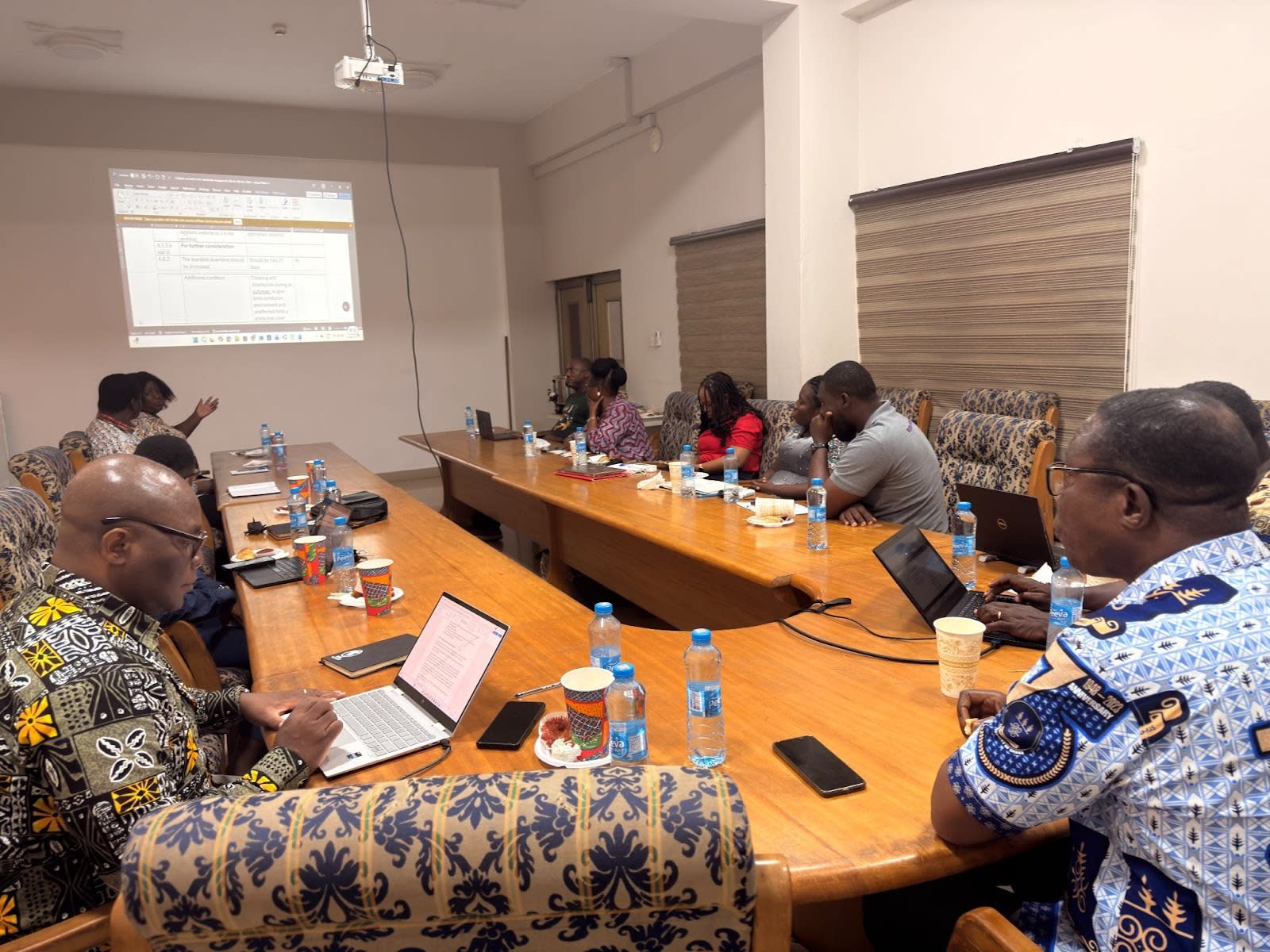
Images of Policy meetings consisting of AWL team and key actors from various government sectors.
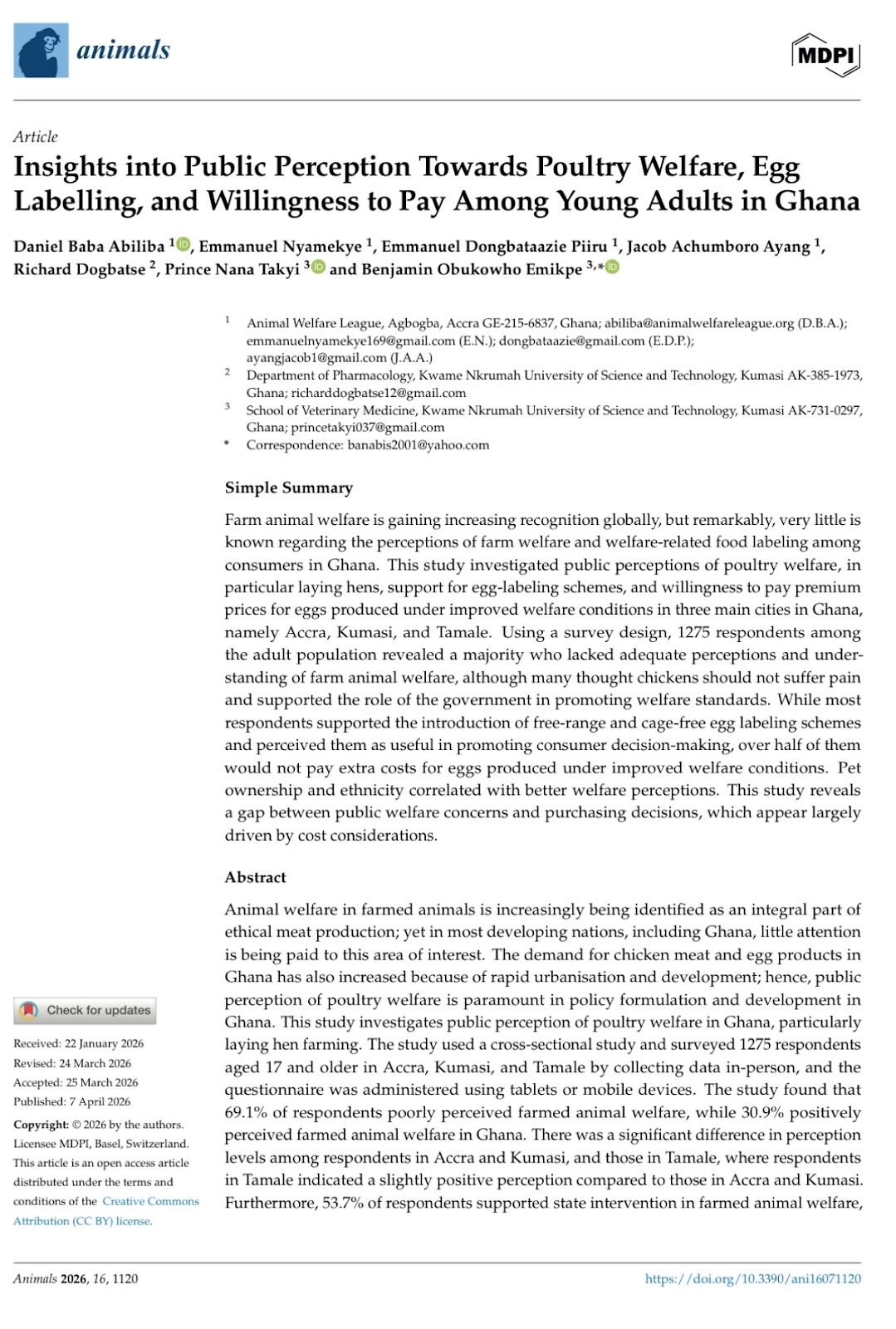
In 2025, our research program expanded significantly:
Lessons learned: Progress report instructions for commissioned researchers were not sent early enough, research timelines were too short, and funding for research was not sufficient.
AWL Africa Activities
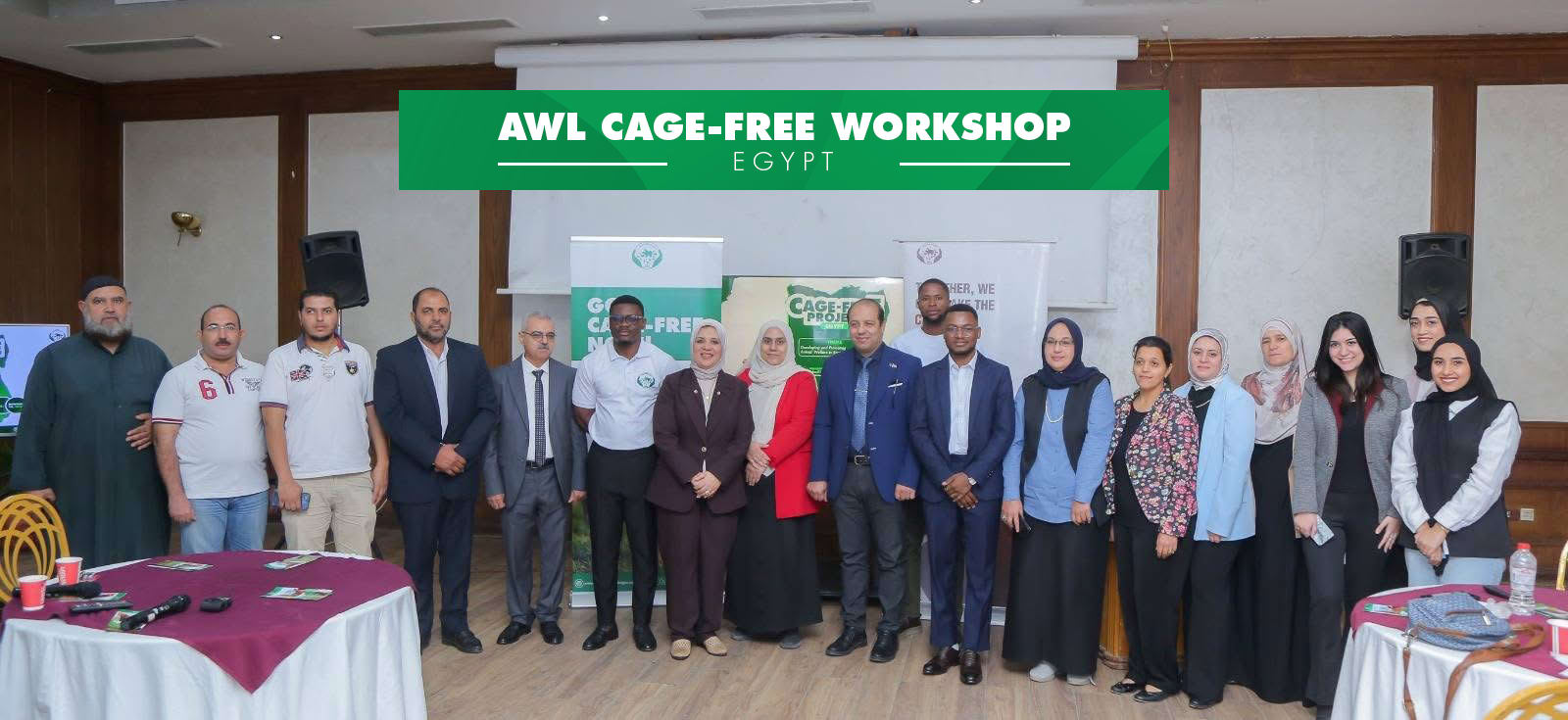
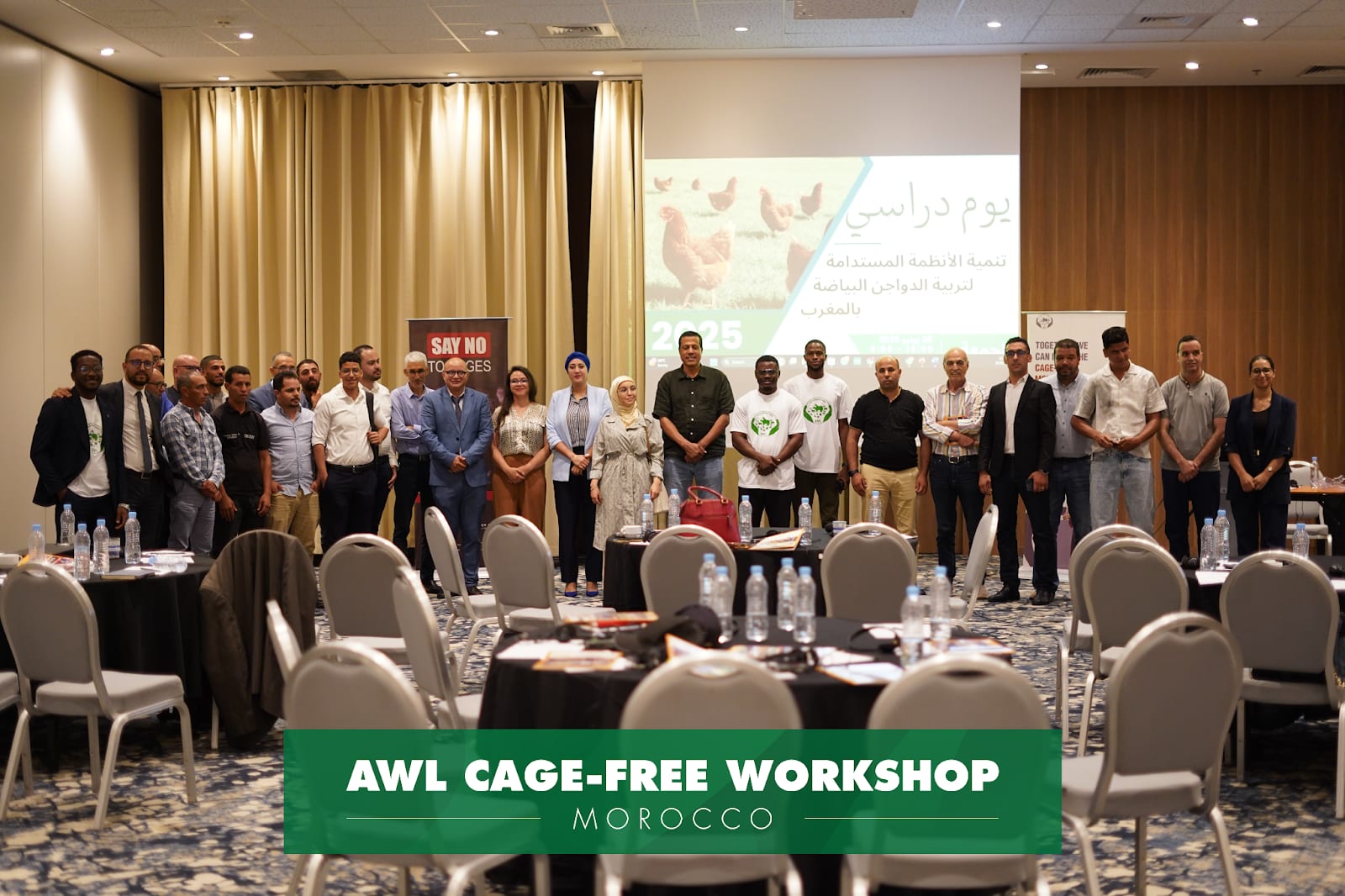
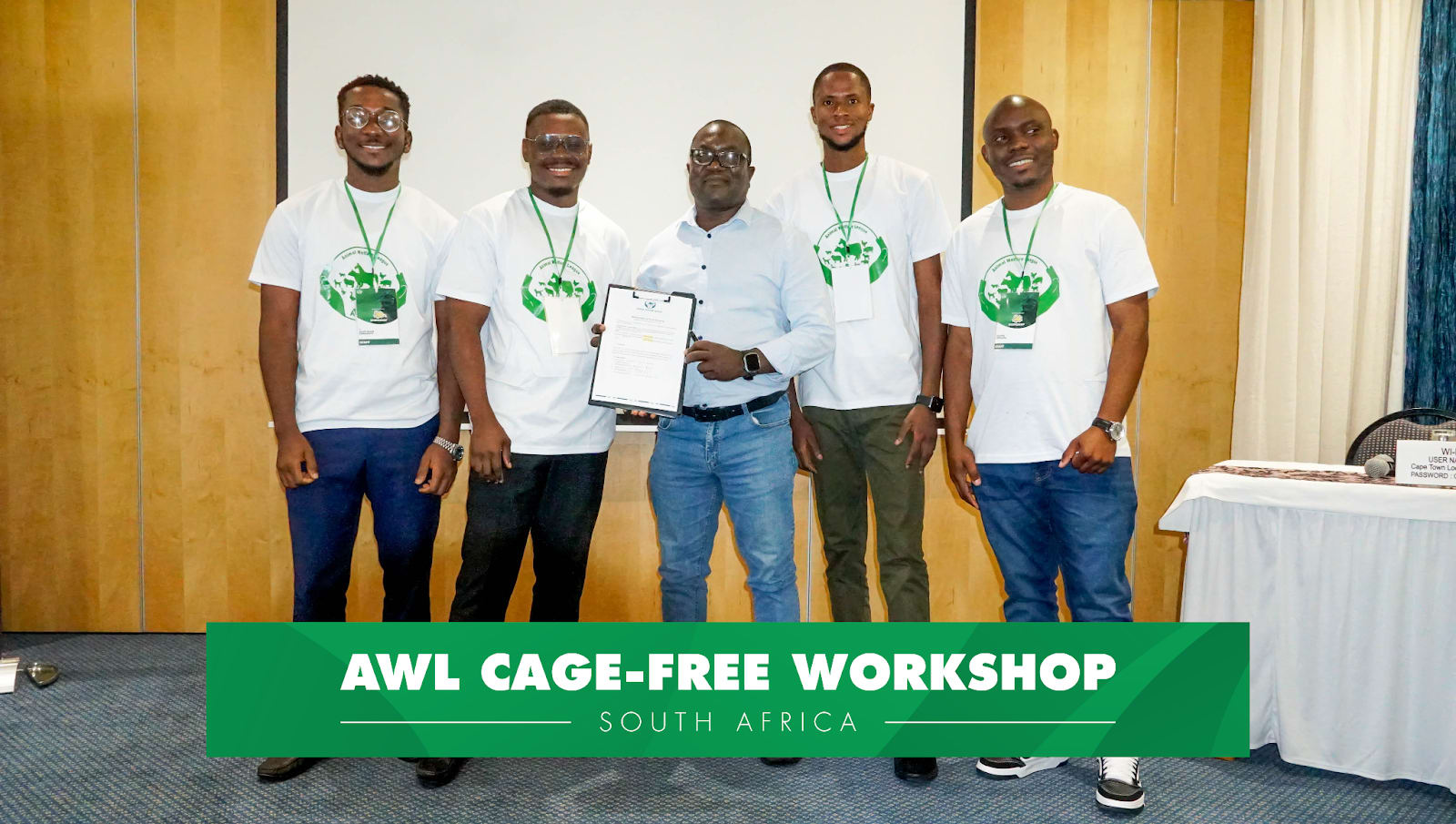
2025 marked a significant expansion of AWL’s operations across Africa. We established a presence in South Africa, Egypt, and Morocco, extending our cage-free advocacy beyond Ghana for the first time.
We hired part-time staff in each country and collaborated with university professors to deliver context-specific presentations on poultry welfare backed by research. Our university partners included:
Each country's engagement included egg producer workshops followed by farm visits to confirm cage-free status and conduct welfare assessments. We also secured consultancy services from key veterinary personnel in each country to address welfare and health-related issues raised by farmers. Farmers signed memoranda of understanding with AWL to remain cage-free, and WhatsApp groups were created for ongoing support in Morocco and South Africa.
In total, 38,160 layer hens are expected to be in cage-free systems across the three countries:
| Country | Layer Hens in Cage-Free Systems |
| Egypt | 3,360 |
| Morocco | 20,000 |
| South Africa | 14,800 |
| Total | 38,160 |
Egypt: We were unable to identify any medium-scale cage-free farms (5,000 to 20,000 hens). We followed up on three free-range farmers recruited in 2024, who collectively produce over 3,000 hens per year and are included in the public directory. Our technical partner is also working to secure more cage-free allocation in the expansion plans of cage farms.
Morocco: All farms in our directory were free-range, with three already holding certifications from the competent national authority. The remaining three farms were supported to apply for certification after our workshop.
South Africa: Interested farms were unfortunately affected by avian influenza outbreaks, which prevented farm certification from proceeding as planned. We did not pursue certification with Certified Humane in South Africa for this reason.
In 2025, our team participated in several key conferences and events:
At the end of 2024, we suggested things we would like to see happen in Africa. In 2025, we were pleased to see progress on several fronts, including our own expansion to three new African countries.
The main expense categories and their total amounts are as follows: Consultants and Staff Compensation at $80,592.88, Research and Policy Work at $69,530.12, Producer Engagement at $29,473.95, Events at $8,312.61, Advertising and Marketing at $7,885.73, and Corporate Engagement & Administration at $37,298.37, for a grand total of $233,093.66.
In 2025, we completed an independent audit and shared audited financial statements for the 2024 and 2025 fiscal year with the Ghana Revenue Authority. We shall make the final statements publicly available once we receive them.
Notice: We continue to examine the risks of continuous public disclosure of funding and grant reporting as we expand operations into new countries. Further updates will be provided as our review advances.
We had 7.5 full-time equivalents (FTE) at the beginning of 2025 and 5.5 FTE at the end.
In 2025, we hired consultants in South Africa and Morocco to support our Africa expansion. We relocated our office to Accra. We also identified a private health insurance company for employees in Ghana.
We extend a big thank you to everyone who enabled us to make progress in our work and achieve the impacts we have made. In particular, this includes our donors, advisors, and our friends and family who support us in working for this cause.
Some listed below:


Executive summary: AWL reports substantial 2025 growth across Africa—combining corporate, policy, research, and media work—while noting operational challenges, and outlines expansion-focused plans and a funding gap for 2026.
Key points:
This comment was auto-generated by the EA Forum Team. Feel free to point out issues with this summary by replying to the comment, and contact us if you have feedback.