Unlocking Careers in AI Safety through Event Methodology
TL;DR
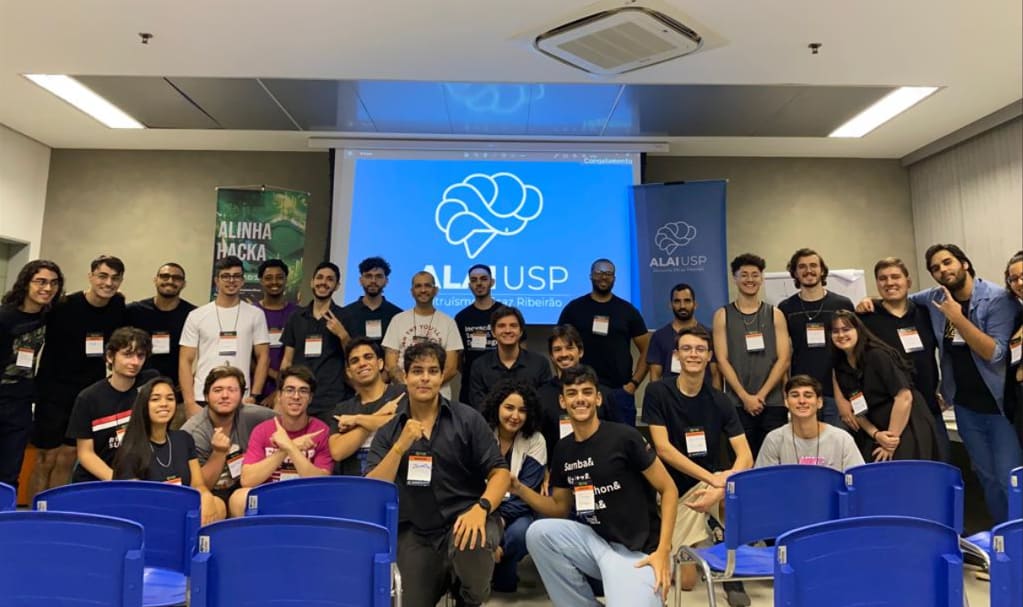
We successfully organized the inaugural AI Alignment Hackathon in Ribeirão Preto, Brazil, with participation from 30 students across diverse skill sets and backgrounds, resulting in three noteworthy submissions.
Introduction:
In December 2023, we launched the first-ever AI Alignment Hackathon in Brazil. This post delves into event specifics, highlights some of the projects that emerged, and shares our insights gained throughout the experience.
End of the first day of the event
Event Objectives:
Engaging Students in AI Safety: Fostering a community dialogue on the existential risks of AI within our university network.
Spreading Effective Altruism Philosophy: Disseminating the core tenets of effective altruism and promoting incentive grants.
Talent Recruitment: Identifying potential members to join ALAI-USP / AE Ribeirão Preto.
Stimulating Ideas for AI Alignment: Creating an environment that encourages the generation of innovative solutions to AI alignment challenges.
Why a Hackathon?
Attractive Event: Events like hackathons are enticing for university students, particularly due to the allure of cash prizes.
Short-Term Impact: Short-duration events exhibit better participant retention, ensuring those who start tend to see it through to the end.
Cost-Effective Impact: Hackathons offer a highly efficient model, delivering substantial benefits to the community with minimal associated costs.
About the Event:
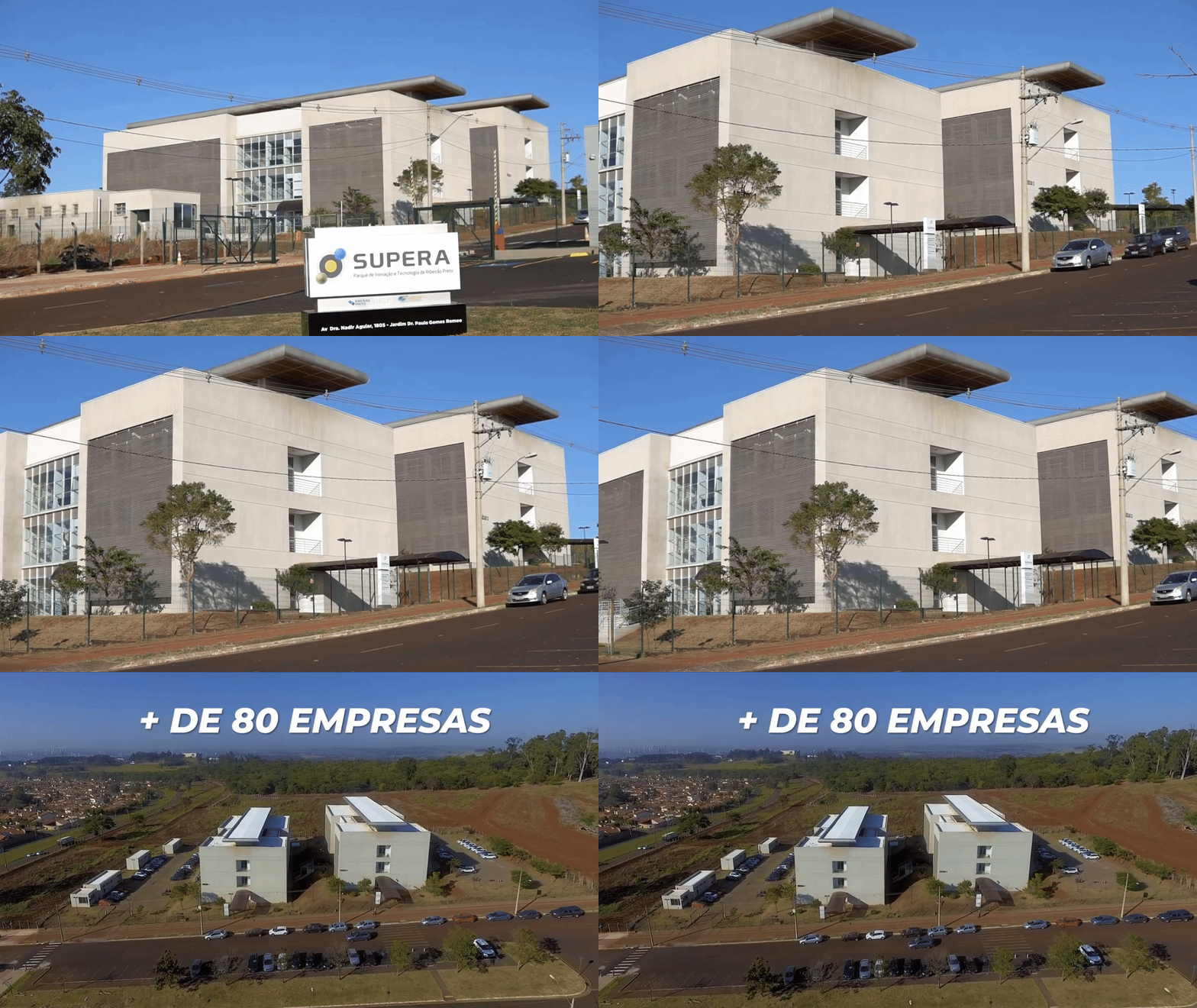
Location: The event took place at SUPERA Parque, recognized as the best incubator in Brazil by UBI Global, affiliated with the University of São Paulo. The choice was influenced by the available mentoring support and the inspiring environment.
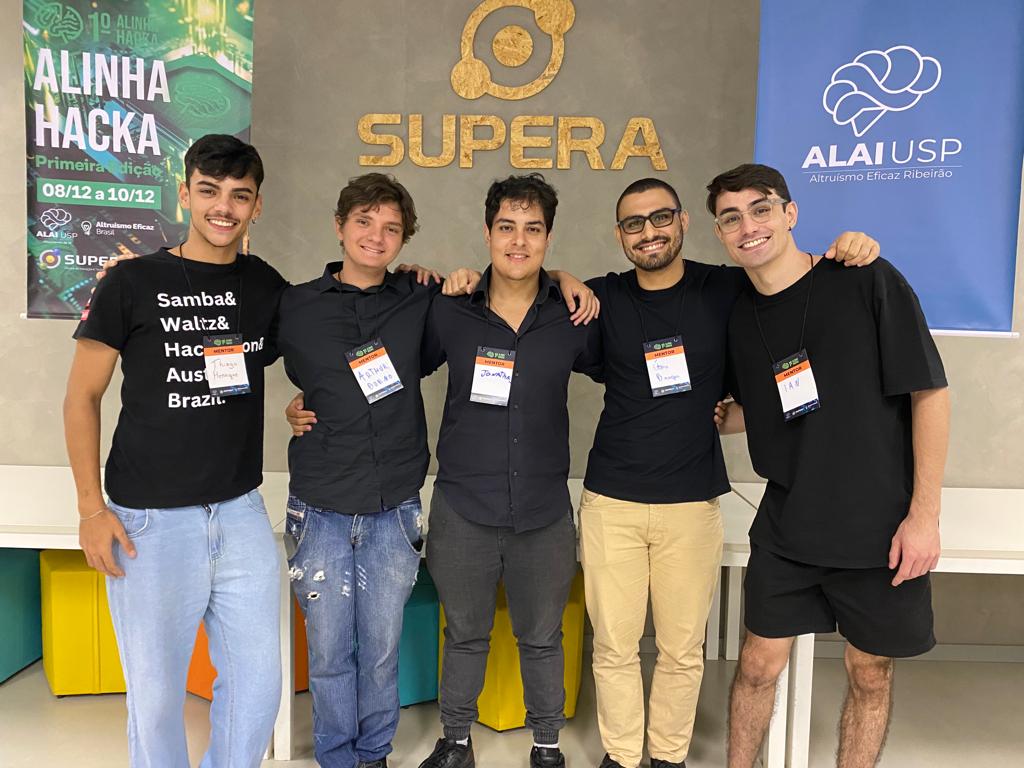
Organizers: The ALAI-USP team, a university study group in AI Safety, spearheaded the event, leveraging the expertise of three ALAI-USP alumni organizers. Key statistics include 30 active members, 20 AI Safety Fellowship alumni, and over 130 participants in in-person talks about career development.
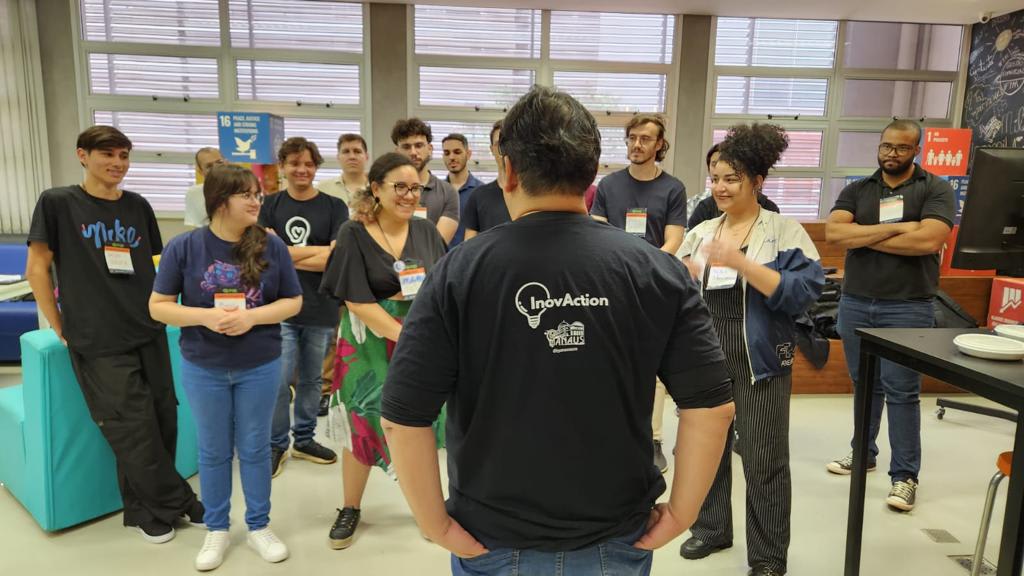
Event Facilitator: Renowned figures in event management, such as Daniel Takaki, founder and CEO of InnovAtion, the largest hackathon organization company in Brazil, volunteered to ensure the event's high quality. InnovAction boasts over 100 hackathons organized across 10 states in Brazil and 15 years of experience in open innovation.
The Challenges:
Fine-Tuning with Human Feedback on LLM: The process of refining and optimizing language models based on human feedback to enhance their performance.
Avoiding Hallucinations on LLM: Strategies to prevent the generation of inaccurate or fictional content in language models.
Our KPIs:
52 Registrations
Impact on 50+ Individuals
12 Individuals expressing interest in joining the Effective Altruism community
Acknowledgements:
We extend our heartfelt gratitude to mentors, judges, and notable individuals like @Juana Martínez and @Danilo Naiff for their invaluable assistance in making this event a success.
TL;DR
* GOAL 3 is a social enterprise that created IMPALA, a patient monitoring and digital platform system for low-resource settings. There is also a GOAL 3 foundation that raises funds to ensure underserved communities will be reached.
* A recently completed report from Rethink Priorities calculated IMPALA to have a cost per DALY averted of $7–17 in paediatr...
This month effective altruism has gotten lots of attention, including a cover story in The Economist. It feels pretty surreal to be on the receiving end of it. But I feel grateful these ideas have caught on, and even more grateful for the drive, earnestness, and compassion of so many people who took strange but well-argued ideas seriously and then actually acted on them....
Note: This post was crossposted from the Coefficient Giving Farm Animal Welfare Research Newsletter by the Forum team, with the author's permission. The author may not see or respond to comments on this post.
Subtitle: On vegan advocacy, effective altruism, and FIFA
I turn 40 today. Here are some hot takes.
On factory farming
1. Our biggest challenge is salience. If factory farming led the evening news, it wouldn’t last lo...