Comments
Soil Nematode Welfare Isn't As Crazy As You Might Think

3 min readJan 26
I’ve been doing a lot of travelling over the last few weeks, which has given me some time between flights to start reading A Brief History of Intelligence by Max S. Bennett. From what I’ve read so far, it’s a great introduction to the evolutionary origins of our current brains. The writing style is not so boring like a neuroscience textbook might be, while also avoiding much of the excessive fluff and lack of technical rigor that so often plague pop science books.
Anyway, after finishing the first few chapters of the book, I’ve become a lot more sympathetic to soil nematode welfare. Yes, soil nematodes. The microscopic ground worms that look like this:
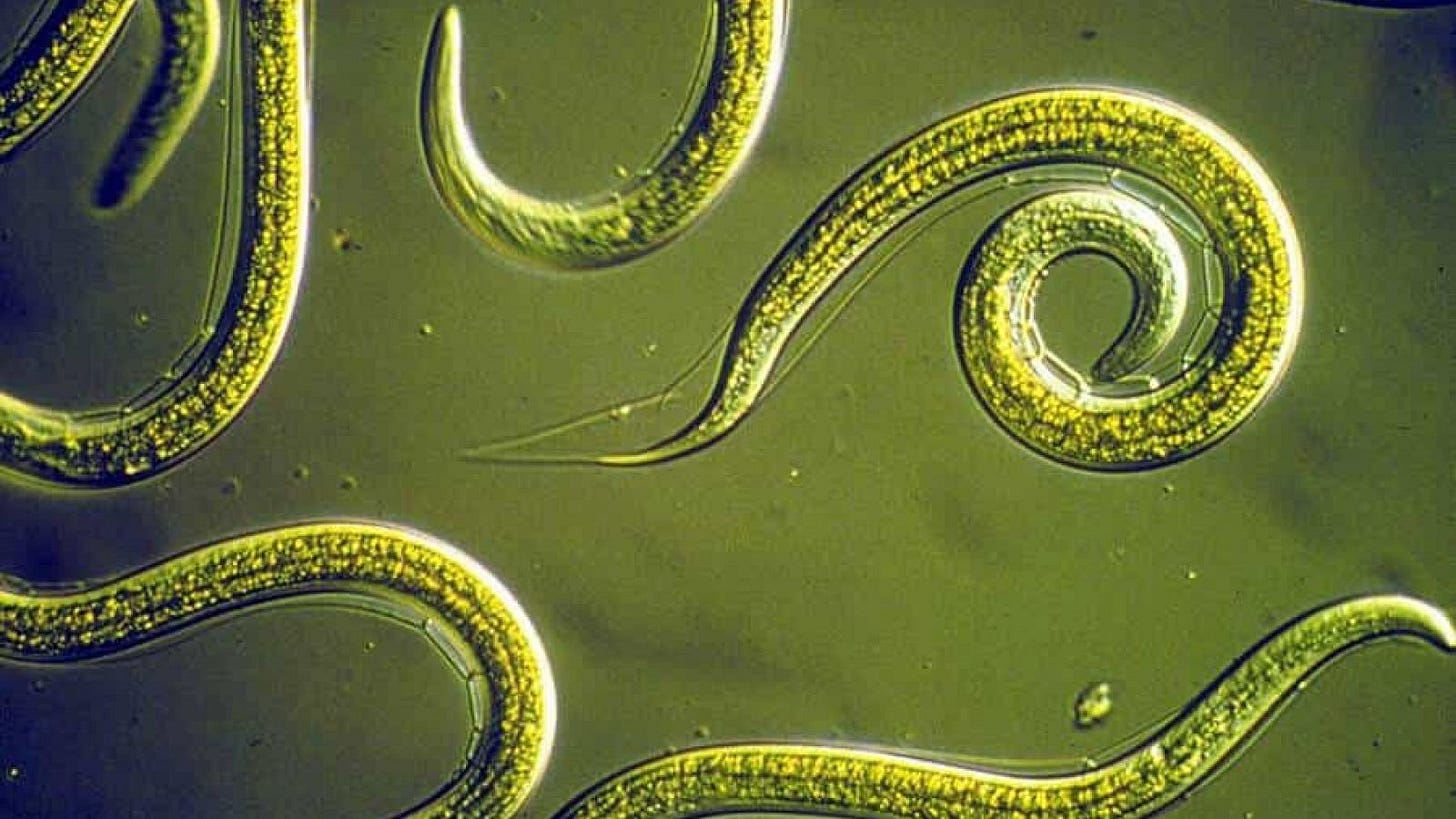
I admit, when I first saw people on the EA Forum advocating for us to spend resources on the wellbeing of soil nematodes, I thought they were insane. I’m on board with animal welfare, sure, but nematodes? After further reflection, however, I will wistfully whimper that the worm whisperers weren’t wrong. As Bennett argues in the book, it turns out that nearly all animals, from the simplest nematodes to modern humans, share some basic cognitive functions:
Now obviously, there are many differences between humans and microscopic nematodes. Human brains are far larger, containing tens of billions of neurons each, compared to only hundreds of neurons per each nematode. And humans are of course capable of far more complex behavior than nematodes. Nonetheless, the fact that we share much of the same basic neurological structure should give pause to the human exceptionalists. It suggests that there’s no clear line we can draw between the simpler animals like nematodes, and the “higher” animals like reptiles, birds, mammals, and humans.
If you have a physicalist view of consciousness (meaning, you believe consciousness arises from physical processes in the universe rather than from intangible things like “souls”), or if you merely assign non-trivial probably to physicalism being true, then you should believe there’s a substantial chance that soil nematodes and other very small animals possess at least small degrees of consciousness. And given the sheer number of soil nematodes — some researchers estimate there may be over 10^20 of them, or more than a million million million nematodes! — that means their aggregate welfare could be extremely large, possibly larger than all other animals on Earth.
I don’t have any original insights for what to do with this information. Even if we could agree that nematode welfare is important, we’re still so ignorant about non-human consciousness that it’s impossible to determine which interventions would be productive, which would be counterproductive, and which would be simply ineffectual. So for the time being, I view soil nematode welfare as more of a philosophical exercise than anything with practical significance. (Although even that assertion has been vigorously debated here on the EA Forum.)
If nothing else, I hope this post inspires you to realize that human cognition, while holding a special place in history, is not fully unique among the animal kingdom. Other animals possess forms of intelligence that mirror and even rival our own. There is no reason, in principle, why non-human animals (or even AI systems) could not feel the same sort of phenomenal experiences that humans do, and thereby merit much of the same moral concern that humans do.

Hi Liam. Nice post. You may be interested in this linkpost for the article "The Conscious Nematode: Exploring Hallmarks of Minimal Phenomenal Consciousness in Caenorhabditis Elegans".
Here are illustrations of the above.