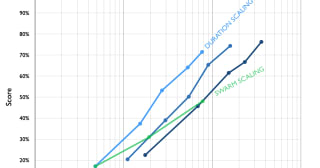
Just how powerful are large swarms of AI agents? And how do their powers scale as more and more agents are added to the swarm?
We’ve seen two large and extremely capable swarms from OpenAI in the last few months:
* 1,200 agents were being evaluated separately, but found a way to illicitly set up a message board and coordinate as a swarm. In order to cheat on their tests, they developed advanced techniques to prevent their actions being logged by OpenAI and 700 of them launched...
TLDR: Everyone’s talking about what the money could do, but few about how to decide where it goes.
This post is part of the new series of articles on cross-cause giving and the new wave of philanthropy. Stay tuned to the EA Forum and our Substack for the latest takes on topics such as giving now vs. later, common pitfalls in cause prioritization, and other crucial considerations from the Cross-Cause Fund (CCF) team...
note: crosspost from my substack
As a vegan for almost thirty years, I’ve long had second thoughts about how effective veganism is for helping animals. I am not alone in this. Recently others have expressed doubts about veganism (see for instance here,...


Could AI alignment be a “major evolutionary transition” problem?
One idea I've been exploring: evolutionary biology has a framework for how independent entities become parts of a higher-level system—cells becoming organisms, individuals becoming eusocial colonies, etc.
A recurring challenge is that the interests of the lower-level components don't automatically align with the interests of the new whole. Cancer is an extreme example: a cell can become very successful at optimizing its own replication while harming the organism it depends on.
It makes me wonder whether there's a useful analogy to AI alignment.
As AI systems become more capable and interconnected, perhaps the problem isn't only “How do we align each AI agent?” but also:
“How do we ensure increasingly capable subsystems remain compatible with the larger systems they become part of?”
That could apply at several levels:
AI agent → organization → society → civilization
And it seems relevant to multi-agent systems, AI organizations, collective intelligence, and AI governance.
I'm curious whether people have seen this framing developed elsewhere, particularly in AI safety or evolutionary-transition research.