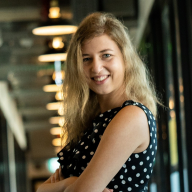
Anna Pitner
Growth marketer for small EA teams
I do growth marketing for small EA and impact teams, usually in a specific situation: there's a real growth goal (applications, subscribers, small donors), but nobody whose actual job is growth, so it sits with a program lead or founder on top of everything else.
Background: 8+ years and 200+ B2C clients in direct response marketing and copywriting, starting under some of Israel's top commercial marketers. At some point it stopped making sense to keep those skills pointed at selling subscription boxes, so I moved them here.
How I usually work: a one-week Growth Map that turns one goal into a prioritized plan, then, if it's useful, a 90-day sprint where I build and test two or three approaches with the team and hand over whatever works. I try to be explicit about uncertainty. By day 90 there's usually one or two channels with real signal, sometimes a channel already producing, and occasionally clear evidence that an approach isn't worth more money, which is also worth knowing.
If your team is in that spot, DM me, or start here: https://annapitner.com/growth-map
Substack >> https://annapit.substack.com
I started a series on organizations working on burning problems that are also unusually good at growth, and what programs can learn from them. First one is Climatebase.
Some numbers: their newsletter grew from about 7,000 subscribers in 2021 to 150,000 in 2026. The fellowship, launched in 2022, has had 15,000+ applicants over its first seven cohorts and 4,500 alumni to date, accepting roughly one in five, at $1,990 a seat. Cohorts grew from about 450 to about 650 at the same price. Many free, funded programs struggle to fill at a fraction of that size.
I tried to understand why:
https://annapit.substack.com/p/free-should-mean-more-demand-so-why
Pushback welcome, and suggestions for who to look at next.
I've been using it for the past 2 months and it's fantastic, I've been making so much progress 🙌 highly recommend!
I 100% agree! I’m a digital nomad, and I tend to stay in relatively affordable places, like Southeast Asia and the Balkans. My expenses are usually around $2k–$3k a month for a pretty high standard of living as a nomad.
I do a lot of networking online and travel to in-person conferences when it makes sense. It definitely makes it easier for me to focus on building my consulting business, where I work on marketing with EA organizations, with a bit less financial pressure 🙏
Wow these are amazing results! I'm also waiting for more EA orgs to invest heavier in marketing :)))
Yes, exactly! that principle captures a big part of what I was trying to point to. It’s very easy for communities like ea to forget that we’re not actually the audience we’re trying to reach 🙏
I relate to this. Personally I feel more drawn to work on global poverty and animal welfare, which makes the impact more immediately tangible to me.
I can also understand why some people feel a bit confused or alienated when the framing focuses heavily on more abstract or long-term philosophical questions while there is still so much visible suffering in the world today.
I agree that many of the actions EA encourages don’t actually require people to buy into the entire philosophical package, and that we might reach more people if we sometimes led with the concrete problems and solutions.
Thanks! I’m really glad to hear that, especially coming from someone working on similar things :)
That sounds like a really interesting angle! the sports analogy seems like a very natural bridge to analytical thinking. I’d be curious to see how it lands with that audience.
And yes, I did see the stories campaign and thought it was a really good direction.
Ah yes, that makes sense 😄 Probably Good does seem like a great fit for people in that situation.
Thanks, this is really interesting! I’ve also seen similar dynamics where “longtermism” as a label can be a bit off-putting, while framing things around concrete risks seems to resonate much more.