Comments
55
...

By: Donny Feng
The ITN framework evaluates cause areas based on:
The framework is further explained in this article from 80000hours.
Neglectedness is considered a key part of the calculation of marginal impact, because under the assumption of diminishing marginal returns, an additional unit of resources is more effective if there are less resources already invested in it.
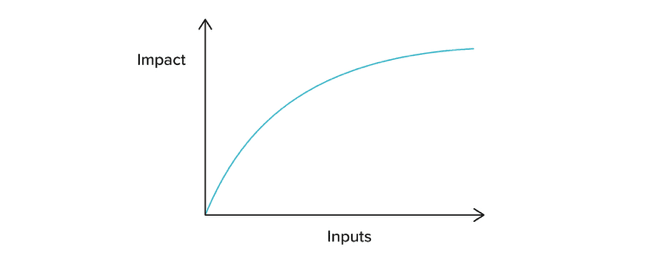
This is captured in the graph below.
The property of this curve is called concavity and this property implies diminishing marginal returns. This is because as you move along the curve to the right (i.e. more inputs are being put in), the gradient of the curve becomes less steep. The gradient is the change in impact over the change input, which tells you the marginal impact of an additional unit of input, given the number of inputs already put into the area.
This assumption can be justified on the view that people are rational and will exhaust the most productive opportunities before the less productive ones.
If this assumption is true, then neglectedness would be a key piece of information in deciding what is the marginal impact from an additional unit of resources that you invest in an area.
For example, if you were deciding between which country to give some direct cash aid to, and you know country A puts £50 towards poverty reduction per capita while country B gives nothing, then all things being equal, the marginal welfare gain from giving the direct cash aid to the poor in country B would be larger than that from giving it to country A.
A second justification for neglectedness is counterfactual impact: If an area is “neglected”, it is unlikely to receive significant attention or resources from others in the future. This means that any additional resources you invest are less likely to be duplicated, and are thus more likely to generate the high marginal impact you expect at a low level of investment.
This argument is somewhat distinct from diminishing marginal returns and we will address it separately in a later section.
Neglectedness is a valid criterion when diminishing marginal returns apply. This is often true in areas where the benefits of interventions are:
One example is giving bed nets for malaria prevention.
Another example would be cage-free advocacy with meat companies. Each additional dollar/person invested in this area raises the probability of a firm making commitments to rear animals without cages, generating expected welfare gains for animals.
The reason why we identify 3 characteristics: Modular, Additive, and Independent, is that these generally prevent the occurrence of spillover effects.
Diminishing marginal returns may not hold as an assumption when these spillover effects exist. In many areas, we end up observing increasing returns due to below factors:
The value of an intervention increases as more people or institutions adopt it. Or, increased volume develops adjacent systems that improve the effectiveness of this intervention. Each additional unit of investment makes previous investments more valuable (e.g. technologies like the Internet, standards like AI safety laws, or social norms becoming more effective as adoption spreads).
Interventions require large upfront investments before any benefits are realised. Early resources invested may generate little to no impact, but additional resources unlock disproportionately large gains (e.g. building infrastructure, developing new technologies, or passing legislation).
Effectiveness improves with experience. Early efforts may be inefficient, but over time actors become better at targeting, execution, and scaling, so each additional unit of input produces greater impact than earlier ones.
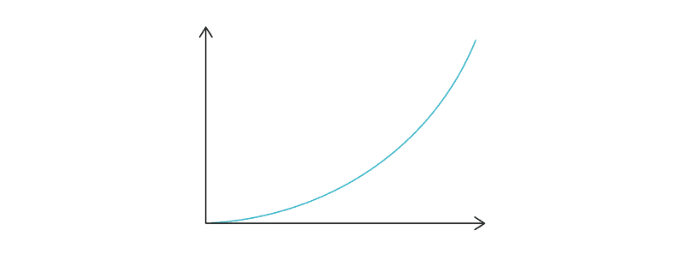
Just as diminishing returns are associated with concave return functions, increasing marginal returns are associated with convex functions.
This article explains concavity and convexity in much greater detail and drives at the point I am trying to make.
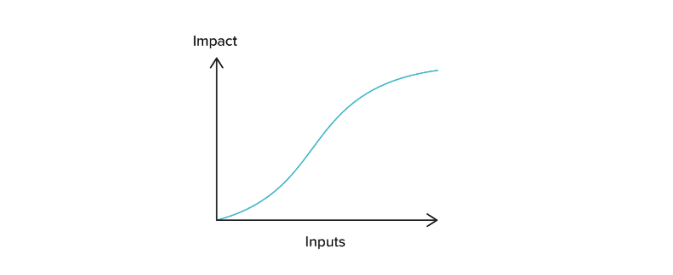
In most real-life scenarios, returns follow a logistic/S-shaped curve.
This is characterised by an initial Lag Phase, a Growth Phase, and Maturity Phase.
This section illustrates some examples of real-life areas that do not obey diminishing returns.
Solar Energy Deployment
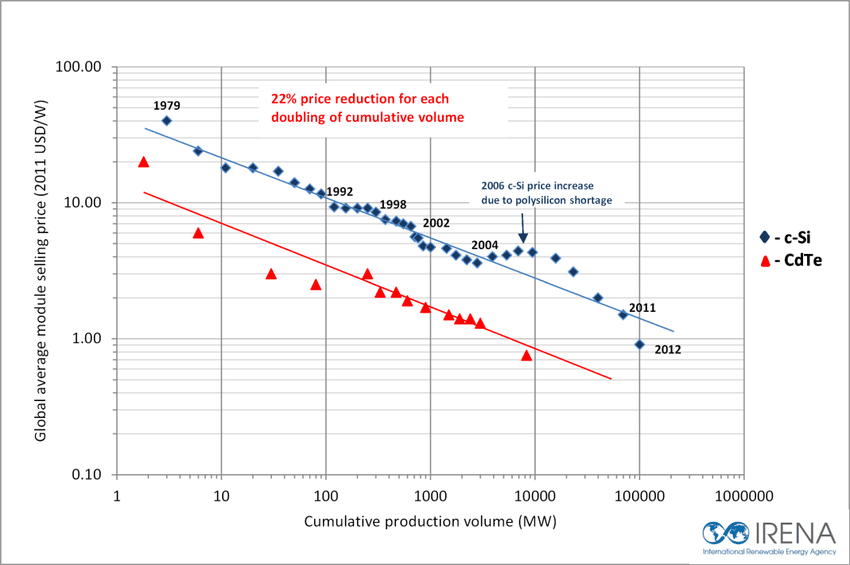
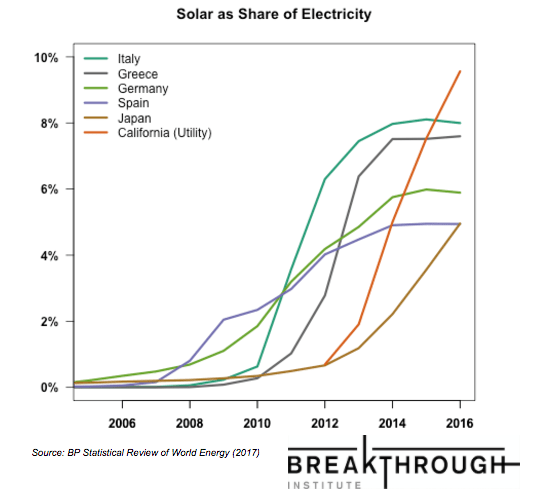
Solar energy deployment follows a well-documented S-shaped return structure.
Implications for neglectedness:
Solar energy is not considered neglected from an EA perspective. Global investment in renewable energy, dominated by solar, reached a record $386 billion in the first half of 2025 (Bloomberg). However, solar energy still occupies a small portion, ~7% of global electricity generation (OurWorldInData). There is ample room for further deployment especially in the global south where new coal plants are still being opened, as mentioned in the outlook here. With high attention from global governments like China and private investors, it is safe to say we are at the start of the “Growth” Phase of solar roll-out.
Using neglectedness as a heuristic may lead to underinvestment at this stage. Even though solar deployment may seem “crowded”, additional investment serves to amplify the effect of other investments by building a new ecosystem of industries that replaces the one dependent by fossil fuel energy: rerouting electricity connections, building grid storage, transforming petrol stations and gas terminals to electric charging stations, changing excise taxes to carbon taxes.
Under the ITN framework, we would favour investing resources in more “neglected” areas, like geothermal deployment, as mentioned in this article by 80000hours. This means missing out on some of the most significant benefits of focusing our investments on select areas by building something of scale. In this area, spreading our investments out over less well-known technologies is not welfare-maximising.
Empirically, additional investment accelerates cost declines, speeds global adoption, and induces changes in adjacent areas that make it even more effective for solar adoption. Solar energy is an example of where investment in a well-known area would be more impactful.
2. Alternative Proteins
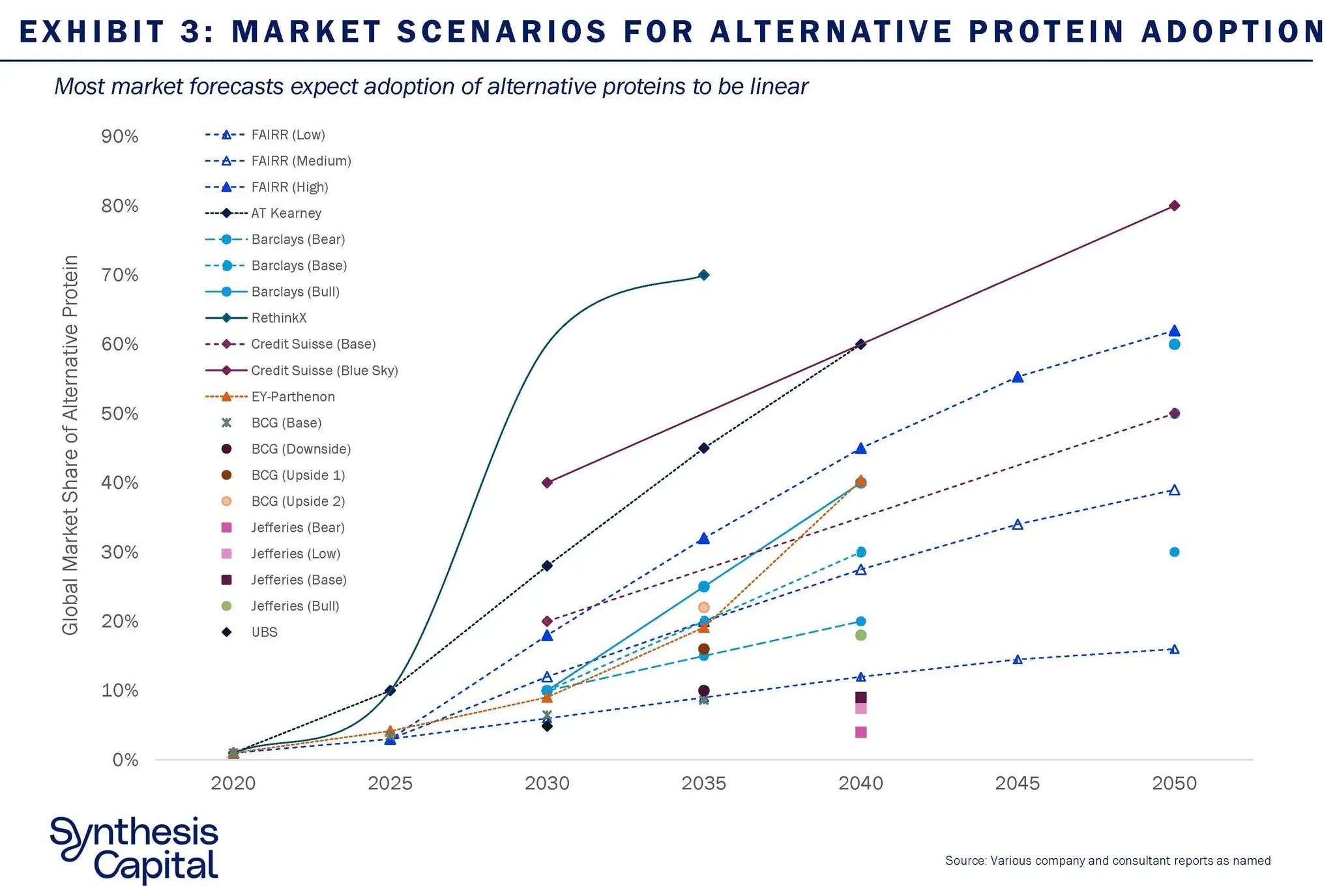
Alternative proteins (e.g. plant-based and cultivated meat) also exhibit an S-shaped return structure.
Implications for neglectedness:
Alternative proteins appear less neglected as compared to other efforts in the cause area like cage-free advocacy due to increasing venture capital and government interest. Over the past few years, advocates have helped secure over $2 billion in public funding (Coefficient Giving).
However, both market players and non-profit institutes agree that we have not reached the tipping point and we are still currently in the learning phase, where much can be gained from investing in infrastructure to scale-up production and unlock the rapid increase in marginal gains from the “Growth” phase.
If we were to deprioritise resources from this area as a result of the neglectedness metric, we risk delaying the intervention from reaching a critical point to reduce the high welfare costs of animal products.
Counterfactual impact refers to the impact that would occur if you had not invested resources into a particular intervention. In this context, a key consideration is how your investment affects the behaviour of others.
One argument in favour of neglectedness is that investing in less well-known or underfunded areas may have a signalling effect. By directing resources towards a neglected domain, you may draw attention from other donors, increasing the total level of investment in that area. In this case, your contribution does not only generate direct impact, but may also induce additional impact through increased participation from others, creating a multiplier effect.
Conversely, in areas that are already well-funded, additional investment is more likely to be duplicated. Since there is already significant attention and capital allocated, your contribution is less likely to change others’ behaviour or attract further resources, so the multiplier effect is unlikely to be present.
This does mean that our framework has to go beyond thinking about the marginal impact from our own funding, but also how much does it affect the deployment of resources to this field as a whole.
So far, the discussion on neglectedness has focused on the allocation of funding. However, similar reasoning is often applied to career choice, where the question becomes not where to allocate money, but where to allocate people.
In this context, neglectedness is often framed in terms of talent gaps rather than funding gaps.
An area may appear well-funded, but still lack the specific skills or expertise required to make progress. In such cases, additional funding may have limited impact, while additional skilled individuals could generate significant marginal returns. For example, highly technical areas such as AI safety or specialised policy work may be constrained not by capital, but by a shortage of qualified researchers or practitioners.
Conversely, some areas may appear neglected in terms of funding, but this may reflect deeper issues such as low tractability or a lack of scalable interventions. In these cases, increasing the number of people working in the area may not lead to meaningful improvements in outcomes.
There are also important differences between funding and talent. Capital is relatively fungible and can be reallocated quickly, whereas talent is heterogeneous and takes time to develop. This makes mismatches between supply and demand more persistent, and increases the importance of identifying the true bottleneck in an area.
Therefore, applying neglectedness reasoning to career choice requires a more direct analysis of constraints. Rather than asking how many resources are currently allocated, the more relevant question is whether progress in an area is limited by funding, talent, or other factors.
The aim of this post is not to argue that well-funded areas are more impactful or worth investing than neglected areas.
Rather, the point is that neglectedness should not be treated as a universal metric for marginal impact, because it is not!
Without proper evaluation, it can mislead people into thinking all areas have diminishing marginal returns, when in fact lots of important areas relevant to EA do not.
A better framework would:
Ultimately, if the goal of the ITN framework is to guide optimal allocation of resources, then we need to reconsider how neglectedness is used—and whether, in some cases, it is distorting the very decisions it is meant to improve.