Executive summary: This retrospective argues that EA Istanbul Summit 2025 successfully introduced many newcomers while strengthening an emerging national community, and distills concrete lessons on team coordination, volunteer management, content design, logistics, and outreach to improve future events.
Key points:
The summit drew 104 attendees from 215 applications, with 57.5% non-male applicants, a 9.1/10 recommendation score, and an estimated cost of $205 per attendee.
Two part-time organizers spent ~468 total hours over 5.5 months, finding that more frequent check-ins and centralized budget management improved execution.
A volunteer team of 10 was recruited via direct outreach, with clearly defined single roles per volunteer identified as critical for smooth operations.
Content was intentionally beginner-friendly, reflecting that ~54% of applicants were new or minimally familiar with EA, though experienced attendees wanted more advanced or interactive sessions.
WhatsApp proved highly effective for reminders, engagement, and managing dropouts, while referrals from existing community members outperformed paid social media ads.
Post-event outcomes included $1,000 donated through a giving game, new volunteers and fellowship applicants, expanded WhatsApp group participation, and stated plans to deepen engagement through fellowships, retreats, and mentoring.
This comment was auto-generated by the EA Forum Team. Feel free to point out issues with this summary by replying to the comment, andcontact us if you have feedback.
In this write-up, we aim to reflect on our experience: Highlighting what went well, identifying areas for improvement, and offering actionable insights for those planning similar gatherings (as well as for ourselves in the future!).
The Effective Altruism community is steadily growing in Turkey, with a significant presence in both Istanbul and Ankara. We currently have over 200 subscribers to our newsletter and over 300 members in our national WhatsApp group. The network now includes 5 active university groups and several cause-specific initiatives, such as AI Safety Türkiye, Health Progress Hub, Effective Animal Advocacy Turkey, and Etkili Bağış (Effective Giving Turkey). Recent community-building activities include a February retreat with 26 participants, 6 cohorts of the Intro Program, 1 In-Depth Program, and a career mentorship program that targeted more experienced community members.
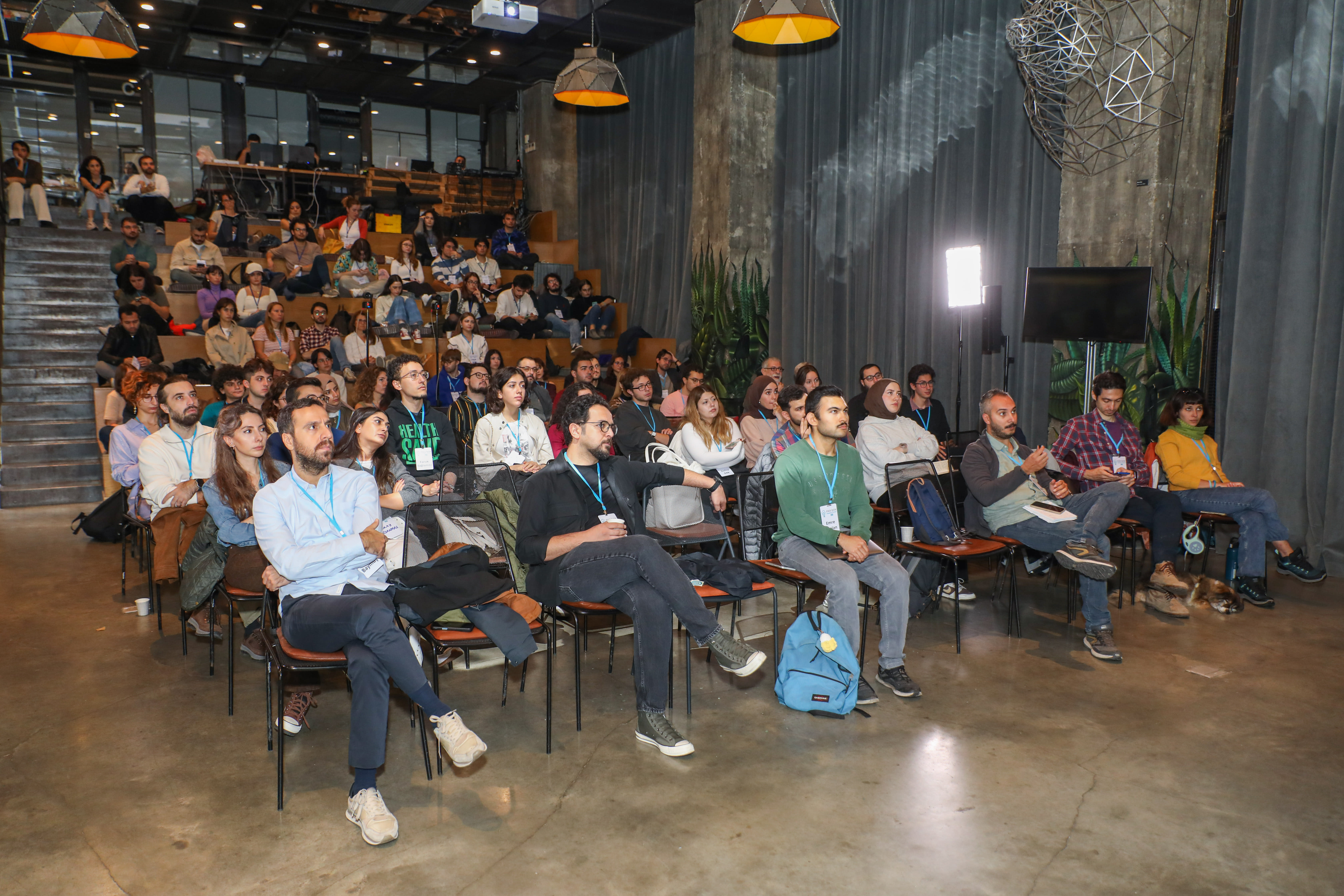
Encouraged by this momentum, on October 18, 2025, 104 attendees from across Turkey gathered in Kolektif House Levent, Istanbul for EA Summit Istanbul 2025, the first-ever Effective Altruism conference and by far the largest EA-related event held in Turkey to date.
The Istanbul Summit had 2 main objectives:
Introduce newcomers to core EA principles and ensure they are provided with next steps: Targeting individuals from different backgrounds (students, fresh graduates, NGO employees, academicians, early career professionals) who have signaled qualities such as caring about social responsibility, having an impact-oriented mindset, or a track record of volunteering.
Bring together more experienced community members for engagement and strengthening community ties.
We believe the event was a success and grateful for the strong turnout, positive feedback and enthusiasm we witnessed!
Key Information
Attendance
No. of applications received
215
No. of approved applications
159
No. of attendees who registered on Swapcard
102
No. of attendees (people who actually attended the event)
104
No. of volunteers
10
Budget
Total event grant
$21,775
Actual expenditure (including staff costs)
$21,324
Travel support
$78
Cost per attendee
$205
Team Hours
Total team hours
468
Content
No. of sessions (Talks, workshops, and meetups)
10
Organizations / Groups
No. of EA Groups that joined the mini org fair
4
Average meaningful connections per attendee
6
Non-male ratio (in applications)
57,5%
Average likelihood to recommend score
9.1 / 10
Core Team
We were 2 organizers (@Ren D. Karabulut & @Fırat Akova) working part-time on the event for 5.5 months, and on average we worked around 18 hours per week each, roughly 468 hours in total. We feel like many aspects of event organization are things that, once you’ve done them for one event, would take significantly less time the next time around. (One example is communication with the venue and vendors.)
We didn’t divide roles very strictly. Attendee and speaker communications, as well as content, were mainly on me, while all meta-level organisation, budget- and money-related tasks and contracts were handled by Fırat. (We would recommend managing the budget through a single organizer.) Beyond that, we worked together on most areas. I (Ren) imagine that with three or more people, it would make more sense to divide responsibility areas more clearly, but for us this setup worked well.
One thing we realized about teamwork is that in the first few months we had biweekly meetings, and later we found that this wasn’t ideal. We realized we could have completed many things earlier if we had talked more frequently. Switching to weekly check-ins, and then later to twice-a-week conversations, worked really well. Even when there wasn’t much to discuss in a given week, especially toward the end, it was reassuring to have that regular touchpoint with each other.
Volunteer Team
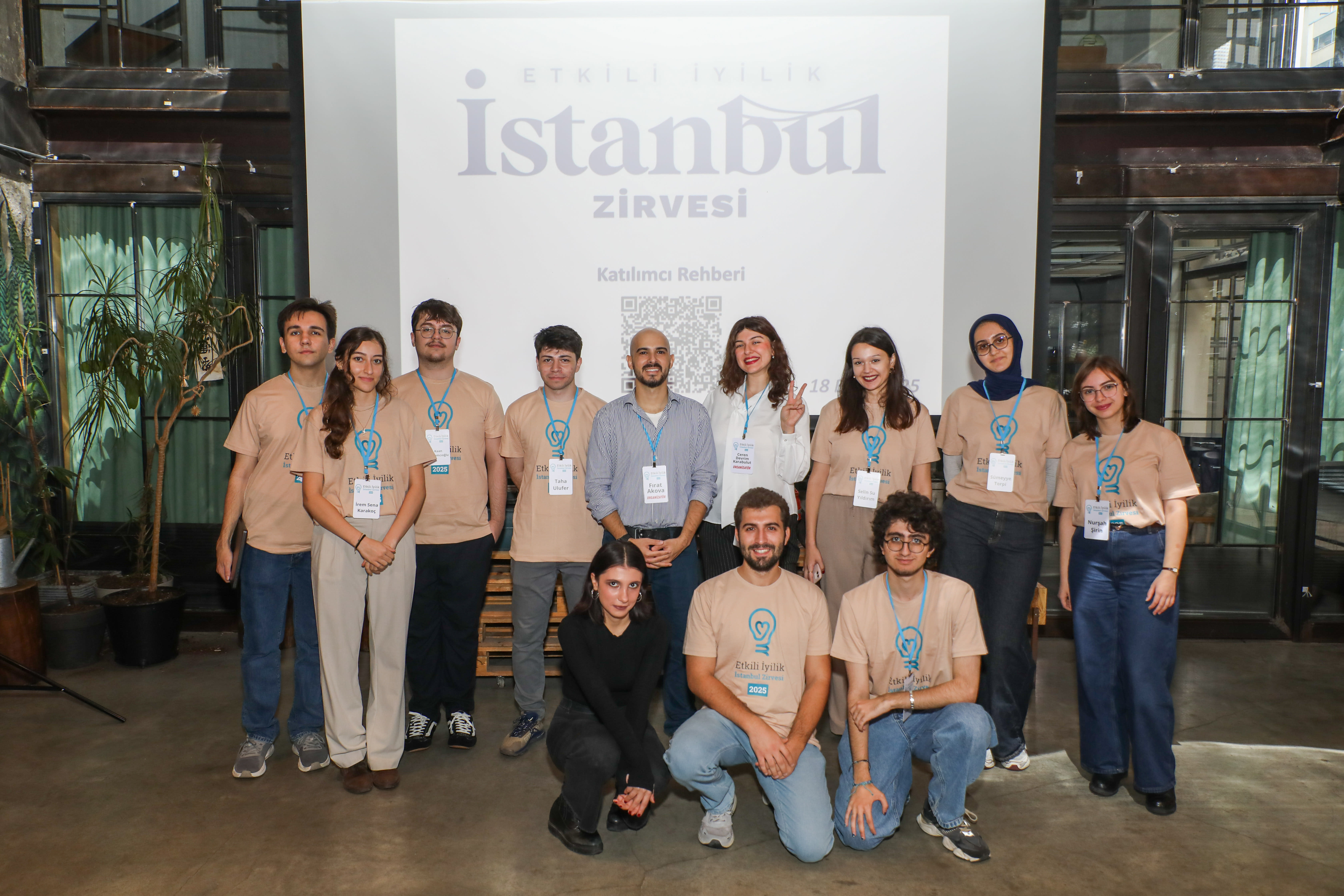
We had an amazing volunteer team of 10 people. We didn’t include a “do you want to volunteer?” question in the application form; instead, we reached out to community members one-on-one to ask if they’d like to help out during the summit. Given the size of our community, this worked really well for us, though if your community is larger, including it directly in the application form probably makes more sense.
Shout out to Nurşah, Elif, İrem Sena, Sümeyye, Selin Su, Taha, Kaan, Mert Kemal, Serhat and Oğuz!
We set up a WhatsApp group for quick communication, since almost everyone in Turkey uses WhatsApp. We had 3 main touchpoints with the volunteer team.
The first was to walk through the different types of responsibilities, so everyone knew what to expect and could flag anything they wouldn’t feel comfortable doing.
The second was going through the run sheet together in more detail and clarifying individual tasks.
The last one was on the morning of the summit itself.
Our volunteers were absolutely crucial to making the event work. They took a lot of initiative and often came to us with better, more efficient ways of doing things, and we’re genuinely very grateful for that! Two of our volunteers had just completed the Intro Fellowship and were first-time volunteers for EA Turkey.
While distributing volunteer roles, we first presented a list of all the tasks needed on the event day and asked volunteers if there were any they would feel uncomfortable doing. This simple step helped ensure a smoother and more positive experience for everyone.
We strongly suggest assigning one main task to each person for the entire day and avoiding giving one person three or more different types of responsibilities. This makes it much easier for everyone to remember and keep track of what they’re supposed to do. When tasks keep changing, it becomes confusing for both the volunteer and the organizers.
Even though we prepared a very detailed run sheet, on the event day we often had to improvise or disregard it at some moments. It is important to keep in mind that there will always be unexpected needs!
For instance, we forgot to bring some of the lanyard cords! So we sat in the volunteer room, pulled up Google Maps on our phones, and started calling nearby stationery stores to see if anyone had 150 blue lanyard cords. One of our volunteers, Kaan, then ran to a nearby store to pick up replacements!
Another example: as the lunch break approached, we realized we might not have enough food if attendance kept rising, even though we had already ordered more catering than our original estimate. To be safe, we sent another volunteer, Oğuz, to pick up an additional 15 vegan wraps. Not ideal, of course, but life happens!
When the run sheet is too complex, it’s also harder to see which volunteers have time-sensitive tasks, so you don’t immediately know who can handle last-minute errands. If you have one designated MC, for example, you know they need to stay alert toward the end of each talk and can’t be sent off-site. Similarly, if someone is responsible for the university groups fair, you’ll know they’re occupied during that part of the event.
So, we’d strongly recommend giving each volunteer one clearly defined role and avoiding mixing multiple types of tasks throughout the day.
Content & Structure
The Istanbul Summit event featured talks, networking sessions, and a mini organization fair.
Among the applicants (which had an impressive 57,5% non-male ratio!), 25.4% had never heard of EA before, and another 29% reported having limited knowledge. 31% expressed mild engagement with the community, while 14.7% were existing community members. We had already intended for the event to be beginner-friendly, so these ratios made sense. All sessions were structured so that someone with zero prior EA knowledge could easily follow along. As expected, we did receive a few comments from more experienced members wishing for more advanced sessions.
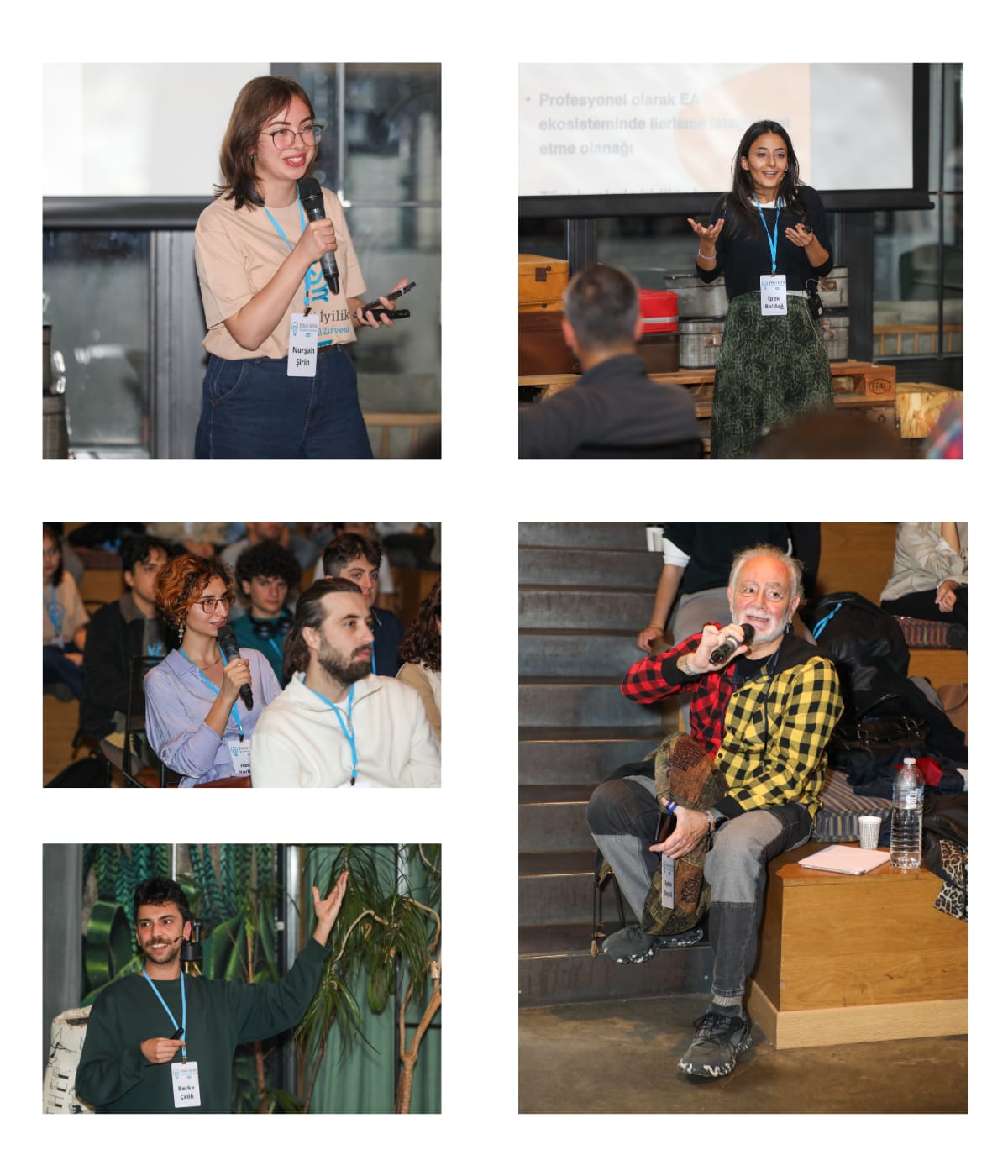
To avoid more engaged members getting bored with introductory-level sessions, we recommend using an additional room to run interactive sessions or deeper dives. In our summit, the only interactive elements were Q&As, a trivia contest led by Alparslan Bayrak, and occasional “show of hands” activities. Venue limitations and additional costs prevented us from arranging a second track, but adding one in the future would be highly beneficial!
The event saw a higher level of interest than expected. Our initial estimate was 50 attendees when starting this project, but 104 people ultimately attended!
Socialization and Networking
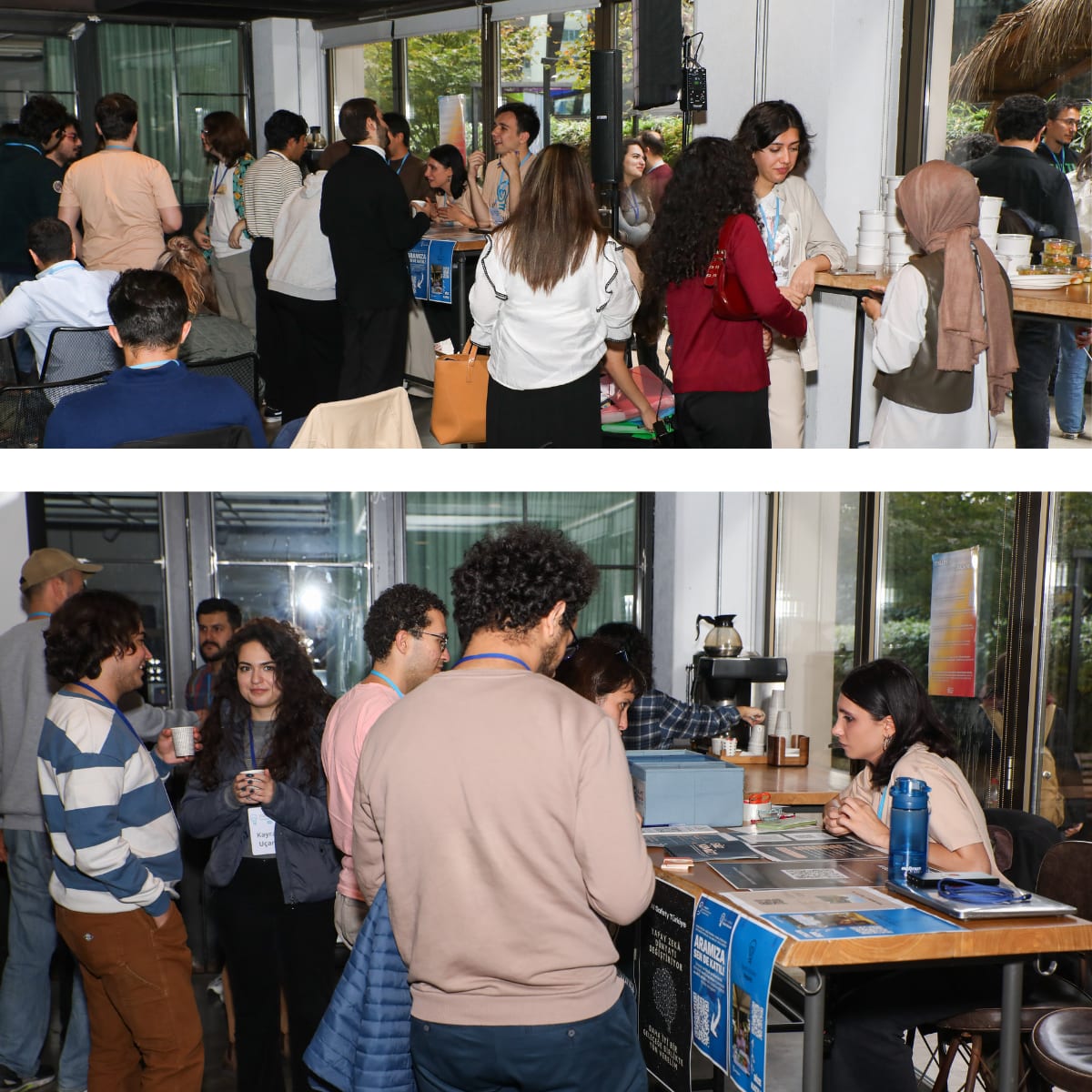
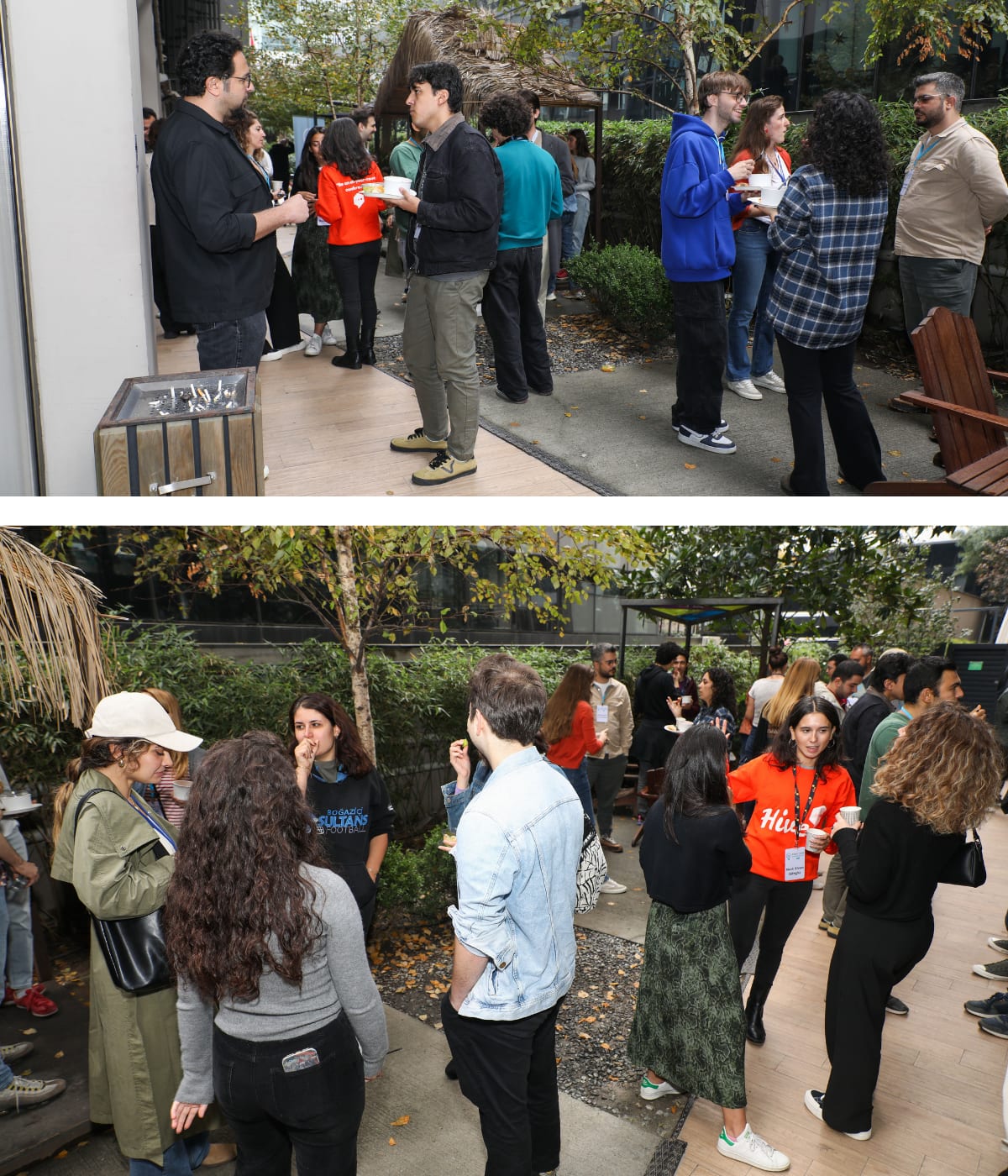
During socialization breaks, attendees were free to meet & connect, supported by Swapcard. We observed that at least 90% of participants were engaging with others in groups or one-on-one and about five-ish attendees were occasionally alone during breaks. While we couldn’t act on this at the time due to other more critical and time sensitive matters, next time we could brief volunteers on how to gently engage those who may be alone.
During the three main socialization breaks, we ran what we call a “mini org fair,” featuring Etkili Bağış (Effective Giving Turkey), Effective Animal Advocacy Turkey, AI Safety Türkiye, and University Groups. Because the venue had only one room and did not provide standing booths, we had to work within tight spatial constraints. We arranged two long, narrow tables and had the four groups share them. This setup was slightly suboptimal: with representatives seated very close to one another, it became difficult for all four groups to engage with attendees simultaneously. When crowds gathered around the two tables, conversations often overlapped with each other.
Based on this experience, we would recommend that event organizers explore external options such as renting standing booths if the venue itself does not offer suitable infrastructure.
Overall, we are very happy with the level of social interaction during the summit!
We also used Swapcard, which allowed attendees to:
View the full agenda and session details,
Choose sessions they wanted to attend, and
Schedule one-on-one meetings with other participants.
Around 102 participants registered on Swapcard, and 59 one-on-one meetings were scheduled. This level of engagement was honestly higher than we expected. Since the majority of attendees were newcomers to EA, we assumed there might be some resistance to using Swapcard, but it ended up being much more welcomed than anticipated.
We recommend sending a separate message about Swapcard via WhatsApp or a Slack group, and letting attendees know they can message you directly if they have any trouble navigating the platform. I think this move really helped people.
Production & Logistics
The summit took 5.5-6 months to plan and execute (May–October), with a total of 468 team hours dedicated to achieving our goals. A significant portion of this time was spent negotiating terms and conditions with vendors and partners.
Venue & Catering
We recommend choosing a venue with good reputation and also comes with an event tech person, having a dedicated event tech person reduces stress and ensures quick solutions to any tech related problems like slides, remote connections, mics etc.
Ask about the venue’s catering policy early on. Some venues do not allow external catering, limiting you to their in-house team or partners.
When selecting a venue, gather ballpark prices for vegan options and treat venue + catering as a package deal if outside catering is restricted. In our case, although the venue itself was reasonably priced, vegan breakfast was expensive. Luckily, we secured a discount from the venue because of a last-minute location change.
Navigating risks:
Before we secured the discount, the catering quotes were extremely high, so we had to think through a workaround. Since our venue was in a very central, busy part of Istanbul, there was a food district nearby. We researched restaurants with vegetarian and vegan options and planned to include these in the attendee guide, suggesting that people go out to eat and then come back.
In this scenario, we would rely on volunteers to go with each group and help make sure everyone returned on time. That said, this is far from an ideal setup, and we generally recommend trying to accommodate on-site catering even if prices are high, where possible.
While this idea was necessary given the extreme costs, it would likely disrupt socializing to some extent, since not everyone can go to the same place due to capacity limits. People would end up eating in smaller, scattered groups. This isn’t necessarily all bad—some people may enjoy the chance for more 1-on-1 conversations—but it’s hard to control or guarantee that outcome.
We’d only recommend this approach if your venue is surrounded by many restaurant options within a very short walking distance (ideally no more than 5 minutes).
Slides & Event Flow
Arrange all presentation slides back-to-back. This prevents delays from opening separate files for each speaker, especially with a tight schedule.
Include slides for logistical reminders such as “Lunch Break” or “Feedback Form Reminder” to reduce the need for real-time supervision.
Religious Accommodation
Although there was no designated prayer room in the building, we accommodated one attendee during Namaz (prayer) by making the team room available for them.
.Volunteers were briefed on where to direct anyone needing the space. While not ideal, this ensured inclusivity.
Dietary Needs
One attendee indicated a gluten-free diet. Since the vegan breakfast was already costly, we brought a few gluten-free breads and snacks. Two attendees used these, and we were glad to provide them.
Merch & Materials
To manage costs, we only printed t-shirts for volunteers and speakers.
For future events, we suggest providing a small notebook for all attendees, with QR codes for “next steps/resources” and the feedback form included in the first pages.
Feedback Forms
Despite repeated reminders and volunteer support during breaks, we were disappointed by the low number of submissions.
Video Production & Photography
We worked with an external contractor for video production and photography.
We were very pleased with the recorded videos, the quality was high and the editing was well done. However, we were not as satisfied with the photos. They turned out quite dark initially, so we contacted the team and kindly asked if the photos could be retouched, they were happy to do so, and the final result was much better. If this ever happens to you, we recommend reaching out to the team as well. Even if they don’t feel comfortable retouching all 500+ photos, they will likely be open to retouching a smaller selection to your liking. For future events, it would be worth investing in proper lighting. Our venue offered an additional lighting package at extra cost, which we decided not to include at the time, but it might have been worth it for better photo quality.We used headsets for speakers to ensure the best possible audio quality for recordings. For Q&A sessions, handheld microphones worked perfectly fine.
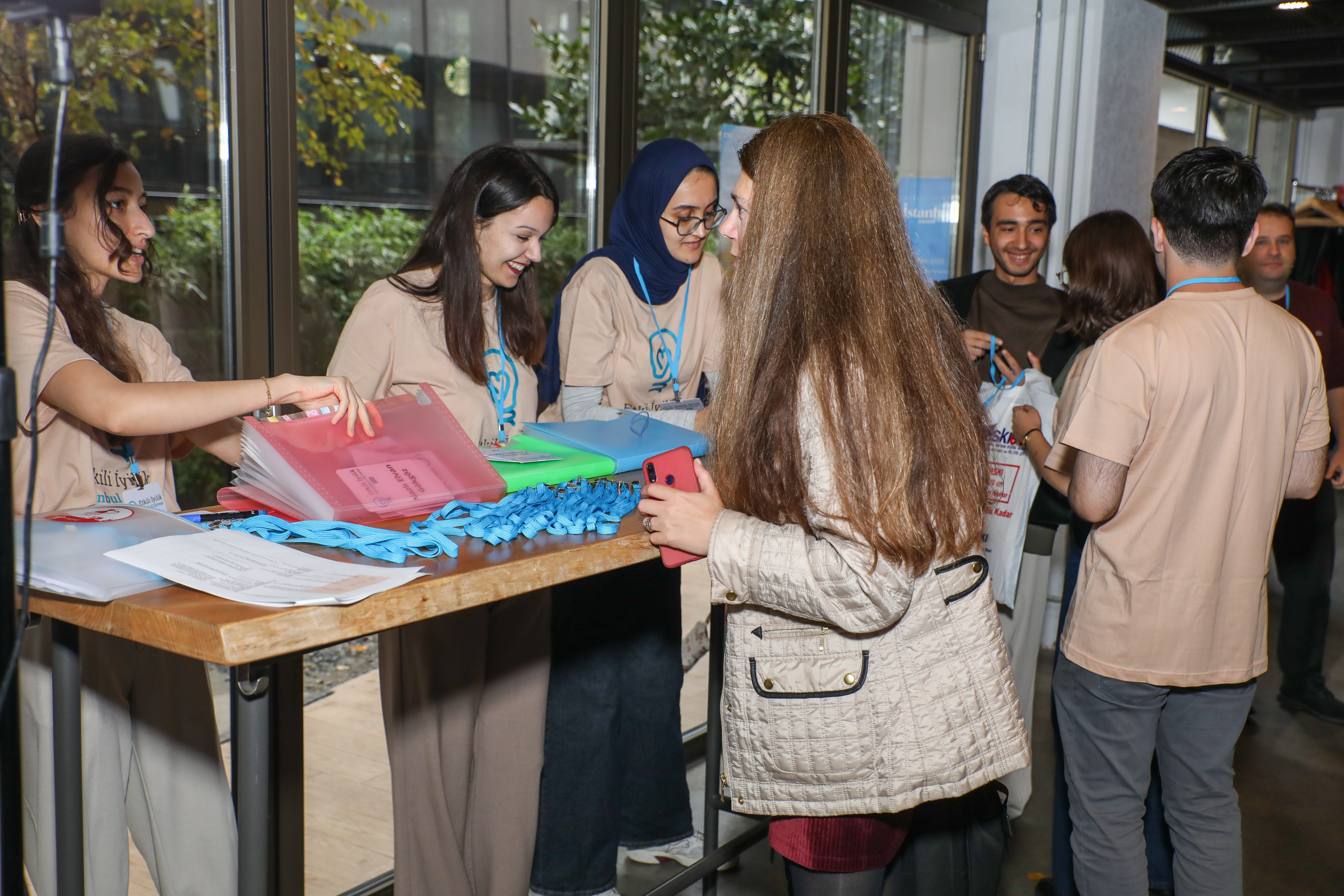
Registration table
We feel like an important part of a smooth event day is having a solid registration and welcoming setup.
Even if your event space (room or rooms) is located right at the entrance and seems straightforward, I’d still recommend always having volunteers welcoming attendees as they arrive and pointing them in the right direction. Most events take place in large buildings with multiple floors and rooms, and even if you include a floor plan in the attendee guide, not everyone will notice or check it. For example, our venue had two separate entrances, and our room was about 50 meters away from the main entrance.
Originally, we thought that arranging all 150 name badges in alphabetical order would make things run very smoothly at the registration table. In practice, it was hard to fit everything into a single folder, so I (Ren) split the alphabet into three sections and placed the name badges into three corresponding folders. This meant we ended up with three large folders, which wasn’t the most elegant setup. We’d recommend future organizers think through a better system here. That said, our volunteers were incredibly positive and picked up my slightly weird system very quickly.
Our registration table set-up hehe.
Speaker Preparation & Dry Runs
We think dry runs should be made a mandatory part of the preparation and communicated clearly from the start. Some of our speakers were initially reluctant to spend time on them, but the ones who did found them very helpful. (So did we!) During these sessions, we fixed issues such as overuse of English terms (the summit was fully in Turkish) and advanced terminology, exceeding time limits, and improving slide designs. We absolutely recommend organizers make dry runs a requirement for every speaker, because even when speakers are domain experts, that doesn’t automatically mean they’ll give a strong presentation for this particular event. From the organizers’ side, supporting a speaker through 2 rehearsals and revisions typically requires about two hours in total. In our case, we did dry runs with 4 of our speakers and spent 8-9 hours.
In our experience dry runs really helped with making speakers feel more relaxed and confident, catching issues that are easy to miss after working on a presentation for too long, ensuring the content works for an intro-level audience, and flagging problems around using English words and overly technical terminology.
Presentation Deadlines & Format
We recommend setting the presentation submission deadline one month before the event and communicate this early with the speakers. Even though we reminded our speakers more than three times, almost everyone was still late from the initial (soft) deadline! Setting an early “fake” deadline worked well, it gave us buffer time to review slides and saved a lot of stress in the final days before the conference.
Regarding the slide formats, one thing we missed was not giving speakers any instructions on the file format and slide ratio. This was completely on our side and ended up causing some time loss while rearranging and consolidating the final deck. We strongly recommend setting clear guidelines on slide format and page ratio in advance to avoid this kind of last-minute friction.
We also recommend organizers to make sure all speakers have provided next-step slides with QR codes because it attracts considerable interest from attendees!
Giving Game Results
During the breaks, the founder of Effective Giving Turkey, Alparslan, hosted a desk where attendees could participate in a mini giving game.
40 participants took part in the giving game.
6 participants made donations to Against Malaria Foundation, New Incentives, and Kafessiz Türkiye, totaling $1,000 collectively.
5 of these 6 had never heard of these charities before.
2 participants took trial pledges, and 1 person expressed interest in taking the Founder Pledge.
14 attendees subscribed to the Effective Giving newsletter.
1 participant joined the Effective Giving team as a volunteer.
Communications
We found that LinkedIn ads were largely ineffective for event marketing, generating very low engagement. Only 14 people reported hearing about the event through LinkedIn, and this number also includes our own organic posts rather than paid ads.
Instagram ads slightly performed better, 25 people who have applied heard about the event there.
We have also collaborated with 1 micro influencer who creates content around career and personal development and 1 email newsletter that focuses on social justice issues. In total 25 people applied from these. Thanks to Güney for connecting us!
Additionally, we reached people through organizations whose audiences could be interested in EA, such as Istanbul Impact Hub and the Entrepreneurship Association. We recommend not spending too much time on outreach to EA-adjacent organizations in general; this approach usually works best when you already have a first- or second-degree connection to someone inside that network.
The most effective way to get newcomer applications was referrals from existing community members and we got the majority of our applications thanks to their referrals. Especially University club members played an important role in promoting the event within their own networks. In several cases, even students who weren’t members of those clubs saw the posts and decided to attend.
Reminders & Communication Channels
We created a WhatsApp group early on to share reminders, key updates, and content with confirmed participants. This worked extremely well and helped maintain engagement both before and during the event. We strongly recommend doing this if people in your country commonly use WhatsApp, especially if you don’t have tools that allow you to send automated batch emails. Honestly, this WhatsApp group was one of the best things we did.
Another function of the group was handling dropouts: we asked people to leave an ❌ emoji on a specific message if they could no longer make it. This made it much easier to accommodate late applications, since reacting with an emoji is the lowest-effort action possible. We think that if we had instead sent emails asking people to reply to say they couldn’t attend, we would have received far fewer responses.
Reminder emails were also essential, of course. We recommend not skipping them and setting up automated email workflows if possible, as this can save a lot of time.
Design & Content Creation
It quickly became clear that neither Fırat nor I (Ren) were great at creating social media visuals, so we worked with a talented community member for graphic design. This made the communications process smoother, more responsive, and more cost-effective than hiring an external contractor. Thanks to Eren for saving us, and to Güney for suggesting Eren.
Social Media Engagement
One thing we didn’t do but wish we had was to create LinkedIn post templates for attendees and encourage them to share their insights in their own words. A few participants shared posts regardless, tagging us, but providing templates could have made this easier and required minimal effort.
Engagement & Post-Event Resources
Including “Next Steps” slides at the end of presentations worked really well. It’s good to have these compiled and shared as physical brochures or small notebooks for attendees to take home.
Güney also created a WhatsApp group and a Notion page with follow-up resources, which was a great strategy, 28 people joined the WhatsApp group and continued engaging after the event.
Feedback survey results
Here are the key takeaways from the 31 submissions we got:
Most Popular Actions:
'Join EA/cause area group' is the most frequently intended action, with 17 respondents planning to do so.
'Apply for short-term opportunity' is also popular, with 10 respondents.
Moderate Engagement:
Several actions, such as 'Publish research/writing', 'Found new EA-aligned project', 'Accept/start short-term opportunity', and 'Find new collaborator/client/partner', show moderate engagement, each with 7 or 8 respondents.
'Apply for grant/funding/scholarship' has 5 respondents, and 'Apply for full-time role' has 4 respondents.
Less Frequent Actions:
Actions like 'Accept/start full-time role', 'Receive grant/funding/scholarship', 'Found new EA/cause area group', 'Take Giving What We Can 10% Pledge', and 'Take Giving What We Can Trial Pledge' are intended by a smaller number of respondents (1-4).
Other results & Community Growth
During the event, 6 people expressed interest in volunteering for AI Safety Türkiye, though results are not yet finalized.
3 people applied for EAATR’s fellowship
1 person from Koç University, who was not previously part of the university EA club, has now started attending events after being introduced at the summit.
Around 60 attendees from the summit WhatsApp group have joined the EA TR WhatsApp group.
Attendees were invited to apply for EA Connect to further engage with the global EA community.
Financial Summary
The following was the breakdown of our expenditure.
Category
Cost (USD)
Venue & Catering
$4,701
Video recordings & photography
$2,444
Volunteer T-shirts & name badges & First-aid kit
601
Social media visuals
$173
Ads + LinkedIn Navigator subscription
$251
Speaker Travel Support
$78
Staff pay
$13,075
Total
$21,324
Next Steps
For our next steps, Fırat and I (Ren) have applied for funding to run several projects to build on and leverage this community growth. We’ll focus on running more advanced and cause-specific fellowships, supporting EA-aligned groups and organizations in Turkey. We’ll also help engaged members take the next step through retreats, mentoring, and career support.
This event was an important step for the EA Turkey community, and we’re excited to build on the momentum with the next set of projects.
If you’re planning something similar and want to compare notes, we’re always happy to share more details or learn from others’ experiences!
We’d be very happy to chat if there’s anything we can help with, here’s my (Ren's) calendar link: https://zcal.co/i/r58DGFa2
A preliminary estimate, and a request for better ones.
Summary
I believe the standard literature estimates for the number of DALYs attributable to a case of stunting are too low, largely because they don’t account for the long term effects. This means that childhood nutritional interventions that reduce the prevalence of stunting may be substantially more cost-effective than previously believed.
Epistemic status
Exploratory and back-o...
TL;DR: Kairos has raised $50 million from Coefficient Giving for two years of funding, one of the largest commitments they’ve made towards AI safety fieldbuilding to date. We’re using this to make an ambitious push for growing Kairos, broadening our portfolio of talent infrastructure projects and incubating new organizations. We’ve doubled in size in the last six mon...
I’ve been feeling pretty shaken since the METR report about the Hugging Face incident came out last week. Over the weekend, I wrote up some thoughts on how lonely the AI situation sometimes feels to me. It’s more personal than what I’d usually share publicly, but I thought I’d post it here in case it resonates with anyone else.
I’m very grateful to the man...




Executive summary: This retrospective argues that EA Istanbul Summit 2025 successfully introduced many newcomers while strengthening an emerging national community, and distills concrete lessons on team coordination, volunteer management, content design, logistics, and outreach to improve future events.
Key points:
This comment was auto-generated by the EA Forum Team. Feel free to point out issues with this summary by replying to the comment, and contact us if you have feedback.