Comments
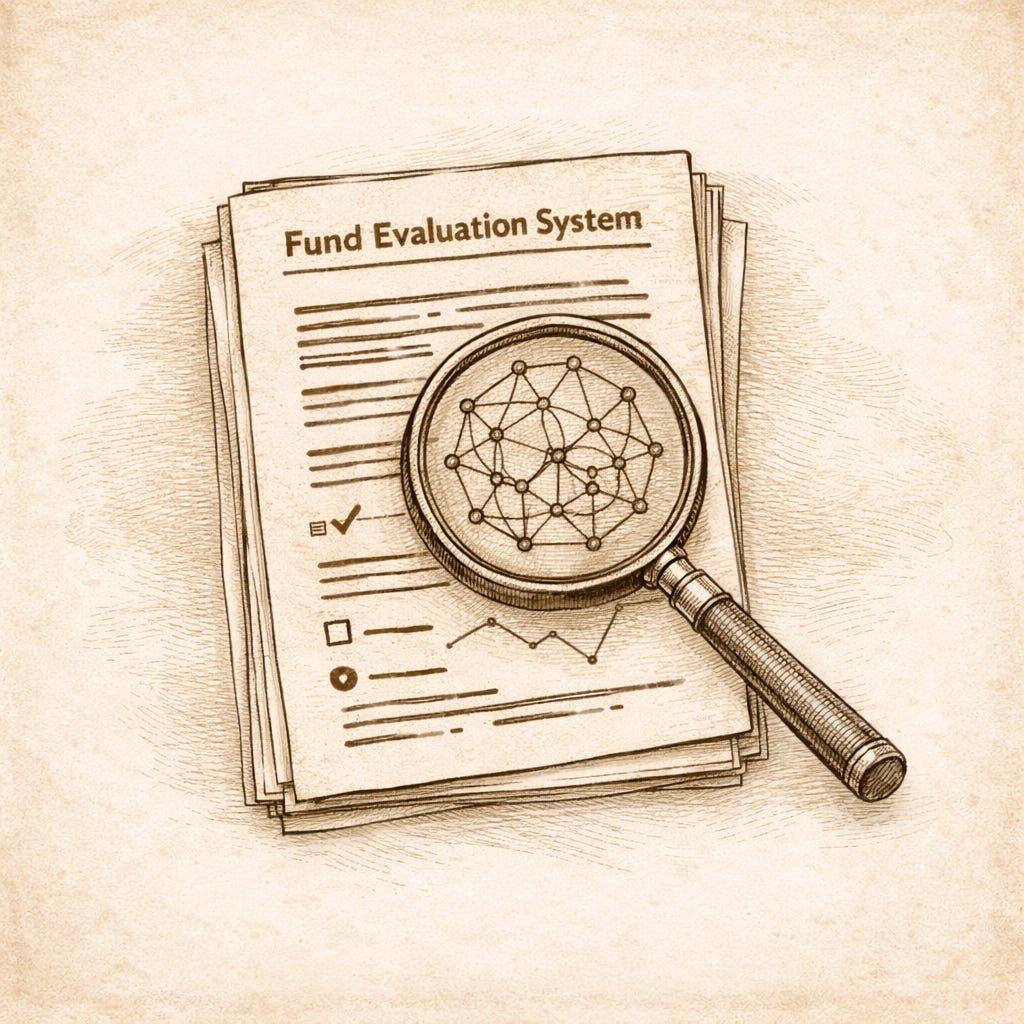
Philanthropic Fund Evaluation System (The first public Elevate Philanthropy report)

3 min readMar 2
24
Summary: This report is an evaluation system focused on how to systematically evaluate a philanthropic fund. It aims to be a values-neutral yet still analytical framework that can help with comparisons between philanthropic funds, even across different cause areas. Feel free to share it if you think someone might find it useful.
Narrative Background
One of the things that made me excited to found Elevate Philanthropy was the idea of creating public goods. Many philanthropists and grantmakers encounter similar problems, and I felt pretty confident that solutions developed for one could often become broader common goods that help many. As such, I aim to make (slightly modified) public versions of as many of the projects I have worked on as possible. The first one is now public; you can see the Google Doc here.
I have been excited about funds for quite some time, so it is not a huge surprise that my first finished project was related to funds. Specifically, this is an evaluation system aimed at helping a principal who is sold on the mechanism of funds but wants a way to analytically compare them, including across cause areas. Although I do not think any process will be perfect, I did think a process could be developed that brings useful systematic comparison between philanthropic funds.
This evaluation framework has now been picked up and used by a few other funders, and I am happy for others to take and use it if deemed helpful. Feel free to share it if you think someone might find it useful. If you want to chat about using this system for your foundation or projects like this, you can contact Elevate Philanthropy here.
Executive Summary: Evaluation Process
Philanthropic funds vary widely in their ambitions, approaches, and results. Some unlock new capital, adapt to any challenges and accelerate the whole ecosystem; others consume resources without clear additional value. For donors, grantmakers, and even the future fund leaders themselves, the challenge is to distinguish between funds that are well positioned for high impact and those that consistently underperform.
The 4Ts Framework provides a structured way to do that. It organizes fund evaluation into four pillars:
Each pillar is broken down into specific sub-factors, with clear scoring criteria and diagnostic questions. Together, they provide a wide view of whether a fund is credibly positioned to deliver impact at scale. This framework does not attempt to make value judgments or only apply to a single worldview, instead looking at the components of performance and the funds ability to outcompete in creating impact in its chosen area.
Evaluation Steps
The full system can be found here. (~50 pages)