Your disability does not make you less of an effective altruist
Effective altruism is about doing the most good with what you have. Having a mental or physical disability might cause you to have less time, money or energy to spend. But if you maximize the impact of these resources, you are doing as much good as you can with what you have.
While I agree with you in principle, I think that the reality is that it is tough to keep this idea in mind, primarily because we judge people based on the results/achievements, rather than on the effectiveness of what they achieved based on what they had.
Simple toy example: the person who started with $100 and ends up with $500 gets much more praise than the person who starts with $5 and ends up with $100.
That’s a good point – others will no doubt measure your success by your absolute impact which will depend on your initial abilities/resources. My post was more meant to address the guilt and distress I suspect many disabled EAs feel, which I think is unfounded.
Note: This post was crossposted from Planned Obsolescence by the Forum team, with the author's permission. The author may not see or respond to comments on this post.
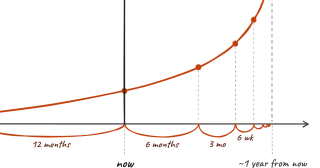
Subtitle: If acceleration compounds, the naive extrapolation implies superintelligence within a year
This post discusses a public METR report on AI R&D acceler...
TL;DR:
* When we started Rethink Priorities (RP) in 2018, our mission was, simply put, to close the knowledge gaps that stopped people from improving the world as much as they could. That hasn’t changed much, but the landscape we’re doing it in is shifting.
* In 2027, we plan to grow our core GHD, Animal Welfare, and Worldview Investigations teams to take on emerging priorities across causes, including those that the forthcoming transformative AI is creating.
...
This was cross-posted from the Animal Charity Evaluators blog.
We update our list of recommendations annually. This year, we announced our recommendations on November 10.
Most people who care about animals arrive at the same impas...
Your disability does not make you less of an effective altruist
Effective altruism is about doing the most good with what you have. Having a mental or physical disability might cause you to have less time, money or energy to spend. But if you maximize the impact of these resources, you are doing as much good as you can with what you have.
While I agree with you in principle, I think that the reality is that it is tough to keep this idea in mind, primarily because we judge people based on the results/achievements, rather than on the effectiveness of what they achieved based on what they had.
Simple toy example: the person who started with $100 and ends up with $500 gets much more praise than the person who starts with $5 and ends up with $100.
That’s a good point – others will no doubt measure your success by your absolute impact which will depend on your initial abilities/resources. My post was more meant to address the guilt and distress I suspect many disabled EAs feel, which I think is unfounded.