Hi,
I have been thinking deeply about how important it really is to publicly advocate for one’s ethical commitments—specifically veganism and charitable giving—and whether there is a moral expectation to be socially active, publicly visible, or research-oriented beyond one’s private contributions.
On a personal level, I tend to keep these parts of my life relatively private. For reasons I cannot fully articulate, I feel a sense of embarrassment or discomfort when the topics come up openly. I don’t want people to assume that these choices are the defining features of who I am, or that they represent my entire identity. While I care about reducing animal suffering and aligning my financial contributions with evidence of impact, I also want to live a balanced life that isn’t dominated by the need to signal or defend these values socially.
As a result, very few people in my personal life know about my dietary choices or how I choose to donate. This is due to a feeling of shame. I desire to avoid being perceived as preachy, moralizing, or overly self-identified by these commitments. I am secret about my actions not because I care about being humble, but because I feel like talking about it makes me cringe.
At the same time, I cannot ignore the fact that public advocacy can correlate with broader behavioral change at scale. Consider, for example, Veganuary, an annual campaign that encourages people to try a vegan diet for the month of January. In 2024, more than 1.8 million people globally signed up to receive support and guidance to try vegan eating, and surveys suggest the actual number of participants could be as high as 25 million worldwide when unofficial participation is included. Vegconomist Importantly, follow-up surveys show that many participants report lasting changes; in the 2025 campaign, around 81 % of respondents planned to at least halve their consumption of animal products long-term, and nearly one-third planned to remain fully vegan after the challenge. Veganuary While these figures do not prove causation, they suggest that public, communal experiences can influence behavior at least for a significant subset of participants.
In addition to community outreach and educational content, deliberate advertising and public advocacy within the Effective Altruism ecosystem has been linked to increased donations and engagement with high-impact causes: for example, GiveWell’s measured marketing efforts—including paid ads on podcasts and donor outreach—have historically shown that every dollar spent on advertising can return more in first-year donations, with past campaigns tracking hundreds of thousands of dollars raised relative to their ad spend. GiveWell Furthermore, targeted messaging trials for Giving What We Can’s Effective Giving Guide found that specific “effective giving” messages and short videos generated higher click-throughs and email signups per dollar spent, indicating that advertising can efficiently bring new donors into the funnel. Effective Altruism Forum These kinds of advocacy and promotional activities complement EA’s broader outreach (e.g., books, media coverage) and contribute to directing substantial funds—such as the hundreds of millions GiveWell channels to evidence-backed charities each year—by making effective giving concepts more visible and actionable to potential donors.
In terms of awareness, the general public remains largely unaware of concepts like effective giving: surveys show that only about 1 % of people have heard of effective altruism, and less than 10 % are familiar with charity evaluators that promote evidence-based giving. Rethink Priorities As such, a lot of people including my friends and family and what not have never really heard about this.
The idea that public advocacy is necessary to create large-scale change also clashes with my sense of personal boundaries. Participation in forums, debate threads, academic or quasi-academic research discussions, and other social circuits often feels like a significant investment of time and emotional energy. While some people thrive in these spaces, I find them draining, and I am skeptical that adding my voice would materially change outcomes for people who have deeply entrenched views or who are not already receptive. Anecdotal polls within vegan communities, for instance, show that only a minority attribute their decision to go vegan directly to online comments or debates, with many saying that personal motivations like health, environment, or ethics played a larger role. Reddit This reinforces my sense that maybe public advocacy isn’t the most effective route for everyone.
In addition, I also don't feel energetic to do a lot of research that a lot of others utilize in this forums to talk about the best things to do and what to donate to etc. For example, I see a lot of people discuss about all sorts of AI related issues and my attention span is so fried that I don't really feel motivated to learn more about things. In general regarding charity, I just find it more attractive to donate to charities that I can see quick simple stats (like ooh $5000 to save one life), rather than go down several rabbit holes. I don’t want to feel obligated to spend hours reading and engaging with research just so I can publicly argue why one cause or charity is better than another. I value evidence and careful thinking, but I don’t want that to become an endless cycle of consuming and summarizing information for others.
From an ethical standpoint, this brings up a difficult moral question: is it enough to quietly donate to causes I believe do the most good and live in accordance with my values, or do I have a moral obligation to try to influence others directly as well as to stay updated on the most recent data? I see compelling data showing that structured campaigns and coordinated giving (like Veganuary and GiveWell’s recommended charities) correspond with measurable participation and impact. But I also see how much of this movement remains misunderstood or invisible to the wider public, and how people outside these communities often react negatively when they feel pressured or lectured.
For many individuals, quiet participation—giving thoughtfully, living according to one’s values without evangelizing, and letting long-term habits speak for themselves—can still contribute meaningfully to change. One can argue that public advocacy and research can enhance awareness and shape norms, but it does not prove that every individual must be a public advocate in order to be effective. For many people, private participation may not only be acceptable, but also the most sustainable way for them to contribute without emotional burnout or social resentment.
In the end, I’m left wondering whether moral responsibility is best fulfilled through public visibility and persuasion, or through consistent, private commitment to impactful actions. One can argue that both paths have roles to play, and that measurable change can arise from collective efforts that are not always visible on social media, forums, or public discussion boards. Perhaps it is okay—ethically, practically, and personally—to focus on donating to high-impact causes I believe in and living quietly in accordance with my principles, rather than feeling obligated to fight every online battle or attend every discussion.
Thanks.



I can count at least three types of public participation here --
(3) is the easiest to dispose of in my view. Although surely people have changed their minds about things on Reddit and in similar places given their massive size, I get the impression that debate subreddits and the like accomplish very little for the amount of effort people pour into them. People generally aren't going into these kinds of spaces with open minds. And the anecdotal poll you mentioned was conducted on Reddit; a truly random poll would presumably find online debate / discussion spaces to be even less important.
In contrast, people do make progress in like-minded spaces (2). But given that you find these spaces draining, the risk of them burning you out and distracting you from more effective activity presumably exceeds any sort of marginal benefit from active participation. No one can do everything. Each person has different aptitudes, passions, and limitations that influence what actions are best suited to them. It sounds like yours are not well aligned to active participation in discussions, and that's fine. It's important that someone conduct in-depth research, communicate it, and discuss it, but it's not important that any given person does so (especially if it doesn't align with their aptitudes, passions, and limitations).
As far as being up to date, I think it's fine to find someone you trust and defer to their judgment as to donation targets. There are respectable reasons to think the end results would be better than trying to do your own research -- especially if you're not feeling motivated to do in-depth research and analysis.
That leaves (1), which is neither of limited utility like in (3) nor can others clearly substitute as in (2). It would be ideal if you could briefly mention certain things without feeling preachy, moralizing, or cringe. And it might make you feel better in the long run to take small steps to be publicly living in accordance with your values -- not trying to "convert" other people, but not hiding those values in shame either. Maybe a post on your social media linking to (e.g.) GiveWell and identifying yourself as a donor could be a step in that direction?[1] if anyone thinks that "overly self-identified," that's a them problem, not a you problem! But I wouldn't say it is ethically insufficient to be quiet.
Others may have more helpful things to say about how to identify as a vegan in ways that you'd find not too uncomfortable. Whether justified or not, vegans do have a reputation in some circles as being "preachy, moralizing, or overly self-identified by" their veganism. As far as I know, effective givers do not have that kind of general reputation, and posting about a charity to which you donate is a normal thing for people to do at least in my non-EA social circles.
Hi, thanks for the response.
First of all, I fully agree with your third point that it feels incredibly draining to talk about (3).
Second, I totally get your point on number 2 that there are enough people conducting research and that there is plenty of supply and there isn't a necessity for others to conduct research (although a sufficient amount should research to prevent it from being heavily swayed by a few people).
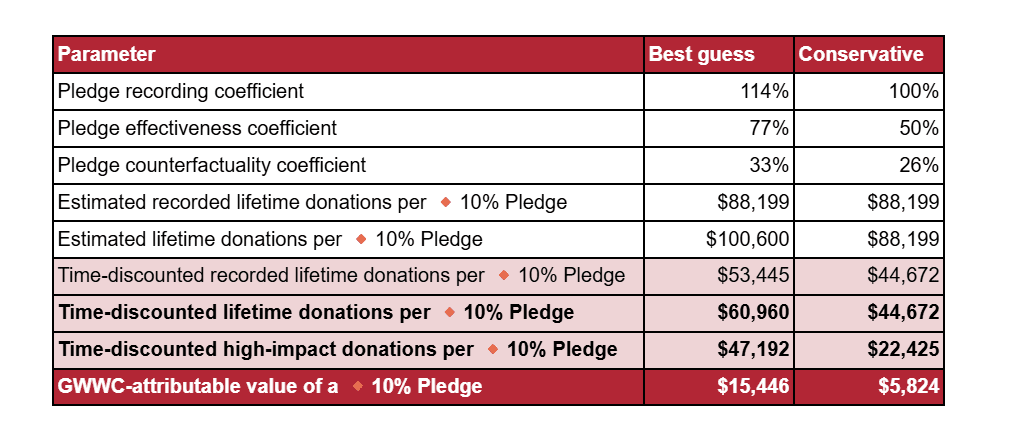
Third, I can't help but feel like there must be some sort of big difference between a charity publicly advertising things vs. a person publicly advertising for free. I feel like for a charity advertising, there are proven metrics that must prove that it generates more money from the charity than it consumes for advertising. To be honest, I do dislike the fact that charities have to use money on non-directly related matters to aid, but it makes sense that sometimes you have to burn money to make more to get aid (at the end of the day, a charity that uses all money for direct aid but has no publicity is effectively useless. Similarly, a charity that hardly directs money to direct aid for like but instead uses 70% of its funding it on stupid bureaucratic stuff is also pretty useless). However, in the scope of a person spreading it on social media, I feel like there is a very your mileage may vary type of scenario. From my personal experience, I don't think anybody in my social media would care about either veganism or effective altruism. Like to be honest, without giving too much personal information, I am still relatively new to my career and so are most of my friends. I do see on Facebook posts etc to donate to this charity for my birthday which I think is a Facebook feature but I can see that literally nobody donates to those posts. I have been recently liking posts regarding Giving What We Can on Instagram and initially I did it thinking that it could lead to more awareness to my Instagram friends especially if I decided to only like those posts and no other posts, but I can't help but feel like I'm ruining my own feed for an ultimately futile effort. In particular, one thing I notice about EA posts on Instagram and I am guessing other social media is it seems to have a low like rate. I can't help but feel like the whole 10% pledge (especially the way some advertisements talk about it as if its some sort of easy thing to do for everyone) especially turns off people from EA making it feel like some sort of cult or something. To be honest, I have been recently seeing more Giving What We Can sponsored ads on Instagram and I can't help but wonder if its money well spent or of its being wasted (I get the importance of advertisements but can't help but feel most people won't care). Truthfully, I think most people are usually distrustful towards things like EA and veganism because it definitely in some ways doesn't really feel natural for a person to care so much about things that don't directly impact them to the point that people find it suspicious. In general, I used to donate like 10% of my income to EA charities but my parents found out and completely disapproved and since I am just starting my career I decided to pause for now but like I definitely don't want to advertise something I am not even doing and I really don't think reposting and retweeting something within my local community regarding EA would really make a difference. Same, regarding vegans, at best I think most people don't care if some one is a vegan or not and wouldn't care about changing their eating habits. At worst, people will be more so turned off from associating with those people. Admittedly, I live in the Bay Area where I feel compared to the other places in the United States people would be much more tolerant towards concepts like EA and especially veganism. But I can't help but feel that dedicating time and energy to spread awareness on social media regarding EA will feel like a waste of time kind of like I am talking to a brick wall. I honestly feel like I would have more success being a Jehova's Witness instead (this is said as kind of a joke, but I am being kind of serious that neither would be particularly popular among the people I associate with).
One of the reasons I am asking this question is because I feel like there is a gigantic move to be very public regarding donations (not because humbleness is a vice but because some people believe it can influence others to donate as well). I heard some people even put the orange diamond emoji in their social media bios or what not (which I feel kind of stupid because 99% of normal people will have no idea its EA related and think its just another unnecessary emoji in a bio). I don't know but spending time and energy talking about EA in social media almost feels as futile as say talking about BLM : https://slatestarcodex.com/2014/12/19/nobody-is-perfect-everything-is-commensurable/
Its like just like some people don't like talking about politics or religion, I don't feel like talking about said topics in fear of making it seem like I'm asking others to convert to my philosophy or something like that.
I can't help but wonder if one can argue its ethically sufficient to just donate and participate in EA type activities like veganism without being really open and public about those topics. I don't want to turn my entire social media feed into being an advertising center for those two topics.
Also, looking at so many ads regarding Giving What We Can, I can't help but wonder if its generating more money than its spending.
But at the same time, I can't help but feel curious that I am neglecting a serious moral obligation or something. In an ideal world where the conversation rate was large, I could make a much larger impact converting others to EA than being a single donor. However, I don't think I live in such an ideal world or at least among those I associate with.
Sorry for the long rant.
Thanks!