Comments
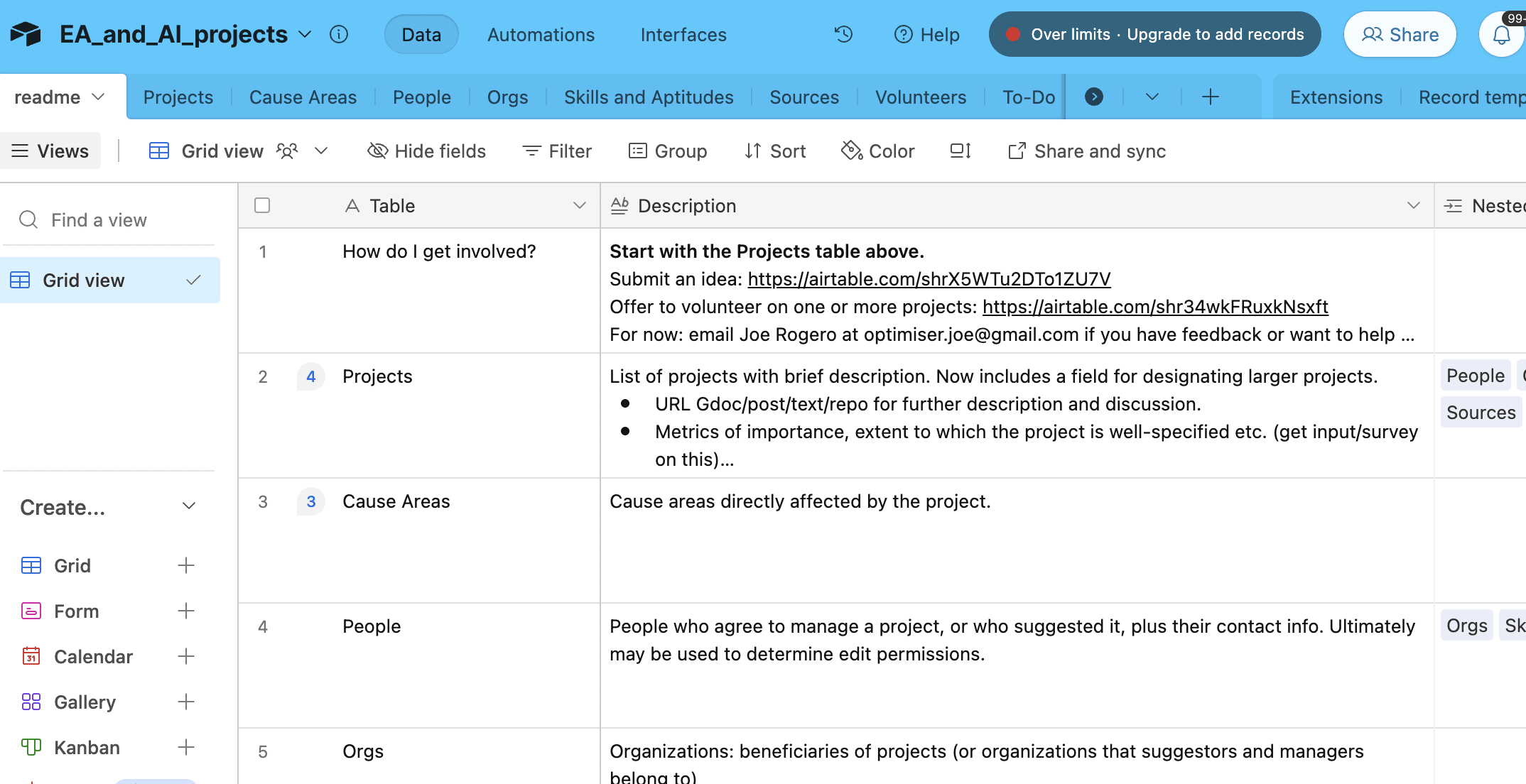
I started an Airtable to keep track of 'small quick win projects', which @Joe Rogero and others have expanded.
However, coordination of anything like this is hard, and requires eyeballs and buy-in from the major players and funders.
I started an Airtable to keep track of 'small quick win projects', which @Joe Rogero and others have expanded.
However, coordination of anything like this is hard, and requires eyeballs and buy-in from the major players and funders.
Impact Colabs started something similar but then abandoned it. They have a forum post and more detailed write-up on why. Our aim is less ambitious (for now, just listing and ranking project ideas with some filtering options) though we do hope to expand the list to include more active volunteer management options eventually. Of note, this database is divided into "quick wins" - roughly, things someone could do with less than a week's work without being part of a particular organization - and "larger projects" - which typically involve starting a full-time group or or supporting an existing one.
If you know of a project not listed, feel free to add it!

Epistemic Status: Exploratory Inquiry
Hey EA Community,
I’m looking for information on whether there is a system or application within EA for tracking ongoing and completed projects to avoid effort duplication and increase efficiency.
Key Questions:
Any insights or directions to relevant resources are welcome.
Thank you!

I can speak mainly on cause/intervention prioritization research - the TLDR is all of us research organizations are pretty terrible at this (e.g. by last count I think at least 4 orgs have looked into hypertension/salt and have come to fairly similar conclusions). From various discussions, I think people are interested in increasing publication of internal research avoid this problem, but folks have also pointed out that duplication is beneficial - if a cause looks good when different organizations with different methodologies investigate it, that's a reliable sign that it really is good; and conversely, we don't want to permanently dismiss an idea just because a single shallow report (which may well be wrong) was negative on it.
FWIW, CEARCH keeps a longlist of causes, and we try to link to existing research where available, but it's not remotely close to comprehensive, except for CEARCH's and CE's output.
Thank you Joel for pointing me in the right direction. You make a good point on not wanting to prematurely write off research findings
In response to the challenges in cause/intervention prioritization and the benefits of research duplication:
Potential Pitfalls: