Comments
Learning from Agricultural Development to Reshape Animal Welfare Work in Low- and Middle-Income Countries

8 min readAug 13
This is a cross-post of the executive summary from The Centre for Animal Life and Farming's first report. See the full report here.
We will also be hosting a webinar on 25th August 2026 to discuss these findings with the animal welfare movement.
Roughly 80-90% of farmed animals live in Low- and Middle-Income Countries (LMICs),[1] yet the animal welfare movement has seen fewer milestone victories in these contexts than in High-Income Countries (HICs)[2]. The standard advocacy models used in HICs (corporate campaigning, consumer pressure, legislative reform, etc.) rely on infrastructure that is often absent in LMICs, such as formalised supply chains, consolidated corporate buyers, and strong legal enforcement.
Fortunately, the animal welfare movement is not alone in these challenges. There is a long history of field-based projects in LMICs designed to shift farming practices to improve farmer productivity, sustainability, and well-being. Collectively, this broad category of work is referred to as agricultural development (“agri-dev”). The strategies and lessons generated through this work may offer relevant and useful insights for the development of animal welfare initiatives in LMICs.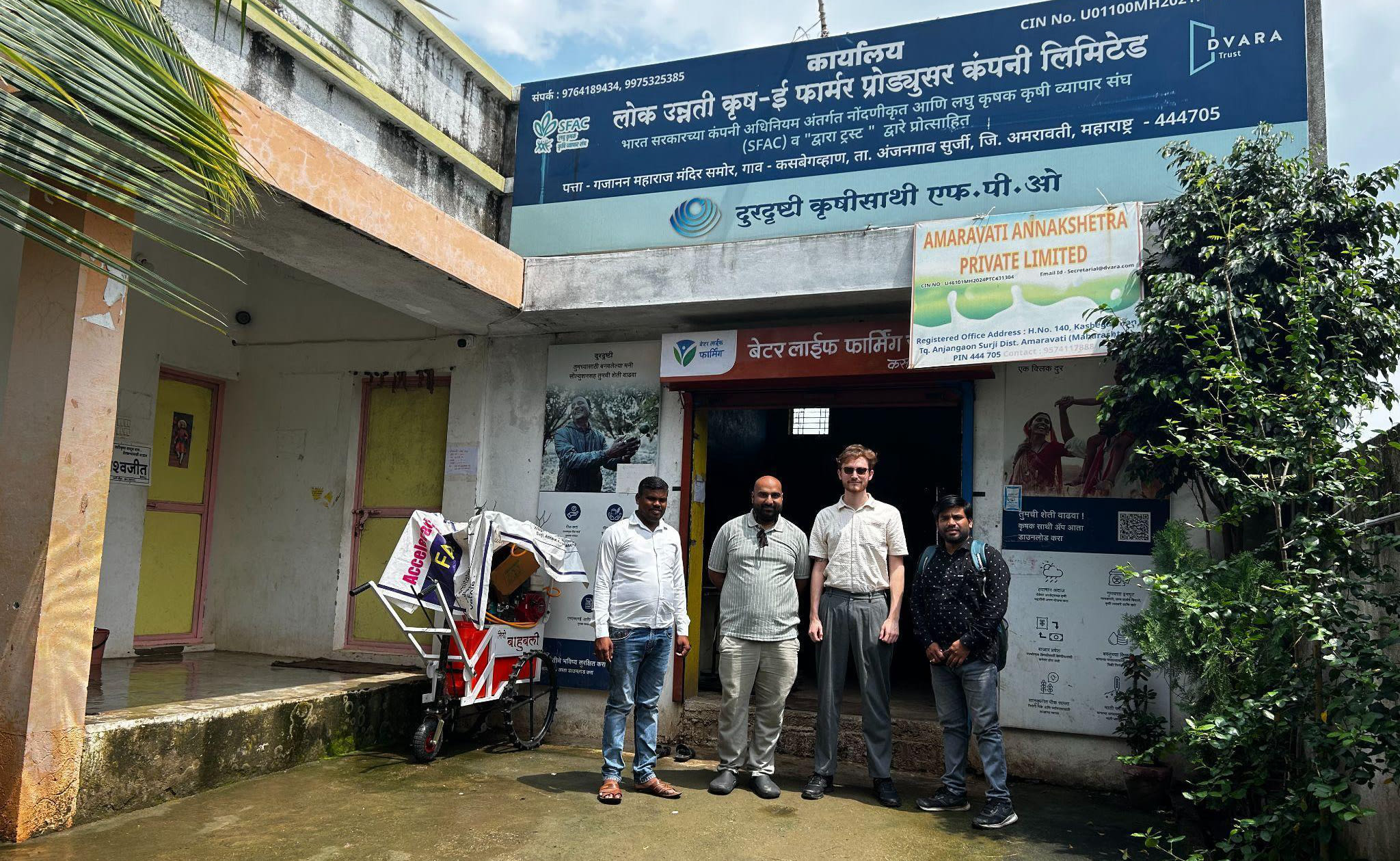
To identify more context-driven strategies LMIC animal welfare actors could use, this report asks the question:
What can the animal welfare movement learn from strategies employed by agri-dev actors to effectively change farmer practices in LMICs?
To explore this question, we conducted a narrative literature review and primary field research in India. We identified six primary high-level lessons that were cross-cutting for all strategies:
We also identified 20 priority strategies used by agri-dev actors that we felt were relevant for the animal welfare movement. We grouped these strategies across three dimensions: organisation types that deliver interventions to support farmer adoption of new practices (8 reviewed), how farmers are trained in new practices (5 reviewed), and how they are incentivised to adopt them (7 reviewed).
We evaluated each strategy across five criteria: effectiveness (at achieving their intended outcome), resource intensiveness, tractability, scalability, and their risk of stimulating harmful industrialisation. This analysis was conducted with a specific focus on the value for CALF’s work within India, though we expect that many of the insights will translate into other contexts. Here are our summarised results (scores range from 1 to 7):
| Strategy | Strategy Explanation | Effectiveness | Low Resource Intensity | Tractability | Scalability | Low Industrial- isation Risk | CALF's Opinion | |
| Organisation Types | Intermediaries | Buy and sell farmers' products, offering fair, stable prices in exchange for meeting welfare standards. | 6 | 3 | 4 | 6.5 | 5 | Recommend for trialing |
| ↳ & Processing | Also process products (e.g., sorting and packaging eggs) to raise prices, funding welfare incentives. | 7 | 2 | 2.5 | 5 | 5 | Recommend for trialing | |
| ↳ & Contract Farming | Formal agreements with farmers on what and how to produce, often with inputs and guaranteed prices. | 7 | 1.5 | 3.5 | 5 | 2.5 | Recommend for trialing | |
| Collaborating with Agri-Dev Organisations | Adding welfare into existing agri-development programmes, leveraging their skills and farmer trust. | 6 | 6 | 5 | 5 | 3 | Recommend for trialing | |
| ↳ & Self-Help Groups | Reaching village women's savings groups, who do most day-to-day animal management, via agri-dev partners. | 5 | 5 | 6 | 3 | 4 | Needs more investigation | |
| Farmer Producer Organisations | Formal farmer collectives whose rules could include welfare mandates. | 4 | 5 | 4 | 4 | 6 | Needs more investigation | |
| Certification | Voluntary audited standards, ideally earning farmers a price premium for higher welfare. | 4 | 3 | 5 | 4 | 6 | Do not recommend | |
| Direct-to-Farmer Technology Providers | Digital platforms, chatbots, or SMS engaging farmers directly at scale, no intermediaries. | 2.5 | 4 | 4 | 2 | 6 | Do not recommend | |
Training Mechanisms
| Training & Visit (T&V) Systems | Trained extension agents deliver structured welfare training to farmer groups on a fixed visit schedule. | 5 | 6 | 6 | 5 | 5 | Recommend for trialing |
| Model Farms & Field Schools | Working farms demonstrating welfare-compliant practices for hands-on observation and learning. | 6 | 3 | 5 | 3.5 | 6 | Conditional — short-term only | |
| Mass Communication (ICT) | Messages delivered at scale via channels such as SMS, apps, radio, or social media. | 1 | 7 | 7 | 7 | 7 | Conditional — simple behaviour changes only | |
| Veterinary Services | Vets or community animal health workers advising on welfare. | 5 | 4 | 5 | 4 | 4 | Do not recommend | |
| Information & Call Centres | Physical hubs and remote services providing agricultural advice. | 1 | 6 | 6 | 6 | 6 | Do not recommend | |
Incentive Mechanisms
| Collective Bargaining | Farmer groups negotiating better input costs or product prices. | 6 | 4 | 5 | 6 | 3 | Recommend for trialing |
| Market Access | Linking welfare-compliant farmers to buyers, sometimes with transport or guaranteed purchases. | 6 | 3 | 4 | 6 | 3 | Recommend for trialing | |
| Value Addition | Processing products (e.g., grading, packaging eggs) to raise value, sharing the margin with welfare-compliant farmers. | 7 | 2 | 2.5 | 5 | 5 | Recommend for trialing | |
| Credit Systems | Loans tied to or supporting welfare compliance, financing practices needing upfront investment. | 7 | 4 | 2.5 | 6 | 3 | Needs more investigation | |
| Conditional Payments | Payments or discounted inputs contingent on adopting welfare practices. | 5 | 3 | 6 | 3 | 6 | Conditional — short-term only | |
| Market Information | Price data informing when, where, and what to sell. | 1.5 | 7 | 7 | 7 | 5 | Do not recommend | |
| Insurance Products | Coverage against production and price risks, potentially conditional on welfare improvements. | 4 | 3.5 | 2 | 6 | 2 | Do not recommend | |
Each agri-dev strategy reviewed across our key criteria in a 7-point Likert Scale
A summary of each strategy and their key considerations is shared in section 3 of the full report (you can also see a more in-depth breakdown of each score here.). This is an initial step. The strategies identified here require rigorous field testing, and the evaluations we offer are preliminary. We present them not as definitive answers but as structured starting points.
This report offers three key lessons for animal movement actors operating in LMICs:
See full data set here. Note that the numbers for total farmed fish are from 2017 and based on low-end estimates from fishcount, meaning that they are significantly more speculative. Data Sources:
Cattle, poultry, and pig data from FAO, 2025 – with major processing by Our World in Data
Farmed fish data from fishcount (2017)
See the full data set here. Data sources:
Company pledge data from Chicken Watch (2026)
Income classification data from The World Bank.