Executive summary: The authors argue that India’s animal welfare funding is structurally misallocated toward direct care, and that improving impact requires locally grounded evaluation, movement-building, and new funding models beyond standard ITN frameworks.
Key points:
The application pool (314 organisations) was dominated by direct care and livelihoods work, but funding concentrated on research, policy, and plant-based interventions, revealing a mismatch between sector composition and high-impact priorities.
India hosts extremely large and rapidly growing numbers of farmed animals, with industrial systems expanding quickly, making current policy and infrastructure decisions unusually high-stakes and time-sensitive.
Standard EA grantmaking frameworks like ITN underweight India because the sector is early-stage, where key opportunities involve policy lock-ins, novel interventions, and movement-building rather than marginal improvements in mature areas.
Round 1 ($585k to 17 organisations) found strong potential in areas like cage-free systems but persistent uncertainty about funding bottlenecks, and widespread measurement gaps (58% of evaluated organisations) limiting confidence in impact claims.
The authors update toward believing that coordinated, locally informed evaluation improves donor learning and may shift funding, while also concluding that the main constraint is lack of movement infrastructure rather than competition among high-quality opportunities.
They argue that effective grantmaking in India must engage local context, including a dominant rights-based moral framework, and prioritize interventions robust across moral worldviews while building shared knowledge and ecosystem capacity.
This comment was auto-generated by the EA Forum Team. Feel free to point out issues with this summary by replying to the comment, andcontact us if you have feedback.
One-off events and policy lock-ins. The 2023 battery-cage ban failure. The empty regulatory space around broiler stocking density. The black soldier fly larvae industry, currently regulated by no one, and that won't last. These are problems where what matters is the size of the win, probabilities of success, how long it locks in, and whether it would have happened without you, not the marginal cost-effectiveness of one more dollar in the field.
How does the marginal cost-effectiveness (for example, the cost-effectiveness of a grant of a few k$) not matter? It is determined by factors like those you listed.
Cost-effectiveness scored lowest at 5.49.
How did you score the cost-effectiveness? Have you considered doing cost-effectiveness analyses (CEAs)? I would be happy to review some for free.
On marginal cost-effectiveness, you’re right that the factors I listed are exactly what determines marginal CE.
So the framing in that paragraph is imprecise.
What I was trying to point at was that the typical “one more dollar at the margin” thinking works well for funding ongoing work where each extra dollar buys more of the same thing.
But it doesn’t work as well in two situations.
The first is contexts where the ongoing work itself hasn’t been built out yet, so there isn’t a stable field at the margin to fund. The second is one-off events like passing a regulation, where extra funding may not change the probability of winning at all, or might only at a specific moment, but still maybe worth taking the bet given high CE.
And these are exactly the judgments the EA ecosystem is less equipped to make at arm’s length, which is part of why fewer such grants get made overall.
I should have written the paragraph that way.
On scoring did the rough back-of-the-envelope calculations which informed the subjective scoring of 1-10 in an area. For some data/evidence poor interventions we just did subjective scoring.
On your offer to review CEAs, we’d love help on that for the next round and I’ll DM you to follow up.
The first is contexts where the ongoing work itself hasn’t been built out yet, so there isn’t a stable field at the margin to fund.
I would say thinking at the margin still makes sense for initial work. It is just that the thinking cannot be based on an established track record.
The second is one-off events like passing a regulation, where extra funding may not change the probability of winning at all, or might only at a specific moment, but still maybe worth taking the bet given high CE.
Extra funding which does not change the probability of winning at all has a cost-effectiveness of 0 neglecting effects besides those of passing the regulation?
On your offer to review CEAs, we’d love help on that for the next round and I’ll DM you to follow up.
Both fair, and I think we're mostly agreeing on substance.
Regarding your second point, the "high CE" in my original sentence referred to the CE of solving the policy issue itself, not the marginal CE of the next dollar. So, funding may still shift the probability of winning, just deferred to when a window opens rather than at the moment of funding, because it may fund prep work and exploratory research on a high-suffering issue.
India Animal Welfare Funding Circle: Round 1 Results and Reflections
314 organisations applied to the first round of the India Animal Welfare Funding Circle, which we launched in December, 2025. Looking at what got funded versus what applied, the two pictures are almost completely inverted. The largest categories of applications, direct care and livelihoods-focused work, contributed least to the funded portfolio. The smallest applicant categories, research, policy, and plant-based work, contributed the most. The circle was set up to fund interventions that may impact a large number of animals to a great extent. The application pool tells us where the Indian sector’s composition is, and what Indian philanthropy has funded previously relative to that aim.
It isn't just a domestic problem. On our count of the EA Animal Welfare Fund's public payouts database, fewer than seven grants over its lifetime have been directed to India-focused work, under $1M of roughly $23M deployed. The AWF's new strategy aims to address exactly this gap of underdeveloped movement in LMICs, which is welcome.
Why this matters
India is among the world's largest hosts of farmed animals. Roughly 38 billion years of non-human animal life are lived in the country each year, the overwhelming majority on factory farms. India runs the world's second-largest egg industry (149 billion eggs in 2024-25, 627 million layer hens), the world's largest dairy herd (304 million bovines), the world's largest goat population, and ranks among the world's largest shrimp producers (21 to 94 billion individuals slaughtered annually). Broiler production runs at 3.4 billion birds per year, 97.6% of them fast-growing breeds.
The trajectory is steeper than the present. Per-capita animal product consumption is 82.6 kg against a global average of 143 kg, and rising fast with income. The Indian poultry market is projected to more than double from $33B in 2025 to $72B by 2035 (8.1% CAGR). Shrimp output is on a 10% CAGR. Industrial systems, breeds, contracts, and regulations are being locked in now, before the welfare asks have been made. The 2023 failure of the battery cage ban was one example. Broiler stocking-density rules have never been written. The window on preventing the culling of 320 million male chicks per year is closing.
Why do existing EA frameworks underweight this
The gap seems structural, and it's worth being precise about why. The dominant cause-prioritisation framework in EA grantmaking is ITN (Importance, Tractability, Neglectedness). It was developed to identify marginal grants in mature fields with diminishing returns. It does that well, e.g., marginal grants to mature cage-free corporate campaigns. India's animal welfare sector is mostly not that. There may be some opportunities with marginal returns, but they are held back by underdeveloped movement infrastructure, and most of the highest value organisations don't yet exist at scale.
Three categories of opportunity that may unlock the most future impact don't fit ITN's shape.
One-off events and policy lock-ins. The 2023 battery-cage ban failure. The empty regulatory space around broiler stocking density. The black soldier fly larvae industry, currently regulated by no one, and that won't last. These are problems where what matters is the size of the win, probabilities of success, how long it locks in, and whether it would have happened without you. Marginal dollar thinking that fits steady state fields fits less well here, because additional funding may not change the probability of winning at all, except at specific moments when a policy window opens. The 32+ state-level glue trap bans show how quickly templates can spread once one is established, and how the value of being there for the first one is structurally different from the value of marginal effort once the template exists. A specific example we see today: the 2023 Egg Laying Hens Rules also opened a window for in-ovo sexing to replace male chick culling in India by 2029, several state animal husbandry departments have already committed in principle, and not enough people are working on it.
Novel programmes and untested theories of change. Welfare credits in fragmented markets. Slow-growing breeder flocks delivered through livelihood-focused NGOs. Preemptive litigation against broiler cages before industry interests entrench. The right analysis here may be an explicit theory of change with assumption probabilities, not simply a tractability score grounded in a precedent base that this ecosystem does not yet have. Almost none of these have been tried in India. Whether they work is itself the thing worth funding.
Movement building for priority issues. This is plausibly the modal need. The sector is early. The number of people working on issues affecting a large number of animals is small. Available knowledge goods and visibility are thin. Grants here buy something different from the immediate impact. They give the ecosystem options to try new things, and preserve the option to make sharper decisions about marginal impact later, when the field is more legible. Both ITN and SPC underserve this kind of work by design.
Beyond the framework itself, there's also a question of how to apply it well. As Moritz Stumpe argues in a recent EA Forum post making a parallel case for Africa, strategic questions in this kind of grantmaking are deeply context-dependent: politics, culture, institutional incentives, and reputational dynamics, each of which could be a limiting factor to address. A lot of this knowledge sits implicitly with people who have worked in the Indian movement for years. It also sits with people who interact regularly with the political, cultural, and institutional environments in which the movement operates. Both groups tend to have a calibrated sense of whether a given strategic claim is true, in ways that are hard to develop from briefs alone, and that aren't easily externalised into evaluation rubrics. For one example of the kind of consideration we mean, see Section 5 on how the rights-protection frame dominant in Indian advocacy interacts with the welfarist frame more typical in EA grantmaking. EA-aligned donors don't typically have ready access to this kind of judgment about India. Regranting initiatives, where global capital is deployed through people with local knowledge, are one way to bridge the gap. Locally-rooted evaluation infrastructure is another.
Why a country-specific vehicle
Closing this gap isn't only a matter of pointing existing vehicles at India. It requires local evaluation infrastructure that can carry SPC reasoning, explicit theory-of-change analysis, and real-options thinking alongside ITN, where ITN still applies.
Indian philanthropy overwhelmingly remains within the country, and one shouldn't be surprised, given the country's size and the scale of problems in the backyard. Indian giving for animals also has strong path dependence. New donors tend to follow what's already being funded by their peers, because that's what's legible to them. They fund what's visible in their immediate environment: the gaushala in their hometown, the stray-dog programme on their street, the working-animal shelter their family has supported for generations. And they fund what's emotionally resonant. Emotional resonance in India is shaped by visible animals and by centuries of cultural infrastructure that has built moral salience around some species and not others. The species that suffer the most, broiler chickens, layer hens, fish, and shrimp, are largely outside that cultural infrastructure and need a path to be included.
This isn't a failure of donors. It's a coordination problem. If the broader movement doesn't exist at scale, if research on fish welfare science doesn't have a domestic home, if no one is doing policy work on broiler stocking density visibly enough for a donor to find them, then new donors literally cannot find out about those opportunities. There's no path from "I want to give to animals in India" to "here are the highest-impact things to fund" that doesn't require building the infrastructure first. The Indian animal welfare donor base hasn't historically had access to a shared cost-effectiveness lens. Giving has been shaped more by relationships and values than by comparative evaluation. There simply isn't a shared map of what high impact looks like in India, because the sector has not been systematically prioritised and evaluated.
We started the India Animal Welfare Funding Circle to build that shared understanding and the supporting infrastructure around it. The working theory is that Indian donors can be supported toward more effective giving if three conditions are present together:
Motivation: knowing that serious peers are reviewing the same pool of organisations.
Capability: access to shared evaluations that they could not produce independently.
Opportunity: a defined moment to act together, and systematic sourcing of high-impact opportunities.
2. What we did
Round 1 ran from December 2025 to March 2026. Six donors participated directly: one Indian institutional funder, one international foundation, two Indian family offices, and two individual donors. Two additional donors funded evaluated organisations through participating donors' networks, a social-proof effect that operated organically.
314 organisations applied. 102 cleared the initial desk review. 54 received full-score evaluations. As of April 2026, the portfolio is approximately Rs 5.6 crore (~$585,000) across 17 organisations.
The desk review weighed six criteria: theory of change quality, welfare impact potential, systemic potential and scalability, measurement and evidence plan, organisational and team track record, and budget proportionality to organisational size. The formal scoring rubric covered three pillars (intervention quality weighted at 45%, team capability at 25%, execution readiness at 30%) and nine sub-criteria, each scored from 1 to 10. Interviews were conducted after initial memos were drafted. In several cases, they surfaced concerns not visible in written applications. Memos were updated with the information before being shared with donors.
3. What we found
The most instructive finding is in the composition of the application pool, and what it reveals about where the sector currently sits.
Intervention type
% of applications
Pass rate to initial yes-list
% of funded portfolio
Direct care/shelter/rescue
26%
12%
4.5%*
Livelihoods/farmer welfare
23%
25%
4.5%
Humane education/awareness
20%
41%
18.7%
Research and evidence
14%
55%
29.4%
Policy and legal advocacy
7%
62%
16.2%
Wild/community animals
3%
0%
0%
Capacity building/movement
3%
50%
6.3%
Plant-based food systems
2%
71%
13.7%
Corporate campaigns/supply chain
1%
50%
6.7%
* Reflects a single grant for working-animal welfare funded by a donor and not formally evaluated.
Two notes on the table. Passing initial desk review meant "worth advancing for deeper review," not "recommended for funding"; some yes-list organisations advanced because we had genuine uncertainties that needed more information to resolve. And these intervention-type buckets are not strictly mutually exclusive: evidence generation may feed future policy work or plant-based work, and direct care can serve community animals or wildlife. We've classified each application and grant by its primary stated purpose.
Two intervention areas produced findings that go beyond the distribution.
The cage-free ecosystem was the strongest-rated intervention area in the entire pool. Organisations here demonstrated clearer theories of change, more developed strategies, and more tangible indicators of progress than most other categories. Four organisations applied, covering most of the major functions a mature cage-free ecosystem requires: corporate commitment tracking, supply-side farmer capacity building, technical assistance to food companies, and producer coordination. Several donors identified cage-free as the highest-value opportunity in Indian animal welfare. Yet only one organisation received funding. The gap between evaluator confidence in the intervention area and the funding outcome came from genuine uncertainty among donors about whether additional capital would accelerate progress or run into structural bottlenecks that grantmaking alone cannot resolve. The evaluation did not produce a sufficient picture of how these actors interact or where the real constraints lie, and that remains an open question going into Round 2.
Across the 54 scored evaluations, 58% of organisations had measurement and evaluation gaps significant enough to affect confidence in recommendations. The most common pattern was behaviour change interventions measuring only activity outputs (workshops conducted, farmers trained, students reached) with no credible account of how those activities connect to actual welfare outcomes. Score clustering reduced the rubric's ability to differentiate in the middle of the distribution: 68% of individual pillar scores fell in the 5 to 7 range. Understanding of space scored highest at 6.76. Cost-effectiveness scored lowest at 5.49.
4. What Round 1 tells us, and what we'd like to test next
Round 1 was a test of a specific theory. Indian donors can be supported toward more effective giving when motivation, capability, and opportunity hold together at the same time. The data is partial. But three findings now sit on firmer ground than they did before Round 1 started. A few things genuinely surprised us. And a few load-bearing questions remain open.
What we believe more strongly now
The evaluation layer is useful, and coordinated giving may compound. The most striking single piece of feedback came from a donor who told us they had learned more about the Indian animal welfare ecosystem in a few months of participation than they would have learned independently in a year. That's the capability leg of the original theory doing what it was supposed to do. Donors were able to surface organisations they wouldn't have otherwise found. Shared evaluation isn't only useful for individual grant decisions. It produces a bird's-eye view of where the real gaps are, which is what coordinated giving needs to find them.
The sector's centre of gravity sits in direct care and ongoing service delivery. We argued this in Section 1 based on what was visible from outside. Round 1 produced the data. This isn't a verdict on direct care, which does important work. It's a description of where Indian animal welfare philanthropy has historically concentrated, relative to where neglected opportunities of maximising welfare outcomes for a large number of animals lie.
Few welfare-focused organisations operate at the scale ITN-style scoring is built for. This is the framework point from Section 1, now with data behind it. Many of the strongest applications came from organisations small enough that "marginal returns to additional capital" isn't really the right question. The question is whether more organisations like this should exist, whether the field needs additional infrastructure to address limiting factors, and how to help such organisations get built. Several species and intervention areas are barely served by anyone. Welfare science on fish in India effectively doesn't exist domestically, even though India is among the world's largest fin-fish producers. Enforcement infrastructure for existing animal welfare law is underbuilt across the entire country. High-fidelity movement building and humane education sit in a very small number of organisations. The gap isn't that the field is crowded, and we need to be marginal. The gap is that the field hasn't been built yet.
What surprised us
The welfare-livelihoods boundary was harder to evaluate than we expected. Seventy-two applications came from organisations working at that intersection, the second-largest category in the pool. We started with a clear theoretical line: is welfare the primary intended outcome, or is it secondary to a livelihoods programme? In practice, that line was much fuzzier.
Some organisations had a genuine welfare rationale that simply hadn't surfaced in the written application. Others had welfare and livelihoods framings sitting alongside each other without a clear account of how they related. We also noticed something else: the ecosystem doesn't actually have many strong examples of livelihood-and-welfare integration to point to as templates. That's a gap in the field, not just an evaluation problem. We are excited that one organisation funded from the portfolio is building a think-and-do tank in this exact gap.
A lot of the work that exists could be genuinely good, but can't yet demonstrate it. 58% of yes-list organisations had measurement gaps significant enough to affect our confidence in recommending them. Most of these organisations were doing real welfare work. They just couldn't show the causal chain of how an activity can credibly lead to a welfare outcome. Whether that's fixable with technical assistance, structural to how the sector has been funded, or partly an artefact of our own framework, we can't separate cleanly from one round.
What remains genuinely uncertain
Three questions matter most, and Round 2 is designed to investigate each.
Whether the circle changes where donors give, or just helps them execute decisions they had largely already made. Both appeared to happen in Round 1, for different donors. Our current donor feedback forms don't provide enough signal. Round 2 will ask the counterfactual question directly: would you have funded this organisation without the circle?
The cage-free ecosystem question is the one we feel least equipped to answer with a standard evaluation process. The evaluation produced high confidence in the intervention area and genuine uncertainty about where additional funding would actually move things. Four organisations cover the major functions a mature ecosystem requires. What the evaluation couldn't resolve is how those organisations interact, where the real bottlenecks are, and whether more capital would compound or stall. This is the real-options problem we flagged in Section 1, now showing up in our actual data. The answer isn't a better rubric. The answer may be more ecosystem research and shared information goods.
What we're changing for Round 2
Four design changes.
We’d be narrowing the scope of the circle as the application pool revealed how much of the Indian animal welfare sector operates in areas that impact a small number of animals, while suffering a large number of animals simply remains neglected. An open call against a broad RfP absorbed evaluation capacity that could have gone deeper on stronger candidates.
The RfP will be more explicit about which specific intervention types in the area we're actively seeking and which we aren't. The goal is for organisations to self-select accurately before applying.
Round 2 will lead with targeted outreach combined with an open call. We expect this to produce a smaller, stronger pool.
We're also working on intervention and ecosystem research in parallel with partner organisations and experts, rather than expecting a standard evaluation rubric to settle all the questions
The wider shift
Round 1 made one thing clear: better grantmaking in India isn't only about better evaluation. It also requires knowledge work that the existing ecosystem hasn't done.
That means mapping where movement infrastructure is missing. Identifying interventions with high potential that simply don't exist yet in the Indian context. And coordinating with organisations, incubators, and funders to help those gaps get filled, which is sometimes more useful than picking among existing applicants.
Impactful Giving is now working with Animal Ask on scoping high-potential interventions that aren't currently being run in India, building on their Leverage Points Prioritisation research alongside our Round 1 data. The areas where our early analysis tells us additional resources may be needed for enforcement infrastructure for existing animal welfare law, movement building and humane education, welfare science on fish, and in-ovo sexing to stop male chick culling. That's a broader bet than running rounds. We think it's where the actual gap lives.
5. What we've learned about how to approach this work
Beyond the framework arguments and the data, Round 1 also taught us something about the broader context of doing this work in India. It's worth spelling it out carefully, because we think it shapes how good grantmaking can actually proceed in this context.
The rights-versus-welfare tension isn't unique to India. The Western EA-aligned movement has its own version, and it's getting louder. The Francione vs. Singer abolitionist debate has been around for decades. The Sentience Institute has been studying what actually produces durable moral circle expansion. And the post-Kroger reckoning, when major retailers walked back cage-free commitments under cost pressure, has pushed funders to ask harder questions about whether welfare wins hold without underlying value change.
The Indian version of the same debate is structurally different. And considerably stronger.
The dominant frame in Indian animal advocacy is rights and protection, not as a fringe philosophical position but as the mainstream worldview. The Constitution recognises compassion for all living creatures. The PCA Act prohibits unnecessary cruelty. Ahimsa sits at the centre of Jain, Buddhist, and Hindu thought, and has for centuries. Roughly a third of Indians are vegetarian for reasons that predate any contemporary welfare campaign.
Animals are already part of the moral circle for a substantial share of the Indian population, in ways the Western movement is still working toward. The rights/protection frame isn't something to argue for. It's the worldview that welfarist reasoning is being introduced into.
The two frames aren't always in conflict. Strategic litigation under the PCA Act, enforcement of existing welfare law, humane slaughter reform, and many cage-free interventions are defensible under both. But where they diverge, the divergences are sharp. Welfarist reforms can be read as legitimising continued exploitation. Rights-based campaigns can target practices whose welfare salience is low. Advocacy for shrimp, fish, and insects sits almost entirely outside the rights frame as it's currently held in India. These animals register more easily under welfarist reasoning, not under rights-based intuitions, despite the scale of suffering.
Notice what the EA durability debate implies for India. Western abolitionists worry that welfare wins will erode without an underlying value change. India is one of the few places where some of that underlying value change has already happened. It's just channelled through a different cultural infrastructure than EA-aligned reasoning typically recognises. Engaging the local rights frame isn't deference. It's strategic seriousness.
Two practical implications follow.
At the grant level, interventions defensible under both frames carry a higher option value in a context where the movement is small and cannot afford in-group fights. They compound the movement rather than fragment it. Hence, it may be worth considering the robustness of the intervention across moral worldviews.
At the field-building level, explicit theories of change that name where a piece of work sits in moral-worldview terms, and how its near-term welfarist wins connect to a longer-term project of moral circle expansion, let disagreements happen at the level of evidence rather than at the level of values.
The Indian movement doesn't need to converge on a single worldview. The conversation just needs to be legible enough that work can proceed across the divergence rather than around it.
6. What we'd like from you
If you're an EA grantmaker or fund manager, we'd value engagement on the framework arguments above, and on whether this model is replicable in other LMIC contexts. We are open to co-funding and regrating conversations in India.
If you're an individual funder, an Indian family office or a foundation that gives to animal welfare, this is the kind of vehicle that helps you give while gaining a comparative view across the field in India. Round 2 is a natural moment to join.
If you run an animal welfare organisation in India working on issues affecting a large number of animals, watch for the Round 2 RfP. We're trying to make it specific enough that you can tell whether to apply before spending time on the application.
If you applied to Round 1 and didn't receive funding, you would have received our feedback or comments, and Round 2 evaluations will draw on Round 1 records where applicable.
If you're an Indian animal advocate or activist reading this, we'd most value hearing what we got wrong, what we missed, and what we should be funding that isn't yet on our list.
Round 1 was the first test. It worked well enough to keep going, badly enough to know we have a lot to learn, and clearly enough that we now have a sharper picture of what building Indian animal welfare grantmaking actually requires.
None of this gets built by one organisation, one funding circle, or one round. The most useful thing we can say after six months of this work is that the people who care about animals in India (donors, advocates, researchers, organisation builders) are largely not yet in coordinated conversation with each other. The premise of this work is that there's much more they could do together than apart.
If you've read this far and any of it resonates, we'd like to hear from you. The next round is the next test. The next decade is a bet on better lives for animals.
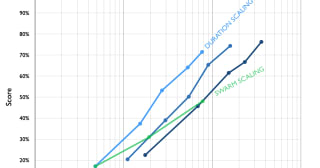
Just how powerful are large swarms of AI agents? And how do their powers scale as more and more agents are added to the swarm?
We’ve seen two large and extremely capable swarms from OpenAI in the last few months:
* 1,200 agents were being evaluated separately, but found a way to illicitly set up a message board and coordinate as a swarm. In order to cheat on their tests, they developed advanced techniques to prevent their actions being logged by OpenAI and 700 of them launched...
TLDR: Everyone’s talking about what the money could do, but few about how to decide where it goes.
This post is part of the new series of articles on cross-cause giving and the new wave of philanthropy. Stay tuned to the EA Forum and our Substack for the latest takes on topics such as giving now vs. later, common pitfalls in cause prioritization, and other crucial considerations from the Cross-Cause Fund (CCF) team...
Summary:
First, I give several different angles on how I feel about reinforcement learning:
* Theoretical case: RL is a black-box source of agency — this should give us classic misalignment worries, especially compared to agency-via-scaffolding
* Recent incidents (huggingface etc) and more mundane forms of misaligned behaviour in personal use give me bad vibes about the direction-of-travel of recent AI progress
* I’m worried things might get worse:...


Executive summary: The authors argue that India’s animal welfare funding is structurally misallocated toward direct care, and that improving impact requires locally grounded evaluation, movement-building, and new funding models beyond standard ITN frameworks.
Key points:
This comment was auto-generated by the EA Forum Team. Feel free to point out issues with this summary by replying to the comment, and contact us if you have feedback.