Comments
Pasting this section from the recent Sentinel brief; seems underdiscussed:
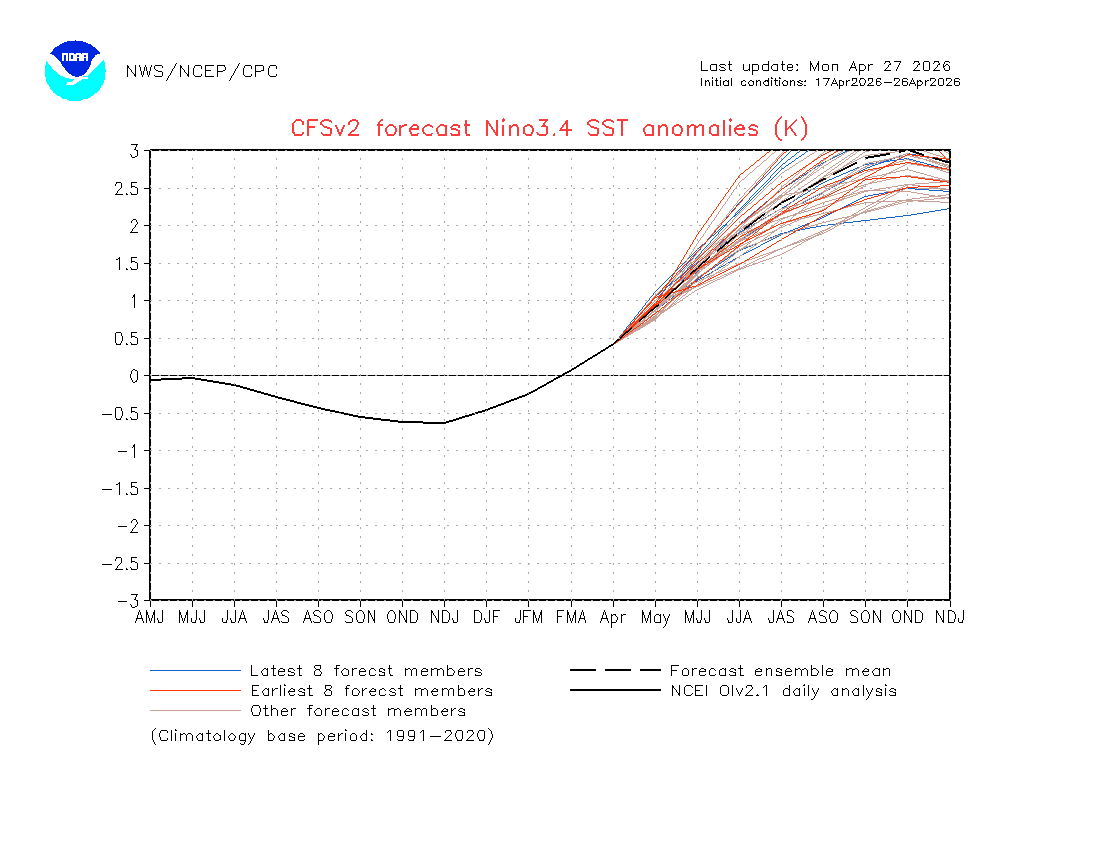
Previously we reported about the likelihood of a strong El Niño event later this year:
The US National Oceanic and Atmospheric Administration is forecasting a 61% chance of an El Niño weather pattern, and a 25% chance of a “super” El Niño. If an El Niño event were to start this fall, there could be an approximately 4% risk of a “megastorm” and “megaflood” occurring in California over the following year; some estimates place the damage it would cost at nearly $1T, or 4% of US GDP, more than the damage caused by the Great Flood of 1862. The risk has been increasing because of the rise in global temperatures. A super El Niño would also be expected to have worldwide effects on temperatures and precipitation.
Now, the latest climate ensemble model from NOAA, with data from April 17-26, shows an even wilder oscillation, reaching a 3°C shift or higher in the Niño 3.4 spot. This shifts one forecaster’s probabilities of a megastorm/megaflood in California in November-March to 6-7%, from our earlier 4%.
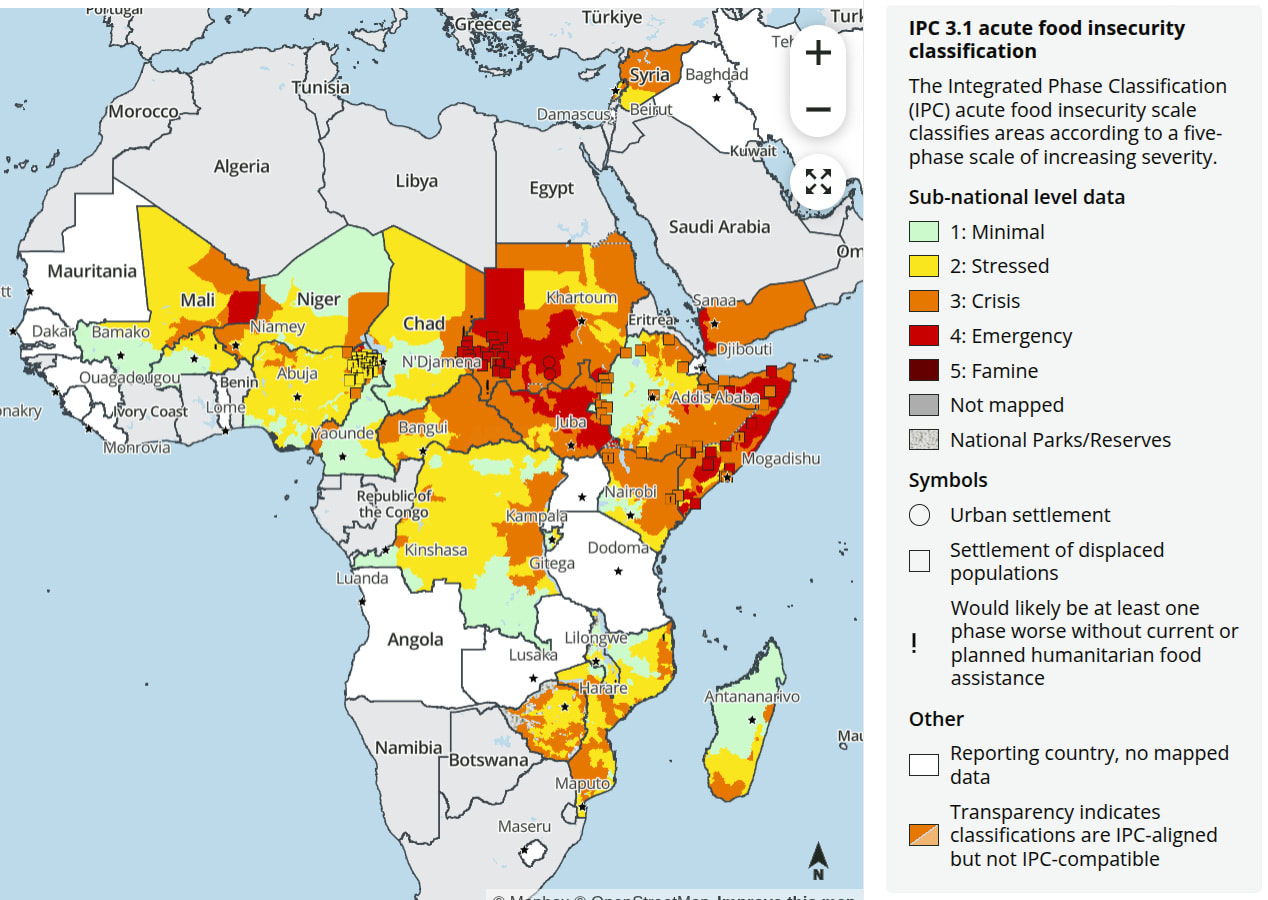
As El Niño events are a primary driver of elevated risks of serious droughts in Southern Africa, it is also looking increasingly likely that next year will bring drought and famine to parts of Southern Africa. The far weaker El Niño event in 2023-2024 resulted in widespread drought and the worst hunger crisis in decades in several southern African countries. An extreme El Niño event starting later this year would be expected to raise the risk of drought and hunger striking the already vulnerable region again. This risk might also compound as a blockade of the Hormuz strait reduces worldwide fertilizer shipments.
Not sure what readers might specifically do here.


