Two years ago at the non-profits conference, I met someone who cared deeply about the environment. In fact, his passion was taking over his life in what he called eco-anxiety. That’s the idea that you are so concerned about the environment that it begins to take over your every thought.
Similarly, I met a couple last year working in non-profits on short-term contracts with a young child. I loved hearing about their passion for animal welfare and their contributions to the cause but they were also anxious that they didn’t have the financial security to take the Giving What We Can pledge to donate 10% of their income to charity.
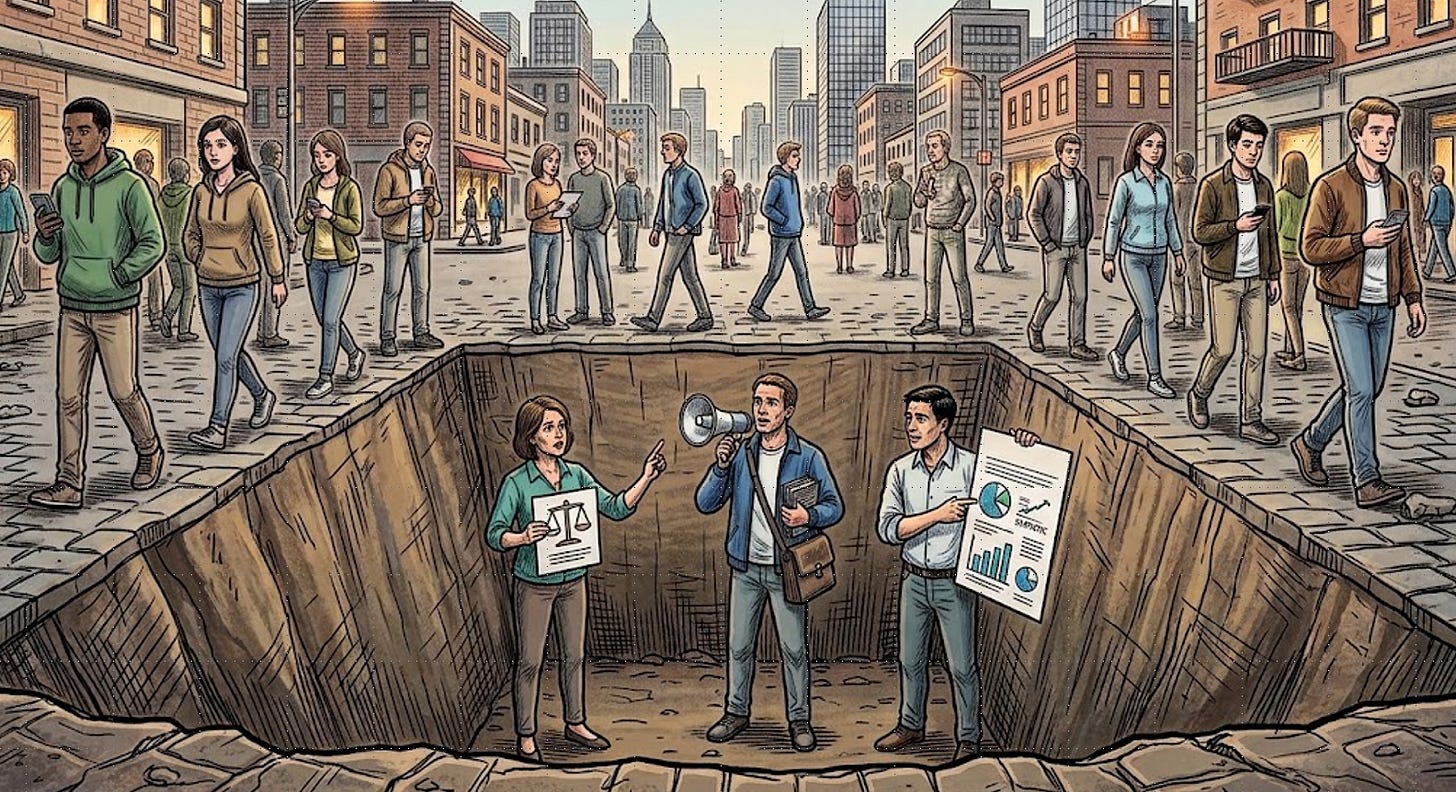
Both these experiences gave me great hope but also great concern. Here were people who were obviously caring and generous, but didn’t properly acknowledge it. It’s common to leave a charities conference with new anxieties about not doing enough after hearing about all the incredible things that people are doing in the world. They held themselves to a gruelling standard that is noble but counterproductive. Nobody should be scared or ashamed about a genuine wish to give back.
The fact is that we are bombarded by messages every day to do more - exercise more, eat better, buy more stuff, look more beautiful. Some of these messages are useful. Most are garbage. All of them compete for our devotion and if you have chosen to accept a message to do more good, you’ve chosen well.
But don’t choose purity. For any message worthy enough to incorporate into our lives, we should treat it not as law, but as a nudge. An inspiration. A north star.
Because if you are a human reading this, total and instant adherence to any new principle is impossible. The irony of thinking too rationally about giving is that moral purity is itself an irrational delusion. You can know you should give 50% of your income to charity and understandably fall short of that goal. We are humans with emotions and agency. I took about 8 years from when I first donated to effective causes (about $20 per month) to 10% of my income in 2022.
Religious folks understand this more than most. Many creeds emphasise inevitable waywardness from even the most ardent believers for which forgiveness is readily made available. Our philosophy of giving should provide the same latitude.
Thinking about giving more isn’t enough, but it’s a start. Giving $10 more than you gave yesterday isn’t enough, but it’s a good start. So wherever you are and whatever you do, just know that all these things might be true at once:
You could do more.
You do a lot.
You should keep going.

I quite appreciate your compassion for all the morally scrupulous, and this new lens that the money and work I've been able to put in may well amount to something, something more meaningful than I ever care to recognize. It's a bit of a throwback to being called an "essential worker" during COVID, working extra hours and hating it, yet always having such nice things said to me by friends, family, and strangers to keep in mind through it all.
Who would've thought that after discovering how to do way more for good causes than we thought possible, many of us would be more worried about not doing enough? I'm indeed not doing enough, because nobody is. If there was someone doing enough, factory farms wouldn't exist, neither would diseases, nor any other suffering in the world, preventable or otherwise; just one instance of it is plenty horrible on it's own.
The problems are bigger than we can comprehend, but so is the progress just a little care makes on solving them, let alone what sustained charitable action by treating ourselves nicely brings about. 🌠