Comments
A Huge Animal Welfare Win
“Ahold Delhaize USA has developed detailed, year-by-year plans tailored to each brand to meet our 2030 goal of 70% cage-free egg unit sales, with full conversion by 2032.”
— Ahold Delhaize
A friend of mine told me about this a couple days ago. This is a huge win (EA Forum post about it here), as apparently Ahold Delhaize is one of the largest grocery operators in the US. My friend shared that because of the company’s size and influence (and anticipated domino effects), this commitment means there’s a good chance that almost all eggs in the US will be from cage-free hens in ~5 years.
I’m not sure why, but that idea, or perhaps the way it was framed, was awe-inspiring to me. Practically all eggs in the US coming from cage-free hens in 5 years. I guess I was just so used to the idea that lots of eggs are from caged hens and even with things like Prop 12 that this would remain the case for the foreseeable future. But no! Now cage-free America is in the foreseeable future. And it’s because of grassroots activists doing their grassroots things. It’s because of people working their butts off together to send a message. And it worked.
The Activist’s Disillusionment
Contrast this great positive with the very negative views of some experienced activists.
I’m still a baby activist. I’ve been vegan for about 7 years now, but for much of that time, I was an inert vegan. Until quite recently, I knew almost nothing about activism. I still don’t know very much about it.
That’s especially clear when I compare myself to the veterans. For example, Bruce Friedrich was apparently with PETA for 25 years, which is longer than I’ve been alive (my 25th birthday is in about half a month). There are people who’ve done and seen a lot more than I, and that will remain true for quite a while.
That’s why I think that more than any setback or apathy/antipathy from without, it is the disillusionment of these activists which demoralizes me. When these people who have led the V-formation for so long turn back to the rest of us and say “we’ll never reach animal liberation through activism,” that more than anything makes my heart sink (to be clear, many aren’t really giving up; many are just saying that activism and advocacy and moral suasion alone won’t work, which is maybe a little less cynical, but still).
Because how could I possibly doubt them? Don’t they know better than anyone? Haven’t they fought harder than anyone? Haven’t they believed more than anyone? Wouldn’t they more than anyone want to believe that their life’s work meant something? Perhaps more than that, their disillusionment makes me feel sad that they feel this way, and afraid that I, too, will inevitably feel this way. Who am I, now, to tell them that they are wrong?
Hope, Not Optimism
I know my initial reaction to the Ahold Delhaize commitment spotlights the positive where surely the story is far more nuanced. What I didn’t say is that this commitment comes on the heels of a previous broken commitment to go cage-free by 2025. That the estimated impact depends on other retailers following Ahold Delhaize’s precedent rather than putting up their own fights against animal welfare standards. And that even then, the estimate is that this “only” affects 5-7 million hens (the statistic given is unclear on the timeframe, so I assume it’s 5-7 million hens annually?). That’s a huge number, but it’s very small compared to the ~10 billion land animals slaughtered annually in the US. And of course, those hens will still suffer horribly—just probably somewhat less horribly than before. There is still so much more to do.
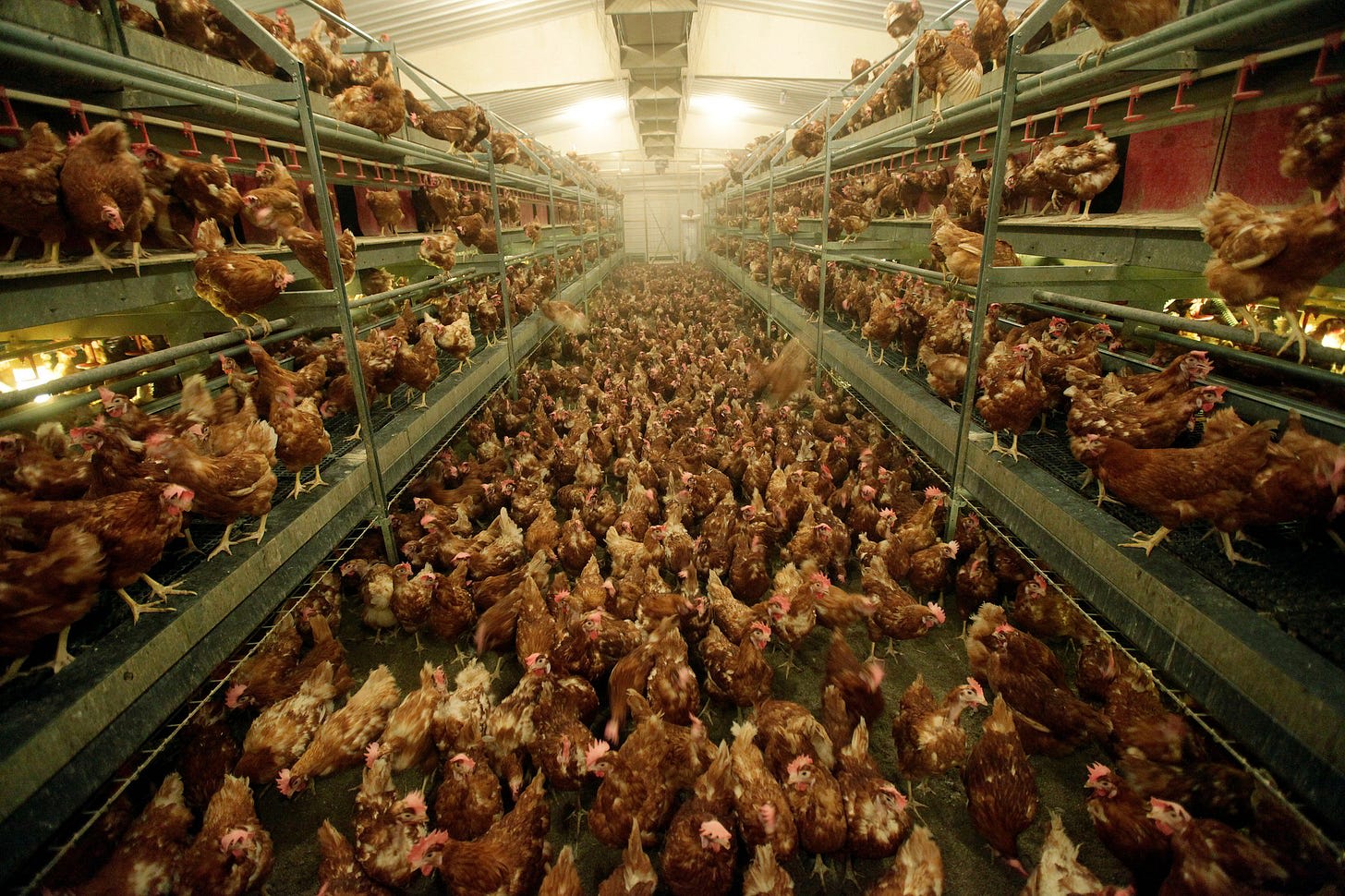
And still, I think it’s an incredible accomplishment. Forcing a public commitment to change out of one of the largest grocery operators in the US. Holding them accountable for their past failures. And most importantly, improving the conditions of life for millions. And making it so practically all eggs in the US will soon be taken from cage-free hens. And all of that because of a handful of people on shoestring budgets who have taken it upon themselves to do what they can. I salute their work, and I’m thankful that they dare to care when so many turn away.
What this reminds me of is the Effective Altruist’s mantra: “the world is awful. The world is much better. The world can be much better.” All of these things can be true at once. And so I propose that what we take away from this campaign—and from the many other campaigns over the years—is neither rose-tinted optimism nor defeatist pessimism, but hope.
A Bird’s-Eye View in Two Senses
I always go back to the antislavery movement.
That’s maybe the one historical example most relevant to animal liberation. A moral atrocity that was part and parcel of life for thousands of years, where individuals were stripped of their rights and treated like property, that until recently was considered permissible, even good. Doesn’t that ring a bell?
And now, slavery is illegal almost everywhere and hated in most places. Now we look back on the slave trade and those who profited from it with the greatest revulsion, and we look back on the abolitionists as heroes. As we should.
I don’t bring this up as some sort of kumbaya argument that everything will inevitably end happily; indeed, I’ve echoed arguments that the end of legalized slavery and the slave trade were not inevitable and might not even have been all that likely. What I think the history of antislavery (and other social movements) shows us is that large-scale social change, spearheaded by a small group of radicals, is possible, even in the face of massive economic incentives and cultural inertia. It’s been done before, and maybe, just maybe, we can do it again.
My intuition is that moral revolutions, like many things in the world, are nonlinear in nature: they can have very little change for a long time followed by very much change in a little time. That seems like what we saw with antislavery. So if we fit the data we have right now with a linear model, then of course we are going to think that nothing will ever change!
I also bring this up because I think many of the activists in that movement probably felt similar things to the activists in the animal rights movement today. They were a small minority shouting at an apathetic world. They encountered resistance and hatred, even being driven out of towns or murdered. They confronted atrocities and depravity that everyone else but the enslaved themselves turned a blind eye to. And they worked for years and years to fight for changes that so many of them never lived to see. I think about how even Benjamin Lay and other antislavery activists of his time might not have dared to imagine the world we live in today, even as they were the very lights that made it possible.
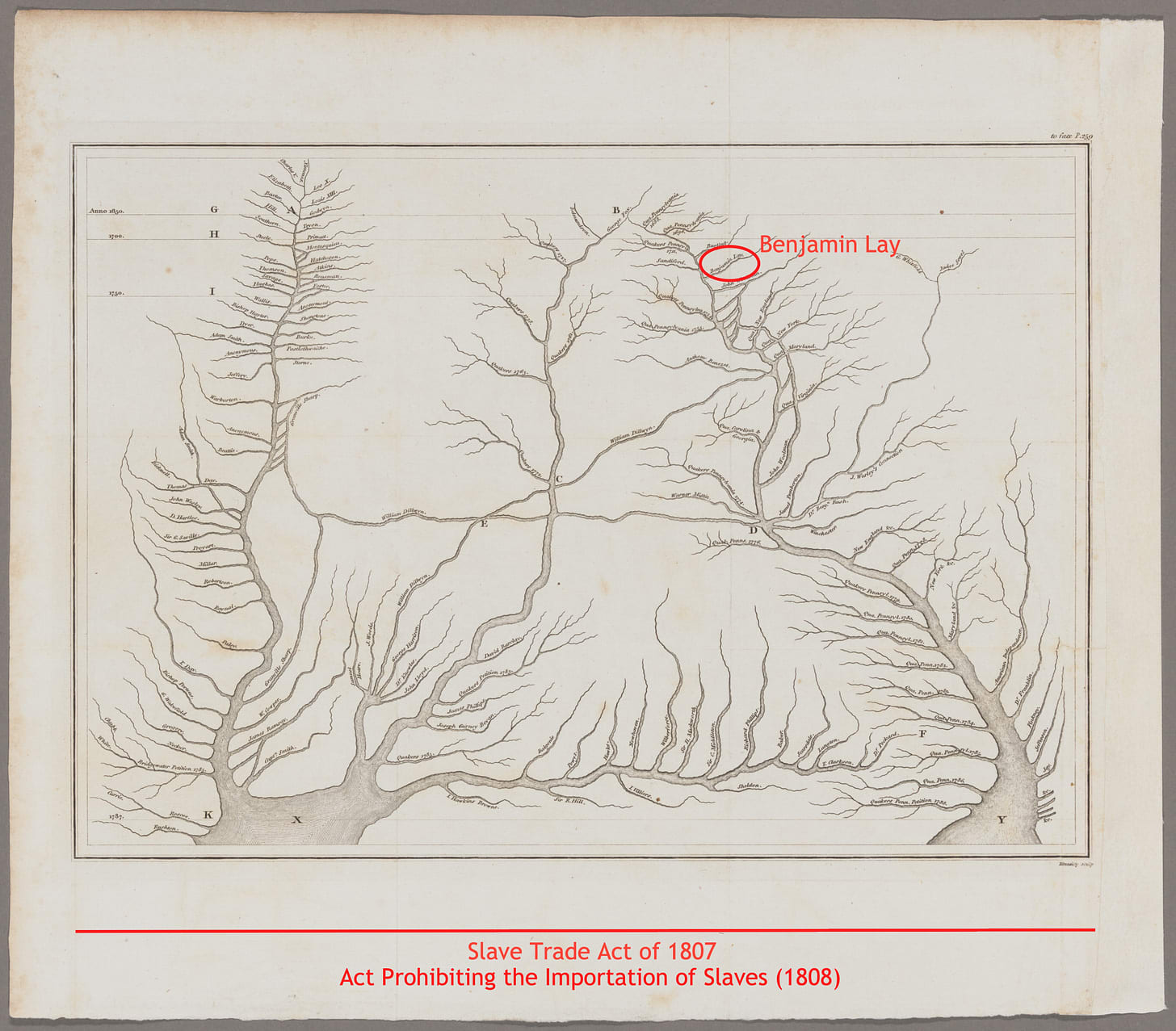
I think that’s a big part of this. The potential reality that none of us may live to see animal liberation is incredibly hard to deal with because in many ways, our world is the whole world. And it feels really disheartening and unfair that animal liberation might never happen in our world. And it is.
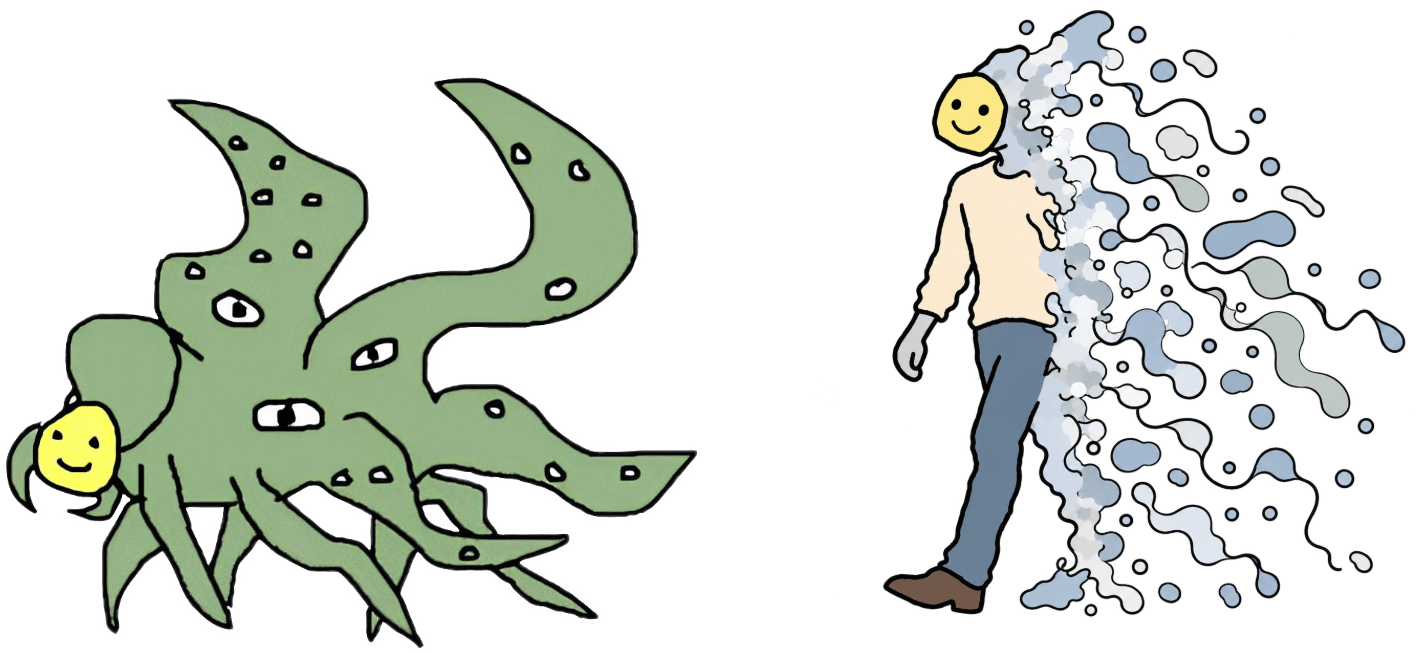
Yet if we can take a bird’s-eye view, perhaps there is a way of seeing that our actions still have meaning, even if their full fruits are not realized within our lifetimes. Perhaps we can understand that although our actions might not be sufficient for animal liberation, they are necessary for it. It is through us that the possibility—the hope—of animal liberation continues. Perhaps the arc of the moral universe does not bend towards justice, but that does not mean that we cannot bend it towards justice ourselves.
And there’s another bird’s-eye view I want us to consider: that of the birds themselves. Sometimes, I think we can get caught up in our own stories. We have a grand, sweeping vision of total animal liberation, and achieving a marginal improvement in 5–7 million of 10 billion animals in just one (fairly big) country seems like so little when it’s put against that vision. But I think there’s a sense in which the consequences are so much more meaningful when we think of each individual bird. Her life will still be terrible. But it will be less terrible than it would have been without the activism on her behalf. That matters for her.
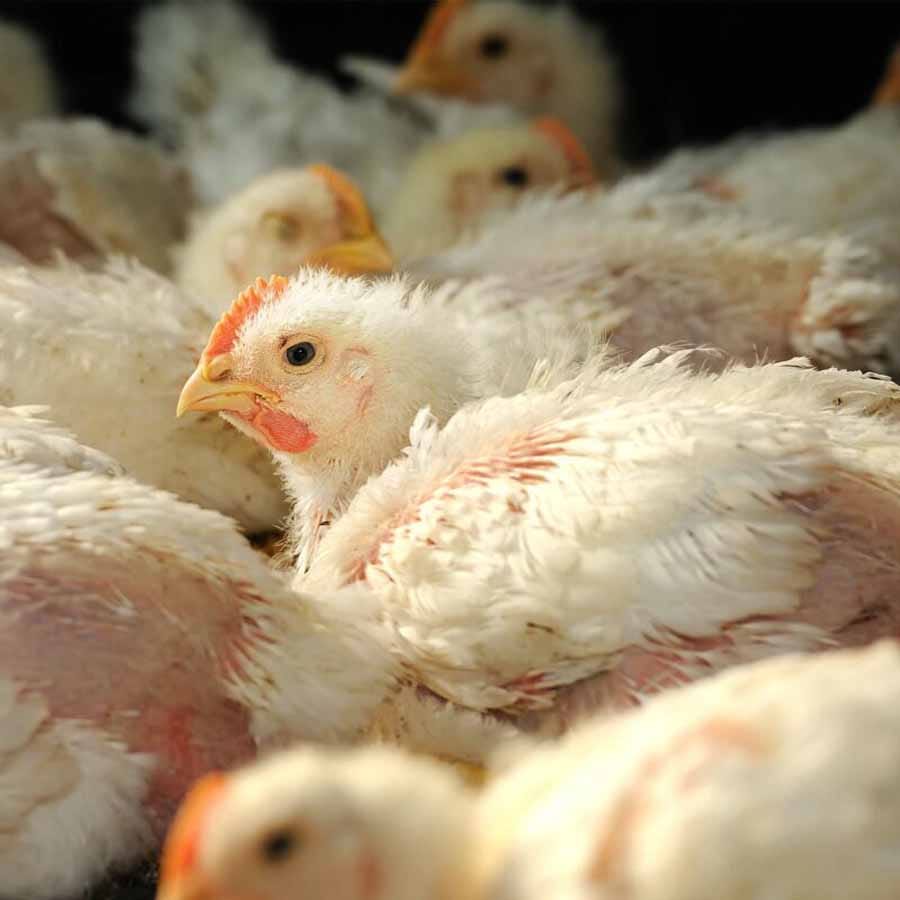
That’s why I want us to take both bird’s-eye views simultaneously. Our visions should be the fullest and most daring dreams of all, extending far beyond our own lifetimes if necessary. And we should recognize that every little win in that grand scheme still matters, especially for the individuals who feel its benefits.
Tending to the Hearth

Once, on a vacation with friends, I was trying to rekindle a campfire. The flames had died down, and there were left only embers. I blew and blew, fed twigs and sticks, and the embers sputtered and sizzled.
“Dude, I think it’s gone,” one of my friends said.
But I kept trying. And eventually, the flames started to grow. Small at first. Then bigger. Then, all of a sudden, the campfire was roaring again. I sat back, satisfied with myself.
What gives me hope, more than anything? It is that we see the sparks and embers today. There are ideas and stories, no matter how fringe, which burn with the passion for universal animal liberation. There are people and communities, if only a few, who house the flames and tend to them. I firmly believe that as long as these sparks have taken hold and created their own smoldering little embers, and as long as they continue to survive and persist through the damp of persecution and the cold of apathy, we have a real chance at achieving all that we set out to.
I’m inspired to take the torch because I can see the impact of those who took the torch before me, even if they can’t see it themselves. I’ve heard that back in the day, it was hard to even be a vegetarian, and there wasn’t even the concept of “vegan” until 1944. Now we have things like the Ahold Delhaize commitment, Amsterdam’s banning of public meat advertising, Palitana’s ban on meat, and Peter Singer getting taught in intro philosophy classes. Now in my outreach, I see people who say they know of factory farming and quietly oppose it, who give me a thumbs-up or a thank you because they know and care, even if just a little. This world—my world—was only made possible by the ones who came before. I am incredibly inspired by and thankful for all the work they have done, and a great hope of mine is that my generation of activists and advocates can keep the fire going and inspire the next generation in the same way.
Even if we don’t end up achieving it all in the end, at least we tried, and we’ve still made the world a better place for our efforts. Even something as small as getting practically all eggs in the US to be cage-free in ~5 years is unimaginably big. And it’s certainly something worth fighting for.

Thanks for this, but just to be clear:
- I am a huge fan of animal welfare campaigns, and my wife and I give significantly to groups working on them.
- I don't recall saying anything that could be interpreted as "we’re fighting an impossible battle.” If I did say something that could be interpreted that way, I apologize. I've never felt that way, so I'm surprised and disappointed that I've said something you interpret that way.
- I am a huge fan of both activism and moral suasion, both of which have done tremendous good, and I remain deeply involved in both.
- I don't think activism and moral suasion on their own will lead to a decrease in meat consumption (progress will be outweighed by growth in per capita meat consumption + population growth), and I would be surprised if anyone on this forum disagreed with that (I don't think I've ever heard anyone in EA suggest otherwise).
Thanks for all you're doing to create a compassionate world.
Hi Bruce,
Thanks for reading my post!
My apologies for using you as an example of disillusionment—I was going off a conversation I had with an acquaintance who talked with you once, and that probably led to me hearing something out of context. I will edit the article to reflect that.
I still stand by my position that it’s possible (though I don’t know how likely) for activism and moral suasion to bring about a moral revolution on their own, and the rest of the forum can fight me on that. But I also absolutely think alternative proteins are a great lever for change and that we should use everything we can to bring about the change we want to see. As Frederick Douglass said, men in earnest don’t fight with one hand when they might fight with two.
I look forward to reading your new book as well! And thank you for all the work that you’ve done; it is an inspiration to me and I’m sure to many others :)
Thank you very much for your kind reply.
I agree entirely with this: "we should use everything we can to bring about the change we want to see." So yes, I am 100% in favor of activism/moral suasion focused on a moral revolution.
I'm working very hard to make that easier (by taking the cognitive dissonance of meat consumption off the table).
This review of the book tackles the question we're discussing head on: https://www.facebook.com/tracey.n.glover/posts/pfbid022kRFtjm2CnsLEhz3WZK1vAHUkHPdGXoAfStgha23VgYdpJzQTdQxUabJ92ApspoMl?comment_id=1631160018025772&reply_comment_id=1418693136049003
btw, this does not appear to be updated?
Argh sorry again; I thought I’d pressed the publish changes button. Hopefully now it’s updated!