Comments
This is fascinating (genuinely, I mean that non-sarcastically), but how do I check if it is true or not?
EDIT: The historical stories I mean, obviously I can check claims about Gebru and Torres and current EA people if I want to.
This is fascinating (genuinely, I mean that non-sarcastically), but how do I check if it is true or not?
EDIT: The historical stories I mean, obviously I can check claims about Gebru and Torres and current EA people if I want to.
I should admittedly be a lot more diligent about citing my sources--I held off on doing so in this post bc I thought it would look awkward in what is ultimately just a brief bullet-point summary, but will do so more extensively in later posts!
I like the idea!
"This bundle originated out of anti-Calvinist polemics..."
I was raised in a Calvinist tradition, and during my exploration of the denomination's history, it really seemed to me like there was a relationship between the rise of Calvinism (specifically Dutch Calvinism) and various proto-TESCREAL concepts like capitalism.
"it really seemed to me like there was a relationship between the rise of Calvinism (specifically Dutch Calvinism) and various proto-TESCREAL concepts like capitalism"
This one of the most famous (though contested) claims in the entire history of sociology/intellectual history/economic history: https://en.wikipedia.org/wiki/The_Protestant_Ethic_and_the_Spirit_of_Capitalism
Ho boy is there ever!. This rabbit hole goes so, so much deeper than most people realize, in a way that tends to get missed because the primary missing link between the two--post-Restoration English Nonconformity--has mostly gone forgotten in popular history.
As just a teaser, for instance--Bayes' Theorem was co-authored by two Nonconformist clergymen, Thomas Bayes and Richard Price. The latter became interested in it in part because he thought it proved the existence of God, which for him also implied that human progress was the unfolding of divine providence on earth building into the Second Coming. He gave sermons along these lines in favor of the American and French Revolutions, and the latter of those was the specific event that Burke wrote Reflections on the Revolution in France in response to: he is the "Dr. Richard Price" addressed in that essay.
By this point, I imagine that most people here have already encountered Torres and Gebru's infamous "TESCREAL bundle". However, the discourse about this accusation so far has mostly revolved whether it is fair to connect the different elements of the bundle, including EA, together, or to attribute the sort of techno-millenarian eschatological aspirations that they speak of to everyone involved in these movements. What has gone mostly unnoticed is that their rhetoric about millenarianism is actually itself rooted in a specific religious and philosophical perspective which is much narrower than most labels that the pair attach to themselves; almost everything that they say about "TESCREAL" is actually an echo of early-to-mid-20th-century theological and ideological discourse about determinism and Christian postmillenialism which has become an important-but-largely-unnoticed influence on the thinking of a lot of those who claim to be on the political "left". I think that this genealogy is worth a lot more attention than it has received so far--critiques of the "idea of progress" are a dime a dozen in academia, but almost never will you find someone attempting the same of its reverse.
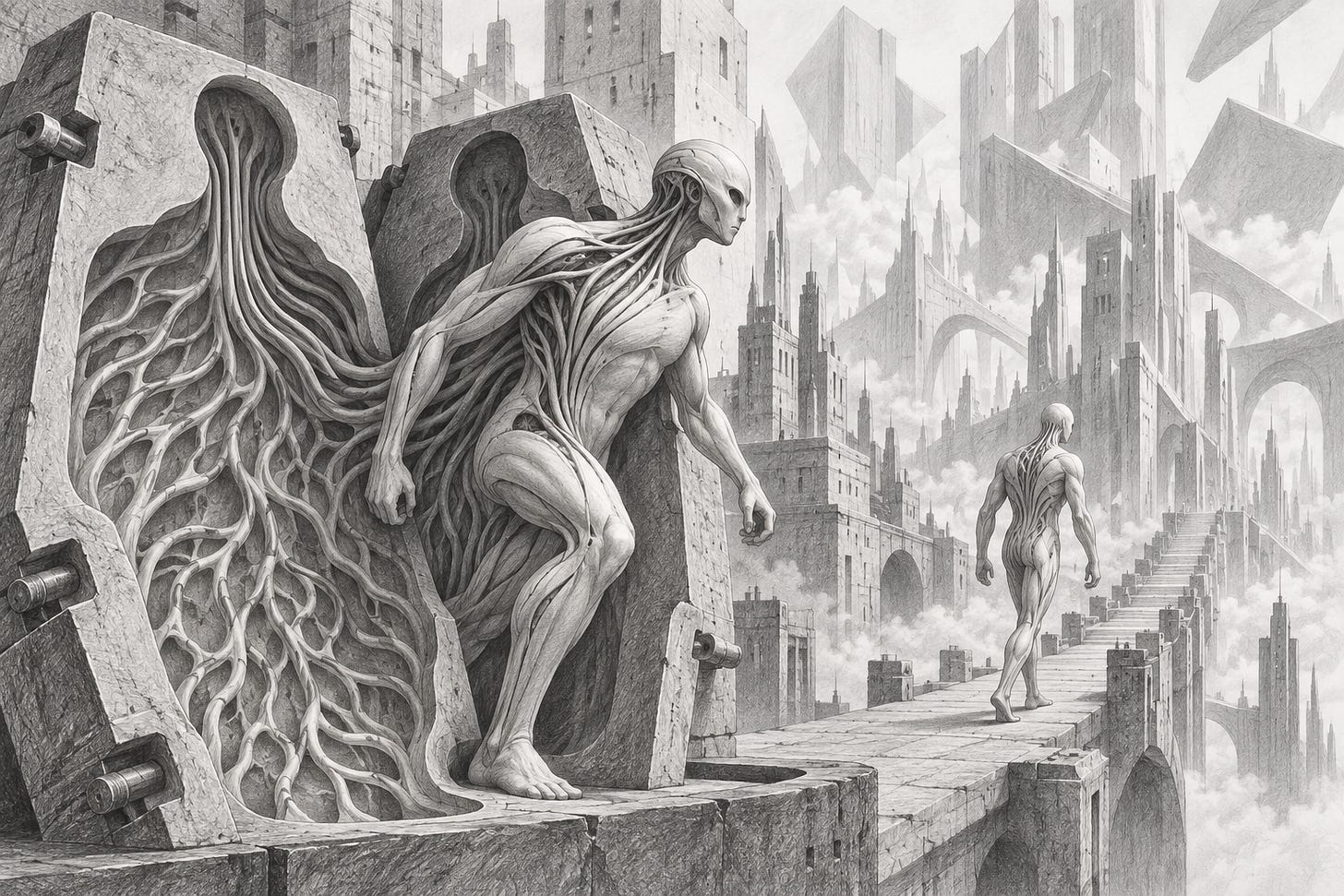
This linked post is what I plan to be the start of a series exploring the history and component values of this ideological bundle, which I have named R9PRESENTATIONALism--it stands for the following:
This bundle originated out of anti-Calvinist polemics written by Catholic and royalist Anglican writers during the early modern period, was picked up by 19th century romantic reactionaries to build the foundation of the emerging Counter-Enlightenment, got carried into the 20th century by various counter-modern literary movements seeking a third way against both capitalism and socialism which could justify the continuing relevance of the traditional humanistic disciplines against the new challenge of the social and psychological sciences, transitioned from being primarily of the political right to the political left due to the ideological aftermaths of WW2 and 1968, and took on its modern form in environmental and anti-globalization activism in the 90s. It is the actual source of the post-60s ideological transformation against the ideas of rationality, science, objectivity, and progress on the left which most people erroneously attribute to "postmodernism" or "critical theory" or the "New Left" or so forth, and it is the often-unspoken foundation behind essentially all ideological challenges against EA, AI safety, YIMBYism, and technological progress from the left and the academic establishment.
I plan on working through this intellectual history over the next few months to unpack exactly what this bundle entails, the motivations behind it, and the reasons why it has become so pervasive in the last half-century. My hope is that having a clear name for this phenomenon will clean up a lot of the confused current discourse about what things are and are not "anti-progress" or so forth; in reality, I think what we will find is that this stream of thought is both much wider and much narrower than most people believe, in that it actually has surprisingly little to do with any of the intellectual lineages that its proponents claim to subscribe to (Marxism, poststructuralism, feminism, conflict studies, etc.) but is a shockingly pervasive influence across modern culture to a greater degree than even most people who complain about it realize. Left-wing humanities academia, often thought of as the source of a lot of this influence, is actually really only a secondary reflection of it, when it's even involved at all. What is really going on here is a four-centuries-long counterrevolution within the arts to defend the validity of charismatic authority--one that I hope you will explore with me.


I'm genuinely asking, is this meant to be satire? Like, are you trying to critique the concept of "TESCREALISM" by creating a purpotedly equally absurd framework in the other direction?
The acronym is absurd, but the post itself seems to address very serious and interesting intellectual history (serious in tone, I've no idea if it is good intellectually history; things can be interesting and also not at all accurate.)
It certainly reads better as satire than intellectual history. A valid criticism of the idea of "TESCREALISM" is that bundling together a long list of niche ideas just because they involve overlapping people hanging out on overlapping niche corners of the web (and in California) to debate related ideas about the future and their own cleverness doesn't actually make it a coherent *thing*, given that lots of the individual representatives of those groups have strong disagreements with the others and the average EA probably doesn't know what cosmism is.
On the other hand, it's difficult to take seriously the idea that secular intellectuals who find the Singularity and some of its loudest advocates a bit silly and some of the related ideas pushed a bit sus are covertly defending a particular side of a centuries old debate in Christian theology...
"On the other hand, it's difficult to take seriously the idea that secular intellectuals who find the Singularity and some of its loudest advocates a bit silly and some of the related ideas pushed a bit sus are covertly defending a particular side of a centuries old debate in Christian theology"
I think the implicit claim is more "they have absorbed a lot of contestable ideas from a particular intellectual tradition that began with certain parts of Christian theology [and remember theology was politics in early modern Europe to a quite high degree], which now just seem commonsense to them, but are in fact highly contestable, and which now seem what being "left-wing" is to them, but which in fact historically have in many cases been associated with the right for hundreds of years". But I agree it probably does function better as a bit of a sophisticated troll, interesting as the historical claims are.
To be clear here I am not trying to suggest that all people who find the singularity a bit silly--I would include myself in this category--share some sort of underlying religious assumption, only that most vocal technology critics like Gebru and Torres who both oppose things like singulatarianism and accuse it of being deeply, intrinsically connected to the entire ideology of "progress" and "technology" as a whole are mostly drawing on previous thought which was based on such religious assumptions, even if they themselves are not aware of it.
But Gebru and Torres don't object to "the entire ideology of progress and technology" so much as accuse a certain [loosely-defined] group of making nebulous fantasy arguments about progress and technology to support their own ends, suggest they're bypassing a load of lower level debates about how actual progress and technology is distributed and accuse them of being racist. It's a subset of the "TESCREALs" who want AI development stopped altogether, and I don't think they're subliminally influenced by ancient debates on divine purpose either.
It's something of an understatement to suggest that it's not just Catholics and Anglicans opposed to ideas they disagree with gaining too much power and influence,[1] and it would be even more tendentious to argue that secular TESCREALs' interest in shaping the future and consequentialism is aligned in any way with Calvinist predestination.
If Calvin were to encounter any part of the EA movement he'd be far more scathing than Gebru and Torres or people writing essays about how utilitarianism is bunk.[2] Maybe TESCREALism is just anti-Calvinism ;) ...
Calvin was opposed to them too, although he believed heretics should suffer the death penalty rather than merely being invited to read thousand word blogs and papers about how they were bad people.
and be equally convinced that the e-accelerationists and Timnit and Emile were condemned to eternal damnation.