Comments
This newsletter was originally shared on 17/01/2026 by AWASH. The original format can be found here. To subscribe and get future newsletters emailed to you, please share your details here.
Hi everyone, it's Naveeth! The past few months have been incredibly productive - we've completed our initial scoping research, delivered our first conference presentation, and started implementation of our pilot project. It’s exciting to be progressing from research to implementation!
Here's what we've learned so far, and what's coming next…
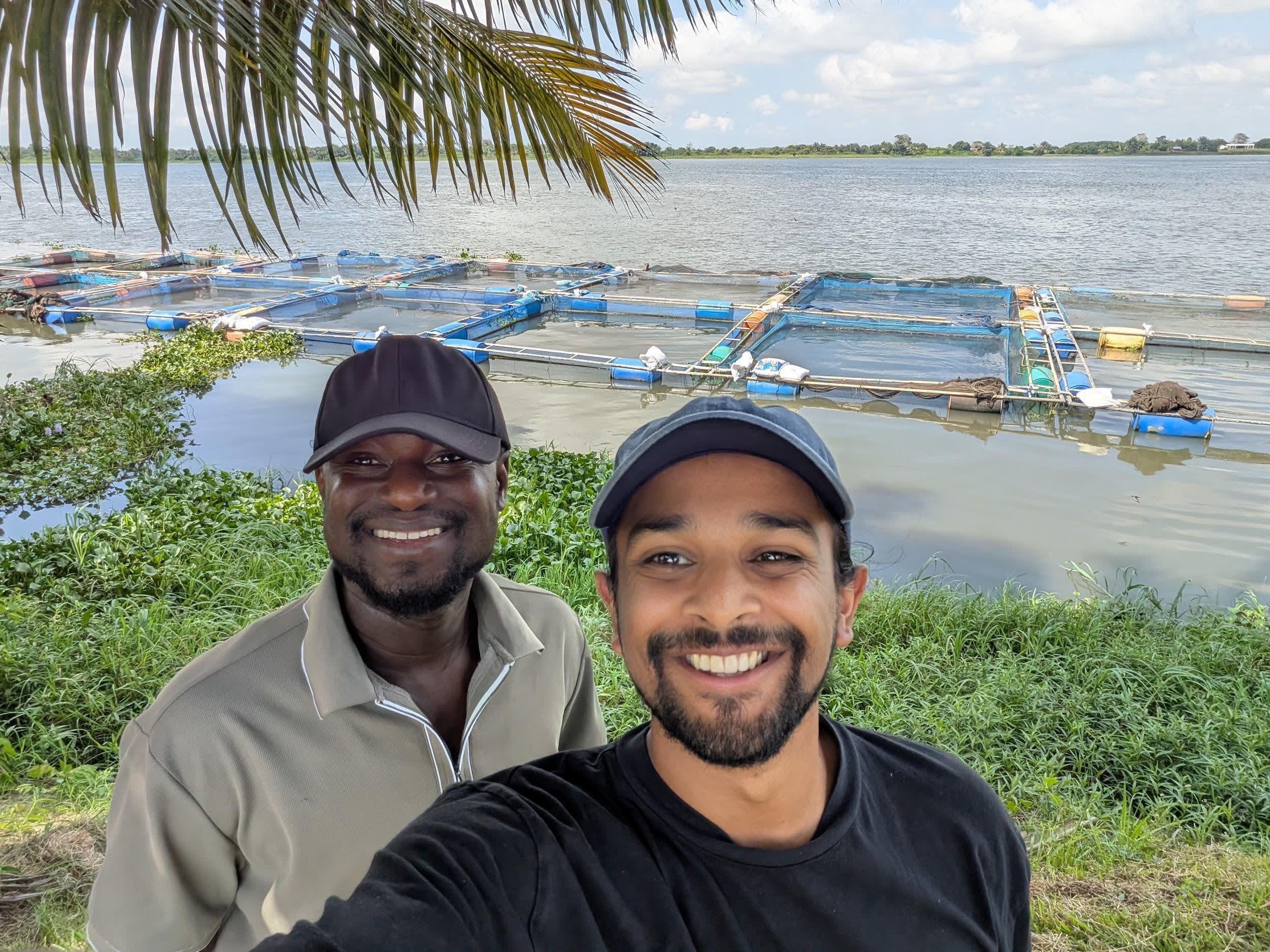
The purpose of the scoping visits was to gain first-hand insight into day-to-day practices and the key challenges farmers face, so we could identify a high-impact intervention.
We initially planned to visit four to six farms. However, thanks to Kwaku, our aquaculture specialist, and his strong existing relationships with farmers, we were able to expand this to eight. In total, we visited six large fish farms (>100 metric tonnes of tilapia produced per year) and two medium-sized farms (50 to 100 metric tonnes per year).
This scoping work has been invaluable, giving us sufficient confidence to pilot egg disinfection as our first intervention. We’re currently writing a detailed scoping report that explains our findings and the selection process for this intervention, which we’ll share with you as soon as it’s ready.
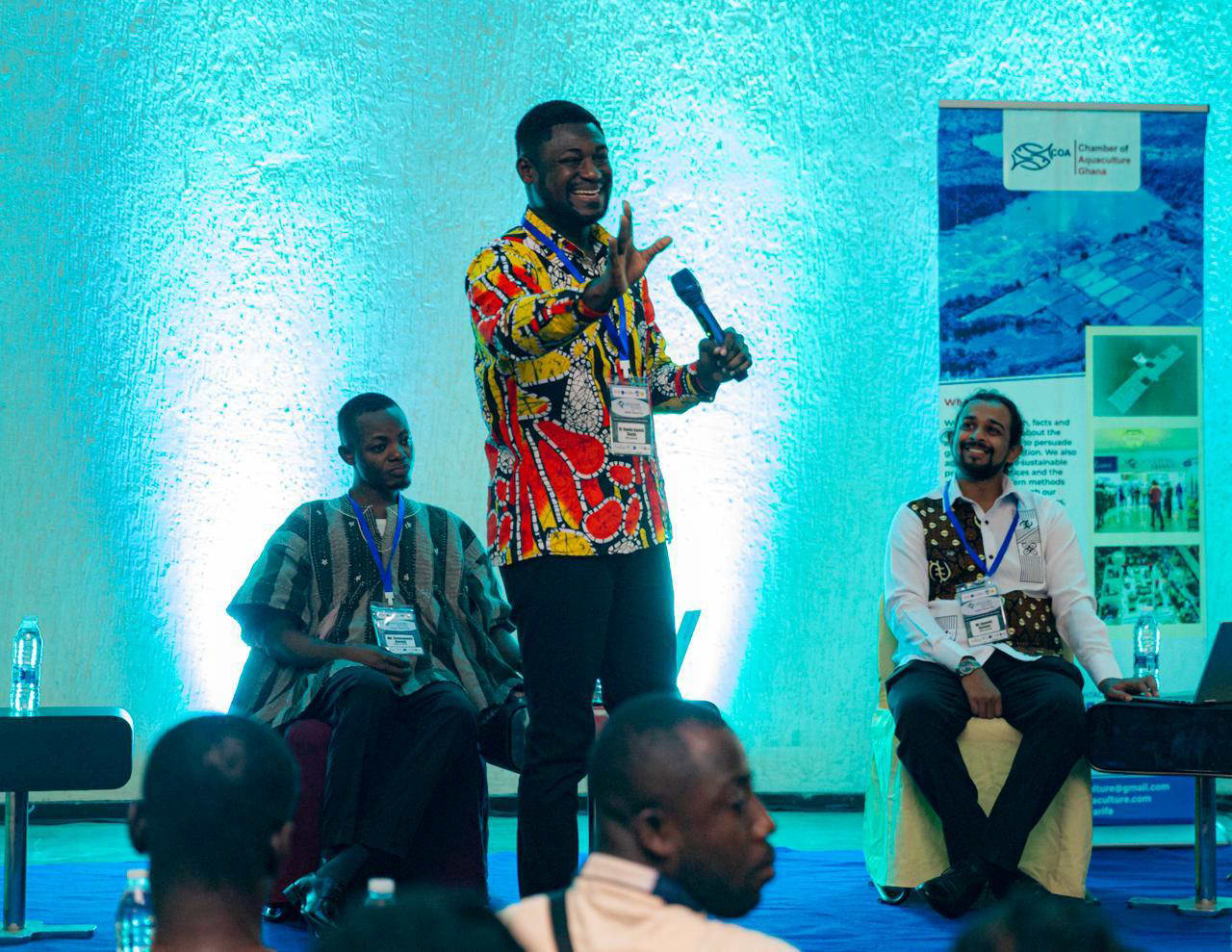
We spoke at the Chamber of Aquaculture’s Aquaculture Ghana Conference, where we delivered a talk titled “Simple changes to reduce losses and increase your profit.” The presentation focused on fish welfare and water quality, with particular emphasis on stocking density.
We explained how high stocking densities negatively affect fish welfare and health, and how this, in turn, impacts growth rates, feed costs (more feed is needed for the same growth), and revenue (as stunted growth leads to lower sale prices).
Around 30–40 farmers attended the session. 16 completed entry surveys, giving us insight into their operations: half farm tilapia exclusively, while the remainder focus on catfish or a mix of species. 11 participants completed exit surveys, all of whom found the talk useful (82% very useful, 18% somewhat useful) and said they would recommend it to others. While this feedback is encouraging, it’s also possible that those who found the talk less useful chose not to complete the survey.
Overall, the conference was a valuable opportunity to raise our profile and meet key stakeholders in person, including farmers, feed manufacturers, equipment suppliers, and government officials. Continued engagement of this kind is central to our goal of becoming known as a knowledgeable and trusted organisation that collaborates closely with farmers and other local stakeholders.
We began implementing our pilot this month! Based on our scoping work, we have decided to pilot egg disinfection as our first intervention. This will be covered in much more detail in our forthcoming scoping report, but here’s a brief overview of why we’ve chosen this approach:
One large farm has agreed to pilot the intervention on a small section of its hatchery. This farm produces just under 1% of Ghana’s national tilapia aquaculture output, meaning there is significant potential for impact. Success at a farm of this size is also likely to carry social weight when engaging other farms, increasing the likelihood of them adopting the practice if successful.
Special thanks to one of Kwaku’s contacts, Dr Ankrah, a pharmacist, who very kindly prepared a batch of the disinfectant specifically for our pilot and provided it free of charge.
Leveraging existing relationships
Kwaku’s existing relationships with farms were critical to the success of our scoping visits. Through his role at the Fisheries Commission, he regularly visits these farms and provides trusted advice, which made farmers more willing to host us and speak openly about their practices. Before Kwaku joined the project, I was only able to secure a single farm visit. This is something we’ll consider for future hiring decisions.
Setting realistic timelines
We initially hoped to begin implementing the pilot in December. In hindsight, allowing only two months for scoping, data analysis, intervention selection, and design was overly ambitious. We also underestimated how preoccupied the farmers would be during the busy Christmas period. Starting in the new year is more realistic and has allowed for a stronger launch.
Lessons from the conference
Key lessons from the conference included:
Lessons from the initial scoping
There are additional lessons from the scoping work, which will be explored in more detail in the report. Broadly, these relate to:
Continue implementing the intervention:
We’ll closely monitor and evaluate the impact of the pilot, and adjust our approach as needed.
We initially plan to run the pilot for three months. However, we’ll continuously assess results against our research questions and decide whether to extend it (to gather more data), stop it (if impact is negligible or negative), or expand it (if it proves effective).
Continue stakeholder engagement
We’ll continue visiting key stakeholders, including large farms we haven’t yet visited, as well as laboratories, universities, and other relevant institutions.
Continue researching alternative interventions
We’re doing this because:


Executive summary: AWASH reports completing scoping research, engaging farmers through a national conference, and beginning a pilot egg disinfection intervention in Ghanaian tilapia hatcheries, with early progress suggesting both feasibility and potential for high welfare impact while further evaluation is underway.
Key points:
This comment was auto-generated by the EA Forum Team. Feel free to point out issues with this summary by replying to the comment, and contact us if you have feedback.