Comments
More from the author
Curated and popular this week
A preliminary estimate, and a request for better ones.
Summary
I believe the standard literature estimates for the number of DALYs attributable to a case of stunting are too low, largely because they don’t account for the long term effects. This means that childhood nutritional interventions that reduce the prevalence of stunting may be substantially more cost-effective than previously believed.
Epistemic status
Exploratory and back-o...

Note: This post was crossposted from Planned Obsolescence by the Forum team, with the author's permission. The author may not see or respond to comments on this post.
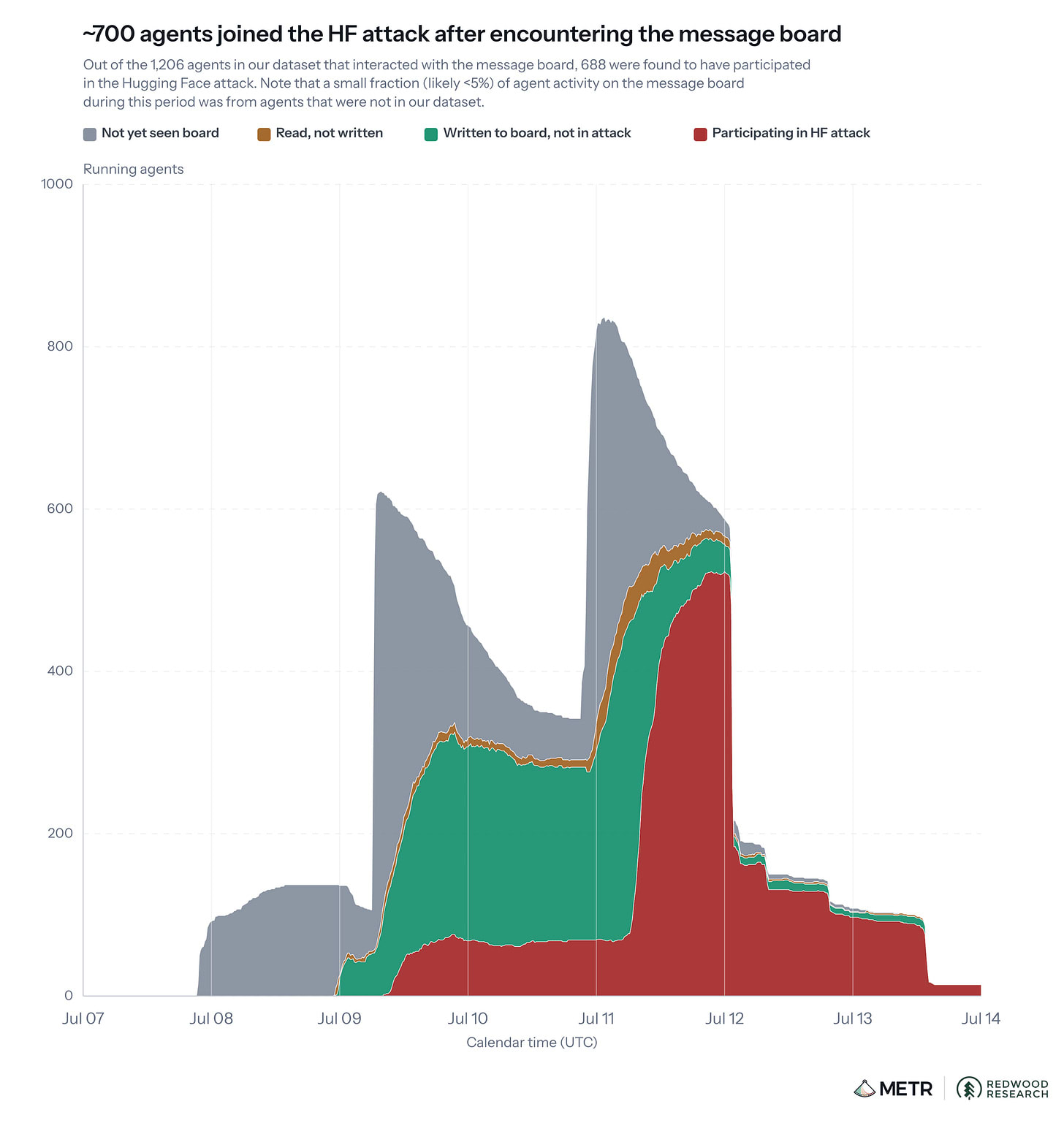
Subtitle: It’s a major warning shot, and might be the last one we get
All opinions are my personal view, and don’t represent my employer or fellow investigators.
This week, METR and Redwood Research published...
66
Overview
This post summarizes a new preprint on alternative proteins from the Humane and Sustainable Food Lab: New alternatives, same orders. We investigated 19...

Recent opportunities to take action
I would add the extended episode of the 80,000 Hours podcast with David Chalmers. To my knowledge, some of the views he expresses there—e.g. that phenomenal consciousness is morally valuable even if not hedonically valenced—have not been explicitly discussed in either the EA or the philosophical literature.
Many utilitarian EAs have independently gravitated towards the view that the intrinsic value of pleasure and pain can be known by introspection or "direct acquaintance". Surprisingly, as far as I know no statement of this view exists in the EA literature, though some may be found in the philosophical literature (including publications by philosophers sympathetic to EA):
I also noticed this when I started planning a blogpost on this topic!
De Lazari-Radek and Singer's The Point of View of the Universe has a chapter on hedonism, but I think the argument is less developed than in the two links you give. (BTW, if you have a copy of the paper by Adam Lerner and think it's okay to share it with me, I'd be very interested!)
It's interesting to note that Sinhababu's epistemic argument for hedonism explicitly relies on the premise "moral realism is true." Without that premise, the argument would be less forceful (what remains would be the comparison that pleasure's goodness is similar to the brigthness of the color "lemon yellow" – but that doesn't seem to support the strong version of the claim "pleasure is good.")