
All of freedomandutility's Comments + Replies
Vasco has come to a certain conclusion on what the best action is, given a potential trade-off between the impact of global health initiatives and animal welfare.
I think it is reasonable to disagree but I think it is bad for the norms of the forum and unnecessarily combative for us to describe moral views we disagree with as "morally repugnant". I think this is particularly unfair if we do not elaborate on why we either:
a) think this trade-off does not exist, or is very small.
or
b) disagree.
For example, global health advocates could similarly argue that EA ...
RCT-informed interventions focused on the poorest will not increase demand for factory farmed meat - only broad based economic growth will do this. So one solution is to focus on micro interventions targeted at the extreme poor.
Another solution is to support the alternative proteins sector in LMICs, which could enable some degree of “leapfrogging” factory farmed meat and reduce carbon emissions.
In terms of changes in status and what people are doing:
- pivot from AI safety technical research to AI governance policy work
- pivot from broader biosecurity to intersection of AI and bio
- adoption of progress studies ideas / adoption of metascience and innovation policy as a priority cause area
- taking broad-based economic growth seriously rather than a sole focus on randomista development
- greater general engagement with politics
- further reduction in focus on effective giving, increased focus on career impact
I don’t think the Global Health and Animal Welfare cause areas have changed too much, but probably get a smaller proportion of attention.
Unrelated to this post, but FYI I think some of the downvotes you’ve received on other posts are because generic productivity advice at least usually isn’t a category of post which this forum is intended for. (Also, most EAs are the types of people who are probably familiar with most e genetic productivity tips already).
Exceptions may be if it is a long list, or something that has been extremely novel or life-changing for you.
Your productivity tips may be better off being posted as Shortform instead of as Posts.
Only works on people who believe that climate change is real! These days you'll at least see a lot of equivocation on that from Republicans. See also Environmentalism in the United States Is Unusually Partisan.
"Thinking in terms of group rather than individual agency makes transition from capitalism to socialism appear more tractable."
I disagree. There is a long history of large, organised, and well-funded groups failing to engineer transitions to socialism within individual countries, let alone a global transition to socialism.
"Most charities seem much less effective than the most effective for-profit organizations, and most of the good in the world seems achieved by for-profit companies."
I disagree but even I did agree, per dollar of investment, I think the best charities far outpeform the best for-profit companies in terms of social impact, and we can do a reasonable job of identifying the best charities, such that donating a lot of money to these charities should be seen as a necessary component of being EA-aligned if you're rich.
I don't think the third question is a good faith question.
This is the context for how Wenar used the phrase: "And he’s accountable to the people there—in the way all of us are accountable to the real, flesh-and-blood humans we love.""
I interpret this as "direct interaction with individuals you are helping ensures accountability, i.e, they have a mechanism to object to and stop what you are doing". This contrasts with aid programs delivered by hierarchical organisations where locals cannot interact with decision makers, so cannot effectively oppose programs they do not want, eg - the deworming incident where parents were angry.
"If I accepted every claim in his piece, I’d come away with the belief that some EA charities are bad in a bunch of random ways, but believe nothing that imperils my core belief in the goodness of the effective altruism movement or, indeed, in the charities that Wenar critiques."
I agree - but I think Wenar does a very good job of pointing out specific weaknesses. If he alternatively framed this piece as "how EA should improve" (which is how I mentally steelman every EA hit-piece that I read), it would be an excellent piece. Under his current framing of "EA...
The use of quantitative impact estimates by EAs can mislead audiences into overestimating the quality of quantitative empirical evidence supporting these estimates.
In my experience, this is not a winnable battle. Regardless of how many times you repeat that your quantitative estimates are based on limited evidence / embed a lot of assumptions / have high margins of error / etc., people will say you're taking your estimates too seriously.
Re 1, as Richard says: "Wenar scathingly criticized GiveWell—the most reliable and sophisticated charity evaluators around—for not sufficiently highlighting the rare downsides of their top charities on their front page.8 This is insane: like complaining that vaccine syringes don’t come with skull-and-crossbones stickers vividly representing each person who has previously died from complications. He is effectively complaining that GiveWell refrains from engaging in moral misdirection. It’s extraordinary, and really brings out why this concept matters." ...
This is great, thank you for doing this hard work!
A couple of disagreements:
"I think it’s important for many to realise the importance of other players and funding sources in the landscape. This could mean many more funding opportunities EAs are systematically neglecting."
My view is that many players and funding sources means that fewer important funding opportunities will be missed.
"I was struck by how little philanthropy has been directed towards tech development for biosecurity, mitigating GCBRs, and policy advocacy for a range of topics from regu...
My sense is that there is a lot of impact to be made from just convincing US foundations to donate to charities abroad, which is probably more tractable than selling EA as an entire concept, and is still very compatible with TBP.
(In my opinion they are basically correct about TBP and EA being incompatible!)
Interesting post!
I'm a big fan of both progress studies and effective altruism / international development.
I think we may disagree on the size of the trade-offs when it comes to drawing philanthropic funding to these areas. I think there is heavy overlap between the intellectual circles of progress studies and effective altruism, so most of the investment going into one approach is trading off directly against investment in the other approach.
I also think how progress studies aims to achieve American economic growth is very important. Some approaches to gr...
I think you’re asking a general question of whether we should politicise or depoliticise issues we care about. I pretty much always think the answer is depoliticise, because very crudely, I expect the right and left to be in power about 50% of the time in 50% of the places, so if we want the laws we want everywhere, we should depoliticise things we care about.
There is high-quality evidence supporting some of these orgs, but for the think-tank types, giving to them would be part of a more hits-based giving approach.
Also, I think many people would say that economic development in LMICs in particular is neglected and underfunded. Stefan Dercon's work (ex-chief economist of Britain's aid agency and development economics professor) challenged my previous assumption that LMIC governments are already optimising for broad-based economic growth.
Your first comment claims that the 120 fold difference in population makes Israel's enemies more influential than its allies at the UN (which I disagree with), which is different to claiming that the disproportionate populations have "some" effect over the UN (which I agree with).
Religions are not represented at the UN, countries are, and the major forces influencing the UN in favour of Israel are the US and the UK, which are mostly not made up of Jews, and the main force influencing the UN against Israel is China, which is largely not made up of Muslims.&...
I think I generally agree with the idea that "making altruism a habit will probably increase your net impact", and thinking of altruistic effort as a finite resource to spend is inaccurate.
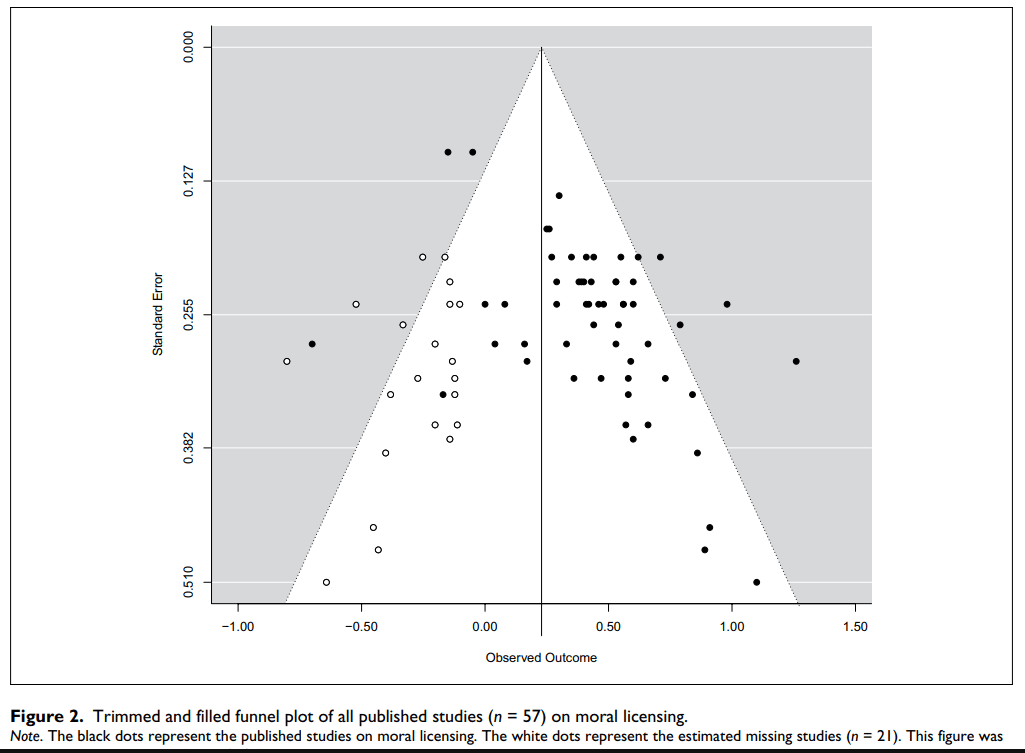
However I think there are is a force, "moral licensing" (https://journals.sagepub.com/doi/pdf/10.1177/0146167215572134) pushing in the opposite direction of habit formation.
My personal recommendation is that people should make altruism a habit where it does not feel like a large personal sacrifice. For almost all this will include generally acting morally under virtue et...
This is by no means a comprehensive list—and some of these relate to points Shakeel already raised—but here’s a list of more wins from 2023, some more meta than others:
- New Incentives hit 2 million infants served by their program. As of January 3, 2024, they’re now at 2,585,587 enrolled in total. Their 2023 enrollment exceeded all their previous years combined.
- Giving What We Can launched a new pledge option for those with significant wealth to give away 10% of their total wealth, not just their income. They also launched effective giving grou
Thanks for your comment!
I think a sufficiently intelligent ASI is equally likely to outsmart human goal-directedness efforts as it is to outsmart guardrails.
I think number 2 is a good point.
There are many people who actively want to create an aligned ASI as soon as possible to reap its benefits, for whom my suggestion is not useful.
But there are others who primarily want to prevent the creation of a misaligned ASI, and are willing to forgo the creation of an ASI if necessary.
There are also others who want to create an aligned ASI, but are willing to consid...
I don't think adoption by LMIC governments removes the desirable wealth transfer to LMICs. I think most of the wealth transfers to LMICs will continue via other NGOs.
CGD have some interesting work making the case that governments should focus on prioritising the most cost-effective health services, and donors, whose funding is less reliable should focus on additional, less cost-effective stuff - https://www.cgdev.org/blog/putting-aid-its-place-new-compact-financing-health-services
Great piece!
I've long thought society overestimates the value of schooling (particularly secondary school).
One reason is negative spillovers (i.e, some of the benefits to individuals from education is probably from winning zero-sum games around jobs). Do you know if education RCTs have tried to take this into account (Eg - via two-step randomisation?)
Another reason I've been thinking about recently is the fact that most people forget most of the knowledge they learned in school, very soon after finishing school. I don't think there's a plausible mech...
Interesting point, but why do these people think that climate change is going to cause likely extinction? Again, it's because their thinking is politics-first. Their side of politics is warning of a likely "climate catastrophe", so they have to make that catastrophe as bad as possible - existential.
Right, but pooling or not pooling effects of different interventions relies on a subjective assessment of whether the interventions (chlorine, filtration, spring protection) are similar enough. Kremer et al have made different assessments to the Cochrane review authors, which I think needs justification. The subjectivity in this part of any meta-analysis is very susceptible to p-hacking.
How does this differ to citizens assemblies?