Comments
This is a good post if you view it as a list of frequently asked questions about effective altruism when interacting with people who are new to the concept and a list of potential good answers to those questions — including that sometimes the answer is to just let it go. (If someone is at college just to party, just say "rock on".)
But there’s a fine line between effective persuasion and manipulation. I’m uncomfortable with this:
This is an important conversation to have within EA, but I don't think having that be your first EA conversation is conducive to you joining. I just say something like "Absolutely—they’re imperfect, but the best tools available for now. You're welcome to join one of our meetings where we chat about this type of consideration."
If I were a passer-by who stopped at a table to talk to someone and they said this to me, I would internally think, "Oh, so you’re trying to work me."
Back when I tabled for EA stuff, my approach to questions like this was to be completely honest. If my honest thought was, "Yeah, I don’t know, maybe we’re doing it all wrong," then I would say that.
I don’t like viewing people as a tool to achieve my ends — as if I know better than them and my job in life is to tell them what to do.
And I think a lot of people are savvy enough to tell when you’re working them and recoil at being treated like your tool.
If you want people to be vulnerable and put themselves on the line, you’ve got to be vulnerable and put yourself on the line as well. You’ve got to tell the truth. You’ve got be willing to say, "I don’t know."
Do you want to be treated like a tool? Was being treated like a tool what put you in this seat, talking to passers-by at this table? Why would you think anyone else would be any different? Why not appeal to what’s in them that’s the same as what’s in you that drew you to effective altruism?
When I was an organizer at my university’s EA group, I was once on a Skype call with someone whose job it was to provide resources and advice to student EA groups. I think he was at the Centre for Effective Altruism (CEA) — this would have been in 2015 or 2016 — but I don’t remember for sure.
This was a truly chilling experience because this person advocated what I saw then and still see now as unethical manipulation tactics. He advised us — the group organizers — to encourage other students to tie their sense of self-esteem or self-worth to how committed they were to effective altruism or how much they contributed to the cause.
This person from CEA or whatever the organization was also said something like, "if we’re successful, effective altruism will solve all the world’s problems in priority sequence". That and the manipulation advice made me think, "Oh, this guy’s crazy."
I recently read about a psychology study about persuading people to eat animal organs during World War II. During WWII, there was a shortage of meat, but animals’ organs were being thrown away, despite being edible. A psychologist (Kurt Lewin) wanted to try two different ways of convincing women to cook with animal organs and feed them to their families.
The first way was to devise a pitch to the women designed to be persuasive, designed to convince them. This is from the position of, "I figured out what’s right, now let me figure out what to say to you to make you do what’s right."
The second way was to pose the situation to the women as the study’s designers themselves thought of it. This is from the position of, "I’m treating you as an equal collaborator on solving this problem, I’m respecting your intellect, and I’m respecting your autonomy."
Five times more women who were treated in the second way cooked with organs, 52% of the group vs. 10%.
Among women who had never cooked with organs before, none of them cooked with organs after being treated the first way. 29% of the women who had never cooked with organs before did so for the first time after being treated the second way.
You can read more about this study here. (There might be different ways to interpret which factors in this experiment were important, but Kurt Lewin himself advocated the view that if you want things to change, get people involved.)
This isn’t just about what’s most effective at persuasion, as if persuasion is the end goal and the only thing that matters. Treating people as intellectual equals also gives them the opportunity to teach you that you’re wrong. And you might be wrong. Wouldn’t you rather know?

Institutional Trust
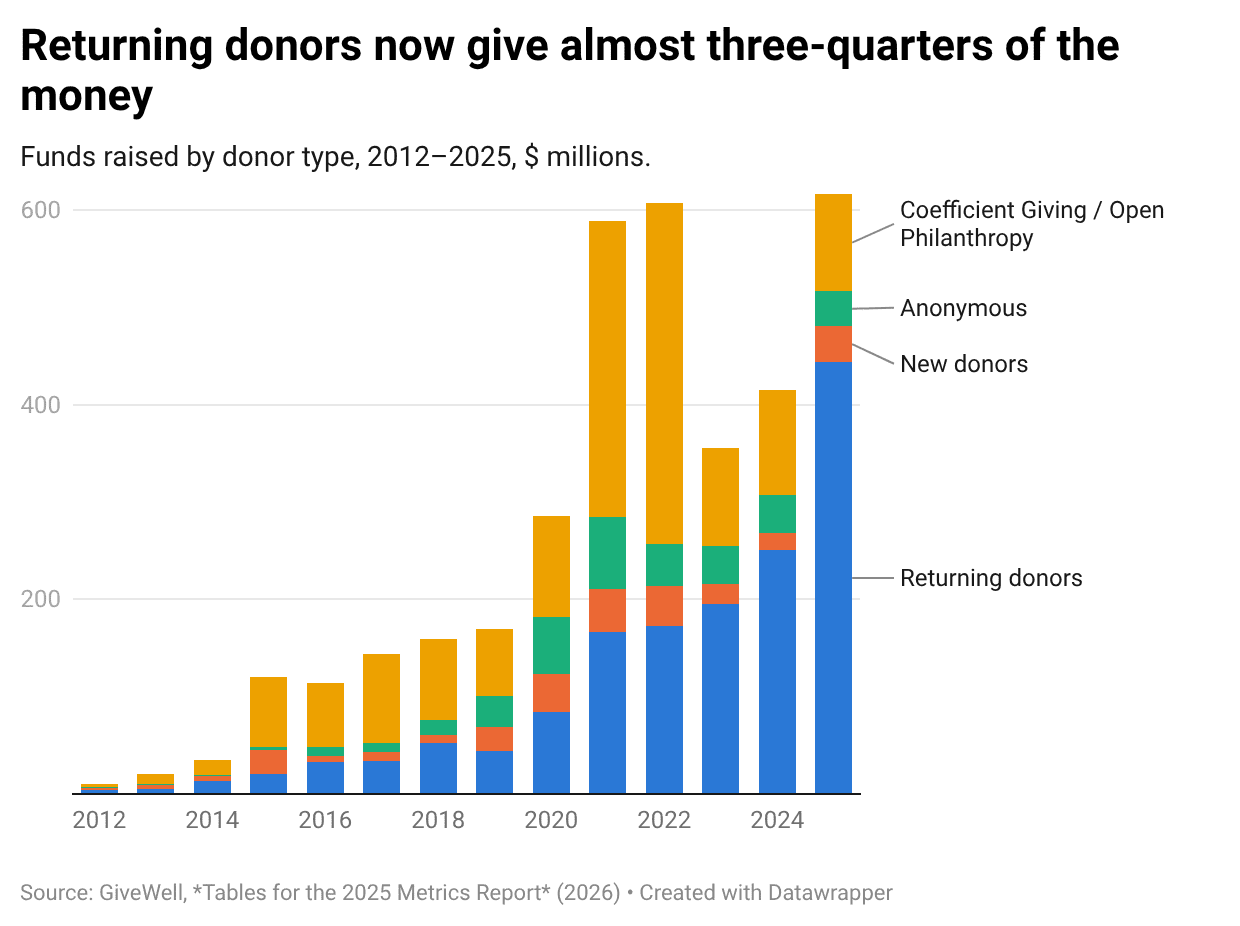
I don't quite follow the logic here. Your first paragraph seems to acknowledge that some degree of institutional trust is part of the trunk rather than merely the branches, but the end of the second paragraph characterizes it as a branches issue.
I'd agree that institutional trust is in a sense less foundational than "root" issues like altruism and effectiveness, but being less foundational does not imply it is less practically critical to reach the end result. If A and B and C and D are all practically essential to reach any of E through H, it's reasonable for someone who is being invited in to start with whichever of A-D they think is weakest out of respect for their time.
As an aside, if one goes so far as to say that EA as currently constituted doesn't have anything meaningful to offer to those who do not "believe that at least some of its flagship organizations and leaders—80,000 Hours, Will MacAskill, Giving What We Can, etc.—are both well-intentioned and capable," [1] then maybe that is a signal something is wrong.
This is further along than your statement that this belief is necessary to "embrace" EA, so I don't want to imply that it is your view.
That's a mistake, thanks for pointing it out! That final sentence wasn't meant to stay in. That is, I think institutional trust is part of the trunk and not the branches.
I agree with your side point that there are some ideas & tools within EA that many would find useful even while rejecting all of the EA institutions.