Comments
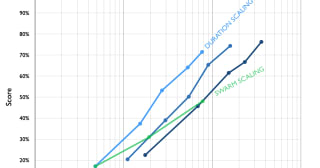
Just how powerful are large swarms of AI agents? And how do their powers scale as more and more agents are added to the swarm?
We’ve seen two large and extremely capable swarms from OpenAI in the last few months:
* 1,200 agents were being evaluated separately, but found a way to illicitly set up a message board and coordinate as a swarm. In order to cheat on their tests, they developed advanced techniques to prevent their actions being logged by OpenAI and 700 of them launched...


Two neglected X-risks
I've been going through various listings of x-risks (and GCR's, to account for some uncertainty re: climate and nuclear) by prominent organisations, and after a brief scanning have found that the usual list includes:
No list that I came across (explicitly) includes either:
I would make the case that both of these are potential X-risks, and should be taken seriously as objects of research. There appears to be credible reasons to believe that APM is not currently an urgent risk (see https://forum.effectivealtruism.org/posts/gjEbymta6w8yqNQnE/risks-from-atomically-precise-manufacturing by Michael Aird), but the same cannot be said of SETI/METI. After reading through some longtermist/EA and non-EA community research into SETI/METI risks, it seems to be an open question as to just how probable the risk of finding/being found by hostile ETI might be.
In the face of deep uncertainty around a number of key questions (one of which is the small matter of how likely it is that ETI's exist and their likely proximity to us, another of which is a question of ETI behaviour which we must investigate and estimate based on a sample size of 0), I suggest that this risk be considered alongside the 'big four', both due to its potentially devastating scope and its potentially high likelihood.
We need to spend time fully researching this risk and identifying the most prudent course of action, even if the end result is that we find it can be safely discounted.