Comments
This is art.
Saudi Arabia are also trying to buy Mo Salah, which I only realize is an EA tie-in now - after having written a personal essay about all the counterfactual lives he saved. Thank you for joining the dots.
This is art.
Saudi Arabia are also trying to buy Mo Salah, which I only realize is an EA tie-in now - after having written a personal essay about all the counterfactual lives he saved. Thank you for joining the dots.
Mirrors Edge is goated
Donating my shares to Lightcone Infrastructure, the Good Food Institute, and the Long-Term Future Fund, because EA refuses to make Mirror's Edge 3.
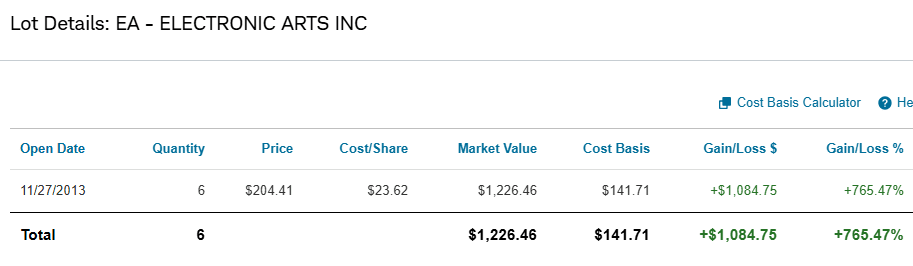
I bought this EA stock almost thirteen years ago:
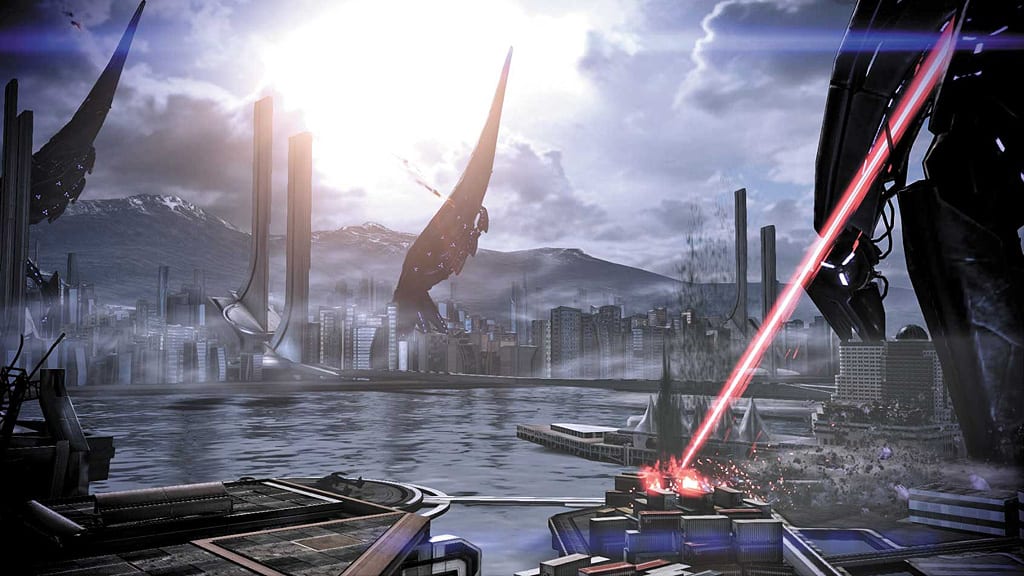
Back in the late 2000s and early 2010s, EA was a great company pumping out groundbreaking games:
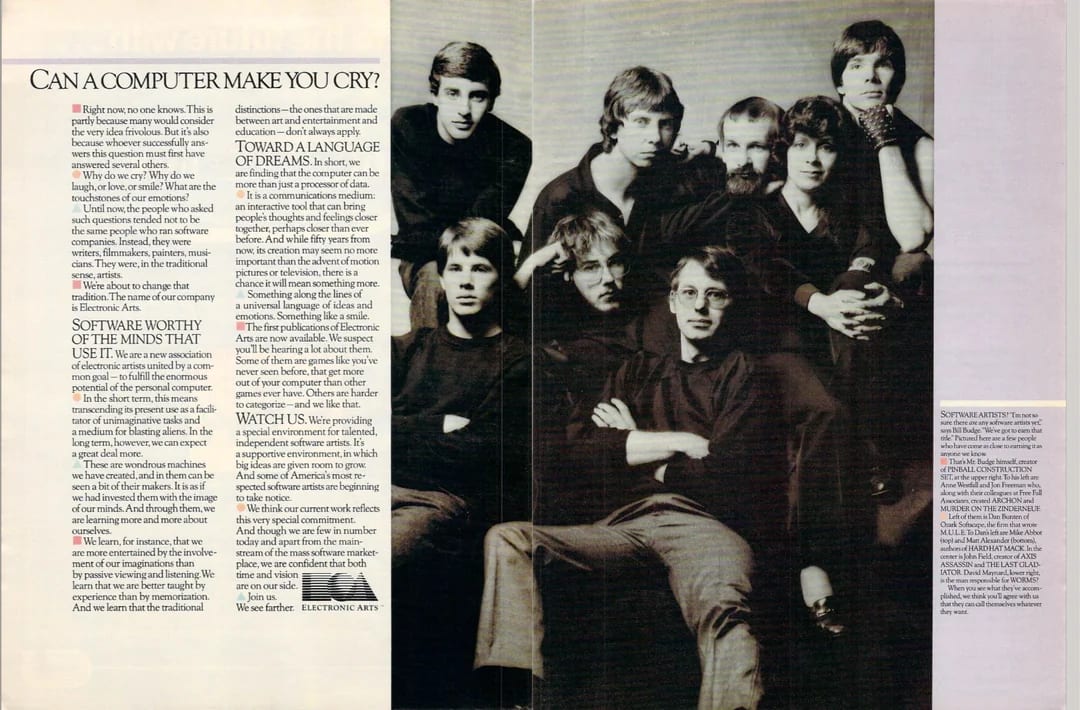
It’s not just that these were fun games. As you may know if you’ve listened to my philosophical lecture series about everything the 2016 puzzle game The Witness has to say about the hard problem of consciousness, good game design is important to me. As I saw it at the time, EA represented three important ideas worth fighting for:
Even back then, of course, people gave EA all kinds of hate. It was frequently voted “worst company in the world” by various internet polls, running neck-and-neck with other love-to-hate-em favorites like Comcast, Facebook, and Ticketmaster.
But despite all the noise, for a while, it seemed like things were actually working. They actually did make that Mirror’s Edge sequel, despite the obvious commercial incentives to have DICE simply churn out Battlefield sequels forever. It was a beautiful game, and a ton of fun!

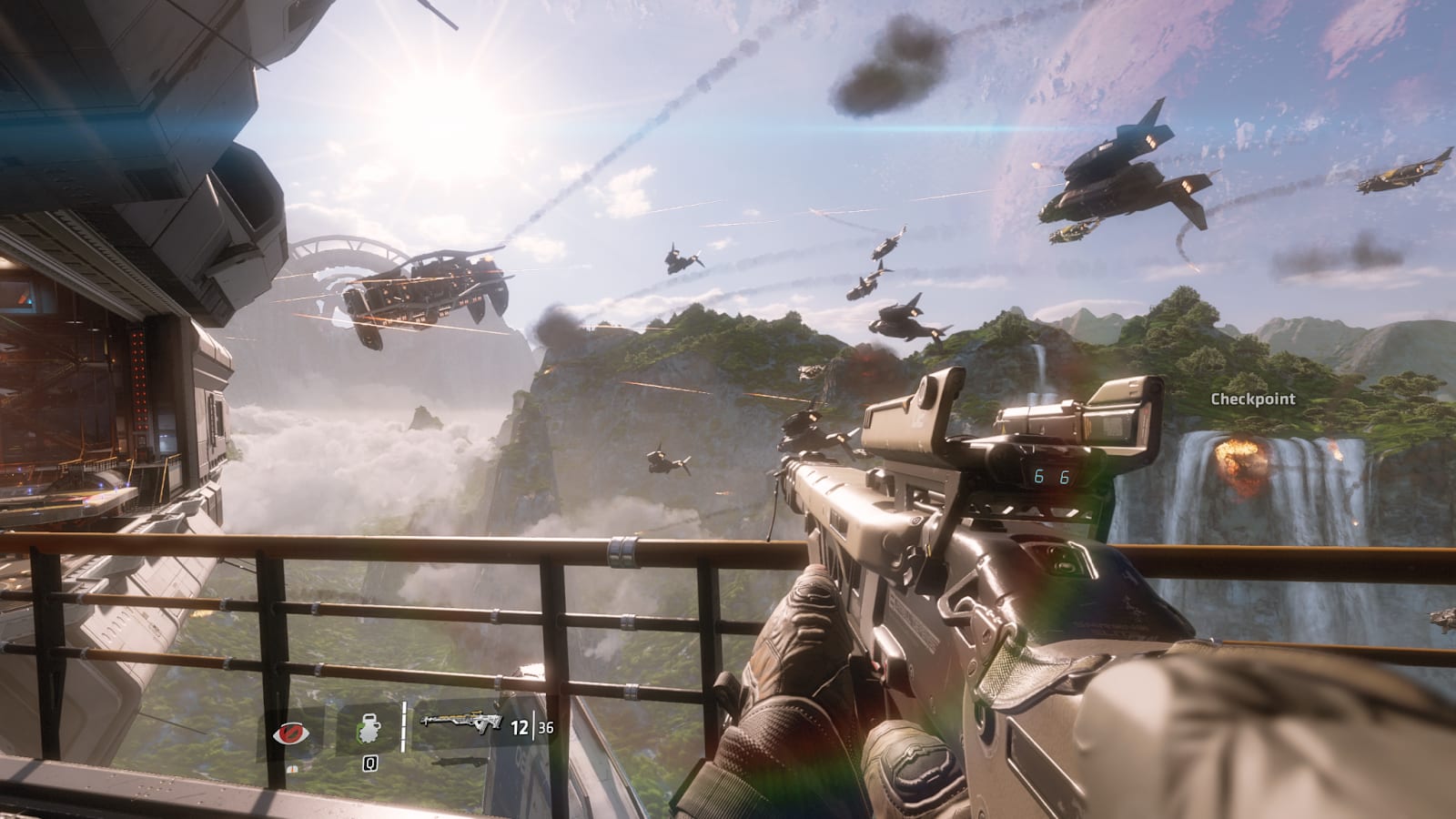
Perhaps even moreso, Titanfall 2 was just incredible. This title was basically a showcase for the idea that fascinating, experimental gameplay ideas could have big mainstream appeal. Who could forget the level where you’re fighting through a gigantic automated factory while the environment is getting reconfigured all around you? Or the one where you press a button to flip between the past & future, literally toggling between two different ongoing battles in the same physical space, like smash-cuts in a movie? Or the level where you’re double-jumping between spaceships doing some kind of aerial car-chase, like a playable version of the ending of James Cameron’s “Avatar” movie? The whole game was nuts. Furthermore, the story behind its development -- Call of Duty developers sick and tired of being told to make the same game every year, fleeing to Electronic Arts where they’d have greater creative freedom, then sticking it to their former bosses by putting out an all-time banger -- was also really inspiring.
Even something like the Star Wars Battlefront 2 controversy wasn’t actually that bad TBH??? Yes, obviously, loot-boxes (and freemium models in general) are a scourge on the videogame industry. But, you know… the game was still fun. And in a game like Battlefield (which is more an explosion of wacky nonstop chaos than a well-tuned competitive test of skill), who really cares if there are a few foolish whales blowing cash on premium power-ups?
At least that’s what I thought at the time. But in retrospect, this was the beginning of the end.
Thoughtful, innovative, well-designed games can be commercially successful. But being a joint-stock corporation isn’t just about making money. It’s about making the most money. In practice, this rewards being a fast-follower of genres that are already popular (rather than coming up with risky new gameplay ideas that might fail), and it rewards a freemium pricing structure that creates an adversarial relationship between players versus the developers, which tends to ruin game design.
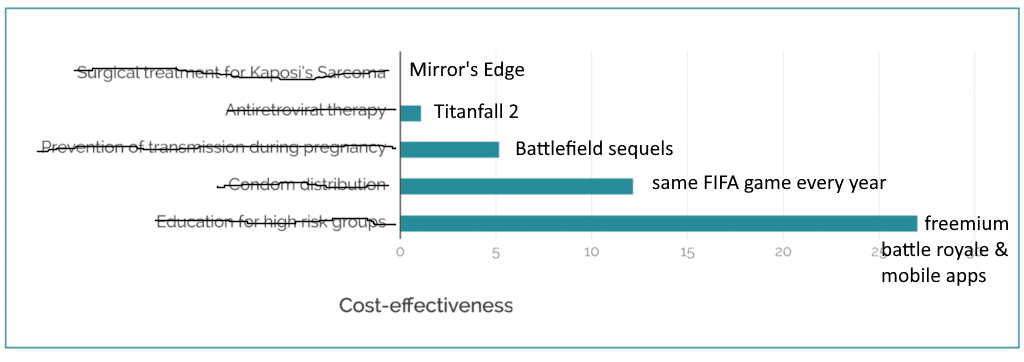
So, the critics were wrong… until they weren’t. Flash forward to 2026, and take a look at EA’s list of recent and upcoming releases. It’s basically just a bunch of sports games and yearly updates for The Sims.
What happened to all those creative teams working on cool, groundbreaking stuff??
Overall, the EA of 2026 has basically ceased to be a creative force in the world. The company that once published Brütal Legend (which is a very funny and underrated game actually) is no more. This is basically what it feels like for me to see what EA has become:
The problem is that EA’s customer base isn’t really singleplayer gamers like myself; it’s whales who buy cosmetic items in multiplayer. So, when I buy or play most of their modern games, I’m basically just bycatch. The games aren’t designed to provide ordinary people with interesting gameplay experiences or a compelling story, except insofar as these are instrumentally useful for maximizing engagement & revenue -- I'm just another little fish incidentally swept up by a product that's been optimized to trawl for whales.

This adversarial relationship -- where the player is trying to squeeze as much fun out of the game as they can without paying a dime, and developers are trying to find the best ways to cajole players into opening their wallets -- is already annoying for most people. But as someone who values the art of game design itself as a way for developers to communicate abstract ideas to players (such as described in this talk about “Truth in Game Design” by Jonathan Blow, designer of Braid and the aforementioned has-a-lot-of-insightful-stuff-to-say-about-the-hard-problem-of-consciousness The Witness), it’s complete anathema.
Currently, Electronic Arts is in the process of being acquired by Saudi Arabia’s public investment fund for $55 billion. Partly the Saudis are just hoping to make money, but they’re also obviously going to exert some cultural influence over EA in the hopes that their games can boost Saudi Arabia’s cultural profile.[3] There could… maybe? …be some interesting stuff that comes out of EA producing some cultural propaganda for Saudi Arabia? It’d be fun to play a Battlefield game set during the 1980s Iraq-Iran war, I suppose? Or maybe a sci-fi stealth-action game that takes place in their stupid NEOM city project? But mostly I expect EA's future to be lame. For example, Ubisoft naturally sets their Assassin’s Creed games in the most fascinating and exciting historical periods -- French revolution Paris! Renaissance Florence! Warring-states Japan! But now Saudi Arabia is paying them to make games hyping up minor archeological sites that the Saudis are trying to promote as tourist destinations??
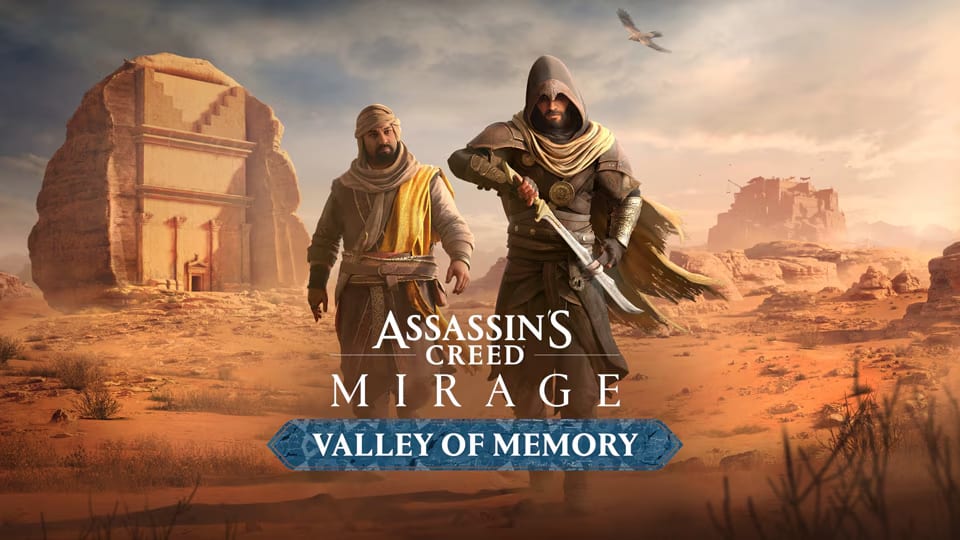
It just doesn’t sound great, either for the quality of the games themselves, or even for EA’s stock price, to introduce this weird new constraint that EA’s games should boost Saudi Arabia’s cultural prominence.
Shortly after I bought those shares back in 2013, a friend texted me an interesting article from a blog called “Slate Star Codex”. One thing led to another, and now I’m really into this niche hobby of trying to use the resources available to me to accomplish the most good possible. I listen to the 80,000 Hours podcast, contract with a variety of longtermist organizations to help them with writing and editing tasks, regularly volunteer at conferences about existential risk mitigation, and so forth. My wife also runs the EcoResilience Initiative, a project to identify the most cost-effective ways of helping preserve earth’s biodiversity.
So, now that I've lost faith in EA, this year I’m planning to donate my appreciated shares to Lighthaven, the Long-Term Future Fund, and the Good Food Institute (which EcoResilience Initiative thinks is one of the most promising interventions, not just for animal welfare, but also for preventing species extinctions).

In conclusion, although I’m giving up on EA, I remain EA-adjacent, because I still own some Sony & Microsoft stock from back in those days. Also, I loved “It Takes Two”, and people say “Split Fiction” is similarly fun. Looking forward to playing it!
For instance, I considered it a suprising amount of success when over a thousand people downloaded my own fan-sequel mod for Braid.
Of course, Sony has always made lots of artsy AAA singleplayer games, like Shadow of the Colossus or The Last of Us. But this is enabled by the fact that these games could be "loss-leaders", generating more sales of their Playstation consoles by creating a halo-effect of prestige around the Playstation brand. EA, as a third-party publisher without a console, was playing on hard mode -- their games had to succeed in terms of actual sales, not just cultivate a brand halo. Critical darlings seem to help sell Playstation consoles -- even if the games that actually get the most playtime on those consoles, are now mostly just literally the exact same entrenched mega-hits every year.
In general, IMO, the "propaganda value" (aka ability to influence culture) that comes from owning mass media platforms -- like the New York Times, Washington Post, Twitter, et cetera -- is often higher than the financial value of these enterprises (ie the net present value of their future profits). So the people most interested in buying such properties are usually interested in capturing some of the "commanding heights of culture", not just making a buck. I would expect this to be true of large videogame companies as well as newspapers and movie studios, even if videogames' cultural influence is more amorphous/indirect and less overtly political. So I don't really hold it against Saudi Arabia that they're doing this; it seems like a natural strategy that any nation with a lot of money should be interested in pursuing. I just don't expect it to result in very many good videogames...


Wow, this made me laugh out loud several times :D