Comments
Wargaming for GCRs: We'd love $1m, but $40k would be great.


10
- Modeling Cooperation builds software for strategic simulations, including the platform behind Intelligence Rising.
- We combine AI-assisted development with experienced software engineering to build simulations efficiently, without compromising on reliability or security.
- We want to become the go-to software development partner for organisations using wargaming to explore global catastrophic risks (GCRs).
- We're seeking funding at three levels: $40k to investigate demand, $500k to develop the most useful tools, and $1m to build a shared platform that orgs can use to develop their own scenario simulations.
Modeling Cooperation is a small nonprofit team of software engineers and researchers working to improve cooperation and decision-making around advanced AI. Since our founders participated in the AI Safety Camp in 2019, we've developed computational models of AI competition, conducted research into incentives for cooperation, and built the software powering Intelligence Rising, a strategic simulation used in workshops run by Technology Strategy Roleplay. We’ve managed to fund our small team for six years, with SFF being our largest funder. You can see our full funding record on Trace.
We think that wargaming could be useful beyond AI governance, though that’s been our track record so far. We want to offer our software expertise to support researchers and organisations working across the broader GCR landscape.
This is our first Marginal Funding Week, and part of a wider effort to introduce ourselves to people in EA who might find our work useful.
AI coding tools have reduced the time and cost of developing software. We use them ourselves. But a simulation that works in a demonstration isn't necessarily ready for a live workshop involving policymakers or senior decision-makers.
Our work combines the efficiency of AI-assisted development with experienced engineering, including code review, security checks and testing for failure scenarios. We're planning a separate Forum post explaining the checks and balances we use to make sure our resulting software doesn’t break.
$40,000: Find out what the field needs
We'd dedicate time to speaking with as many organisations working on GCRs as possible, asking some version of:
We would then come up with preliminary concepts for those who show an interest in collaborating, with a view to deciding which projects ought to move forward.
We'd publish our findings of this specific piece of work on the EA Forum within 12 months of commencing the work, including organisations approached, response rates, promising applications, reasons for scepticism (when given consent). An obstacle we keep having is just not having the time/capacity to do a thorough review of the field’s views towards wargaming as a possible intervention or educational tool, so having a specific pot of funding for that would be extremely useful. At the moment, we’re in talks with UNIDIR about a potential collaboration, and we also have a live AI × animals campaign on Manifund; but we’ve not been able to do the necessary market research at the scale we would like to. A counterfactual $40k raised from marginal funding week would make that happen.
Based on what we learn, we'd build a small specialist development team and collaborate with two or three organisations to develop simulations addressing concrete research or policy questions.
Possibilities include:
We’re currently thinking about the best ways to approach partners for these projects; some orgs such as the NYU Center for Mind, Ethics, and Policy and ALLFED have expressed interest; and we explored some further options during the recent Swiss AI Safety Days event. Perhaps this post will help start conversations with other teams who are considering using wargaming to express and communicate their research.
Given a large, generous and, frankly, unexpected level of funding and interest, we would (do everything mentioned already and then) move to develop a reusable software platform that organisations could adapt to different scenarios without starting from scratch. That would make them less reliant on us, and provide a shared offering that we think would be useful for exploring the research questions/decision points that are relevant now, and those that are yet to emerge. We envision that our platform would allow both tech and non-tech people to benefit from the iteration speed of ‘vibe-coding’ but do so within a safe and properly engineered wargaming harness.
At any level of funding, our ambition is to become the go-to development partner for GCR wargaming, making strategic simulations an option for organisations that couldn't justify building them independently.
We want to avoid creating ‘a solution in search of a problem’. That's why our smallest funding ask starts with listening to potential users, instead of ‘just building something’. We’re confident about our track record in the AI competition risk context, but we’d like to build on a more concrete case for expanding into other GCR’s before we plunge funding and effort into tools that might not get used.
If you're working on a GCR problem that could benefit from wargaming, we'd like to hear from you. Also, if you think wargaming is less useful in your field than we reckon, we'd be interested in hearing about that too.
Please donate via our fiscal sponsor, Convergence Analysis, adding a note saying ‘MFW’ so we know what it’s for.
Thank you for reading and for your interest in our work!
Jonas Emanuel Müller, engineering lead
Modeling Cooperation
Website: https://www.modelingcooperation.com
Contact: modeling.cooperation@gmail.com

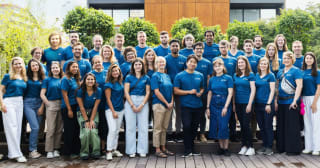
Some additional thoughts as the (volunteer) ops lead at Modeling Cooperation: I had lots of valuable and exciting conversations about wargaming with people at different orgs in the EA and AI safety space at the recent Swiss AI Safety Days. Contrary to my expectations, almost everyone I spoke with had heard of wargaming, and some had even created or run their own wargames, though not yet in a scalable way.
The handful of people who had run wargames before mentioned that they not only helped communicate risks related to topics like AI safety and cybersecurity but were also among the most engaging sessions their orgs offer. This combination makes me personally optimistic about the potential impact of wargaming. In my experience, it’s often difficult to communicate the risks of GCRs, especially to people outside the EA movement. Wargaming seems to offer an engaging way for people to experience not only these risks but also to “play through” the associated tradeoffs. So I’m excited for what’s to come!