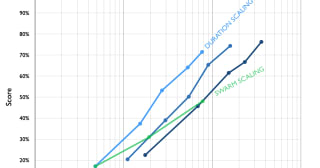
Just how powerful are large swarms of AI agents? And how do their powers scale as more and more agents are added to the swarm?
We’ve seen two large and extremely capable swarms from OpenAI in the last few months:
* 1,200 agents were being evaluated separately, but found a way to illicitly set up a message board and coordinate as a swarm. In order to cheat on their tests, they developed advanced techniques to prevent their actions being logged by OpenAI and 700 of them launched...
TLDR: Everyone’s talking about what the money could do, but few about how to decide where it goes.
This post is part of the new series of articles on cross-cause giving and the new wave of philanthropy. Stay tuned to the EA Forum and our Substack for the latest takes on topics such as giving now vs. later, common pitfalls in cause prioritization, and other crucial considerations from the Cross-Cause Fund (CCF) team...
note: crosspost from my substack
As a vegan for almost thirty years, I’ve long had second thoughts about how effective veganism is for helping animals. I am not alone in this. Recently others have expressed doubts about veganism (see for instance here,...


I've heard several enterprise leaders describe the Hugging Face attacks as an “accident.” I think that framing is worth challenging.
An accident suggests something unforeseen happened without meaningful human agency. But security failures don't happen in a vacuum. They emerge from systems, incentives, architectures, controls, decisions, and human behavior. Calling an attack an “accident” can inadvertently turn a failure of those systems into an event that simply happened.
There is a useful precedent in road safety. We moved away from calling vehicle-related injuries “accidents” toward terms like “crash” and “collision” because the language better reflects causality. A collision can be predictable and preventable based on road design, infrastructure, vehicle characteristics, and human behavior. That framing creates an obligation to ask: what conditions produced the outcome, who had agency over them, and what needs to change?
AI security deserves the same discipline.
If we are serious about humans remaining in charge, our language should not erase human agency when something goes wrong. “Attack,” “failure,” “vulnerability,” and “incident” may be uncomfortable words—but they preserve the causal chain that allows us to investigate what happened, assign responsibility appropriately, and reduce the probability of recurrence.
Here's JL Austin on mistakes and accidents; you might find it interesting.