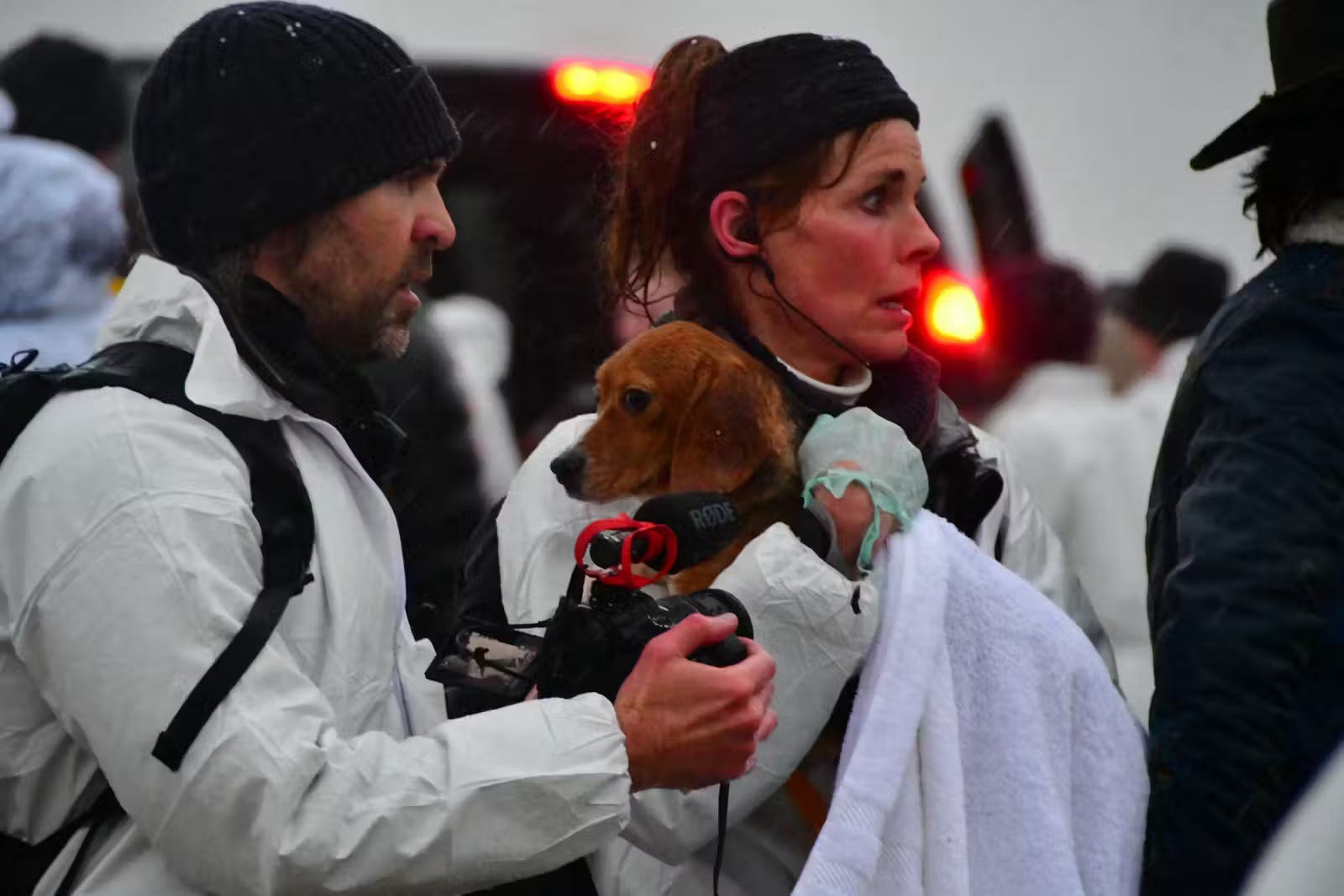
Last month I joined 150 activists to walk into Ridglan Farms in Wisconsin. We managed to rescue 22 beagles from horrific conditions, which was a win, and I don’t take that lightly. But if all I did was save 1/6th of a dog, I wouldn’t be excited about the effort given that there are substantial risks and time costs. The reason I’m excited is because the Ridglan rescue represents a potentially transformational concept for the animal movement: the role of love in building people power.
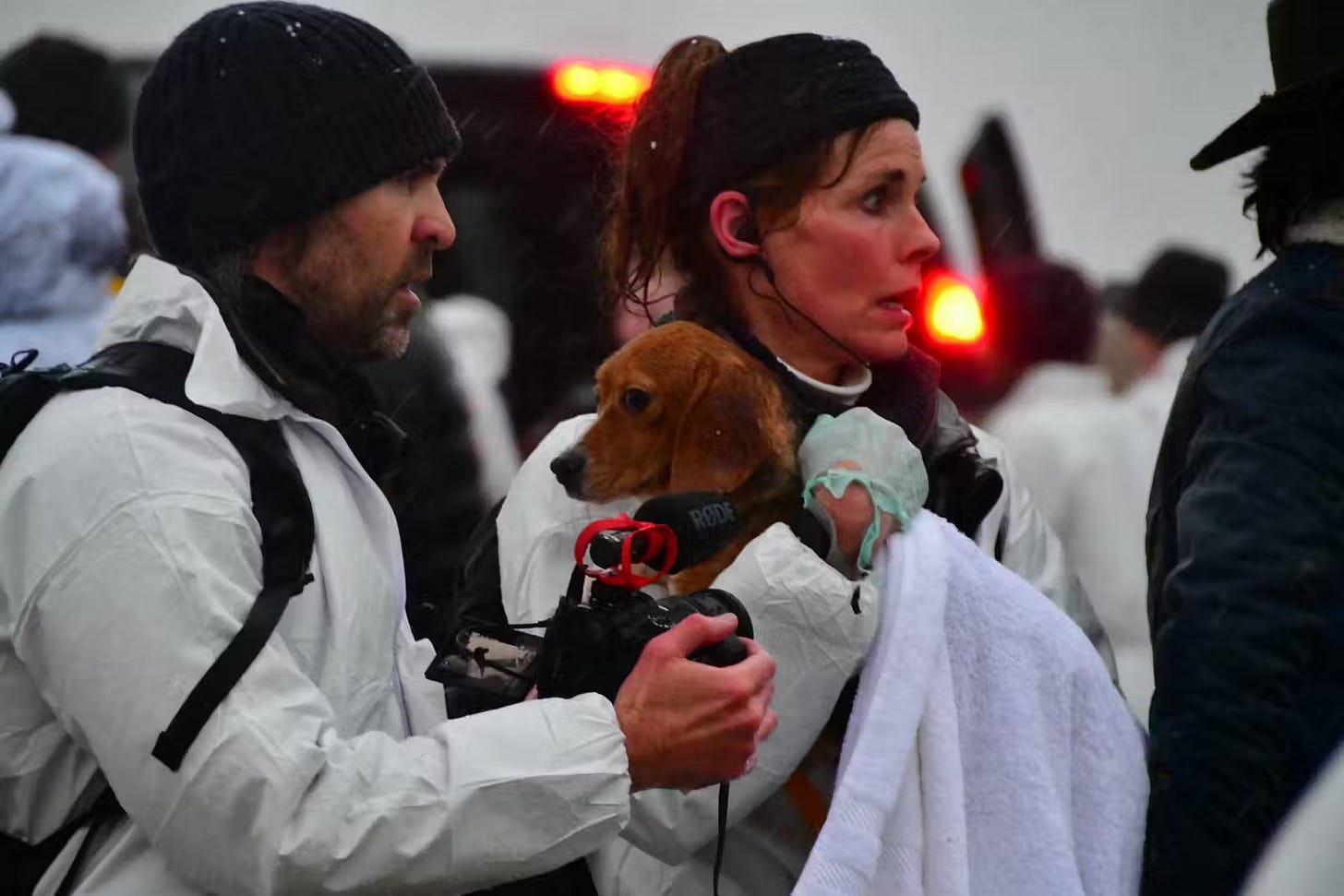
I’ve been building scalable change for over a decade: I co-founded both Sendwave and Wave, two highly successful tech startups collectively worth billions of dollars and saving its users another order of magnitude (i.e. tens of billions) in fees each year. In order to get big and scale quickly, we had to build a product people really loved. That love translated into people talking about it and telling their friends. And with our team, we constantly talked about cultivating love for our users through paying attention to their needs, and enabling our users to express love to each other through money transfer.
Word-of-mouth growth for startups works over three basic stages: users first hear about it and try it out, like it and keep using it, and share it with someone else. Since I left Wave last year, I’ve been obsessed with trying to apply what I know about startups and in particular this word-of-mouth growth engine to people power: how can we harness a similar engine of people learning about a way to make change in the world, getting inspired to join and tell their friends, culminating in massive political or social change?
By looking at historical movements, we know that social change is possible by mobilizing huge numbers: slavery abolition, women’s suffrage, civil rights, anti-imperialism, gay rights. We have also seen it in political revolutions: among many others, an iconic nonviolent revolution in Serbia in 2000 deposed Slobodan Milosevic. These successes arose from the exact engine described above: people getting really passionate about the issue, recruiting friends and family, until tons of average people were in the streets demanding change.
We can adapt the startup model into three basic components for the engine of how a movement can grow:
- Some way to draw attention
- Convert attention into sustained action—a short burst is not usually enough
- People successfully recruit others
This is perfectly analogous to the startup model of activate/retain/share. When a business grows to tons of users, it has the capacity to make money or create impact, and when a movement has tons of activists, it has the capacity to deliver societal change. (How that change is actually delivered will be a future post; here we’ll focus on growth, retention and sharing.)
Love is key
In startups, love draws people in, retains them and makes them want to share. Does the same apply to movements? What is it that draws someone into a movement and keeps them there?
Normally, we think of political or social change as being driven by outrage: ICE is kidnapping our neighbors off the streets, animals are being abused in factory farms, people are starving in Gaza. But while outrage can definitely attract attention, outrage is not how businesses grow their user base, and I am starting to think a social movement cannot be sustained on pure outrage either. Because while outrage is attention-grabbing, it’s also quite aversive, and most people can’t look directly at outrage for months or even weeks on end without getting tired and burning out.
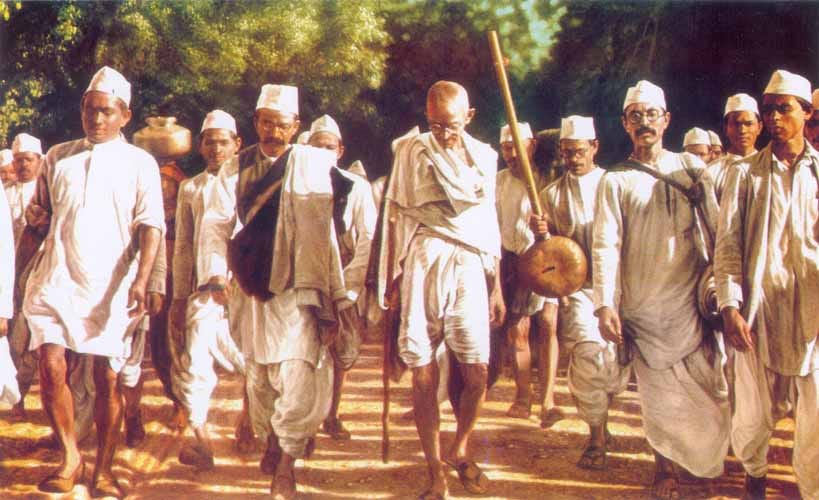
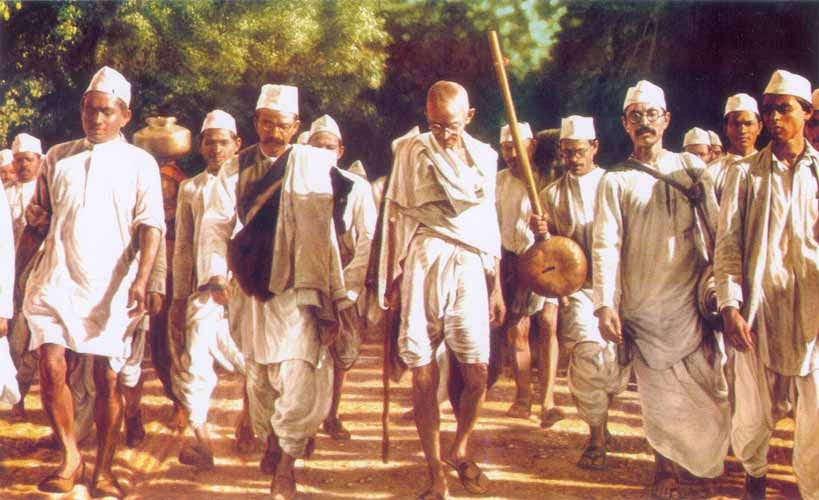
To bring people in and sustain them, a movement must inspire love. Martin Luther King learned a lot about love from Gandhi: “As I delved deeper into the philosophy of Gandhi my skepticism concerning the power of love gradually diminished, and I came to see for the first time its potency in the area of social reform.” Both MLK and Gandhi led movements in which love for all, even adversaries, was a guiding principle. The movements’ nonviolent loving-kindness discipline in the face of extraordinary violent repression made headlines, thrust their causes into the mainstream and led to rapid success. Also, the movement that successfully deposed Milosevic in Serbia had the slogan, “Because I Love Serbia.”
Gay rights were marginalized for decades until in 2009 Simon and Watts did some polling which led the movement to focus on the love aspect: “Marriage as an expression of a generous kind of love and commitment had been drowned out by the language of ‘equal rights’ and the ‘benefits’ and ‘protections’ that marriage afforded. The research conducted by Simon and her colleagues revealed that the claim was more likely to appeal to conflicted voters if expressed in terms of love and commitment.” The movement successfully pivoted, got a lot more people on board, and a few years later, same-sex marriage was legal countrywide.
Occupy Wall Street had a social structure in the encampments which one organizer, Jonathan Smucker, called “falling in love with ourselves”: “...the thing we longed for most—was a sense of an integrated existence in a cohesive community.” In his book Hegemony How-To, Smucker considers this a flaw in the movement: “What if this longing was so potent that it could eclipse the drive to affect larger political outcomes?” However, this communal love, realizing a utopian vision for how a better society could operate, was clearly a big draw and why the encampments retained as many people as they did, sometimes for years. To me, Occupy demonstrates love’s power to retain movement participants, despite in this case seeming misdirected for their broader purpose.
I don’t think any of this is a coincidence. Some form of love has been core to every successful movement I’ve studied. It comes in many forms: love for the beneficiaries, love as spiritual discipline, love as communication frame; but there’s a reason why we use the same word for all of these, which is that all these ways we experience this love seem to trigger similar emotional landscapes including positivity, openness, empathy, and courage. (And I’ll acknowledge that love alone isn’t sufficient for a movement by any means, but I think it is far more critical than current organizers seem to realize.)
Applying love to the animal movement
Many of you will agree that factory farming is the worst and most urgent moral atrocity of our time. When we try to get people to care about this issue, we usually communicate outrage and disgust. And I don’t disagree with leading with outrage in many cases. But if love is key to sustained public engagement, we need angles to communicate that love and build it amongst advocates, and I don’t think this has been historically a big part of animal rights advocacy.
I can only think of a few examples of love in the movement against factory farming:
- farmed animal sanctuaries: At sanctuaries, they take care of rescued pigs, chickens, and other animals saved from industry abuse; you can occasionally visit and meet them and that is very rewarding.
- telling individual animals’ stories through journalism, e.g., The Dodo, which highlights all sorts of lovable animals, not just your typical dogs and cats
- the Ridglan Farms rescue story, which starts from the mutual love between humans and companion dogs and extends it to “so let’s break every beagle out of there”.
I’m paying attention to the Ridglan rescue
The Ridglan rescue will likely be used as a case study for future rescues and movement-building efforts. It has attracted unprecedented momentum for an animal rights issue, from a much broader base of support than your typical vegan crowd. I claim this is in large part due to centering love, but that’s not the only reason: substantial credit goes to moral leadership, nonviolent discipline and legal/comms strategy.
Read any comment thread about the rescue and you’ll see a very different vibe than most vegan or animal rights stories. It’s love-filled and universally positive, and it’s clear that the base of support includes:
- Dog owners and animal lovers who have never been active on farmed animal issues
- Seniors, blue-collar workers, and other “average people” who are drawn into the story
- The left, the right, and the center of the political spectrum
- Celebrities (e.g. Dave Portnoy, Ricky Gervais)
- Podcasts who mostly cover non-animal things, but now are interviewing Ridglan activists (e.g., I’ve Had It)
- Local and national news
Love serves not only to attract attention, but to inspire and retain people. And this is where I think the Ridglan story may have access to a key lever of scalable change: factory farms are immense, faceless and intimidating, and it’s scary to imagine going up against a big corporation, even when you know you’re in the right. But love is the opposite of, and counteracts, fear; and when I saw the opportunity to throw open those doors, and have the potential of giving and receiving love for the sweet beagles being tortured inside, that inspired enough courage to get me over the hump to join a rescue for the first time in my life.
Thousands have signed up for the next rescue, which is scheduled for a week from now. They’ve set a goal to get all 2000+ beagles out. The March rescue was already a powerful story, and this second rescue attempt is going to be more than 10 times bigger. The facility appears to be preparing for the rescue by reinforcing the perimeter with a moat, hay bales and scary-looking guards. I think it will gather far more than 10x the attention due to the drama. But it’s a love story too: a love story for the beagles, for the activists who will free them, for the families who will accept those beagles into their homes, and even, hopefully, for the farm staff and justice system who have until now been an obstruction.
I’ll be watching and learning.
Edited to add: this post was written in a personal capacity, reflects my personal views and is not an endorsement of any illegal activity. Links are provided for informational context.


Love this post, I think this framing can really help with engagement and retention, and to turn supporters into advocates, especially in the animal rights movement where so many people burn out or struggle to stay involved.
A small nitpick:
Dave Portnoy donated and fundraised hundreds of thousands of dollars for dog shelters.
Ricky Gervais is even vegan and has been very active on animal rights, especially dogs. He recently donated 2.5 million pounds to animal charities, and has been advocating against animal testing on beagles for a long time.
My impression is that the animal rights movement has been very successful in terms of celebrity endorsements, I'm surprised that I haven's seen much of it for EA-style welfarist work (e.g. cage-free campaigns) and I wonder if there could be some opportunities there.
Fantastic feedback - thank you! I've updated the post to not say that these celebrities haven't been active on animal rights, because as you point out they have. Thanks!