I recently came across this great introductory talk from the Center for Humane Technology, discussing the less catastrophic, but still significant risks of generative large language models (LLMs). This might be a valuable resource to share with those unfamiliar with the staggering pace of AI capabilities research.
A key insight for me:
Generative LLMs have the capacity to interpret an astonishing variety of languages. Whether those languages are traditional (e.g. written or verbal English) or abstract (e.g. images, electrical signals in the brain, wifi traffic, etc) doesn't necessarily matter. What matters is the events in that language can be quantified and measured.
While this opens up the door to numerous fascinating applications (e.g. translating animal vocalizations to human language, enabling blind individuals to see), it also raises some serious concerns regarding privacy of thought, mass surveillance, and further erosion of truth, among others.
Note: This post was crossposted from Planned Obsolescence by the Forum team, with the author's permission. The author may not see or respond to comments on this post.
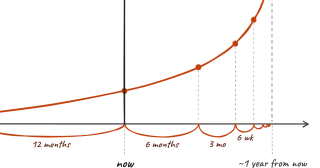
Subtitle: If acceleration compounds, the naive extrapolation implies superintelligence within a year
This post discusses a public METR report on AI R&D acceler...
TL;DR:
* When we started Rethink Priorities (RP) in 2018, our mission was, simply put, to close the knowledge gaps that stopped people from improving the world as much as they could. That hasn’t changed much, but the landscape we’re doing it in is shifting.
* In 2027, we plan to grow our core GHD, Animal Welfare, and Worldview Investigations teams to take on emerging priorities across causes, including those that the forthcoming transformative AI is creating.
...
This was cross-posted from the Animal Charity Evaluators blog.
We update our list of recommendations annually. This year, we announced our recommendations on November 10.
Most people who care about animals arrive at the same impas...

I recently came across this great introductory talk from the Center for Humane Technology, discussing the less catastrophic, but still significant risks of generative large language models (LLMs). This might be a valuable resource to share with those unfamiliar with the staggering pace of AI capabilities research.
A key insight for me: Generative LLMs have the capacity to interpret an astonishing variety of languages. Whether those languages are traditional (e.g. written or verbal English) or abstract (e.g. images, electrical signals in the brain, wifi traffic, etc) doesn't necessarily matter. What matters is the events in that language can be quantified and measured.
While this opens up the door to numerous fascinating applications (e.g. translating animal vocalizations to human language, enabling blind individuals to see), it also raises some serious concerns regarding privacy of thought, mass surveillance, and further erosion of truth, among others.
https://www.quinnmchugh.net/blog-micro/llms-as-translators