Comments
I wrote this almost a year ago, and in AI terms it's very stale, but I hadn't seen much discussion of this intersection on the forum so thought it was still worth linking too.
From Malawian farmers getting chatbot advice on crop diseases to Indonesian fishermen improving catches and Kenyan health workers diagnosing TB faster, AI is already being deployed across LMICs.
The most interesting question isn't whether AI delivers services more efficiently. It likely already does, and increasingly so. The interesting question is whether AI breaks the traditional development pathway entirely.
Historically, countries climbed the income ladder through a fairly predictable sequence:
- Agricultural productivity gains
- Then manufacturing
- Then services
Lower labour costs plus strategic industrial policy helped Bangladesh dominate textiles and Vietnam become an electronics hub, lifting tens of millions from poverty. But that model depends on human labour costs mattering. If AI and automation make them less relevant, production could shift back to richer countries, and the ladder that built modern Asia might get pulled up.
Alternatively, if AI delivers personalised education, healthcare and cheaper energy at scale, we might see unprecedented acceleration in human development and massive reductions in the cost of goods and services.
There could even be a decoupling of GDP from welfare with poor countries able to attain a much higher standard of living without increasing GDP.
I think both dynamics are likely to play out simultaneously, which makes this harder to reason about than most technology and development questions. What follows is my attempt to map the terrain. Looking at existing applications of AI already working, economic scenarios for what comes next and what it might mean for LMICs.
Real World AI Applications: Transforming Development
AI is not a future concept in LMICs, it's a present reality, already being deployed to address development challenges. These examples demonstrate AI's tangible impact across sectors, offering glimpses into how it can drive efficiency and improve access to goods and services.
Healthcare
AI is already a powerful diagnostic and research tool in healthcare, making higher quality services more accessible and efficient.
- Computational Vaccine Design (AlphaFold & others)
- Using AI to virtually design and optimise vaccine structures
- A computationally designed COVID-19 vaccine induced approximately three times more neutralising antibodies than the Oxford/AstraZeneca vaccine, even at smaller doses
- Jacaranda Health PROMPTS
- An AI enabled SMS service providing personalised pregnancy advice to mothers, processing 10,000+ daily questions and triaging high risk cases
- Reached 2.74 million mothers across 1,200+ health centres in Kenya. Mothers were 22% more likely to achieve recommended antenatal care visits and 3.5 times more likely to seek care for danger signs, contributing to a 27% reduction in neonatal deaths at partner facilities
- A scalable solution leveraging widespread mobile phone penetration to deliver health information and improve maternal and child health outcomes
- GiveDirectly's AI for Targeted Aid
- Using AI to analyse mobile phone data for more accurate targeting of cash transfers for humanitarian relief
- In Togo, this approach reduced the exclusion of eligible individuals by 8-14% for COVID-19 relief, ensuring aid reached those in poverty
- Enhances the efficiency and accuracy of humanitarian aid and social protection programmes, ensuring limited resources reach the most vulnerable populations with less waste
Agriculture
AI is changing farming by providing above average insights, automating tasks and expanding access to resources for smallholder farmers.
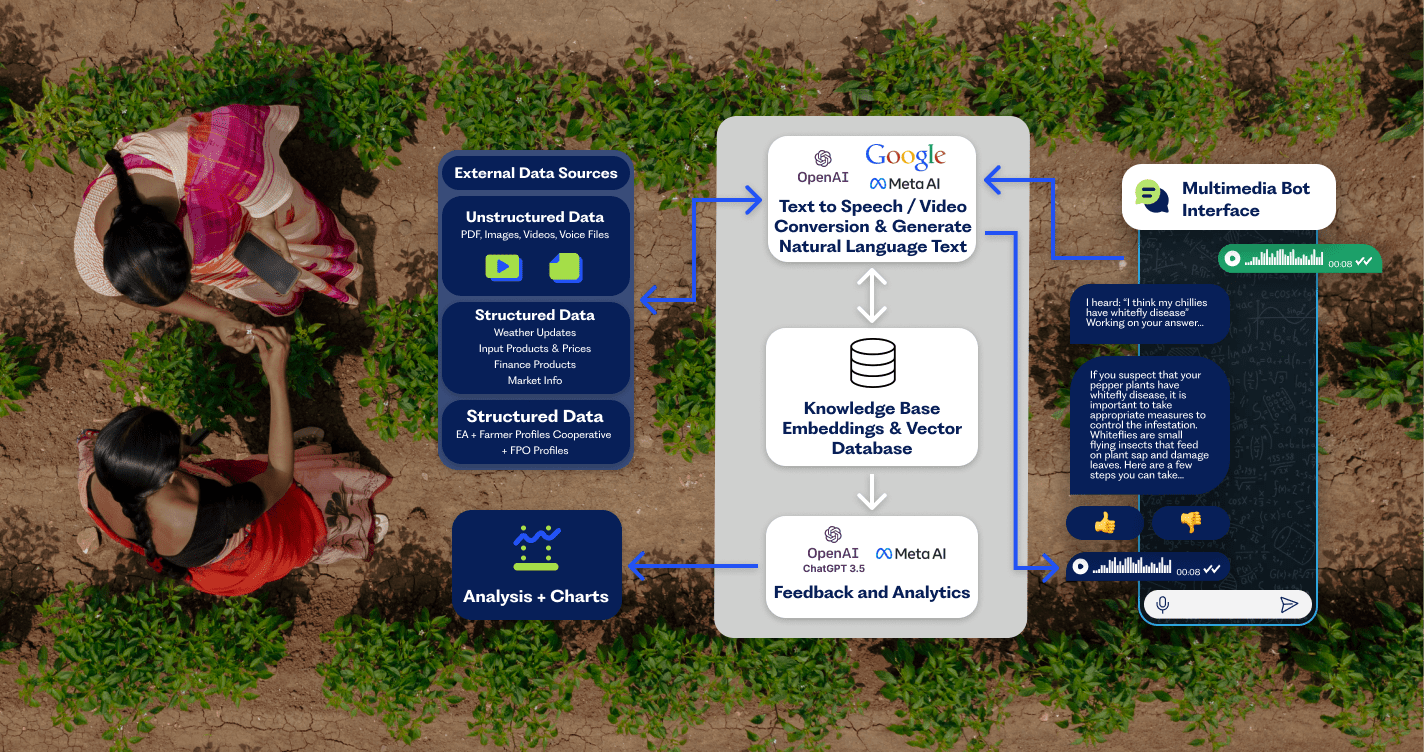
- Farmer.CHAT by Digital Green
- Combines farmer-to-farmer videos with AI tools to deliver personalised agricultural advice through extension agents
Used by over 8.2 million farmers across India, Kenya and Ethiopia. RCTs show the approach is 10 times more cost-effective than usual services, reducing cost per adoption from $35 to $3.50, reaching 30% more farmers, and delivering a 43% gain in practice adoption rates
- Agricultural Drones
- Drones configured to scatter seed, spray pesticide or spread fertiliser, operated via mobile phone app or AI automated
- Cuts the requirements for managing some aspects of crop production by at least half. For one Vietnamese farmer, what took five days manually to spray a 30-hectare farm now takes four hours, using 30% less chemicals
- Apollo Agriculture (Credit for smallholder farmers)
- Uses machine learning and alternative data (like GPS) to provide loans, high quality inputs, agronomic training and insurance
- Helped nearly 400,000 farmers in Kenya and Zambia achieve 2-2.5 times higher yields, boosting incomes and food security without requiring collateral
Manufacturing and Logistics
AI is optimising complex operations and cutting costs in critical industrial sectors.
- Mathematical Optimisation for Cargo Ships
- AI powered API for optimising shipping network design
- Able to double the profit of a container shipper, deliver 13% more containers with 15% fewer vessels
- Improves the efficiency of global supply chains, lowering trade costs, which benefits economies reliant on exports and imports
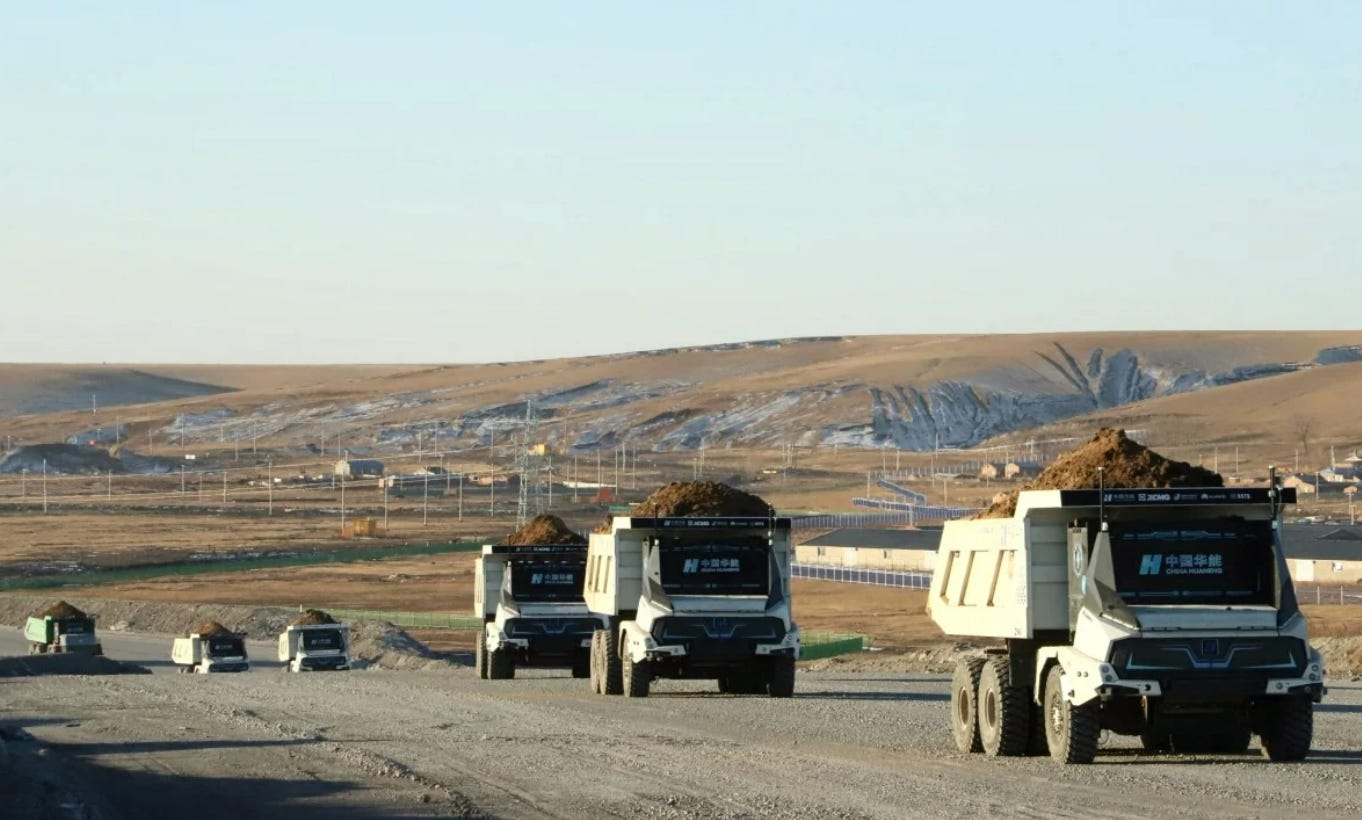
- Driverless Mining Trucks
- 100 driverless electric mining trucks that autonomously load and unload materials in harsh conditions
Projected to improve transport efficiency by 20% compared to manned trucks, contributing to an 8% reduction in operational costs across China's coal mining sector
- Jetstream Africa (Trade Finance)
- Uses AI enabled tools, including optical character recognition, to streamline assessing credit risk and providing trade finance for businesses
- Reduced credit decisioning time from an industry standard of around one month to less than one minute, resulting in loans and financial guarantees to hundreds of businesses in Nigeria and Ghana with a loss rate less than half the regional industry average
Education
AI is changing learning by personalising content and enhancing teacher effectiveness.
- Rocket Learning (Early Childhood Learning, India)
- An AI coach via WhatsApp supporting parents and childcare workers in low income communities by creating localised content and automating gradings
- Reached 2.5 million children, with 75% hitting developmental milestones versus a 57% national average
- Provides scalable, accessible early childhood education support, critical for foundational learning in contexts where formal schooling is limited or stretched
- English Language Learning (Nigeria)
- An AI powered tutoring programme for English language learning
- An RCT found a significant overall improvement of 0.23 standard deviations in English language learning over six weeks, equivalent to 1.5 to 2 years of schooling. This positions it among the most cost-effective educational programmes
Science
AI is accelerating scientific discovery and forecasting critical environmental events, offering new tools for research and disaster preparedness.
- Protein Structure Prediction (AlphaFold)
- An open access AI model that predicts protein structures
- Provides ~214 million predicted protein structures utilised by 1.6 million researchers across more than 190 countries, significantly speeding up research in areas from drug discovery to fundamental biology
- Flood Forecasting (Google AI)
- AI model predicting floods 7 days ahead
- Covers 100 countries and 700 million people, sending over 115 million alerts in 2021 across India and Bangladesh. The World Bank estimates upgrading flood early warning systems could save 23,000 lives annually
- Earthquake Prediction
- Accurately predicted 70% of earthquakes a week before they happened during a seven month trial period in China
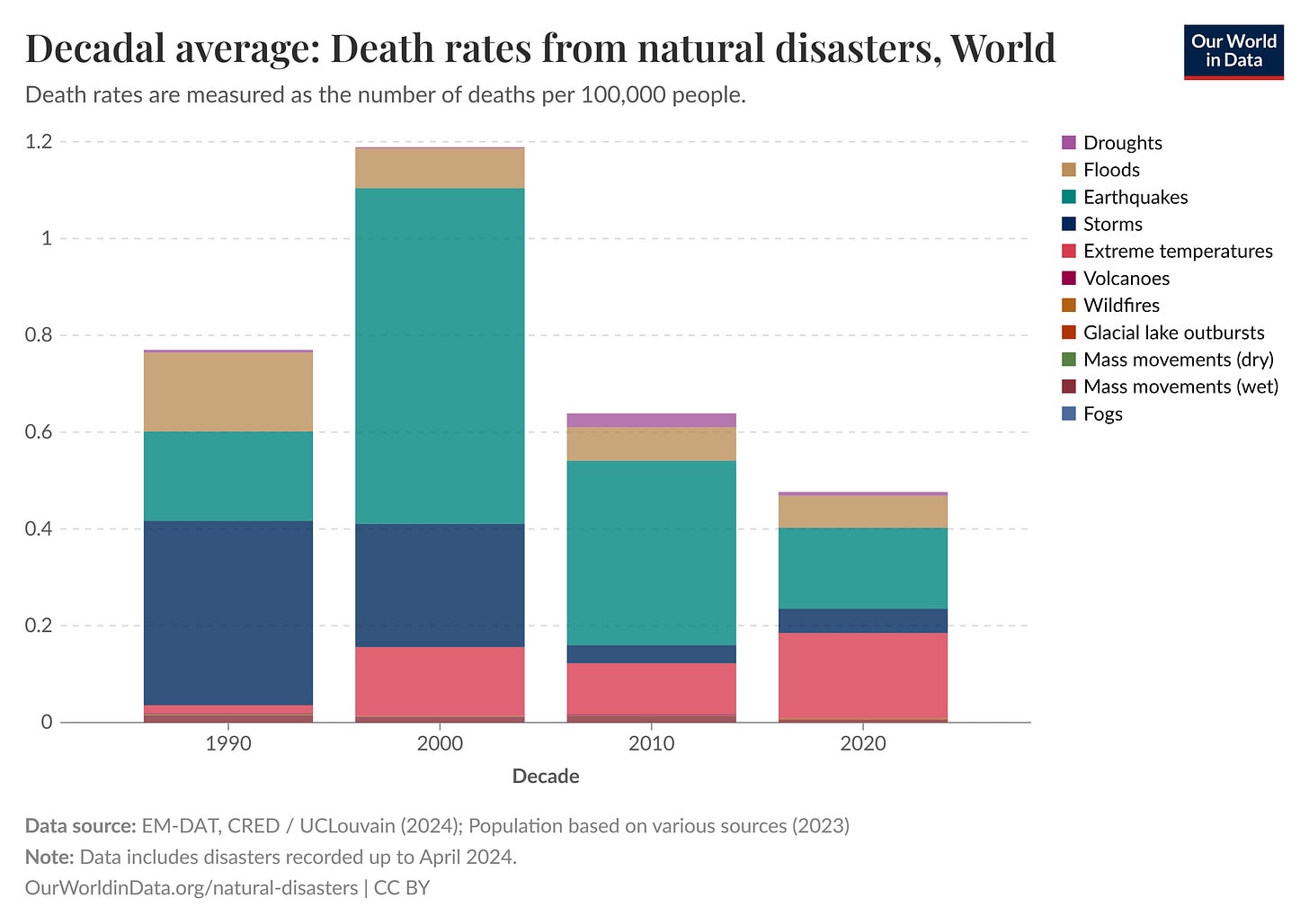
Offers the potential for disaster preparedness in earthquake prone regions, allowing for evacuation and mitigation efforts that could save lives and reduce economic damage. Earthquakes have been the deadliest natural disaster in the last few decades given how hard they have been to forecast
As these examples show, AI is already delivering results and improving lives across LMICs. However, the true breadth and depth of AI's economic implications, and whether it will fundamentally reshape development pathways, remains a subject of debate.
The Future of Economic Growth
The economic implications of AI sit at the heart of a central debate in modern economics. While there's broad consensus that AI will have meaningful effects, economists are divided on the magnitude, distribution and timeline of these changes, ranging from modest productivity gains to dramatic economic transformation.
Three Scenarios for AI's Economic Impact
This wide spectrum of uncertainty manifests in varying projections for AI's productivity impact, which typically cluster into three scenarios:
- Conservative
- This outlook anticipates AI will bring incremental, but still valuable, improvements
- OECD projects 0.25-0.6 percentage points in annual total factor productivity growth
- Daron Acemoglu predicts a modest increase in GDP between 1.1 to 1.6% over the next 10 years (or ~0.1% increase a year)
- Moderate
- This perspective foresees substantial, but still manageable, boosts to productivity and economic output
- Goldman Sachs envisions labour productivity (output per worker) boosts of up to 1.5 percentage points and a 7% increase in GDP over 10 years
- Wiseman and McClements predict an additional annual economic growth boost of 3-9% in the near future
- How much economic growth from AI should we expect, how soon?
- Transformative
- This scenario suggests that AI could become self improving, capable of automating knowledge production itself
- AI transcends its role as a mere tool, evolving into an economic resource that compounds growth exponentially, potentially leading to explosive, unprecedented economic acceleration
- Tom Davidson suggests there is a 1 in 10 chance of 30% annual growth rates by the end of the century
Epoch AI - Erdil and Besiroglu estimate even odds of explosive growth by 2100
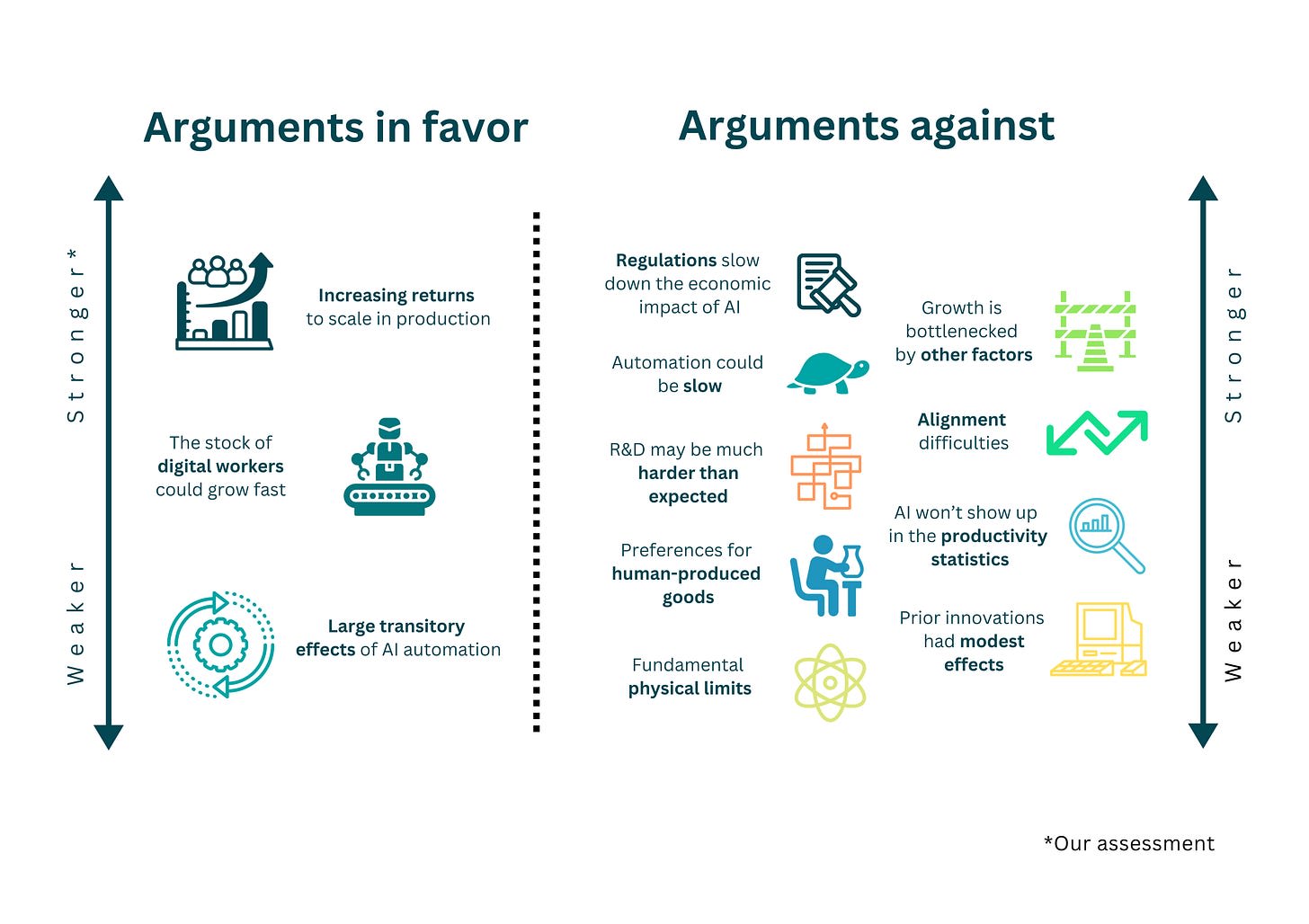
Epoch AI - Explosive Growth from AI: A Review of the Arguments
A Modern Solow Paradox
Yet, despite optimistic projections for AI's transformative potential, a confusing reality persists. Aggregate productivity growth remains low. This echoes Robert Solow's 1987 observation regarding computers - “You can see the computer age everywhere but in the productivity statistics.” Several explanations have been proposed for this:
- Measurement Problems
- Traditional economic metrics might struggle to capture AI's true value, missing improvements in service quality or the consumer surplus from free digital services
- The value of personalisation or enhanced user experiences, central to many AI applications, frequently doesn't appear in GDP statistics
- Implementation Lags
- Historical patterns show that general purpose technologies, like the steam engine, electricity or computers, take decades to generate measurable productivity impacts
- These technologies require significant complementary investments in skills and organisational restructuring, implying AI's full economic benefit is yet to materialise
- Complex Propagation
- Productivity gains from AI may propagate indirectly through intricate supply chains, appearing in downstream sectors rather than at the immediate point of AI adoption
- A manufacturing firm using AI for logistics, for instance, might not show direct productivity gains itself, but enables efficiency improvements throughout its broader network
- Threshold Effects
- AI's systemic impact might only become visible once it reaches a critical mass across interconnected systems and industries, suggesting we are still in the early stages of economic transformation awaiting a tipping point for broad, measurable productivity acceleration
Distribution of Benefits
Beyond economic growth projections, a question concerns how AI's economic benefits could be shared. Economists hold differing views on whether AI will broaden prosperity or concentrate gains.
The Distributive View: AI as a Catalyst for Broad Prosperity
Rooted in historical precedent, this view sees AI as a general purpose technology that will broaden prosperity. Market mechanisms and falling costs are expected to distribute benefits widely, leading to a new era of abundance.
- Augmentation Over Replacement
- AI will augment human capabilities, fostering new, human centric industries and roles. Work will evolve, shifting towards uniquely human cognition, creativity and interpersonal skills
- Market Driven Diffusion
- As AI becomes cheaper and more ubiquitous, its benefits, like improved service access and reduced production costs, will diffuse through the economy, benefiting a broad consumer base. This could lead to a significantly higher standard of living due to drastically reduced costs of goods and services
- Human Economic Value Endures
- A core economic argument against extreme wealth concentration is the role of broad human consumption, without it, the economic pie could shrink. This implies an incentive for wealth distribution to maintain demand
The ‘Normal Technology’ View: Benefits Not Guaranteed
This perspective also positions AI as a general purpose technology, but one whose benefits are not automatically guaranteed to be widely distributed. It suggests that AI's integration will be gradual, and its impact will depend heavily on institutional responses.
- Controllable Tool, Gradual Impact
- Transformative economic and societal impacts will unfold slowly, over decades, bounded by organisational and institutional adaptation
- This innovation diffusion lag stems from regulatory speed limits in safety critical domains, the ‘capability-reliability gap’ between benchmarks and real world utility, and the challenge of incorporating tacit knowledge. Benchmarks often measure methods progress, not actual utility
- Systemic Risks
- The primary concern is systemic risks common to large, interconnected systems (governments, large firms, oligarchies) which can be amplified by AI
- These include exacerbated inequality, concentration of power and erosion of social trust
- These arise from organisational choices, mirroring disruptions from past technology revolutions
- Specific occupational displacement (copywriters, translators, etc) is a known risk
- The primary concern is systemic risks common to large, interconnected systems (governments, large firms, oligarchies) which can be amplified by AI
- Institutional Capacity for Mitigation
- Optimism lies in institutional capacity to respond
- Policy can mitigate risks and distribute benefits through the usual regulations, investment in resilience and proactive redistribution
The Intelligence Curse: A Concentrated Resource
Another view suggests AI might behave less like a plough or steam engine (which augmented people and created new human centric industries) and more like coal or oil, a concentrated resource that can be more easily used to yield rent to its owners rather than broad prosperity
- Diminished Incentive for Human Capital
- If AI can reliably and cheaply perform most economically valuable work, powerful actors (states, corporations) may lose their incentives to invest in human capital
- In a world where revenues flow primarily from AI systems rather than human productivity, the conventional drivers for widespread education, employment, and social safety nets (citizens' ability to generate taxes or profits, or their power to pose credible threats to a regime) could diminish
- Resource Curse Analogy
- This scenario mirrors the ‘resource curse’ seen in rentier states that derive wealth from natural resources rather than a diversified, human centric economy, often leading to concentrated wealth for a few and poverty for the general populace
- If AI becomes the ultimate resource, its benefits could overwhelmingly flow to capital owners and those who control AI companies, displacing middle income employment without creating equivalent alternatives, leading to growth that does not translate into widespread prosperity
- Challenging this Outlook
- Governance Quality
- The resource curse has been more prevalent in countries with poor institutions and high corruption
- Nations like Norway and Australia have successfully leveraged resource wealth for broader benefit, suggesting that robust governance quality could mediate AI's distributional impact
- Consumer Demand
- If the general populace loses economic power, who will consume AI produced goods and services? A few wealthy individuals cannot sustain a large scale economy, potentially limiting profitability for AI owning entities
- Lower Costs of Living
- Additional mitigating factors include the potential for dramatically lower costs of providing a high quality of life with advanced AI, even with less traditional employment
- Social & Political Agency
- Society might designate certain ‘nostalgic’ jobs (priests, judges, etc) as exclusively human to preserve labour scarcity
- Political action in response to job displacement could force redistributive policies to maintain social stability and avoid unrest
- Governance Quality
Implications for Development
The historical development trajectory, where countries typically progress from agriculture through manufacturing to services, faces disruption from AI. This transformation is simultaneously reshaping global trade patterns in ways that challenge conventional economic theories.
- Technology Adoption
- AI presents the potential for LMICs to leapfrog development stages by adopting AI enabled services (advanced diagnostics, automated governance) without first establishing conventional industrial infrastructure
- The success of mobile banking and satellite internet shows this is possible
- Effective adoption and widespread benefit rely upon infrastructure - reliable internet connectivity, affordable data and stable electricity
- Many LMICs currently lack these elements, which risks creating a new 'digital divide' both within and between countries, marginalising rural areas or poorer populations who cannot access these services
- This could slow down development but also insulate against potential job losses
- Export Strategies
- Automation poses a threat to the export oriented models prevalent in many countries heavily reliant on routine manufacturing
- Bangladesh's textile industry or Vietnam's electronics assembly will see their competitive advantage erode as AI powered automation makes nearshoring or reshoring economically attractive for richer nations
- This may compel these countries to focus on higher value niche services, creative industries, or human centric labour
- Fostering economic resilience may involve prioritising the lowering of intra-regional trade barriers, for example, within Africa and Asia, and forming strategic partnerships, rather than relying solely on historical global market access which may be shifting
- Digital Services
- AI enables the emergence of new categories of tradeable digital services (data labelling/annotation, content moderation and other sectors that require human in the loop roles like medicine or law) offering a potential pathway that bypasses industrial development
- A country could conceivably export AI generated content, automated customer service or data processing services without needing to establish a conventional manufacturing base
- Concentration Effects
- The development and deployment of advanced AI depend on computational resources, highly specialised talent pools and access to data
- These advantages are concentrated in the richest economies, fostering winner takes all dynamics
- This risks increasing global inequality, potentially locking countries out of lucrative and transformative sectors of the future economy and amplifying existing disparities
- LMICs could benefit from forming coalitions to negotiate more effectively with global AI developers to ensure that technology supports national development agendas
- Domestic Labour Markets
- Beyond export oriented jobs, AI could impact domestic labour markets within LMICs, affecting service sectors, agriculture and the informal economy
- Widespread job displacement in routine tasks could lead to increased internal inequality, particularly between those able to adapt and those unable to do so
- Human Capital Development
- The skills demanded in an AI driven economy are likely different from those normally required in manufacturing. LMICs face a challenge in retraining existing workforces and fundamentally reorienting their education systems
- A failure to address this skills gap could inhibit the 'leapfrogging' potential AI offers
- Governance
- AI offers tools for improved governance, such as enhanced public service delivery, more efficient resource management or crime prevention
- It also could be used to help entrench authoritarian regimes, and make bad regulations easier to monitor even if they are damaging to an economy
- Broader Societal and Ethical Risks
- Models are often predominantly trained on data from a few high income countries, reflecting their specific social categories and labour market structures
- When deployed internationally, such systems risk importing these biases, which may interact unpredictably with local social hierarchies and norms which could lead to a homogenisation of hiring practices globally or less useful/more harmful applications
- Environment
- While the direct energy use of AI queries is low for individuals, the overall electricity consumption of data centres for AI is a substantial and increasing concern
- Intensive mining of minerals like copper and lithium can cause ecosystem damage, water depletion and pollution
- At the same time, AI can be used to reduce energy costs and accelerate research into solar, battery, nuclear technologies, etc
AI models and associated applications can be very different month to month, posing a challenge for academic research cycles to keep pace. To remain relevant, development research may need to focus more on identifying underlying mechanisms and principles that outlast any single AI model or interface or for academia to significantly speed up research cycles.
AI Strategies for LMICs
Given these implications, the question for LMICs becomes how to strategically engage with AI and related policies to benefit their countries which may trade off with the risk of increased harms.
- Infrastructure and Connectivity
- Internet access reaches only 27% in low income countries versus 93% in high income nations, with broadband costs accounting for 31% of monthly income in low income countries compared to just 1% in wealthy ones. Some countries have regular power outages and internet failures/blackouts
- These constraints suggest developing tools that rely on less energy/internet access or focusing more on building up energy infrastructure and utilising satellite internet
- Foundational AI vs Applications
- Some people suggest that countries should develop their own foundational models to have more control over their future
- But the resource gap is huge. The US secured $67.2 billion in AI investments in 2023 and is one of few countries that could develop frontier models
- Building foundational models from scratch costs tens if not hundreds of millions of dollars and requires a lot of pre existing infrastructure whilst adapting existing models is far less costly
- The choice mirrors LMIC startup strategies. Just as companies like Jumia became ‘Africa's Amazon’ without reinventing ecommerce infrastructure, AI applications can solve local problems using existing models. Technologies like mobile based commerce and banking have been adopted faster in LMICs compared to high income countries, supporting the idea that countries can leapfrog in AI adoption with the right conditions
- Avoiding Hype
- Governments may announce ‘AI transformation’ programmes but no clear theory of change linking AI deployment to improved outcomes. These initiatives often exist primarily for political signalling rather than addressing concrete policy problems
- Funders may mandate AI quotas (‘allocate 15% of your programme budget to AI solutions’) creating incentives to retrofit AI onto problems that may be better solved in other ways
- Talent and Brain Drain Challenges
- The global talent distribution is heavily skewed, nearly 60% of all top tier AI researchers reside in the US, six times the number in China and Europe, whilst India has ~400 people out of the 22,000 PhD educated AI scientists globally
- This reinforces the application focused strategy. Rather than competing for scarce foundational AI talent, countries can build practical expertise in adapting and deploying AI solutions. The skills needed for effective AI application development are more about understanding local contexts and navigating regulatory environments
- Regulatory Environment
- Major tech companies including Google, Apple and Meta have delayed AI product launches in Europe due to regulatory uncertainty, whilst offering full features in less regulated markets
- The EU's AI Act creates compliance burdens that extend time to market and give competitive advantage for providers operating in jurisdictions with lower regulatory standards
- Unlike the extractive compliance typical in LMICs (where regulatory systems often serve elite interests rather than development goals), AI regulation presents a different dynamic that may not be captured by elites yet
- Success stories like Ghana's minohealth AI Labs, which developed radiological diagnosis systems now used globally, demonstrate how LMICs could move faster than Europe to deploy and export AI solutions. This represents a genuine first mover opportunity for practical applications
- Data Quality
- LMICs often rely on models developed by large tech companies with training data that might be less useful in their country, whilst facing challenges like a lack of access or even a lack of data in the first place
- These limitations create opportunities as well. Local applications can address specific cultural and linguistic needs that global models might miss. The key is building solutions that work with available data whilst gradually improving local data collection capabilities
Career Pathways in Emerging Technology
For people motivated to contribute to ensuring AI benefits global development and LMICs, there are various pathways available across technical, policy and implementation.
Frontier AI Companies
Working at major AI companies to influence how foundational AI systems are developed and deployed globally.
- Paths to Impact
- Help ensure that foundational models work effectively in multiple languages and can be deployed in low resource environments
- Work on making AI models more efficient so they can run on basic hardware and limited internet connectivity
- Influence product development to consider applications that could dramatically improve healthcare, education or agricultural productivity
- Example Roles
- Research scientist roles focusing on model efficiency or multilingual capabilities, product manager positions for global AI deployments, technical roles working on reducing computational requirements, business development roles identifying beneficial use cases in emerging markets
- Pros
- Working with the most advanced AI systems and largest budgets for R&D. If you can influence foundational models to work better, the scale of impact could be enormous since these models underpin many applications
- Cons
- Your influence on company priorities is likely to be quite limited unless you reach senior levels. Most frontier AI companies are primarily focused on high value markets in wealthy countries
AI Startups & Businesses
Building commercially viable AI solutions in sectors like agriculture, healthcare, education or financial services for LMIC markets.
- Paths to Impact
- Create businesses around AI applications that help farmers increase yields, enable better healthcare diagnosis or improve educational outcomes
- Develop approaches to reach populations that most tech companies don't serve
- Build solutions that work offline or with limited infrastructure
- Example Roles
- Founding teams focused on agricultural technology, health tech, or fintech, technical roles building AI tools that work on basic smartphones, business development roles expanding AI solutions to new markets, product roles designing for low resource environments
- Pros
- Market incentives align with user needs - if your product doesn't actually help people, they won't pay for it
- You can iterate quickly and get direct feedback
- Commercial sustainability means you're not dependent on donor funding cycles
- Cons
- The people who most need help are often the least able to pay for it, creating a fundamental tension
- Many AI applications require upfront investment with uncertain returns.
- Operating in LMICs often involves infrastructure challenges, regulatory uncertainty and currency risks that make businesses harder to scale
Government & Policy
Shaping how AI is regulated and deployed to maximise benefits for economic development.
- Paths to Impact
- Help governments create policies that enable beneficial AI applications whilst avoiding regulatory barriers that prevent innovation
- Work on strategies that help countries leapfrog development stages using AI
- Support efforts to ensure AI deployment increases rather than decreases economic opportunities
- Example Roles
- Policy advisor roles in country governments working on digital strategy, positions at international organisations like the World Bank or USAID working on AI and development, roles helping navigate AI regulation across different countries, positions working on trade policy that affects AI deployment
- Pros
- Governments have significant influence over whether beneficial AI applications can actually be deployed at scale
- Policy work can have large multiplier effects if you get the frameworks right
- There's relatively little expertise in this intersection, so individual contributions may matter more
- Cons
- Government decision making is often slow and influenced by political rather than evidence based considerations
- Your impact depends heavily on political stability and whether the people you're advising remain in power
- Many governments have limited implementation capacity even when they have good policies
Academia, Think Tanks & Nonprofits
Conducting research, generating evidence and implementing AI solutions in development contexts.
- Paths to Impact
- Generate evidence on which AI interventions improve people's lives and livelihoods
- Bridge the gap between what's technically possible and what works in practice
- Train people to work effectively at the intersection of AI and development
- Example Roles
- Researchers studying AI's impact on poverty reduction, field implementation roles with organisations deploying educational technology or agricultural advice systems, positions at think tanks studying AI's economic effects, programme roles at foundations funding AI applications in health, education, or agriculture
- Pros
- You can work on neglected questions that other sectors won't fund
- Academic and nonprofit environments can allow for longer term thinking and risk taking
- Direct connection to outcomes and evidence of what works
- Cons
- Limited resources mean you often can't implement solutions at the scale needed to significantly impact poverty
- Publication incentives in academia may not align with practical impact
- Many pilot projects fail to achieve sustainable scale
- Grant funding is competitive and often project based rather than allowing for sustained work
Key Considerations
The intersection of AI and development offers opportunities, but success requires understanding both technical capabilities and practical constraints.
Evidence on what works is still limited, and there's significant risk that AI applications may not deliver the promised benefits or could even create new problems. However, the potential upside is substantial if AI can help accelerate development.
Further Resources
- Dylan Matthews - How AI could explode the economy
- Frontier Tech Hub - AI as a tool for International Development professionals
- SSIR
- How AI powered nonprofits could make health care more effective
- Mapping the Landscape of AI Powered Nonprofits
- Alice Evans - Crafting AI Complementary Skills and Bulletproof Assessments (at universities)
- Google
- Health AI Developer Foundations is a new suite of open weight models to help developers more easily build AI models for healthcare applications
- 1000+ real world AI use cases from organisations
- Peter Breitbart - AI for Doing Good: Lessons from the Frontlines
- VoxDev - collection of AI articles
- Nature - Can AI help beat poverty? - Measuring poverty is the first step to delivering support, but it has long been a costly, time intensive and contentious endeavour
- Turn.io looking at how chat and AI has been used to achieve impact in 2024
16


Executive summary: The author argues that AI is already improving services across LMICs and could either accelerate human development or undermine traditional export-led growth models, with both dynamics likely unfolding simultaneously and reshaping the future of development.
Key points:
This comment was auto-generated by the EA Forum Team. Feel free to point out issues with this summary by replying to the comment, and contact us if you have feedback.