It seems prima facie plausible to me that interventions that save human lives do not increase utility on net, due to the animal suffering caused by saving human life. Has anyone in the broader EA community looked into this? I'm not strongly committed to this, but I'd be interested in seeing what people have reasoned about this.
Yeah there have been a sporadic musings about this one the forum. If you search " Vasco Grilo' he has a bit of interesting stuff on this.
My broad personal opinion is that in Uganda when I live at least, most animals (apart from battery hens) have net positive lives as they are not intensively farmed. Unfortunately this is changing fast
Because of this I don't think saving lives in this country is going to increase net animal suffering (or not very much). Whether we should just optimise for utility anyway it's obviously another question.
Others will disagree, it's an in interesting if a bit dark topic...
See the meat-eater problem tag and the posts tagged with it. That being said, wild animal effects can complicate things.
Globally, there are around 20 billion farmed chickens alive at any moment, mostly factory farmed, so about 3 per human alive, higher in high-income countries and lower in low-income countries. There are also probably over 100 billion fish being farmed at any moment, so over 12 per human alive. See Šimčikas, 2020 for estimates.
Note: This post was crossposted from Planned Obsolescence by the Forum team, with the author's permission. The author may not see or respond to comments on this post.
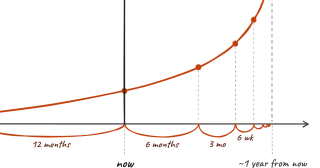
Subtitle: If acceleration compounds, the naive extrapolation implies superintelligence within a year
This post discusses a public METR report on AI R&D acceler...
TL;DR:
* When we started Rethink Priorities (RP) in 2018, our mission was, simply put, to close the knowledge gaps that stopped people from improving the world as much as they could. That hasn’t changed much, but the landscape we’re doing it in is shifting.
* In 2027, we plan to grow our core GHD, Animal Welfare, and Worldview Investigations teams to take on emerging priorities across causes, including those that the forthcoming transformative AI is creating.
...
This was cross-posted from the Animal Charity Evaluators blog.
We update our list of recommendations annually. This year, we announced our recommendations on November 10.
Most people who care about animals arrive at the same impas...

It seems prima facie plausible to me that interventions that save human lives do not increase utility on net, due to the animal suffering caused by saving human life. Has anyone in the broader EA community looked into this? I'm not strongly committed to this, but I'd be interested in seeing what people have reasoned about this.
Yeah there have been a sporadic musings about this one the forum. If you search " Vasco Grilo' he has a bit of interesting stuff on this.
My broad personal opinion is that in Uganda when I live at least, most animals (apart from battery hens) have net positive lives as they are not intensively farmed. Unfortunately this is changing fast
Because of this I don't think saving lives in this country is going to increase net animal suffering (or not very much). Whether we should just optimise for utility anyway it's obviously another question.
Others will disagree, it's an in interesting if a bit dark topic...
See the meat-eater problem tag and the posts tagged with it. That being said, wild animal effects can complicate things.
Globally, there are around 20 billion farmed chickens alive at any moment, mostly factory farmed, so about 3 per human alive, higher in high-income countries and lower in low-income countries. There are also probably over 100 billion fish being farmed at any moment, so over 12 per human alive. See Šimčikas, 2020 for estimates.