Change the main ask from veganism to IMPACTarianism to do the most good for animals.
IMPACTarianism: Boycott animal bodies, eggs, and dairy at least 6 out of 7 days on average and don’t publicly check ingredient lists.
It upholds veganism's "as far as possible and practicable" caveat, just recast in a different tradition that emphasises the outcomes (total number of animals in the system) and the impact at the group level of society more than a human individual.
Practical benefits: Lower barrier to entry; decrease in outreach dismissal. More accessible, viral, and sticky. An easy impact and movement multiplier.
Recap of reasons for veganism:
Remove sources of personal disgust
Remove obvious examples of hypocrisy that distract from evangelism
Denormalise seeing animals as things not persons (lives not stock)
Simplify action-guidance somewhat
Boycott
Doubts
We live in this universe with a moral impediment: the permanent structural impossibility of acting in the world without harming or manipulating someone. Every day we make trade-offs between direct and indirect death, enslavement and suffering in our choices.
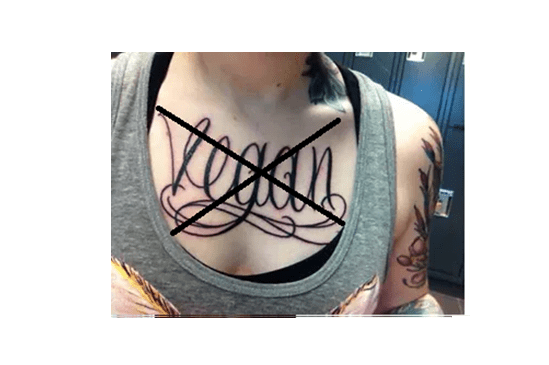
Every vegan's lifestyle is not superior to every non-vegan's, regarding animal suffering or deaths caused. Investigated further, veganism is not completely well-defined and any true vegan limit is always "However far I go". A truly holistic ethics would be far from simple; exploitation is a vague predicate and no-one can be consistent. For all its talk of rights, veganism has no substantive theory of them, their origins and conditions of overriding.
Veganism as a tradition/practice misaligns with its anti-‘killing, exploitation/injustice, and suffering’ aims, for example in cases of freeganism or commissioning indirect harms. Veganism is not cruelty free (eg crop deaths, palm oil, coltan, pesticides) and is an arbitrary “moral baseline” (why not Jainism, minimal plastic waste, minimal travel and activism too?)
One should be drawn to veganism in youth but renounce its particular puritanism upon later examination.
Vegans need to stop believing some of their own most extreme propaganda about “cruelty-free” or “minimising cruelty” (both trivially false). This variant of deontic puritanism is the dominant ask merely because of the historical accident of first mover advantage and seldom-challenged marketing mythology. For many of its adherents, veganism can become an end-in-itself / the only thing that matters (a form of value capture).
However, turning away from veganism is asking people to give up an identity that they have derived status from and invested esteem and effort into, not just some mere point in argument.
Problems with veganism in full:
Opportunity cost* of promoting Prohibition instead of Reducetarianism:
▷ Resistance from threatened masculinity, cultural identity, or those who wont otherwise consider full abstinence.
▷ Misplaced effort, time, money and bad PR on diminishing returns, eg instead of checking ingredient lists for minutiae or expend resources procuring alternative products, one could pick litter, do street outreach, work paid overtime, or campaign for systemic change.
*These costs are paid by the suffering and deaths that we fail to avert.
Demarcation of animal “use” and “product” across the whole supply chain; the tradition results in a myopic focus on a contrived notion of participation rather than difference-making, insensitive toindirectkilling and suffering
▷ Corollary: Reconciling deontic and consequentialistic reasons, whileaccounting for possible Logic of the Logger, wild animal hunting as suffering reduction, and cluelessness arguments
Demarcation of moral patienthood using Animalia.
Demarcation of slavery from welfare issues. Do deontic purists prohibiting exploitation need a theory of what is unjust use of power and a position on keeping pets?
Demarcation matters because veganism is often thought to be sharply-defined and that it has correspondingly sharply-defined obligations.
There is also the empirical issue that vegan movement growth has plateaued.
Post-vegan
The vast amount of people (43%-81%) would never even consider going vegan. Veganism chooses personal purity over effective advocacy; its present dominance is an opportunity cost to helping animals. We should displace veganismas the tentpole advocacy ask and identity.
If someone says “I could never give up Christmas dinner” Then the advocate should reply “Then don’t worry about that day;focus on the other 364 days and why you are doing it!”
For many people, animal products will be a chronic relapsing condition. Shun the naïve “I could go vegan, therefore you can too” mindset. You are not your audience. Although one size never fits all, some strategies will meet people where they are better than others.
The cost of the vegan ask is too high for most people. Dismissively high. Because of this immediate turning off, we lose a person’s potentially lifelong lifestyle actions and we lose them giving any headspace to animal protection.
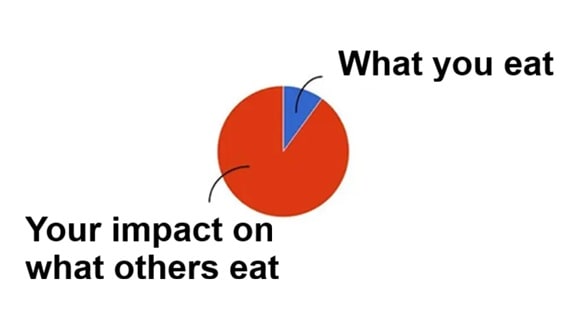
A less stringent ask can increase the basic reproduction number R₀ and reduce the total number of animal victims in the system more than veganism. Quantity matters and we can and must realign veganism's "as far as possible and practicable" stipulation to the more holistic perspective - doing good at the level of society as a whole.
Readjust our lenses. Rethink “Just go vegan” Enter astrong reducetarianism.
Existing typologies
Existing reducetarianisms:
Home veganism, eg Singer’s Paris exception, or vegetarian when travelling
Chegan / Excusetarian //pejoratives used by vegans that would not be useful to reclaim
Reducetarianism is often associated with only mild or “anything goes” reductions of meat only. Thus far, no well-defined near-vegan reducetarianism has been coined.
Lower barrier to entry; decrease outreach dismissal
Goalposts; emphasise ‘Quantity matters’. Measure by absolute consumption not determining counterfactuals; anyone can say they “try to consume less xyz” :S
Fairly well-defined; although any texts are ultimately interpreted in edge cases through traditions
Trackable
Sticky / forgiving / resilient to Lapse->Dropout pathway
Change the main ask – do the most good for animals!
Introducing IMPACTarianism
Boycott animal bodies, eggs, and dairy at least 6 out of 7 days, on average.
…Judge food by general knowledge; don’t check ingredient lists for minutiae in public
Sign the pledge
Log your skips (any calendar day where you knowingly consumed bodies, eggs, or dairy at any meal)
Tiered identities for pledgers:
-IMPACTarian: ≤ 52 skips in the past 365 days & pledged > 100 days ago
-Aspiring IMPACTarian:≤ 1-in-7 of your first 100 days are skips
-Aspiring Reducer: > 52 skips in the past 365 days
View a prototype webpage with tracker and pledge HERE (download and open the HTML file in a browser)
Sign the IMPACTarian pledge:
"I will boycott consumed animal products using general knowledge.
I will not check ingredient lists for minutiae in public.
Living is not perfectly harmless.
Quantity matters.
I will make this boycott accessible to multiply causing less harm"
This is a draft proposal, subject to refinement.
FAQ
Q: Why a new ask? A: Animal product consumption is rising, the number of vegans has plateaued and the vast number of people turn off from the veganism ask. Most reducetarian variants to date have been mild - maybe to avoid treading on veganism’s toes for social reasons. Anecdotally, many EAs already adopt their own veganish lifestyle.
Q: Isnt veganism a unique moral baseline? A: The practice of veganism is an arbitrary line around a heap of suffering that includes some harms but excludes others. The idea that vegans have clean hands – or even the cleanest hands - is a myth. More advocates are realising that some minutiae acts of veganism dont help animals and dont help humans to engage with or stick with other acts of substantial change necessary to build a mass movement that helps the most victims.
Q: Isnt this still celebrating abuse? A: No. We have the unprecedented issue where nearly all of society are raised in performing and normalising industrial-scale animal abuse where victims cannot self-advocate. Because abstinence has not grown significantly, we are open to whatever works to decrease the number of victims. Promoting veganism is like promoting celibacy but for the diet. We put impact first over symbolism or performance. Consider “What if just one IMPACTarian can do as much good as ten vegans?” The victims care about the outcome, not our squeamishness about the path we take. Increasing the number of plant-based meals will in turn grow the quantity and quality of PB foods - a snowball effect making deep boycotts easier.
Q: Do you force vegans to eat animal products if they don’t want to? A: No. But the IMPACTarian ask is always categorically IMPACTarianism, not veganism.
Explaining IMPACTarianism to others is simple:
“I boycott meat, seafood, eggs, and dairy… …at least 6 out of 7 days on average / …most of the time …because of the torture breeding and mass misery of farmed individuals."
“I boycott torture farms that cage and torment sentient individuals on an industrial scale”
“We can avert more animal lives of suffering and avert more deaths with a strong structured reduction message/ reducetarian ask, instead of veganism”
“I’m massively reducing the total days of animal misery that I pay for”
“It’s to reduce massive industrial suffering occurring out of sight”
Boycott bodies, eggs, and dairy. Make it accessible, viral, and sticky. No demand for a progression to veganism. End mass animal abuse. An easy impact and movement multiplier. Multiplies reducing suffering beyond veganism. Compassionate, without obsession. IMPACTarianism can do more good than veganism. More holistic and inclusive. Change the ask from veganism. Do the most good!
Considerations and Discussion:
IMPACTarians never have to say “Im never again consuming xyz”. No socio-cultural death/alienation, greater achievability, less outreach resistance. How much to weight this benefit?
IMPACTarianism upholds veganism's "as far as possible and practicable" caveat, just under a different tradition (and less marketing myth) that emphasises the outcomes (total number of animals) and the group level of society more than the human individual.
How to concisely qualify “Quantity matters” against small-bodying? Add a caveat “Don’t replace beef with chicken and fish” at the cost of complexity?
Licensing non-abstinence might be a slippery slope into weaker reducetarianism. Tracking accurately is effort. Decision fatigue.
Sharing one’s skipcount still allows for proud identity and grandstanding, eg “I’m a 12-skip IMPACTarian” or a vegan could say “I’m a 0-skip IMPACTarian”. But should we discourage skip-announcing because it disunifies the IMPACTarian goal?
With cultivation, can the IMPACTarian feeling of social identity become as strong as the vegan one? The vegan’s aim of living exploitation-free is motivating for some people, even if it is a fiction. A higher barrier to entry strengthens identity and presumably stickiness for those who make it in. Is a lower barrier making a change less sticky? Will enough people think in such raw, numerical terms of ‘Days of animal suffering saved/avoided’ and ‘I am doing more good than veganism’ to engage and stick with IMPACTarianism?
Emphasises talk about animal suffering not identity: “I wont eat that because…” not “I can’t eat that.”
Vegan backlash: -Should IMPACTarianism replace or complement veganism messaging? Should Impactarians taboo the V-words? Say PB/plant-rich/non-animal/animal-friendly/low-cruelty? Veganism can remain an option but not the stated aim of IMPACTarianism. Is there an initial proportion of vegans required to support IMPACTarianism for it to succeed longterm? Must IMPACTarianism compete adversarially/zero-sum with veganism for space to exist? Is it interpersonally unkind to erode a vegan worldview and belief in clean hands that many vegan humans find good for mental health?
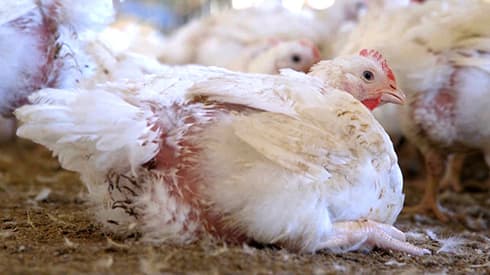
Avoids potential humane-washing. Undercover footage shows there is no expectation of humane animal treatment (akin to how one would treat a loved companion animal) during raising, transport and slaughter, at least for the foreseeable future.
Skips: What unit to track? Timing (frequency, duration, period eg day, 12-hour, ‘meal’) or portion quantity? How large a number of skips should disqualify someone from Impactarianism? Initial thoughts on the skip threshold: roughly between 37 skip days (1/10 of the days) and 104 skip days (2/7 of the days) per year. A skip is a day when one buys it or when they consume it? The latter seems better because the quantity is limited by the stomach. Count skips (non- compliance) or successes (compliance)? Having fewer skips mitigates possible Goodharting: -Compensation (Loading up on skipped days) -Changing consumption from meat -> eggs/dairy, or large body -> small bodied victims https://faunalytics.org/quantifying-the-small-body-problem ? Are you disqualified as an Impactarian if you check ingredients in public? Maybe you have to re-sign the pledge and start over another 100 days as an Aspiring IMPACTarian? Is ingredient “general knowledge” sufficiently constrained? People will eat croissants etc but curiosity and discussion will spread knowledge.
Scope: Which species? Permit an alleged welfare level? eg humane, free range, grass-fed, Red Tractor, RSPCA, Happy Eggs Include dairy? Perhaps the most ubiquitous and the least impactful. Should we use the more colloquial carnist language of “meat and seafood” instead of “land and sea animal bodies” / “flesh” and thus also permit eating insects? Should eggs include fish eggs? Animal products rather than just foods? Is it feasible to be sensitive to clothes, vivisection, commissioning non-vegan meals, harming insects, visiting farms, zoos, aqua-prisons, and safari parks, indirect harms like deforestation and pollution, or WAS (eg shifting land use)? Consistency is the hobgoblin of small minds? IMPACTarianism is arguably slightly moreconsistent than veganism by eliminating disproportionate attention and effort to minutiae. Is it appropriately apportioned to sentience-normalised proportion of victim’s lifetime total product? Is IMPACTarianism similarly well-defined to veganism? Pros and cons? Any practical benefit in explicitly scoping IMPACTarianism to sentient individuals instead of the animalia heuristic? Should IMPACTarianism take an explicit stance on bivalve mollusc consumption? Should IMPACTarianism mandate a certain number of hours are spent on outreach?
Risk of vegan backsliding (vegan-> IMPACTarian -> reducetarian) and low non-vegan adoption yielding a net harm to animals
How much wouldsystemically changing IMPACTarianism’s goalposts demotivate its pledgers and lead to dropout?
Should we encourage community variations on IMPACTarianism and let a thousand flowers bloom?
Anecdotally, there is already a shadowy battalion of “90% vegans” and Flexitarians are 19% according to one survey. What if vegan activism alreadymaximises the size of the IMPACTarian demographic without needing to explicitly grow it?
Is the name too silly/pretentious? Or is it an advantage to be memorable? Is it obvious that IMPACTarianism, like vegetarianism, is unrelated to: Arianism, an early Christian religious belief about Jesus, and Aryanism, a modern racial and political ideology about human groups. ?
eg (The Logic of the Logger) Decreasing animal product demand could increase wild animal suffering. This also applies to veganism.
Next steps
Step 1: Feedback and Share. Discuss with your peers, experiment and iterate on this successor to veganism. Develop your own elevator pitch. Engage Dietician expertise for lasting behavioural change
Cross-posted from my Substack.
Epistemic status: I’ve puzzled over this for a long time but I’m not sure I came to the right answers. I'm sharing this partly because it might help others work on resource allocation, but mostly because some smarter reader might tell me how to do it better.
TL;DR:
* I he...
With the AI windfall, mental health may be taken increasingly seriously by mainstream EA. There’s increasingly room to explore the cause area and answer some of the biggest uncertainties; at the same time, costs of the most effective interventions are continuing to fall. StrongMinds is now treating for ~$35, about a third of GiveWell’s best guess from a few years ago, and is expected to...