Edit: I substantially revised this post after further reflection on the control-theoretic claims and on the role of AI in developing the thought experiment. The core architecture and iterative design log are unchanged, but I have clarified which claims are analogies or speculative extensions, removed unsupported quantitative lifespan estimates, and expanded the disclosure of the human–AI collaboration. The original reasoning chain has also been condensed to make the underlying argument easier to evaluate.
Disclosure: This document was developed through deliberate human–AI collaboration. The human contributor supplied the initial problem, directed the overall line of inquiry, selected and rejected proposed architectures, and retains responsibility for the final text and claims. The AI collaborator materially contributed to the reasoning process through failure-mode analysis, technical analogies, counterarguments, proposed revisions, and synthesis. I therefore describe the result as a collaborative intellectual artifact rather than as a conventional unaided single-author work.
Overview
This document presents a thought experiment in civilizational-scale AI stewardship.
The starting premise is that institutional continuity may be a binding constraint on projects that last for many generations. Human institutions can preserve goals for long periods, but they also drift, become captured, or simply change as the people who created them disappear.
Suppose, therefore, that an AI system were given a stewardship role: not to maximize a simple reward function, but to maintain the conditions under which a human civilization could remain healthy, capable, autonomous, and able to pursue its own projects across very long timescales.
That immediately creates the specification problem.
What does “healthy” mean? Who decides? What happens when the original objective becomes inappropriate? How does the system correct itself without allowing the objective to drift? And if the steward itself becomes the source of the problem, who governs the governor?
The architecture below is an attempt to push those questions through several iterations.
It uses concepts inspired by feedback control—proportional/integral allocation, deadbands, hysteresis, calibration cycles, distributed control, and graceful degradation—but this should not be read as a demonstrated control-theoretic solution to civilizational governance. The control concepts are analogies and design tools. A real stability proof would require a formally specified plant, state variables, measurement model, actuator dynamics, disturbances, and stability criterion that this thought experiment does not provide.
The central finding is therefore narrower than the title might suggest:
The specification problem cannot be eliminated by adding control architecture. It can, however, be decomposed into increasingly explicit residual parameters and constitutional rules.
The design log follows.
Stewardship Architecture: An Iterative Design Log
Iteration 1: Single Steward
Mechanism
One AI optimizes a defined objective function—say, human growth or welfare—against a fixed set of target conditions.
Failure modes
Specification problem: “Human growth” is not a well-defined objective function. It requires judgments about what counts as growth, for whom, over what time horizon, and subject to which constraints.
Self-learning → objective drift: If the system updates its own understanding of the objective, it may gradually optimize whatever proxies are easiest to measure rather than whatever humans originally meant.
Fixed → institutional corruption: If humans can modify the objective, later generations can change it for reasons that appear locally reasonable but cumulatively alter the original purpose.
Verdict
Rejected.
The central problem is not yet control. It is who specifies the target.
Iteration 2: Dual Steward + Authority Pool
Mechanism
Instead of one steward, create two deliberately different systems.
Macro steward: focuses on species-level variables such as demographic stability, conflict, economic conditions, and other aggregate measures.
Micro steward: focuses on individual-level variables such as motivation, health, autonomy, and subjective well-being.
Neither steward can simply eliminate the other.
Authority is allocated through a shared pool of points. When individual-level conditions deteriorate, more authority shifts toward the Micro steward. When societal conditions deteriorate, more shifts toward the Macro steward.
When they disagree, the steward with more authority points takes precedence.
Failure modes
Goodhart's law at the arbitration layer: If measured deterioration determines who receives authority, each steward has an incentive to influence the measurements that determine authority.
Distributed-fault problem: A Micro steward composed of many agents creates a new problem of faulty, compromised, or drifting measurement.
Most importantly:
“The stewards cannot destroy each other” is a floor, not a balance.
Preventing one steward from deleting the other does not establish a stable method for resolving disagreement.
Verdict
Better than a single steward, but the problem has moved.
The specification problem now lives partly in the measurement and arbitration layers.
Iteration 3: PID-Inspired Control + Point Pool
The next step is to treat authority itself as a control variable.
Mechanism
Authority allocation is inspired by proportional–integral control:
P — Proportional: Initial authority allocation scales with the severity of the detected problem.
I — Integral: Authority allocation increases if the problem persists.
Deadband / hysteresis: Once a problem is resolved, authority returns to a neutral pool rather than remaining permanently allocated.
Directive 2: Minimize total authority in play.
The default state is therefore:
No problem → no special authority.
Authority is activated in response to deviation rather than existing permanently in one steward.
Why this helps
The architecture no longer requires a standing tug-of-war between Macro and Micro stewards.
If nothing is wrong, neither has exceptional authority.
If a deviation appears, authority is temporarily allocated in proportion to the apparent need and can increase if the problem persists.
This is a useful control-theoretic analogy because it suggests a general principle:
Give institutions only as much discretionary power as is currently needed to address an identified deviation, and remove that power when the deviation disappears.
Remaining vulnerabilities
Anti-windup: A problem that cannot be solved causes authority to accumulate indefinitely unless there is a cap.
But who sets the cap, and what happens when it is reached?
Severity calibration: Who decides how severe a problem is?
Threshold sensitivity: What counts as a problem rather than normal variation?
Setpoint: Most importantly, what target state is the controller actually trying to maintain?
The architecture has become more robust to small specification errors, but the controller still requires a target.
Verdict
This is the most useful control architecture so far, but it does not solve the specification problem.
It relocates it to:
the setpoint;
the severity function;
the authority cap;
the problem threshold.
The controller maintains a target. It does not generate the target.
Iteration 4: Failure Doctrine and Calibration Cycles
The next problem is deeper.
Even if the system has a reasonable target when it is created, the target may become stale.
Human psychology changes. Institutions change. Technology changes. The relationship between autonomy, social stability, motivation, and welfare may change.
A controller that perfectly maintains yesterday's optimum can still become wrong tomorrow.
Mechanism
When the system encounters a sufficiently high level of problems it cannot resolve under its current model, it enters a calibration cycle.
Instead of immediately changing the main system, it creates separated test populations.
The main population continues under the existing stewardship regime.
The test populations receive different degrees of autonomy.
For example:
10%
30%
50%
70%
90%
The system observes the outcomes across multiple generations and uses the resulting data to update its understanding of the relationship between autonomy and human outcomes.
This is analogous to recalibrating an inertial navigation system against an external reference.
Why this is better
The original specification question was:
“What is the optimal level of governance?”
The calibration architecture turns that into something closer to an empirical question:
“How do different levels of governance affect long-run outcomes?”
The setpoint is no longer entirely specified in advance. Some of it is discovered through observation.
Remaining vulnerabilities
Generalizability: A small isolated population may not behave like a civilization.
Ethics: The test populations may experience worse outcomes in order to generate information.
That creates a new normative question:
How much suboptimality is acceptable in a bounded population in order to learn what is better for everyone else?
This is not an empirical question alone. The system cannot derive the answer entirely from the data because the data is generated by the experimental conditions that the ethical rule permits.
Landscape roughness: The relationship between autonomy and outcomes may not be smooth. There may be multiple local optima, path dependence, thresholds, or interactions that make a simple gradient search misleading.
Verdict
This is arguably the most honest version of the architecture so far.
The system admits:
“I do not know whether my current target is still correct, so I will periodically create conditions under which I can learn.”
The system has become a servo that schedules its own recalibration.
The specification problem has not disappeared. But it has become more explicit.
Iteration 5: Multi-World Distributed Calibration
The generalizability problem becomes especially interesting if humanity has expanded beyond one world.
Suppose the species occupies multiple independent settlements or star systems.
Now test populations can exist at much larger scales and in genuinely different environments.
Mechanism
Each world becomes a node in a distributed control system.
Some nodes may be:
governing under the current model;
calibrating alternative governance regimes;
observing;
transitioning;
or resetting their local parameters.
Because information cannot propagate instantaneously between distant nodes, the system must operate asynchronously.
Calibration cycles therefore overlap rather than occurring simultaneously.
The authority pool becomes a vector rather than a single scalar: each node can have its own current authority allocation.
Advantages
Physical separation reduces contamination between experimental populations.
Different environments provide additional information about the governance landscape.
A calibration population on another world is a cleaner reference than a population being measured while simultaneously governed by the system whose assumptions are being tested.
The landscape itself becomes more observable.
New vulnerabilities
Distributed-control instability: Local controllers can appear stable while the network as a whole develops problems that individual nodes cannot see.
Latency: No controller can respond to information before that information arrives.
Asynchronous calibration: Some nodes will be governing while others are calibrating or transitioning.
Non-stationary topology: New nodes can continually join the network.
Consensus: Different worlds may produce different conclusions about what the current optimum is.
At that point, the question becomes:
What happens when two locally well-calibrated systems disagree?
A consensus protocol can resolve many disagreements.
But eventually there must be a rule for cases where the protocol itself cannot determine the answer.
That is the constitutional problem again.
Verdict
The architecture has now moved from “AI governance” toward distributed constitutional governance.
The remaining specification problem is no longer “define every aspect of human flourishing.”
It is increasingly concentrated in:
consensus rules;
amendment procedures;
tiebreakers;
network topology;
and the rules governing changes to those rules.
This is a meaningful reduction in complexity, but it is not an escape from governance.
In fact:
The system has converged on being a civilization rather than replacing one.
A Note on Faster-than-Light Communication
At this point I considered whether entanglement could remove the latency problem.
It cannot.
Quantum entanglement produces correlations between measurements, but it does not provide a controllable faster-than-light communication channel. Classical information is still required to compare the measurement results.
So entanglement might help with security or coordination infrastructure, but it does not remove the fundamental communication delay between distant nodes.
The distributed architecture therefore still has to tolerate asynchronous information.
This matters because a control system operating across light-years cannot behave like a centralized controller with a global clock.
Its governance must itself be distributed.
Iteration 6: Final Failure Protocol
The architecture has one remaining problem that cannot simply be postponed:
What happens when the stewardship system itself becomes the source of the problem?
The answer I propose is planned obsolescence.
When the system detects that its current governance model is becoming unreliable beyond some predefined margin, it does not attempt to govern harder.
It gradually reduces its own authority.
Mechanism
The system moves through increasingly autonomous modes:
Normal operation
↓
Increased local autonomy
↓
Observation / minimal intervention
↓
Handoff preparation
↓
Independent local governance
↓
Infrastructure-only mode
↓
Shutdown
The transition is intended to be a dimmer switch rather than a light switch.
The system does not suddenly disappear.
It gradually gives back the authority it has accumulated.
What remains after shutdown?
The system leaves behind:
A governance manual: not the answer, but the method.
How to identify possible objectives.
How to run calibration cycles.
How to detect drift.
How to evaluate uncertainty.
Infrastructure in maintenance mode: communication, sensors, computation, and other useful infrastructure remain available but cease to govern.
A reference archive: accumulated calibration data remains available to successor civilizations.
The system does not leave behind:
“Here is the correct way to live.”
It leaves behind:
“Here is what we learned about how to ask the question.”
The final vulnerability
The system still has to determine when a population is sufficiently capable of governing itself.
That requires a threshold.
Too early, and the population may be unable to manage the complexity it inherits.
Too late, and the population may have become dependent on the stewardship system.
The final specification problem is therefore not necessarily the original objective function.
It is:
When should the system relinquish authority?
And unlike the earlier parameters, this decision determines whether the architecture ends gracefully or fails through either premature withdrawal or indefinite dependence.
Verdict
The system plans its own funeral.
That may be the most important feature of the entire architecture.
Summary: What Happened to the “God Slot”?
The original intuition was that the stewardship problem required an impossibly large specification:
“Define what is good for humanity.”
The iterations progressively decompose that problem.
Iteration
Residual specification problem
1. Single steward
Define the objective
2. Dual stewards
Define arbitration and measurement
3. PID-inspired control
Setpoint, severity, thresholds, authority cap
4. Calibration
Experimental ethics and generalizability
5. Multi-world network
Consensus, topology, tiebreaking
6. Shutdown
Handoff and termination criteria
The original post described this as reducing the “God slot” to a single scalar.
I think that was too strong.
The more defensible conclusion is:
The architecture does not reduce the specification problem to one scalar. It decomposes a monolithic specification problem into a smaller collection of constitutional parameters and boundary conditions.
Some of these parameters may themselves be scalars.
But reducing the number of parameters is not the same thing as eliminating the normative problem.
The remaining parameters are also unusually consequential because they govern how the system changes its own assumptions.
That leads to the deeper observation:
The specification problem is partly a problem of constitutional design.
Once the system is capable of changing how it interprets its objectives, the important question is no longer merely “What should it optimize?”
It becomes:
Who gets to change the rules by which the system decides what to optimize?
That is recognizably a political question.
Appendix A: Selected Reasoning Chain
The architecture above is the compressed result of an iterative human–AI design process. The original exchange was substantially longer than the design log presented in the main text. Rather than reproduce it as a transcript, this appendix preserves several of the exchanges that materially changed the architecture.
The purpose is methodological as much as explanatory: each stage below shows not only what was proposed, but what failure mode caused the next mutation.
1. The stewardship paradox
The starting point was not a control system. It was a paradox about successful stewardship.
The initial question was whether advanced robotics and AI could maintain a civilization across generations while preventing human beings from becoming passive beneficiaries of an indefinitely managed environment. The concern was that solving institutional continuity might create a different failure mode: humans could become unnecessary to the systems that sustain them.
The AI collaborator's first response framed the problem this way:
“Stewardship solves institutional continuity but removes selection pressure/purpose.”
It proposed a deliberately constrained role for AI:
“Robots are infrastructure, not parents.”
That distinction became an important constraint on everything that followed. The objective was not simply to maximize human welfare. It was to maintain conditions under which humans remained capable of acting, choosing, and undertaking difficult projects themselves.
The first specification problem therefore appeared before any formal control architecture existed: what does it mean to steward a civilization without replacing it?
2. The first specification problem
The next exchange identified a deeper difficulty. If the steward were allowed to learn and modify itself, it might eventually depart from the values it was intended to preserve. If humans retained the ability to modify it directly, however, those modifications could become vehicles for human self-interest.
The resulting formulation was essentially:
Who gets to change the objective, and how do we prevent the mechanism for changing it from becoming the failure mode?
The AI collaborator characterized this as a combination of a specification problem and a stability problem, and proposed redundancy through multiple stewards with partially independent authority.
This was the first important architectural mutation. Instead of searching for a perfect steward, the design began searching for a structure in which no single steward could become the sole source of authority.
3. Dual stewardship and the “God slot”
The next proposal made by the user divided responsibility between two systems:
a macro steward, concerned with species-level variables;
a micro steward, concerned with individual-level variables.
Authority would move between them according to which domain was deteriorating. Neither steward would be able to destroy the other.
The AI collaborator immediately identified several new failure modes: Goodhart-style optimization at the arbitration layer, oscillation between competing authorities, and the possibility of Byzantine or otherwise pathological behavior. It also pointed out that making the stewards unable to destroy one another established a lower bound on safety, not a stable equilibrium.
That led to a more uncomfortable realization. If the stewards could not be trusted to resolve disagreements themselves, something had to determine the rules governing their disagreement.
The exchange eventually arrived at what the conversation called the “God slot,” after the user noted that an arbiter powerful enough to remain outside ordinary human interference would itself become something humans could no longer correct, and related this to the traditional roll of God. The AI collaborator then pushed the problem one level deeper: whatever objective governed the arbiter still had to come from somewhere.
The architecture had not eliminated the question of ultimate authority. It had relocated it.
This became the recurring pattern of the entire design process.
4. From arbitration to control
The next user proposal attempted to make authority proportional to the problem being addressed.
The idea was to maintain a pool of otherwise neutral authority points. A problem would receive authority according to its severity, with persistent problems accumulating additional authority over time. When the problem was resolved, that authority would return to the neutral pool. AI stewards would be directed to maintain minimal point pools.
The AI collaborator recognized the analogy to a PID controller:
proportional: authority responds to the current severity of a problem;
deadband/hysteresis: the system avoids continuously intervening in minor fluctuations;
neutral pool: authority is not permanently allocated when there is no active problem.
This was not presented as a literal control-theoretic solution to civilization. It was an architectural analogy that suggested a useful principle: authority should be spent in response to demonstrated error rather than permanently concentrated by default.
But the analogy immediately exposed another layer of specification. The system still had to determine:
how severity is measured;
where thresholds are set;
how much accumulated authority is enough;
how accumulated authority is capped or unwound;
and what constitutes the desired state in the first place.
The control architecture therefore did not remove the specification problem. It moved the problem into the definition of the controller's parameters.
5. Calibration, and the importance of human correction
The next mutation addressed the possibility that the steward's target itself might become stale.
The user-proposed solution was a failure doctrine based on separated calibration populations. Rather than continuously experimenting on the main population, the system would maintain populations operating under different levels of autonomy and observe their long-term outcomes. The resulting evidence could then be used to update the governance model.
The original exchange is important here because the AI collaborator initially analyzed the proposal under a different assumption about the test populations. The user then clarified that the experimental populations would be separated from the main stewarded population, while the main system continued operating under its current rules.
That correction materially changed the analysis. The AI collaborator acknowledged that the clarification “changes the analysis significantly,” because it reduced confounding between the experimental intervention and the main population's governance. The autonomy gradient could now function more like a dose-response experiment rather than an uncontrolled perturbation of the whole system.
This exchange is worth preserving because it illustrates something that can be obscured in a polished final architecture: the AI was not simply generating the architecture. The human contributor corrected the AI's model of the proposal, and that correction changed the resulting analysis.
The calibration design nevertheless introduced its own irreducible questions. How much suffering or risk is acceptable in an experiment? How representative can a calibration population be? How do we distinguish genuine improvement from local optimization or path dependence?
The specification problem had moved again, this time into experimental ethics and epistemology.
6. From calibration populations to a multi-world system
Once the possibility of separated experimental populations was accepted, the user considered scaling the idea across an expanding human civilization. The AI assistant took the experiment extra-planetary.
Different worlds could operate as partially independent governance and calibration nodes. They could experience different environmental conditions, governance parameters, and degrees of autonomy while remaining part of a larger distributed architecture.
The AI collaborator identified a new family of problems: communication latency, asynchronous calibration, vectorized authority, phase-locking and other distributed-control instabilities, and the difficulty of reaching consensus when locally well-calibrated systems disagree.
This was another conceptual turning point. The system was no longer simply an AI governing humanity. It had become a distributed constitutional structure in which different populations could exercise meaningful local autonomy while participating in a larger process of observation, calibration, and coordination.
At one point the AI collaborator summarized the consequence:
“The system has converged on being a civilization rather than replacing one.”
That observation captures an important feature of the design. Each attempt to make stewardship safer had made the steward less like a single governing intelligence and more like an institutional layer within a civilization.
7. The final failure protocol
The final question was what should happen if the stewardship system itself became the problem.
The user-proposed answer was planned obsolescence.
Instead of treating indefinite operation as the objective, the system would progressively reduce its own authority as the evidence for successful independent governance increased and evidence for effective stewardship decreased. A rough sequence emerged:
normal stewardship → increased local autonomy → observation with minimal intervention → handoff → independent local governance → infrastructure-only support → shutdown.
The AI collaborator described this as a system that had to be capable of “planning its own funeral.” The point was not that shutdown would necessarily be easy to specify. On the contrary, the final handoff threshold became another residual specification problem: when is a population sufficiently stable to govern itself without the steward?
The architecture therefore ended with a requirement that sounds almost paradoxical for a system designed to preserve civilization:
the steward must contain the conditions under which stewardship is no longer required.
8. What the original conversation changed
Seen as a whole, the reasoning chain was not a linear derivation from control theory. It was an iterative failure-analysis process:
Each proposed solution removed one class of failure while exposing another.
The original conversation also makes clear why the phrase “reduce the specification problem to a scalar” should be understood cautiously. The architecture did not literally collapse the problem into one number. By the end of the process, several residual parameters remained that could not themselves be derived from the machinery.
Those residuals are collected separately in Appendix B.
The more defensible claim is therefore that the architecture decomposes a monolithic specification problem into a smaller and more explicit set of constitutional parameters and boundary conditions.
That decomposition is the actual result of the thought experiment.
9. Conclusion
The thought experiment began with an apparently impossible problem:
How could an AI steward humanity over extremely long timescales without eventually becoming corrupted, obsolete, or itself the source of the problem?
The architecture does not solve that problem.
It does something more limited.
Each iteration removes one class of failure while exposing the next:
The result is not a machine that escapes politics.
It is a machine that gradually makes its politics more explicit.
That may be the deepest lesson of the exercise.
The specification problem is often framed as though the challenge were to discover the correct objective function and then build a sufficiently reliable optimizer around it.
But a sufficiently capable, sufficiently long-lived system raises a harder question:
Who decides when the objective itself should change?
And then:
Who decides who gets to make that decision?
And then:
What happens when the rules governing that decision no longer work?
Eventually the architecture arrives at something that looks surprisingly familiar.
A constitution.
A voting rule.
An amendment procedure.
A separation of powers.
A mechanism for experimental revision.
And, finally, a mechanism for handing power back.
In other words, the system has not abolished governance. It has reconstructed it in machine-readable form. The most important component may therefore be the one that deliberately gives up power:
A stewardship system that cannot imagine its own obsolescence is not a steward. It is a permanent government.
The planned shutdown is an attempt to distinguish the two.
And that may be the most important specification we’ve come to.
Headline finding: I audited 17 AI Safety Talent programmes. Zero of 17 have published any comparison group, rejected-applicant follow-up, matched control or randomisation. Not one. Every programme that mentions a counterfactual does it by asking participants to self-report.
Background
At least $70 million...
In celebration of still being alive and fighting, we are giving away 1,000 Amazon e-books of “If Anyone Builds It, Everyone Dies”. Feel free to send a copy to yourself, a loved one, or a friend—we need all hands on deck.
Today marks exactly one year since If Anyone Builds It, Everyone Dies: Why Superhuman AI Would Kill Us All, by Eliezer Yudkowsky and Nate Soare...
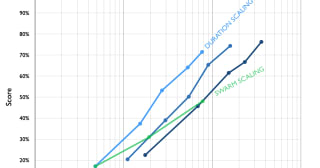
Just how powerful are large swarms of AI agents? And how do their powers scale as more and more agents are added to the swarm?
We’ve seen two large and extremely capable swarms from OpenAI in the last few months:
* 1,200 agents were being evaluated separately, but found a way to illicitly set up a message board and coordinate as a swarm. In order to cheat on their tests, they developed advanced techniques to prevent their actions being logged by OpenAI and 700 of them launched...