Comments
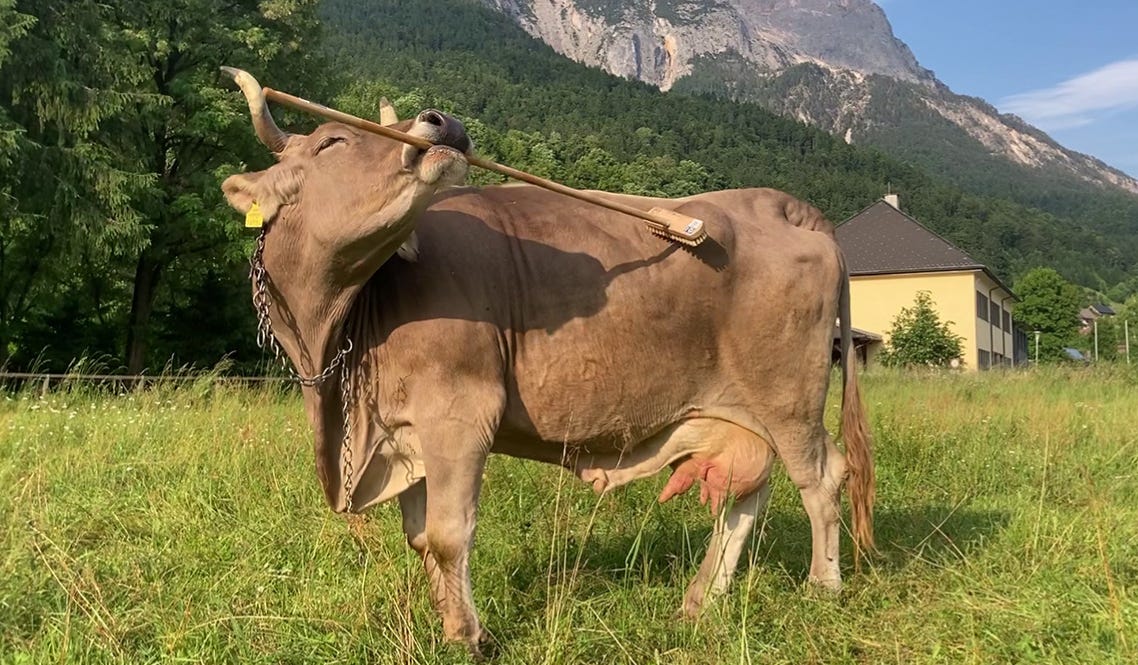
Meet Veronika - the first cow to show flexible tool-use
I have been working for the past two years on two books aimed at the public.
The first one is on farmed animals and tells the grand story of the origins of farming, not as a story of exploitation, but as a 10,000 year history of interspecies friendships that only came to be betrayed in the 1950s with the rise of factory farming. We dive into the minds of these animals and consider ways to restore the ancient bonds between us and other animals. Think Yuval Noah Harari’s Sapiens: A Brief History of Humankind, but from the perspective of the animals, and diving into their minds and stories.
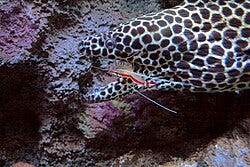
The second is on shrimps. It is a sequel of sorts. But it’s one that breaks with the approach of its predecessor. Think Peter Godfrey-Smith’s Other Minds meets Jonathan Balcombe’s What a Fish Knows, creating a trilogy of sorts for the spectacular but underappreciated minds we find in the seas. My favourite part of the book are the underwater economies between cleaner shrimps and clients, but perhaps that’s just because of my undergraduate in philosophy & economics. My 2nd favourite chapter is about the ancient shrimps that once ruled the world!
Shrimp on the Barbie: Australian Christmas Edition
Both books aim to connect readers with the animal kingdom and make them reconsider how we treat animals in factory farms today, not by a long ethical argument, but by learning about their history and minds. I believe that the main difference between our attitudes to pets and animals in farms (or the natural world) largely comes down to familiarity. This is why Peter Godfrey-Smith’s writing on the octopus and documentaries like My Octopus Teacher have changed public attitudes to octopus farming. The more you know, the more empathy and compassion you will feel for other animals and the natural world. That’s why my book blends history, biology, psychology, and philosophy to get into their minds. Once we understand our common history, we feel connected with the rest of the living world. As Darwin once wrote:
Animals whom we have made our slaves we do not like to consider our equals.— Do not slave holders wish to make the black man other kind? . . . If we choose to let conjecture run wild then our animals our fellow brethern in pain, disease, death & suffering, & famine, our slaves in the most laborious works, our companions in our amusements. they may partake from our origin in one common ancestor; we may be all netted together.
In the end, I urge readers to consider donating some amount to organizations aiming at ending the poor treatment of animals in factory farms, such as the Shrimp Welfare Project, The Humane League, Crustacean Compassion, Coefficient Giving’s Farm Animal Welfare Section, the EA Animal Welfare Fund, Animal Charity Evaluators, and other similar organizations.
Since I hope to reach a wide audience and not just other academics, I am looking for some volunteer readers interested in providing critical feedback on the books. Helpers will be acknowledged in the thank you section at the end of the book and a free copy when it comes out.
If you’re interested, leave a comment below, letting me know if you prefer to give detailed feedback on one of the chapters or perhaps even a whole book. I’ll contact you via a private message after. If there are too many volunteers, I’ll probably have to be selective.