Comments
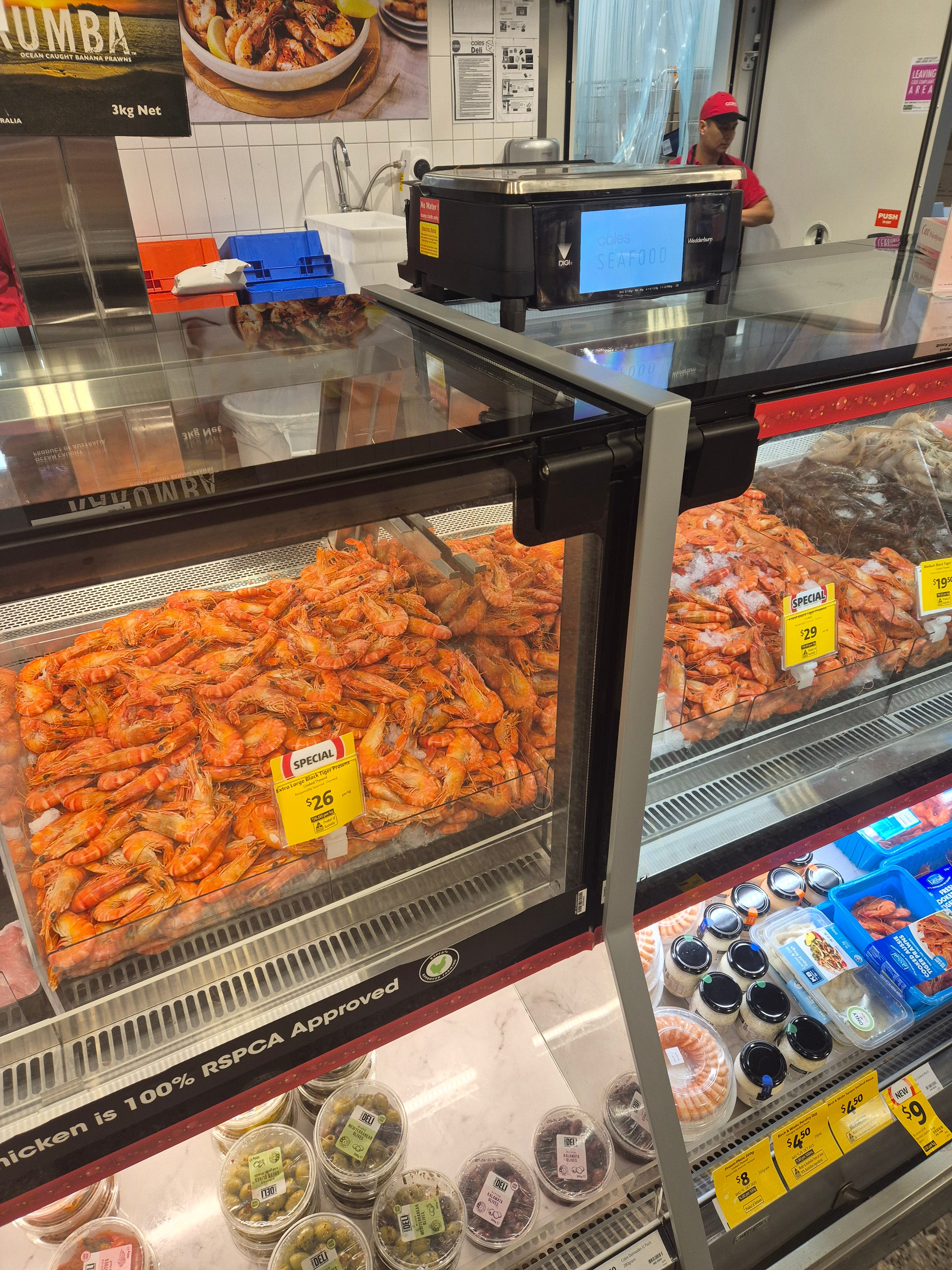
This December, I returned to Australia to spend Christmas with my wife's family. It's my third Australian Christmas, and I'm still shocked by the differences to the German festivities not too far from the Alps where I grew up. It's a hot summer day in the Southern Hemisphere, people wearing goofy Christmas outfits, and the centerpiece of the feast isn't a duck but…shrimps or rather as Aussies call them, prawns.
Australian shops stock up on shrimps before Christmas
I found that already strange in the previous years. But this year was quite different. This year I feel strangely melancholic. When I look at the shrimp on the platter I don't see odd food anymore but rather individuals.
Piled on a platter, their black eyes still visible, their segmented armored bodies intact. It's also a contrast to how we usually consume meat. The animal processed. The individual disappearing. Not so in the case of these shrimps. But that’s only part of the explanation for my change in attitude
The plausible cause? I'm currently writing a book on the minds of these small and unassuming crustaceans. Yet, even after months of research on their lives, their surprising mental abilities, I can't help but feel surprised at my sudden empathy towards these little shrimp. While I didn’t partake in their consumption, most others at the table didn't seem to mind, happily loading their plates with what is perhaps the highlight of an Australian Christmas dinner.
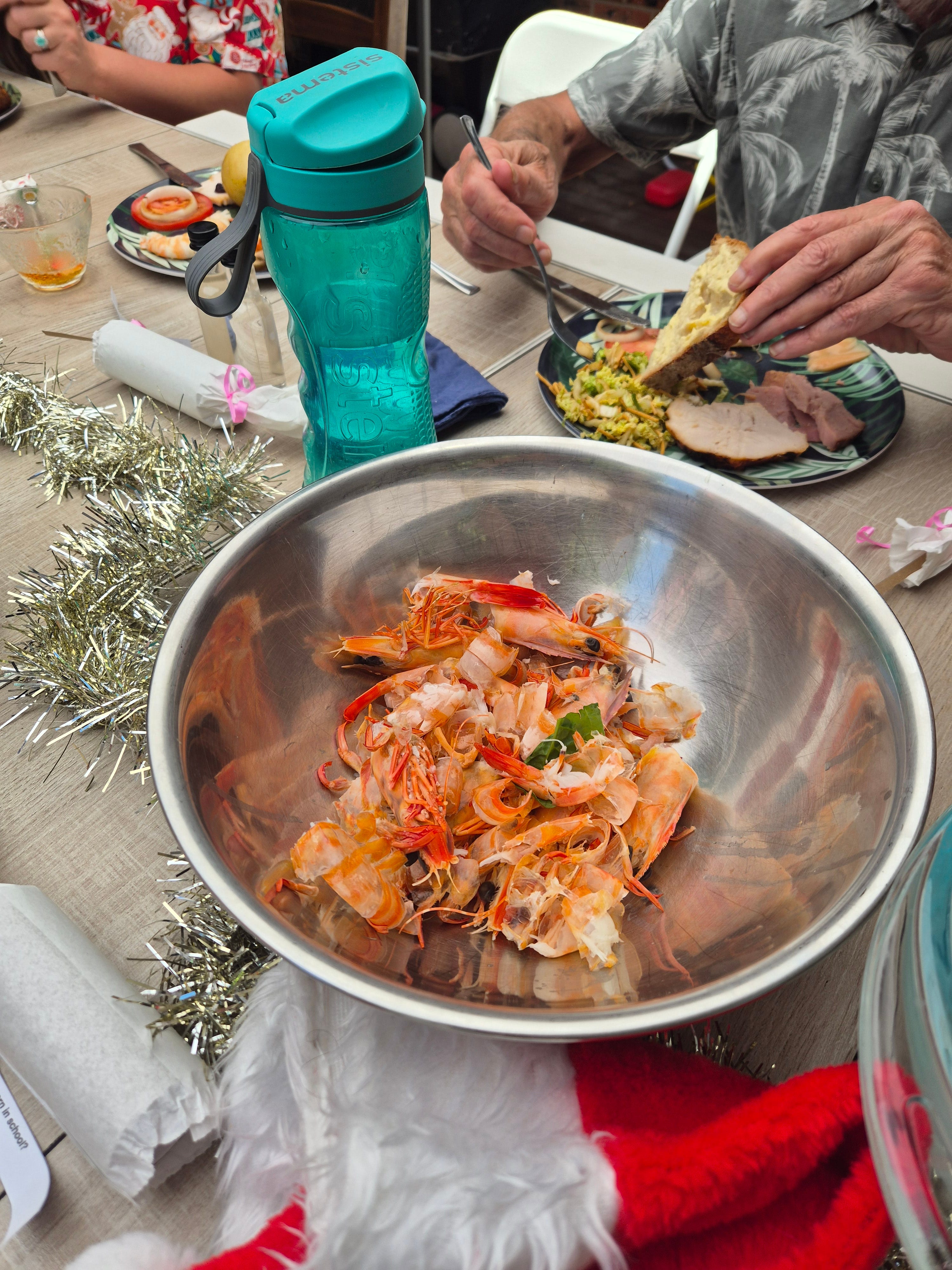
The aftermath of an Australian Christmas
It is one thing to know the absurdly high numbers of trillions of shrimp killed for food each year and how little attention we pay to their welfare as individuals from a utilitarian calculus; it's another to experience empathy, to feel moved by their suffering. This is why the Shrimp Welfare Project was featured in the Daily Show as a perfect punchline for many jokes (see my previous post). There is an empathy gap when we look at animals so unlike ourselves, strangely alien, with their armoured bodies. But I am pleased to see that gathering data about them, learning about them, helped me to bridge my own empathy gap.
Now one doesn't need to feel a lot of empathy for those who need our help the most. The facts sometimes speak for themselves—at least among effective altruists. That's what convinced me to write a book about them before I ever felt any warm and fuzzy feelings for them. But creating empathetic feelings for those in need can certainly help to get people motivated!
Writing a book for the public with the explicit goal to make readers look beneath the shell and rethink their perspectives of them as mindless robots is a risky business. There are many books on the minds of cute and cuddly animals like dogs and pigs, or on mysterious animals like octopuses and bats. For shrimp there are none. Writing the first book on the minds of shrimp allows it to avoid competing titles, but it also makes it harder to convince publishers that there is a market for it. What matters in trade publishing is whether there is a market for a book: that is, will it sell? It's easy to wonder whether anyone would buy a book on what it's like to be a shrimp…
But I am much more optimistic now. Christmas conversations on the surprising abilities of shrimp went down better than expected. There was genuine surprise and interest. Tales of shrimp research appear to genuinely raise feelings of compassion for these creatures. What I once thought of as grotesque creatures of the sea I now thought of as cute…? Perhaps this is just the Christmas spirit grabbing a hold of me. It is perhaps a time of compassion after all!
Since this is a season of giving this is probably a good point to end this Christmas blog post by mentioning the FarmKind fundraiser for Shrimp Welfare multiplying each donation by 1.5 such that a $10 donation can help 22,500 shrimp to avoid painful death through stunning. You can share the Christmas spirit with shrimp here: LINK