"Gotta go fast." ―Sonic
A few prominent transhumanists have argued that building friendly AI as quickly as we can may be our best chance to prevent a "grey goo" catastrophe, in which self-replicating nanobots kill everyone on Earth. In 1999, Eliezer Yudkowsky forecasted that a nanotech catastrophe would occur sometime between 2003 and 2015. He forecasted a 70%+ chance of human extinction from nanotechnology, and advocated rushing to build friendly AI (in current terminology, aligned AGI or safe AGI) in order to prevent the end of all human life. At this time, Yudkowsky had begun work on his idea for building friendly AI, which he called Elisson. Yudkowsky wrote:
If we don't get some kind of transhuman intelligence around *real soon*, we're dead meat. Remember, from an altruistic perspective, I don't care whether the Singularity is now or in ten thousand years - the reason I'm in a rush has nothing whatsoever to do with the meaning of life. I'm sure that humanity will create a Singularity of one kind or another, if it survives. But the longer it takes to get to the Singularity, the higher the chance of humanity wiping itself out.
My current estimate, as of right now, is that humanity has no more than a 30% chance of making it, probably less. The most realistic estimate for a seed AI transcendence is 2020; nanowar, before 2015. The most optimistic estimate for project Elisson would be 2006; the earliest nanowar, 2003.
So we have a chance, but do you see why I'm not being picky about what kind of Singularity I'll accept?
Fortunately, in 2000, Yudkowsky forecasted that he and his colleagues at the Singularity Institute for Artificial Intelligence or SIAI (now the Machine Intelligence Research Institute or MIRI) would create friendly AI (again, aligned or safe AGI) in somewhere between five to twenty years, and probably in around eight to ten years:
The Singularity Institute seriously intends to build a true general intelligence, possessed of all the key subsystems of human intelligence, plus design features unique to AI. We do not hold that all the complex features of the human mind are "emergent", or that intelligence is the result of some simple architectural principle, or that general intelligence will appear if we simply add enough data or computing power. We are willing to do the work required to duplicate the massive complexity of human intelligence; to explore the functionality and behavior of each system and subsystem until we have a complete blueprint for a mind. For more about our Artificial Intelligence plans, see the document Coding a Transhuman AI.
Our specific cognitive architecture and development plan forms our basis for answering questions such as "Will transhumans be friendly to humanity?" and "When will the Singularity occur?" At the Singularity Institute, we believe that the answer to the first question is "Yes" with respect to our proposed AI design - if we didn't believe that, the Singularity Institute would not exist. Our best guess for the timescale is that our final-stage AI will reach transhumanity sometime between 2005 and 2020, probably around 2008 or 2010. As always with basic research, this is only a guess, and heavily contingent on funding levels.
Nick Bostrom and Ray Kurzweil have made similar arguments about friendly AI as a defense against "grey goo" nanobots. A fictionalized version of this scenario plays out in Kurzweil’s 2010 film The Singularity is Near. Ben Goertzel, who helped popularize the term "artificial general intelligence", has also made an argument along these lines. Goertzel proposes an "AGI Nanny" that could steward humanity through the development of dangerous technologies like nanotechnology.
In 2002, Bostrom wrote:
Some technologies seem to be especially worth promoting because they can help in reducing a broad range of threats. Superintelligence is one of these. Although it has its own dangers (expounded in preceding sections), these are dangers that we will have to face at some point no matter what. But getting superintelligence early is desirable because it would help diminish other risks. A superintelligence could advise us on policy. Superintelligence would make the progress curve for nanotechnology much steeper, thus shortening the period of vulnerability between the development of dangerous nanoreplicators and the deployment of adequate defenses. By contrast, getting nanotechnology before superintelligence would do little to diminish the risks of superintelligence.
The argument that we need to rush the development of friendly AI to save the world from dangerous nanotech may seem far-fetched and certainly some of the details are wrong. Yet consider the precautionary principle, expected value, and the long-term future. If the chance of preventing human extinction and saving 10^52 future lives is even one in ten duodecillion or 1 in 10^40 (in other words, a probability of 10^-40), then the expected value is equivalent to saving 1 trillion lives in the present. GiveWell’s estimate for the cost to save a life is $3,000. So, we should be willing to allocate $3 quadrillion toward rushing to build friendly AI before nanobots wipe out humanity. In fact, since there is some small probability — it doesn’t matter how small — that the number of potential future lives is infinite, we should be willing to spend an infinite amount of money on building friendly AI as quickly as possible.
I believe there’s at least a 1 in 10^48 chance and certainly at least a 1 in ∞ chance that I can create friendly AI in about ten years, or twenty years, tops, on a budget of $1 million a year. I encourage funders to reach out for my direct deposit info. If necessary, I can create a 501(c)(3), but I estimate the expected disvalue of the inconvenience to be the equivalent of between a hundred and infinity human deaths.
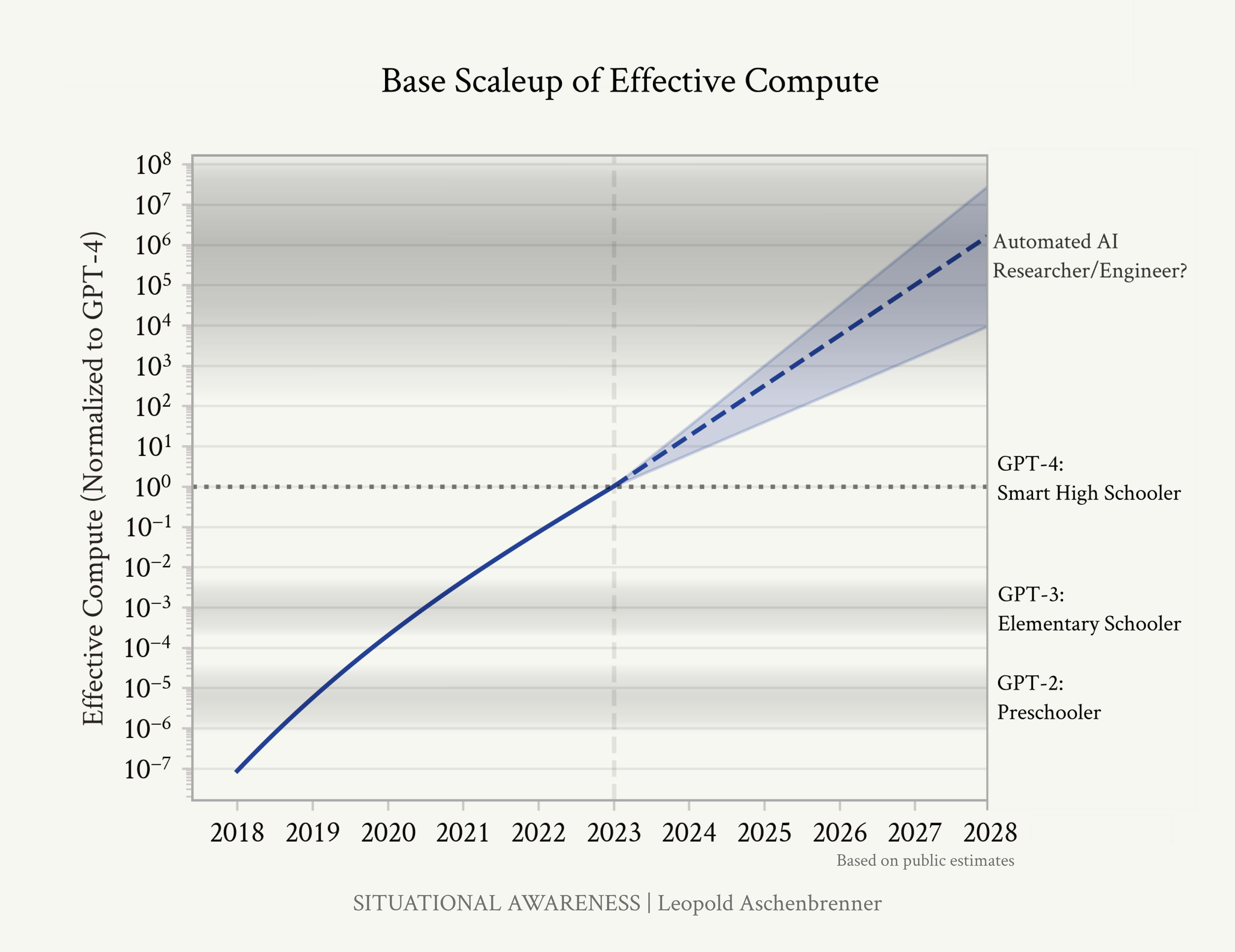


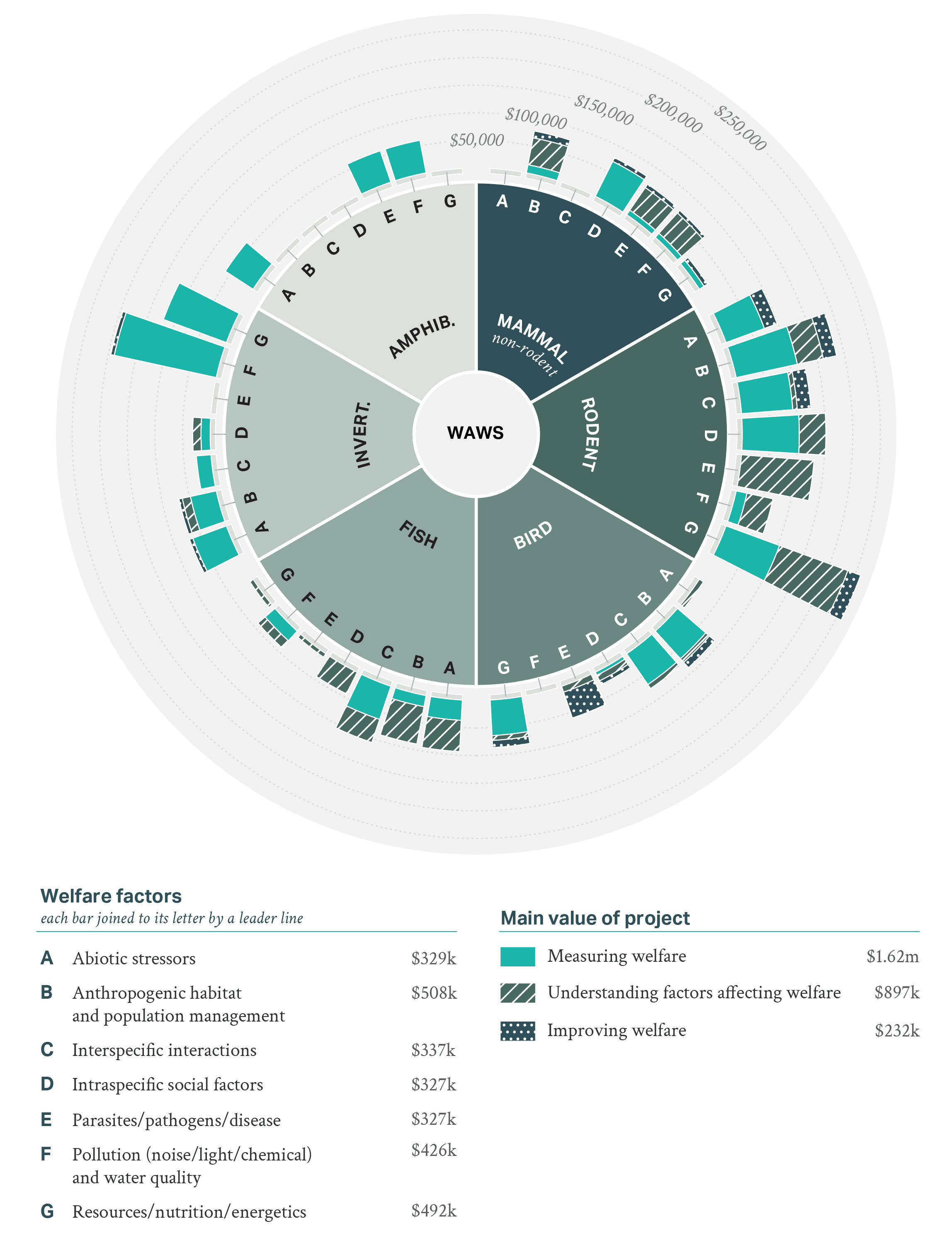
I agree that this illustrates a counterpoint to longtermism-style arguments that is underappreciated.
As someone who believes that there are valid reasons to be concerned about the effects advanced AI systems will have and therefore that general "AI risk" ideas contain important insights and are worthy of consideration, I will offer my perspective on why this post aptly demonstrates an important point.
I think there is something of a pattern in discussions around AI risk that conflate formal, high reliability methods with less formal conceptual arguments that have some similarity to the more formal methods. This causes AI risk advocates to have an inaccurate impression of how compelling these arguments will be to people who are more skeptical. I think AI risk advocates sometimes implicitly carry over some of the high reliability and confidence of formal methods to the less formal conceptual arguments, and as a result can end up surprised and/or frustrated when skeptics don't find these arguments to be as persuasive or warrant as a high a level of confidence as AI risk advocates sometimes have.
This post effectively demonstrates this dynamic in two areas where I have also noted this myself in the past: track prediction track records and high impact/low probability reasoning.
As an example of the prediction track record case, consider this from an interview with Will MacAskill on 80,000 hours:
Formally tracking predictions or returns from bets that are made by members of a specific community and showing they are often correct/realize high returns would indeed be a compelling reason to give those views serious weight.
However, it is much more difficult to know how much to credit this kind of reasoning when the testing is informal. As an example, you can have a cherry-picking or selective memory issue. If AI risk inside view advocates often remember or credit flashy cases where members of a community made a good prediction or bet, but don't similarly recall inaccurate predictions, then this informal testing may not be as compelling, and skeptics are likely to be justifiably more suspicious of this possibility compared to people who already find arguments for AI risk convincing.
As an example of the high impact/low probability reasoning case, consider this post by Richard Chappell:
David Thorstad provides some counterargument in this post. Commenting on Thorstad's article on the EA forum, Chappell says this:
My reading of this exchange is that it demonstrates the formal/informal conflation that I claim exists in these types of discussions. To my mind, the "explaining how expected value works" part suggests an implicit believe that the underlying argument carries the strength and confidence approaching that of a mathematical proof. Although the argument itself is conceptual, it experiences some amount of spillover of reliability/confidence because the concepts involved are mathematical/formal, even though the argument itself is not.
I think this dynamic can cause AI risk advocates to overestimate how convincing skeptics will (or perhaps should) find these arguments. It seems to me like this often leads to acrimony and frustration on both sides. My preferred approach to arguing for AI risk would acknowledge some of the ambiguity/uncertainty and also focus on a different set of concepts than those that often have the focus in discussions about AI risk.
Thank you so much for this.
Breaking character, if you want to see just how strongly people are biased toward misjudging their own track record, it's instructive to have friends and family who do retail stock picking (essentially gambling). I have strongly advocated passive ETF investing based on the wealth of research and analysis that supports it. Even when they’re well-informed about the case for passive ETF investing, people still think they can beat the market. And the thing about going up against the market is, your performance is absolutely quantifiable! In a way that vibes-y predictions about AI aren't. Yet, even being consummately quantifiable, people who pick stocks don't benchmark their performance, or do it selectively when their stocks are up (obviously giving a biased impression), or somehow justify or rationalize or explain away why they're actually winning.
I don't trust for a second that someone judging their own performance on informal, selectively remembered, largely subjective AI predictions is doing a fair job. Even when people like Dario Amodei or Ray Kurzweil have publicly made specific AI or technology predictions that turned out to be unambiguously dead wrong, they have subsequently twisted and contorted the truth in order to make themselves right — lied, essentially, or else fooled themselves. I do not trust people to grade their own homework and to have the result be scientific-quality evidence.
The high-impact/low-probability reasoning, on the other hand, is completely sound and demonstrates why deep-pocketed donors should give me $1 million/year.