Note: This post was crossposted from the Coefficient Giving Farm Animal Welfare Research Newsletter by the Forum team, with the author's permission. The author may not see or respond to comments on this post.
Subtitle: On vegan advocacy, effective altruism, and FIFA
I turn 40 today. Here are some hot takes.
On factory farming
1. Our biggest challenge is salience. If factory farming led the evening news, it wouldn’t last lo...
This month effective altruism has gotten lots of attention, including a cover story in The Economist. It feels pretty surreal to be on the receiving end of it. But I feel grateful these ideas have caught on, and even more grateful for the drive, earnestness, and compassion of so many people who took strange but well-argued ideas seriously and then actually acted on them....
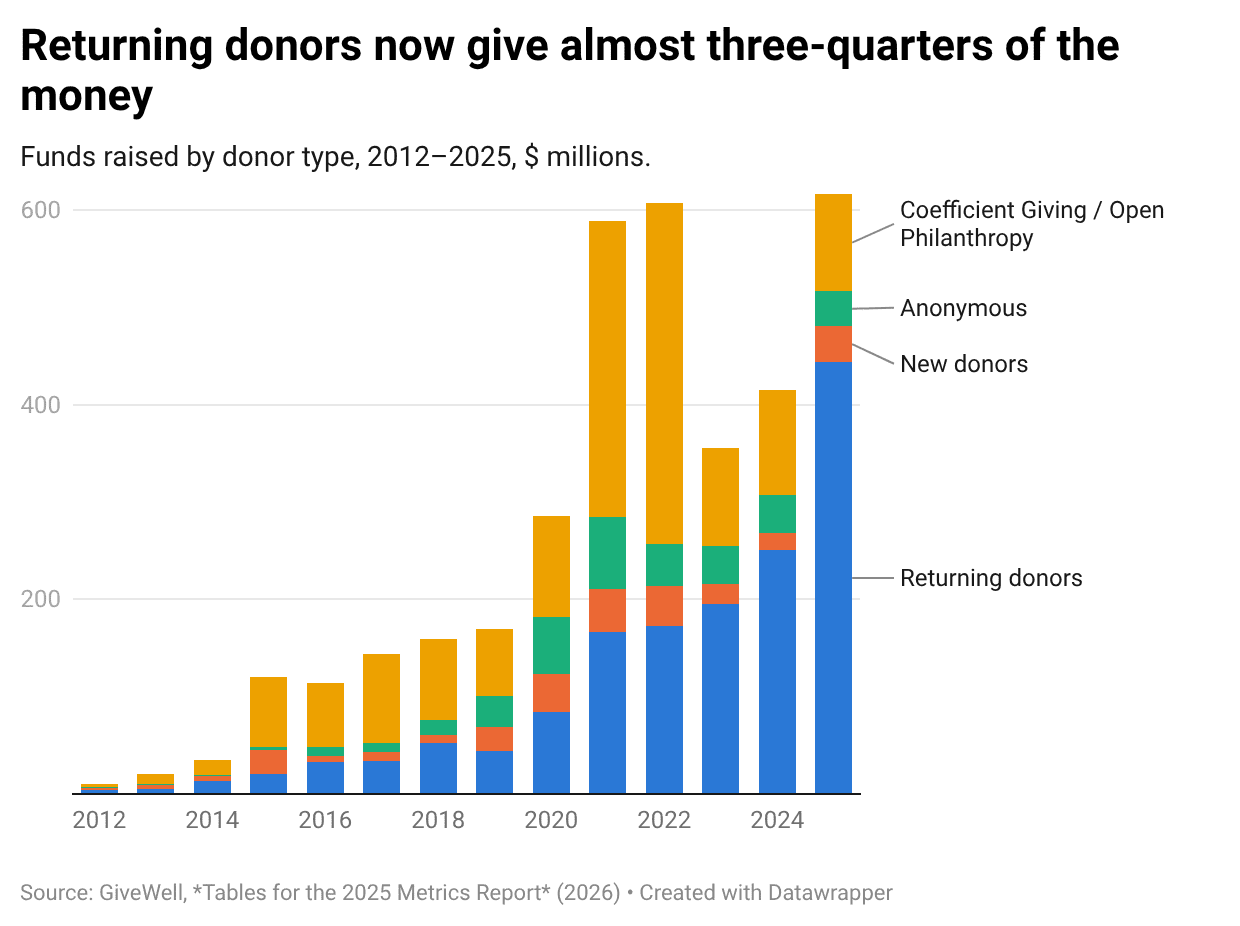
Previously: GiveWell raised less than its 10th percentile forecast in 2023 · GiveWell fundraising up 17% in 2024
GiveWell has published its...
If you really mean "ancestors" rather than "descendents", my best guess would be the Peruvian pre-colombian peoples. In their worldview, there were three worlds: Hanan Pacha (heaven), Kay Pacha (our world, which "mother Earth" or "Pachamama" is a part of), and Uku Pacha (the underworld). The dead interacted with the living in many ways, mainly related to fertility, such as fertilizing the soil for agriculture and being the craddle of new generations. For these reasons, they cared deeply about preparing the passing of deceased leaders and maintaining values and rituals (e.g., sacrifices) to keep their ancestors happy.
Another guess would be the ancient Egyptians, who also had elaborate rituals for the dead and deities associated with the deceased. I don't know much more about them, though.
Sorry I did mean descendants, this is quite interesting though!