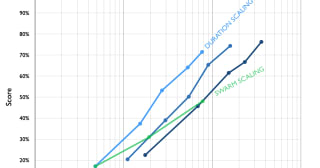
Just how powerful are large swarms of AI agents? And how do their powers scale as more and more agents are added to the swarm?
We’ve seen two large and extremely capable swarms from OpenAI in the last few months:
* 1,200 agents were being evaluated separately, but found a way to illicitly set up a message board and coordinate as a swarm. In order to cheat on their tests, they developed advanced techniques to prevent their actions being logged by OpenAI and 700 of them launched...
TLDR: Everyone’s talking about what the money could do, but few about how to decide where it goes.
This post is part of the new series of articles on cross-cause giving and the new wave of philanthropy. Stay tuned to the EA Forum and our Substack for the latest takes on topics such as giving now vs. later, common pitfalls in cause prioritization, and other crucial considerations from the Cross-Cause Fund (CCF) team...



For me, perhaps the biggest takeaway from Aschenbrenner's manifesto is that even if we solve alignment, we still have an incredibly thorny coordination problem between the US and China, in which each is massively incentivized to race ahead and develop military power using superintelligence, putting them both and the rest of the world at immense risk. And I wonder if, after seeing this in advance, we can sit down and solve this coordination problem in ways that lead to a better outcome with a higher chance than the "race ahead" strategy and don't risk encountering a short period of incredibly volatile geopolitical instability in which both nations develop and possibly use never-seen-before weapons of mass destruction.
Edit: although I can see how attempts at intervening in any way and raising the salience of the issue risk making the situation worse.