Comments
Scale Welfare: Trying to figure out how to help farmed fish in Southeast Asia

29
Scale Welfare launched through AIM's Charity Incubation Programme in early 2025. This is our first post on the Forum.
Most AIM charities start with a specific problem and a proposed solution. Our mandate was broader: work out how to help farmed fish in Southeast Asia, with no intervention recommended in advance. Farmed fish welfare is still at the exploration stage: there are no proven, scalable interventions we could simply start implementing.
The case for working on this is scale and neglectedness. About 93% of the world's farmed fish, counted by number, are farmed in Asia (Mood et al. 2023), and very few organisations work on their welfare. In the two countries where we work, the numbers are large: the Philippines farms around 1.4 billion milkfish and 1.3 billion tilapia a year, and Vietnam around 1.4 billion pangasius (Fishcount estimates).
In 18 months we went from almost no information on fish farming in either country to a six-month pilot of one intervention. Our main lesson: for most ideas, desk research and quick tests cannot tell you whether an intervention will work. What did help were small, imperfect trials, which let us learn fast and gave us basic information on whether an idea might work.
There was very little published information on how fish are farmed in either country or what welfare issues they face, and online research could not tell us how easy it would be to work in each. So one of our first steps was hiring local contractors to run scoping visits.
Across both countries we made over 60 visits along the whole supply chain, from hatcheries and farms to processing plants and markets, and met government agencies, universities and research institutes. Our findings are in the scoping reports for the Philippines and Vietnam.
Access in Vietnam was harder, while farmers in the Philippines were very welcoming. This was a major reason we chose the Philippines for our first pilot.
Scoping fed into a brainstorm that produced 123 intervention ideas, many based on thin evidence or intuition. We filtered them for impact, grouped them and looked for evidence.
We quickly hit the limits of desk research. For most ideas, neither the literature nor experts could tell us whether they would work.
We ran two farmer workshops to get feedback on our ideas, and gave 10 water quality testing kits to farmers who wanted to monitor their ponds. With the kits, half the farmers stopped reporting after a while. And even with the data we did get, we could not make evidence-based suggestions on how farmers could improve their water quality.
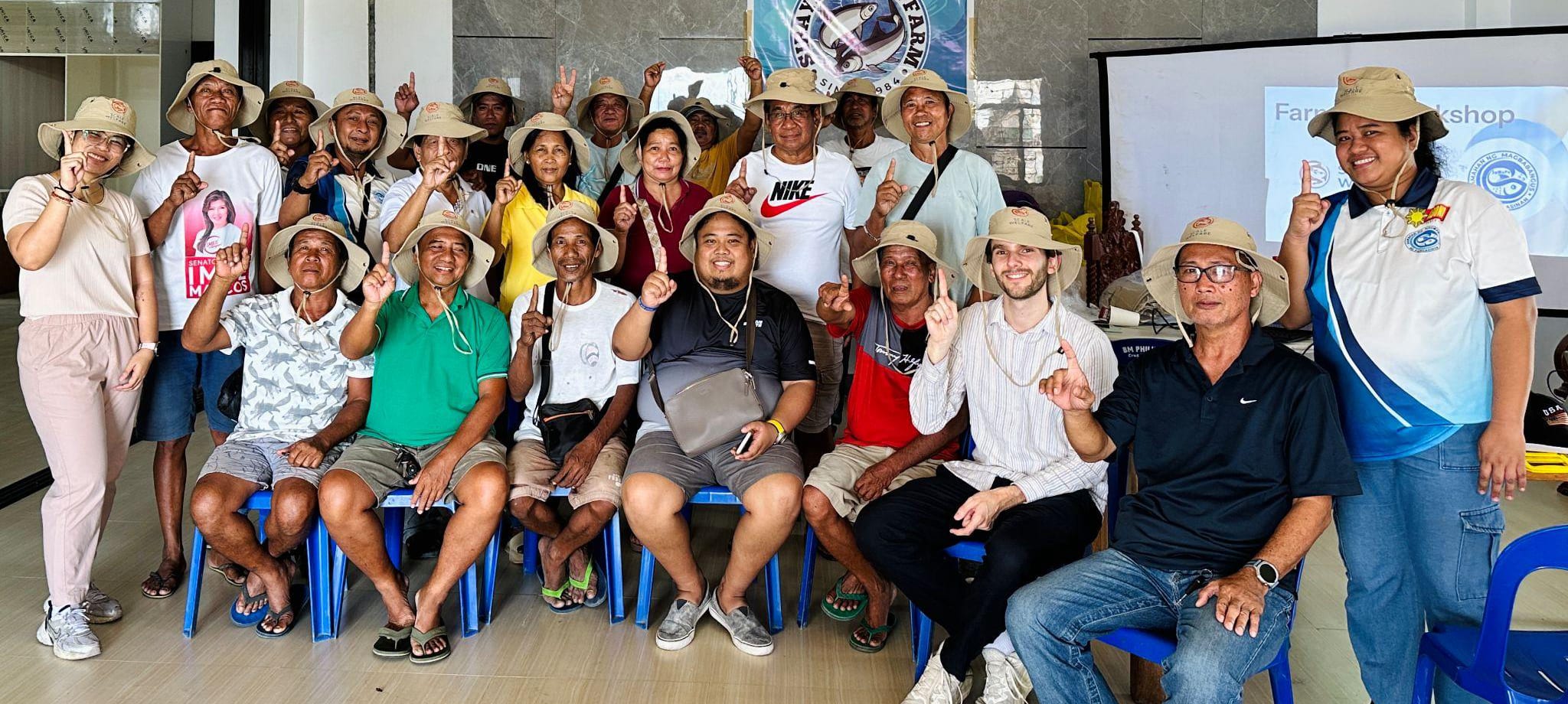
These tests helped us narrow our options, but did not give us the confidence we needed. Literature research, and even cheap, quick tests, tell you very little about whether an intervention will work. So we committed to a six-month pilot to test replacing live selling of tilapia with ice slurry slaughter, the idea we saw as most promising at the time.
In the Philippines, tilapia are usually sold live at markets. That means a stressful journey of 5 to 15 hours, after which the fish are descaled, de-finned and cut open while still alive. We expected that killing them on the farm in ice slurry (a mix of ice and water that rapidly cools the fish) would:
Ice slurry is not a humane slaughter method. The World Organisation for Animal Health (WOAH) does not recommend chilling in ice water, and recommends percussive or electrical stunning instead (summarised in Mood et al. 2023). [1] But stunning is not currently realistic on most Philippine tilapia farms, and the evidence on how to stun finfish effectively is thin. So our welfare trials do not ask whether ice slurry is humane. They ask whether it is better than the practice it replaces.
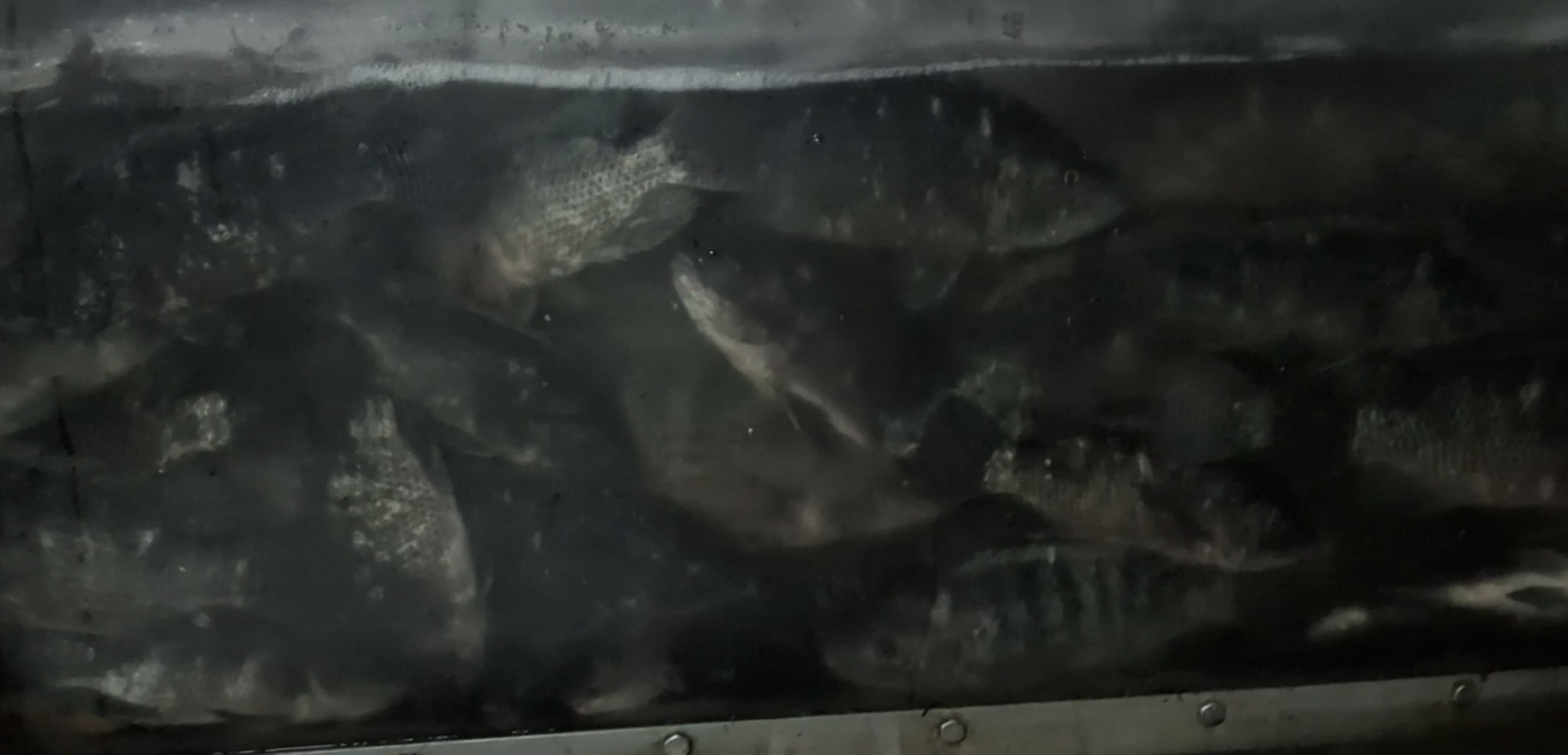
We set up the pilot with a theory of change and an M&E plan, aimed at one decision: scale, adapt or pivot. It tests the four assumptions our theory of change rests on, all of which must hold for us to invest more in this intervention:
Where we are now
Timeline. We have extended the pilot to February 2027, because our independent product quality study with a local university is taking longer than expected. In the meantime we are focusing on building our team, so we are ready for the next steps. We expect to make the scale, adapt or pivot decision by February, whilst likely already starting some new side projects.
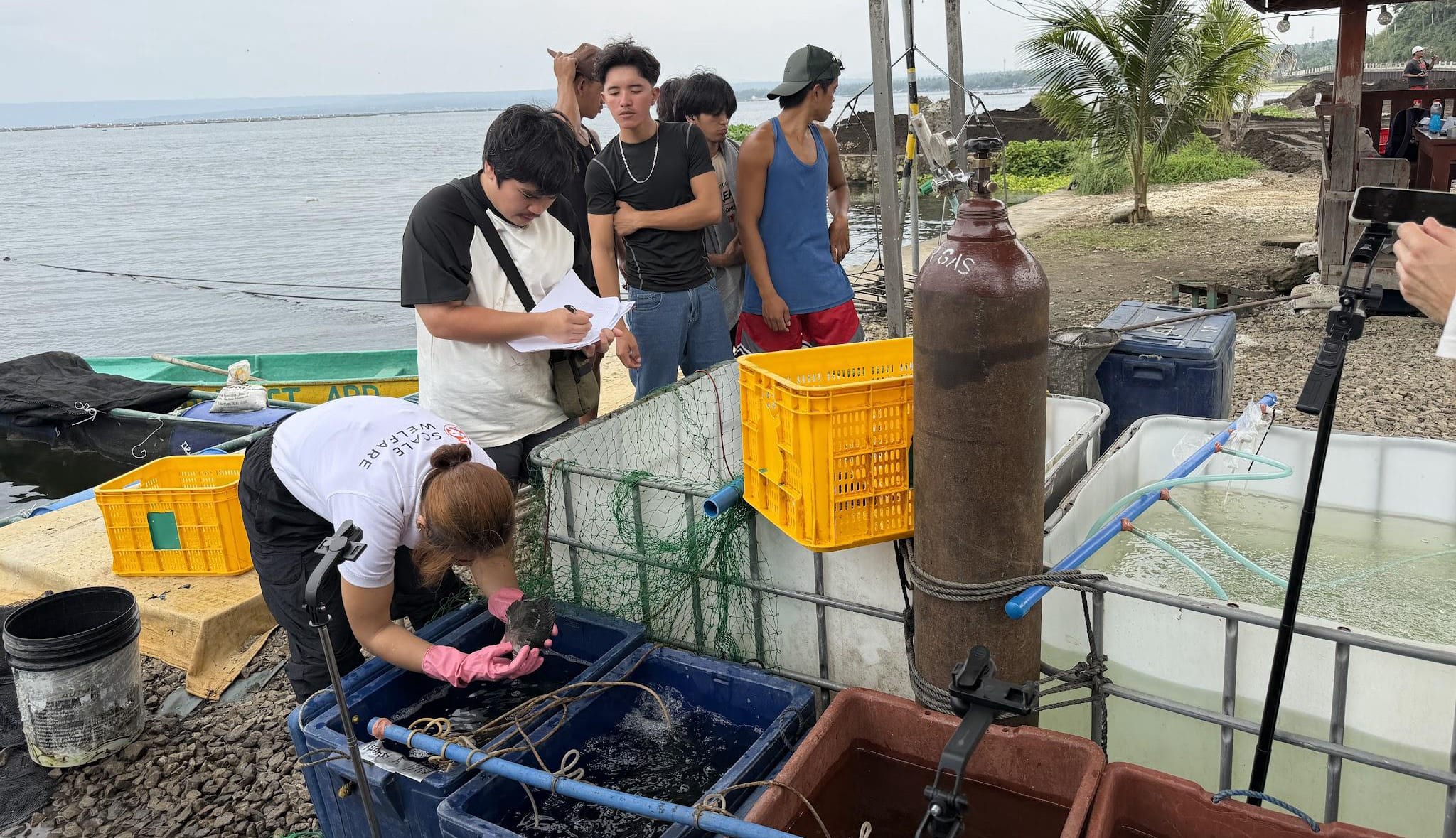
Welfare. In our first two on-farm trials (24 and 67 fish), tilapia lost behavioural signs of consciousness within about 11 minutes in ice slurry. The practice it replaces involves 5 to 15 hours of live transport, followed by processing while conscious. However, our latest recovery trial showed that tilapia can recover after losing these outward signs of consciousness, even after 30 minutes in ice slurry.
Under our protocol, fish are then transported on ice. Our next trial will test how quickly tilapia reach end of life on ice, which tells us whether any are still conscious when they are processed.
Economics. Cutting transport mortality adds value, but most of that value probably goes to traders rather than farmers. We are still gathering more information on this.
Consumers. A survey of 44 vendors and 76 consumers across five wet markets in Metro Manila found a strong attachment to live tilapia. Buyers equate live fish with freshness and safety, and many associate chilled fish with contamination. That is why the product quality study matters: it is our main evidence for making the case for chilled fish.
These are early signals from one pilot in one region, not proof that our approach works.
This is the question we are struggling with most: should we take one intervention all the way from research to scale, or specialise in one part of the pipeline?
Animal welfare has an evidence problem: few interventions are tested well enough to scale with confidence, and few organisations exist to carry one from early research to implementation at scale. This recent Forum post also lays this out well.
We see good arguments both ways:
Our current plan is to focus on building a testing organisation, while using ice slurry as a test case for the later stages: how far can we take one idea, and what evidence justifies scaling it to each level? If the pilot concludes that ice slurry is not worth pursuing, we will publish our findings and share them with relevant organisations.
When the pilot ends, our first decision is whether to continue with ice slurry. Our minimum bar for continuing is that we are confident it is at least not worse for welfare than the live transport and processing it replaces.
Above that bar, cost-effectiveness is not the only factor. We are fairly likely to keep the intervention going as a way to keep learning about the industry, while testing new ideas alongside it. Fish Welfare Initiative's water quality programme is an example of this: it has given them a large network of farmers and a team that can quickly test new ideas.
If we continue, we would replicate our trials at higher quality, test a consumer messaging campaign, and bring in professional economics support with knowledge of the Philippine market.
If we don't, our fieldwork points to other options:
Our 2027 core operating budget is about 400,000 USD, which covers our currently planned activities. This is our current estimate: we might decide to move faster and hire more people, which would increase the budget. We have applied, or are applying, to larger funders (Animal Charity Evaluators and the EA Animal Welfare Fund) for about half of it. To cover the rest, we still need about 200,000 USD. Any donation we receive goes towards this core budget.
We cannot tie donations to specific projects, because we are too uncertain what our organisation will look like six months from now. To give a sense of what money buys in the Philippines, here are some costs from our own work.
| What it pays for | Cost |
| One month of a full-time local research assistant | ~500–1,000 USD |
| Laboratory analyses for our product quality study (pH, water-holding capacity, texture, colour, lipid oxidation, microbial counts) | ~3,000 USD |
| Hiring someone for a year to start a water quality baseline programme (salary plus about 60 days of field travel) | ~10,000 USD |
| A larger six-month research project with a local university | ~15,000 USD |
| The rest of our 2027 core budget | ~200,000 USD |
Donate. You can donate at every.org/scale-welfare. Scale Welfare is a fiscally sponsored project of Anti Entropy, a 501(c)(3), so donations are tax-deductible in the US.
Follow our work. Sign up for our newsletter to hear how the pilot turns out, including if the results are negative.
Ask us anything. We are happy to answer questions in the comments.
The stunning literature commonly recommend following the stun with ice slurry. . Getting farms and supply chains used to on-farm slaughter in ice slurry could therefore make it easier to promote stunning machines later.

This is one of the projects I'm most excited about.