I'd say that very careful, non-unilateral EA outreach could be leveraged.
I read almost every Tweet where anyone mentions effective altruism. One frequent type of message which makes me wince is when someone @s a very wealthy/famous person something like "have you heard of effective altruism?" when that person mentions charity in any context.
(I'll refrain from linking to any specific examples, but I tend to see it happen at least once a week, and the messages come from many different sources.)
I doubt that any of these Tweets have caused specific problems yet, but if we want very wealthy people to become interested in EA, we should distinguish ourselves from movements/groups that do a lot of random solicitation.
Fortunately, we are at this point well-known enough that a lot of high-net-worth individuals naturally hear about us in the course of looking up giving opportunities, and we have groups like Effective Giving that practice careful outreach to promising prospects. But a sufficiently pushy/annoying message from an individual talking about EA could still create a bad first impression. I'd hope that our first reaction as a movement to news like this would be "what are this person's interests, and is there a way EA can help?" rather than "I wonder how we can get donations from this person?"
(I don't mean to say that your post implies you think in this way -- I'm just taking this chance to lay out something I've seen a lot, and which has been bothering me for a while.)
Thanks for writing this! Poorly judged initial outreach can make later outreach harder, and rich people especially are experienced at having to resist people mooching off them. While I think there is a lot that individual EAs can make good progress on unilaterally, high value outreach suffers much more from the unilateralist's curse, and I think should be left to CEA and other responsible organisations.
Thanks for sharing your views on this. I'm now updating towards the view of "don't tweet wealthy people about EA unless they explicitly ask for donation suggestions."
Here are some past examples of EAs tweeting wealthy people with donation advice:
Jeff Bezos: In this case he's asking for advice, so tweets that are consistent with what he's asking for seem appropriate. For instance, I think I suggested GiveDirectly to him. Do you share this view?
Ricky Gervais: This seems like the kind of tweet that EAs should not reply to in your view, since it's a (half-joking?) mention of his intention to donate to help animals, without asking for suggestions. Does that capture your view on this? (Disclaimer: I crossposted this to the Facebook EAA group and may be indirectly responsible for most of the tweets from EAs here. Maybe that was a mistake.)
I think tweeting to Jeff Bezos seems fine, though I'd hope that someone's first response would be "I should make sure Effective Giving saw this" rather than "I should tweet my favorite EA charity at him".
I don't read Ricky Gervais as being entirely unserious, so responding to him might be reasonable. Some considerations I'd make before tweeting at him:
What's his history in this area? Does he have a record of supporting animal charities? Does he Tweet about bacon all the time, making this an obvious joke?
Do the PR people at the animal charities I support know about this Tweet? Should they be the ones to send something, if anyone does?
Are people already deluging him with charity suggestions? If so, how can I make my Tweet stand out, if I plan to send one at all?
Try to take the perspective of the famous person who will be skimming over replies; what will make them take notice? What would lead them to actually type a response, or want to set up a phone call? What's the best link to send them if they are busy, impatient, unfamiliar with EA, and reading Twitter from a phone on the way to their next gig?
(I'm not arguing any particular position here. Just mentioning some considerations.)
I think tweeting to Jeff Bezos seems fine, though I'd hope that someone's first response would be "I should make sure Effective Giving saw this" rather than "I should tweet my favorite EA charity at him".
Maybe? Although I think there were some advantages to tweeting him directly:
He was asking for tweets, not for organizations to reach out to him via some other way.
I imagine it's going to be very, very difficult for organizations to get a hold of Bezos, and I don't think his tweet changed that.
A grassroots EA tweeting effort could generate maybe 100 tweets from different individuals which was 0.2% of the overall 47k tweets. That seems to have provided a nontrivial chance of getting his attention, which seems net positive if the tweeters are careful about content.
Still, it might be the case that the best course of action would have been to run it by Effective Giving, either beforehand or in addition.
I don't read Ricky Gervais as being entirely unserious, so responding to him might be reasonable.
I think he was partially serious too, but he didn't explicitly ask for suggestions like Bezos did.
Some considerations I'd make before tweeting at him:
* What's his history in this area? Does he have a record of supporting animal charities? Does he Tweet about bacon all the time, making this an obvious joke?
* Do the PR people at the animal charities I support know about this Tweet? Should they be the ones to send something, if anyone does?
I think they found out about it from my post, or possibly via some other method. There are a number of tweets there by Animal Charity Evaluators, The Humane League, Vegan Outreach, the Nonhuman Rights Project, etc, or from their employees.
* Are people already deluging him with charity suggestions? If so, how can I make my Tweet stand out, if I plan to send one at all?
As noted above, merely increasing the ratio of EA to non-EA tweet replies would likely increase the probability that it gets his attention. There is of course the possibility that the attention is counterproductive if looks like charity spam.
Maybe? Although I think there were some advantages to tweeting him directly:
I agree with all of these! I don't think that you shouldn't tweet directly in the Bezos situation -- it's just a good idea to tell organizations that might be well-positioned to send their own messages, too. My argument was more "watch out for each other's interests" than "leave it to the professionals".
[Link] MacKenzie Bezos signs the Giving Pledge — EA Forum
MacKenzie Bezos announced in a letter on Tuesday that she had signed the Giving Pledge, a commitment to give half of her $35 billion in assets, or at least $17 billion
[Edit: Savvy] EA outreach here is probably leveraged.
Disclaimer: This blog post focuses on a new piece of research from Rethink Priorities. I was not involved with the funding or execution of this research, and therefore write this piece merely as a consumer. However, I am the Executive Director of Giving Green and a board member of Rethink Priorities, and acknowledge that these affiliations may bias my...
I am writing up two charity ideas I’ve wanted to investigate, but haven’t been able to, in the hopes someone will investigate them further. If you end up investigating either, I'd be most interested to see what conclusions you come to!
Vulture preservation as a global health intervention
Since the mid 1990's the vulture population in India has been rapidly declining. The reason is due to a few chemicals which are fed to livestock, which is highly poisonous to vultures.
...
Summary
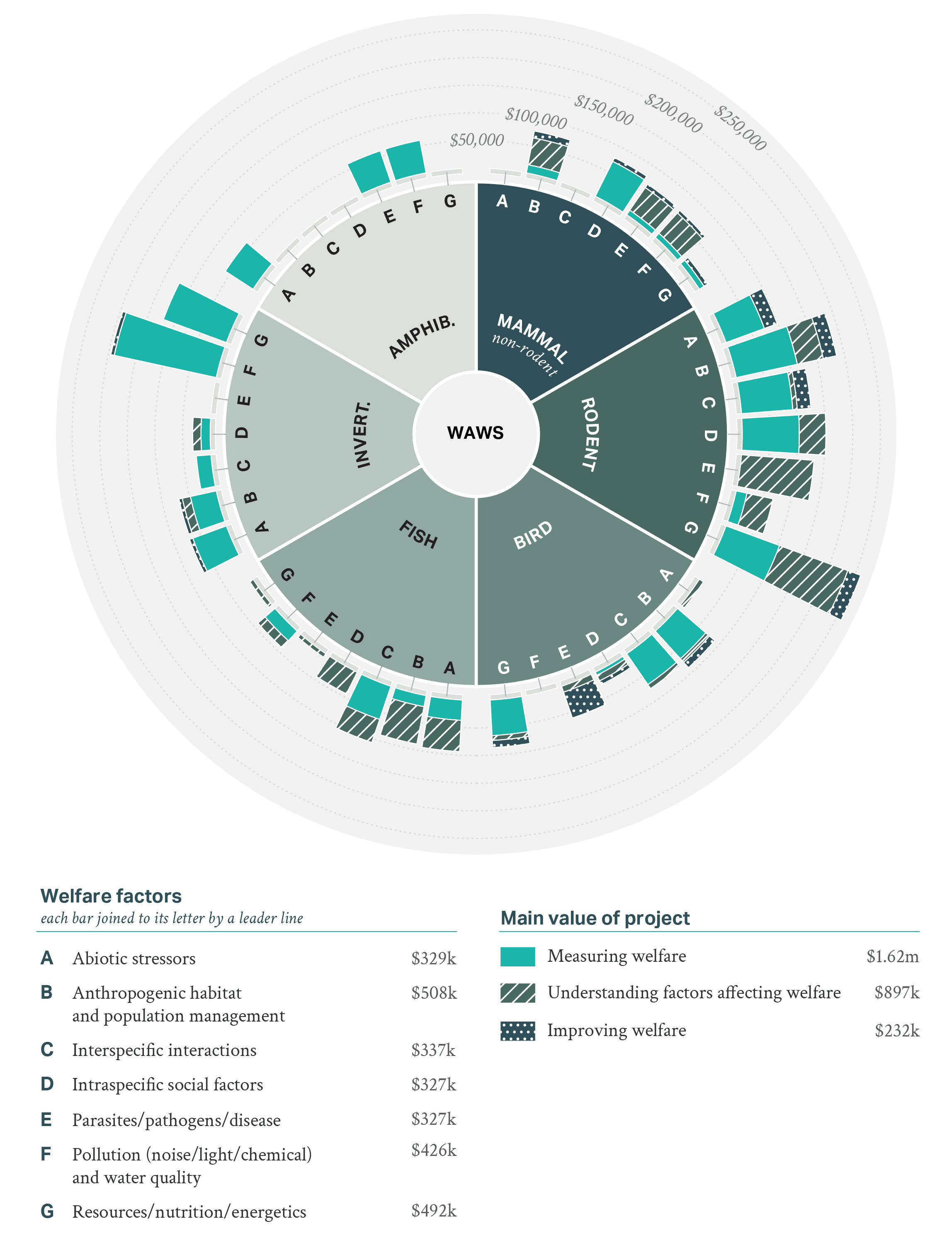
This post will summarize the trajectory of Wild Animal Initiative’s field-building for wild animal welfare science so far, along with patterns and indicators we want to see more of going forward. Beginning with an initial phase focused on establishing credibility and awareness of the field, through a second phase that has placed more emphasis on the distinctiveness and broad priorities of the field, we are now moving into a third phase designed to co...


I'd say that very careful, non-unilateral EA outreach could be leveraged.
I read almost every Tweet where anyone mentions effective altruism. One frequent type of message which makes me wince is when someone @s a very wealthy/famous person something like "have you heard of effective altruism?" when that person mentions charity in any context.
(I'll refrain from linking to any specific examples, but I tend to see it happen at least once a week, and the messages come from many different sources.)
I doubt that any of these Tweets have caused specific problems yet, but if we want very wealthy people to become interested in EA, we should distinguish ourselves from movements/groups that do a lot of random solicitation.
Fortunately, we are at this point well-known enough that a lot of high-net-worth individuals naturally hear about us in the course of looking up giving opportunities, and we have groups like Effective Giving that practice careful outreach to promising prospects. But a sufficiently pushy/annoying message from an individual talking about EA could still create a bad first impression. I'd hope that our first reaction as a movement to news like this would be "what are this person's interests, and is there a way EA can help?" rather than "I wonder how we can get donations from this person?"
(I don't mean to say that your post implies you think in this way -- I'm just taking this chance to lay out something I've seen a lot, and which has been bothering me for a while.)
Note: I work for CEA, but these views are my own.
Thanks for writing this! Poorly judged initial outreach can make later outreach harder, and rich people especially are experienced at having to resist people mooching off them. While I think there is a lot that individual EAs can make good progress on unilaterally, high value outreach suffers much more from the unilateralist's curse, and I think should be left to CEA and other responsible organisations.
Thanks for sharing your views on this. I'm now updating towards the view of "don't tweet wealthy people about EA unless they explicitly ask for donation suggestions."
Here are some past examples of EAs tweeting wealthy people with donation advice:
I think tweeting to Jeff Bezos seems fine, though I'd hope that someone's first response would be "I should make sure Effective Giving saw this" rather than "I should tweet my favorite EA charity at him".
I don't read Ricky Gervais as being entirely unserious, so responding to him might be reasonable. Some considerations I'd make before tweeting at him:
Try to take the perspective of the famous person who will be skimming over replies; what will make them take notice? What would lead them to actually type a response, or want to set up a phone call? What's the best link to send them if they are busy, impatient, unfamiliar with EA, and reading Twitter from a phone on the way to their next gig?
(I'm not arguing any particular position here. Just mentioning some considerations.)
Maybe? Although I think there were some advantages to tweeting him directly:
Still, it might be the case that the best course of action would have been to run it by Effective Giving, either beforehand or in addition.
I think he was partially serious too, but he didn't explicitly ask for suggestions like Bezos did.
He's very pro-animals.
I think they found out about it from my post, or possibly via some other method. There are a number of tweets there by Animal Charity Evaluators, The Humane League, Vegan Outreach, the Nonhuman Rights Project, etc, or from their employees.
As noted above, merely increasing the ratio of EA to non-EA tweet replies would likely increase the probability that it gets his attention. There is of course the possibility that the attention is counterproductive if looks like charity spam.
I agree with all of these! I don't think that you shouldn't tweet directly in the Bezos situation -- it's just a good idea to tell organizations that might be well-positioned to send their own messages, too. My argument was more "watch out for each other's interests" than "leave it to the professionals".