(Note: Look for an upcoming article by @kman about a research program for adult human intelligence amplification. If you are interested in working on this, please do reach out.)
S: So, where are we with adult intelligence amplification?
T: Unfortunately, there aren't any clear pathways right now. There is no biotechnological intervention that we know of, where there's a clear argument that if you do that intervention, it would likely significantly increase the general cognitive capacities of an adult human. There are several approaches that are hopeworthy, but each one would be very expensive to pursue.
S: What approach are you most hopeful about?
T: On a strategy level, I'm most hopeful about more roadmapping work. Past drive-by efforts at roadmapping haven't worked. But it seems plausible that there are ways to significantly accelerate adult intelligence amplification, and it's just hard to tell what they are without thinking about it a bunch.
So, I'd want us to collate a bunch of information about brains, intelligence, and various technical areas like brain-computer interfaces, brain surgery, brain genetics, neurophysiology, drugs, and so on. Then we'd ask big ambitious engineering questions with all that stuff at our fingertips, come up with ideas for how to do adult intelligence amplification, bounce ideas off each other and off of domain experts, break the ideas, go back to the drawing board, learn more, and so on. That way we might come to understand where to invest larger amounts of resources, in order to accelerate adult human intelligence amplification.
Existing technoscientific investigation might be somewhat efficient in a forward-chaining way, but it seems likely that it's quite inefficient with respect to the overarching goal of meaningfully increasing adult human general intelligence or other cognitive capacities. There has been very little concerted effort to increase general intelligence in healthy adults through biotechnological interventions. As a consequence, gathering the relevant information into one discourse, and asking questions from the perspective of adult human intelligence amplification, is not something that's been done before, anywhere, by anyone. This sort of roadmapping seems not unlikely to produce a lot of insight into how to accelerate HIA.
S: Ok thanks. I was more interested in hearing concretely what approach you think has a decent chance of working.
T: It's really hard to say. There's currently no good way to know what sort of intervention someone could do to their adult brain to noticeably increase their general intelligence, let alone hugely increase it. So there's a big strategic problem of "What even would be the technical intervention I want to technologically enable?"; we don't even know what kind of technology we'd want to develop. And then you have to actually implement the intervention, which will be its own big difficult technoscientific project.
S: Ok... But it seems like there's a lot of levers one could pull. There's a lot of surface area (literally and figuratively) on the brain. And we could explore this somewhat efficiently, maybe? And then hill-climb on combinations of interventions. For example, there's a bunch of genes associated with higher IQ, right? So we could maybe edit a bunch of those genes and hope that many of them can still take effect.
T: Yeah, much of my hope in adult cognitive amplification comes from the fact that there are several different kinds of interventions, and lots of surface area within a given kind of intervention.
S: So brain gene editing is a good approach?
T: Definitely. I mean, it's definitely possible that it might be a good approach to investigate.
S: Ok. Is there a project working on this? Should we make one?
T: At least given the information I have, it doesn't seem like the thing to do at the moment.
S: Why not?
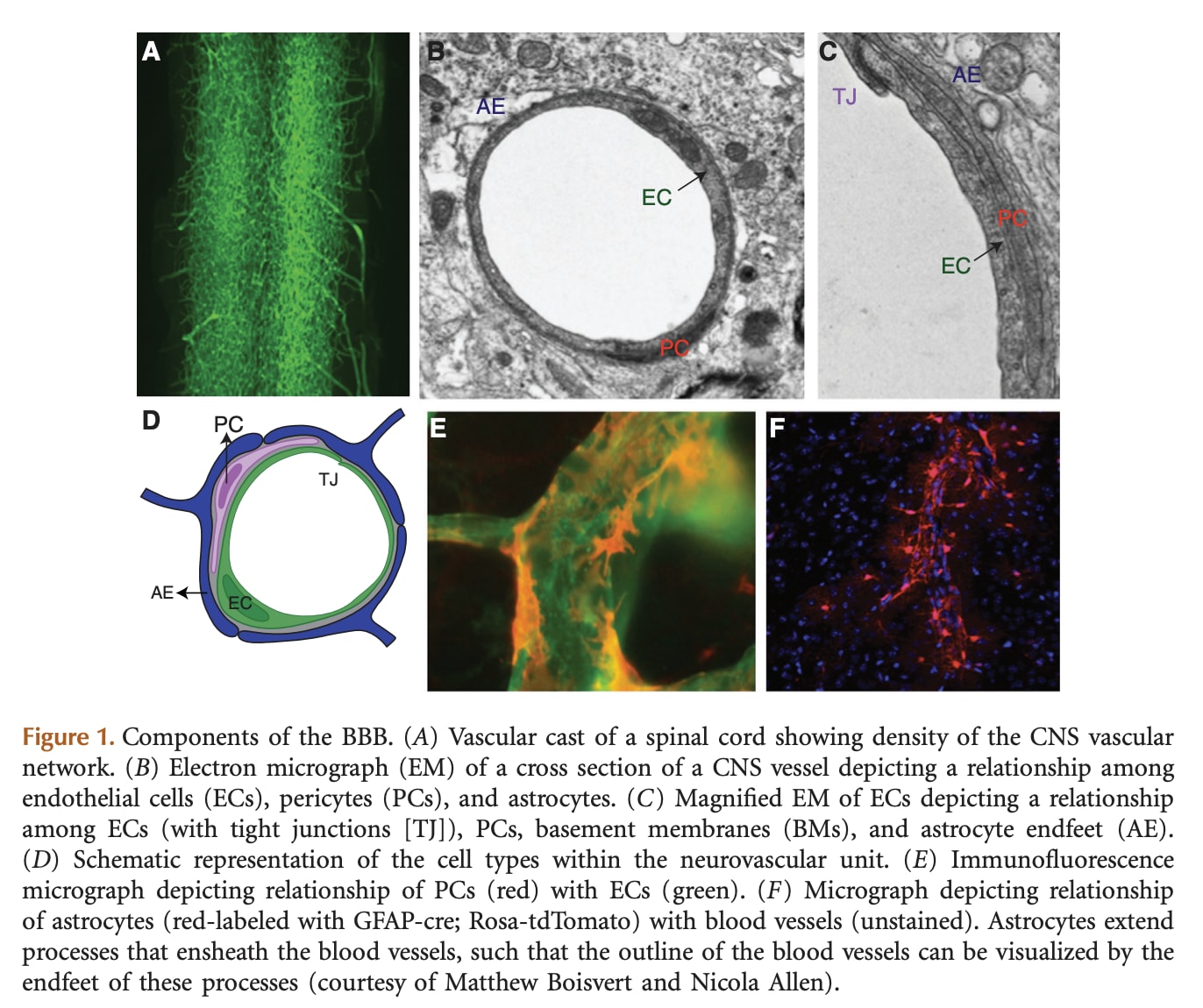
T: Concretely, one main reason is that it's hard to get into the brain. To edit neurons in the brain, you want to get molecular complexes, such as CRISPR-Cas9 plus RNA, into the brain and into neurons. You want to do that repeatedly, into many or most cortical neurons. To get stuff into the brain, one natural method that people have tried is to put the stuff into the bloodstream, and wait for the stuff to be carried by the blood through the brain. But the body wants to protect the brain from viruses, waste, toxins, etc., so there's a barrier of tightly packed cells that encases blood flowing through the brain. Only specific kinds of things can pass through that blood-brain barrier. It's not easy to make the gene-editing molecular complexes pass through the blood-brain barrier and into the brain tissue. See:
There are methods to deliver molecules to the brain that don't involve passing molecules through the blood-brain barrier. For example, spinal taps have been tried, though that method applied specifically to gene editing is still in early development.
S: That makes sense, but do you think that's an insurmountable obstacle? Couldn't we make progress by, like, trying? Human intelligence amplification seems really important, so even if it's hard, it seems worth some people working on it.
T: There are already people working on it, for some value of "it".
A general lesson to understand, beyond the concrete obstacle of the blood-brain barrier, is that bottlenecks tend to be convergent subgoals.
If you have some ambitious goal X, you might notice that no one else has announced "I am trying to do X". You might therefore think that your efforts to achieve X will be highly decorrelated with other technoscientific investigations. If no one has been working on X, then you aren't duplicating the efforts of other investigators because your work doesn't overlap with their work.
Indeed, it's plausible that no one, or very few people, have been working on X. However, [an abstract spiel about why you'll probably end up duplicating efforts anyway; see the subsection "Appendix: Bottleneck subgoals tend to be shared across ultimate goals"]. Basically, many of the problems you'll get stuck on, as you work toward X, are probably problems that other people are also stuck on, even if no one else was working toward X specifically.
S: This is a bit abstract. Could you illustrate the idea more with an example?
T: For instance, we might have the goal of massive brain gene editing, or massive stem cell editing for reprogenetics. Starting from either of these, we have the following subgoals, each a subgoal of the previous subgoal in the list:
- Edit cells repeatedly in vitro in order to get dozens or hundreds of targeted edits. A few dozen targeted edits have been accomplished, so some groups are working on this, but this isn't a very crowded research goal. There are many technical subgoals of this goal, such as keeping cells alive during the stress of being edited, and developing sequencing pipelines tuned for the specific needs of checking for point-edits and damage in near-clones. But one central subgoal of getting dozens or hundreds of edits is:
- Find more precise editing systems. E.g. make CRISPR-Cas systems that cause less DNA damage and make the target edit more frequently using fewer editor molecules. Many people are working on this, with lots of resources. There are many subgoals of this goal, such as finding variants in bacteria, manufacturing variants, and testing variants in cells. But one central subgoal of finding, or more specifically designing, editors that are more precise, is:
- Understand better how proteins fold, behave, and interact with other molecules. This is a whole long-term research area, with lots of theory and experiment and recent tools such as AlphaFold and so on.
S: I'm not totally sure I buy the example. I feel like in your progression down subgoals, you also make each subgoal more broad, which explains why more people are working on it. But anyway, I think I at least get what you're trying to say. Popping up the stack, for brain gene editing, you're basically saying, people are already working on crossing the blood-brain barrier?
T: About more broad subgoals, part of the point is that, as you backchain further from your top-level goal, you have to broaden the subgoal. Unless you know exactly what you need from the subgoal, you have to broaden the scope of pathways you're considering, and so you overlap more with preexisting efforts. And in other ways you'll be duplicating effort with other people working on similar things, e.g. you'll inherit any shared sub-sub-goals that apply to the whole set of similar things.
Anyway, yes, people are working on crossing the blood-brain barrier, because that's how you would deliver any sort of drug to the brain. It's a convergent subgoal. In particular, people want to do gene therapy for brain diseases, so at least some people have been trying seriously to get gene editors into the brain.
More generally, people want to intervene on the brain for all sorts of reasons—implants, drugs, editing, cancer treatment, other surgeries, and so on. For that reason, lots of people want to get into the brain, and lots of people have to deal with the barriers to brain access, including the blood-brain barrier, the skull and meninges, and the immune system. So there are existing methods for getting into the brain, and convergent difficulties with improving those methods.
S: I'm still not getting something... Ok, I accept that getting editors into the brain is an important technical obstacle to brain gene editing, and I accept that people are working on it, so it might be a bit difficult to accelerate... But still, can't we put a bunch of resources into this? We care a lot about intelligence amplification, so we could put more funding and talent into research on this, and be highly determined in our efforts.
T: Potentially, yes.
But one important part of being truly determined to solve the problem is to take the time to back up and think hard about what approach to the problem will be feasible. In particular, there's nothing stopping you from going down a path that leads to nowhere, or at least, nowhere that's especially relevant to your goal of increasing intelligence. Science is hard, and biology specifically is very hard. I think it's quite plausible that we could accelerate progress in some specific areas, even if someone else is already seriously working on it.
However, because it's simply hard, and because someone's already working on it, it's probably not easy, and specifically not cheap, to accelerate progress in that area. It would take quite a lot of money and/or work. I know I'm being a bit of a downer here. It's just that money and effort are not in fact unlimited, and talent is not unlimited (at least until we succeed). I think we have to think hard about which pathways to invest in, before going deep into one pathway, if we want to make good use of our resources.
In the case of the blood-brain barrier, you might rush off to join the gene therapy people, and see that they are working on adeno-associated viruses as delivery vehicles to carry gene editors into the brain. You could work on that for years, and substantively contribute to technical progress there. And that would be great! But at some point, hopefully quickly, you might realize that AAVs are too small to carry enough DNA specifying gene-targeting RNAs to have much of an effect. You might realize that AAVs are likely to provoke immunity, so they can't be used for more than one or a few rounds of editing. Since you need to do hundreds of edits to even possibly have a large effect on intelligence, you can't achieve that using AAVs. Then again, maybe that's not right; maybe you could use several variations of your AAV to do several rounds of edits! We don't know.
Assuming that investing effort into AAVs was some kind of error, what exactly was your error? One error is presuming that subtechnologies will generalize the way you wanted. Your goal of HIA led to the subgoal of getting gene editors into the brain. You share that abstract subgoal with the brain gene therapy people. But it turned out that their gene therapy requirements (a vector for one round of editing) come apart from your intelligence amplification requirements (vectors for many and/or large rounds of editing).
Zooming out, I think the fundamental error is failing to start out with thinking hard about how to amplify adult intelligence. Before we've understood more about the problem, we are not able to make good decisions about where to invest resources. Once we've understood more, we'll know more about how to accelerate toward that goal.
For example, maybe if we investigated more about the blood-brain barrier and AAVs, we'd realize AAVs won't work, but instead we find out about fetal cell microchimerism in the brain (h/t GeneSmith). Cells from a growing fetus enter the mother's bloodstream, and some of them (or at least, some DNA from them) end up in the mother's brain. Maybe that turns out to point to a more promising editor delivery method.
If we don't investigate, we won't realize that there are somewhat disjoint technoscientific pathways that predictably have very different expected utilities for adult intelligence amplification. Any one piece of information about a specific pathway might come easily from a day of literature search, but there are very many such pieces of information needed to get a good picture of the relevant technoscientific pathways.
S: Wait hold on. You just said that the AAV thing was an error because subtechnologies don't have to generalize the way I want, so accelerating the AAV research that people are already working on will end up being mostly a waste of my effort. But your argument from earlier was that it's hard to accelerate brain gene editing because people are already working on it. Is this a contradiction? You're saying that the important subgoal is already being worked on, but also that accelerating that subgoal doesn't help?
T: You're right. I'm contradicting a general version of my argument that goes like:
You can't accelerate X because X requires convergent subgoal Z. Other people are already working on subgoal Z and they are probably doing it fairly efficiently. So you can't accelerate X much by working on Z.
But the way I'm contradicting that argument isn't that now I think "Actually you can accelerate solving the Z problem in general.". That still seems directionally unlikely to me. (Of course, how unlikely will depend on the specifics.) What I want to say now is:
Actually, there are different versions of the subgoal Z. If you think hard, you can distinguish version Z1, which people are already working on, from version Z2, which people are not working on, but which is what you need in order to do X. Then you can accelerate Z2 and thereby accelerate X. If you just try to accelerate Z, you are liable to try to accelerate the wrong version of Z, and furthermore you probably won't make much progress because people are already working on Z in general. (Separately, even if you do identify the right thing Z2 to accelerate, you'll still have overlapping subgoals with other people working on Z.)
S: Is it actually so bad to go down "the wrong" path for a little bit? The way people gain experience and skills is by getting their hands dirty.
And not only that. Maybe the real way to do roadmapping is to try to develop some promising method, and see what happens. That way you directly observe what actually works, how well it works, what doesn't work, and where you actually get stuck. Roadmapping is difficult in part because you can't even really tell what will work just by reading papers. The papers don't explain how difficult and costly some method is, and what would happen if you tried the method some other way. At some point, you have to just run the experiments yourself.
I'd worry about spending years theorizing about methods and reading papers and writing blog posts, and never really getting around to actually doing anything, while all the important research happens elsewhere.
T: Getting lost in the clouds is a real risk. I bet there are things we could do to avoid getting lost in the clouds, but I haven't already figured those out. On the other hand, I really do think that some roadmapping analysis is needed.
To be clear, if someone wants to just jump right in to bench research in order to accelerate intelligence amplification, that seems great! I would not try to talk them out of that. Someone could just decide "I'm going to work really smart and hard, for decades, and make first-rate scientific advances in this specific area, because I think this specific area is really important.", and then go do that. As it is said: "Indeed, that's the only thing that ever has."
What I would try to talk them into, is to ALSO spend some time—I don't know how much, maybe some hours per week on average—seriously thinking, investigating, and writing about HIA and possible full pathways to achieve it. If nothing else, that work would contribute to creating the field of human intelligence amplification. But more directly, if they aren't doing that work, I would expect that:
- they might not plant the right questions,
- they might not learn and figure out what they need to,
- and they might not pivot their research as soon as possible,
in order to contribute to solving adult intelligence amplification. Assuming that's something that especially mattered to them. If they start going down the wrong path, I expect it to be somewhat difficult and costly for them to pivot later; they'd be leaving behind their experience, knowledge, and connections.
S: Ok. Let me jump back a bit. You mentioned fetal cells as a way through the blood-brain barrier. What's that about? Do you think that's a more promising route?
T: It might be, I don't know. It's notable in that it's a large object (fetal progenitor cells) that gets through the blood-brain barrier, whereas normally only small objects like single molecules get through. Immune cells can also get in, mainly during disease.
S: Does that solve the obstacle then?
T: I don't know. It might. As in the case of brain gene therapy, there are some people working on that. I assume, without knowing, that there are several formidable technoscientific obstacles to exapting a serviceable, scalable route into the brain from those cells.
S: But you don't know a specific obstacle?
T: That's right. I mean, I can plug the question into my gippity just as well as you can, and hear something about problems with isolating and expanding the cells, and maybe it's just that the blood-brain barrier is weaker specifically during pregnancy (though perhaps you could use that as a way in), and so on. I don't have special understanding about this topic, and therefore I'm not so confident it can't work. Indeed, it seems quite worthwhile to investigate it more! I just want to calibrate our expectations about whether this specific route will work, at least in the context of thinking about our overall strategy for adult intelligence amplification. We should throw ourselves optimistically into the details of constructing promising intelligence amplification methods, when it is time to do that; but when it is time to figure out what to do with the next three months or years rather than the next three days or weeks, we should be appropriately critical.
S: You do seem rather negative, throughout this conversation. You emphasize what is difficult, rather than what might work.
T: Yes, and I endorse that. Good babble requires good prune. We have to understand the constraints we're up against, in order to develop plans that might actually work. And, there are always constraints. In biology, you should basically assume that there are blocking constraints you don't know about, until you've seen something actually happen, or you have another really strong reason to expect your plan to work.
If I bring up a problem with brain gene editing, you might say, ok, forget that; what if we increase intelligence by transplanting a bunch of neuronal progenitor cells into the brain? They'll differentiate into various neurons, and then the person will have more neurons, so there's a good chance they'll be smarter. And I'll say that I expect there to be major blockers. I don't know what they are, but without looking into it, I'm pretty confident that it will be very difficult to get that working, and even if you do, it's not obvious whether or how much it would increase intelligence.
You might then object that Parkinson's patients have shown some improvement from transplants of progenitor cells that become dopamine neurons. If I find time to ask a gippity a few questions, I'll come back and say that the delivery method used in those experiments was a needle injection of progenitor cells. The needle injection probably kills an amount of neurons comparable to the number of neurons that get added to the brain; the number that actually get added, after surviving the high attrition from the differentiation and integration processes following injection, isn't so impressive. So this method can potentially treat a deficiency where a specific kind of neuron is needed in small numbers, but it probably wouldn't let you increase cortical neuron count by even 0.1% (adding ~20 million neurons).
You might counter that we could deliver neuronal progenitor cells into the cortex just below the surface, without a needle causing much damage, and that this has been demonstrated in rodent cortex, where human neurons took up residence. And if I find the time, my gippity will counter that the neurons took up residence in lesions in mouse cortex, and took up residence in rat cortex after injection in newborn rats (thus harnessing the developmental program, not available to us); and overall, you're likely to get a bunch of cells that die due to differentiation, integration, and overcrowding, and which therefore cause secondary damage due to inflammation. And I'll also tack on that the cell types and neurite connectivity of these transplanted cells will probably be quite different from natural cortical tissue, and therefore might not help at all.
There's probably a way to get massive neuronal progenitor cell transplantation to work, but it might be really really hard. It's possible that there's a fairly easy way to get this to work; it would be great to hear of that.
But the point is, according to me, you shouldn't bet too much on any such plan. Unless it's a really good plan, and it comes with clear reasoning showing that it has a good chance of working.
S: I don't get why you need to have such confidence in a plan before getting started. Biology is empirical. It seems like the level of confidence you're demanding is too high, and you won't end up causing any actual technoscientific progress to happen.
T: I don't know... I guess I just think that the first, second, third, and fourth draft plans will not work? In order to accelerate things, we want to concentrate resources into a few projects that are not already by default happening as fast as they could. In order to make a bet like that, we want to know what we're doing so that we're picking the right few horses, and so that we can explain to donors and talent why this path is neglected and worth betting on, compared to other paths or other cause areas.
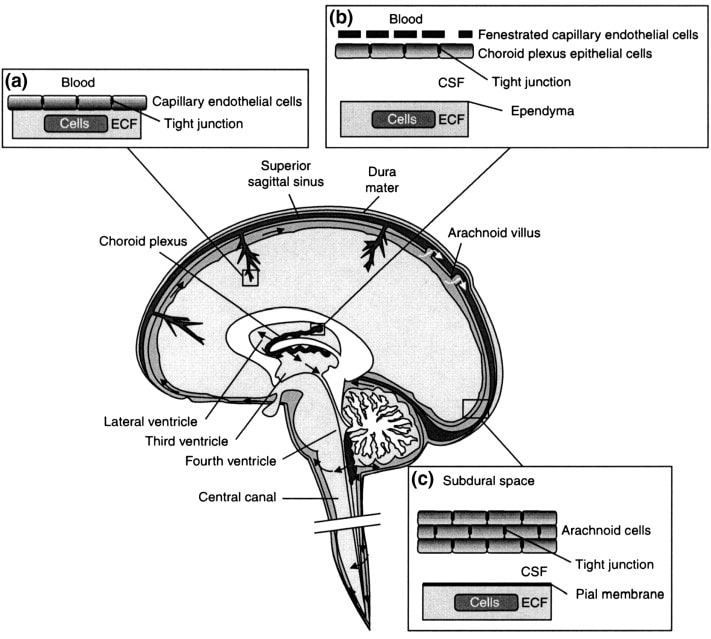
If you want a positive version, we could also say this: There could be some really surprising good method. But we haven't investigated enough to find the prerequisite information and we haven't thought hard enough to figure out the method. Maybe we would discover such a method, and then we'd be able to put a bunch of effort into accelerating that method. For example, if we investigate a bit more, we might find out that the blood-brain barrier is not the only way molecules commonly get inside the brain. There's also the blood-cerebrospinal-fluid barrier, and some drugs enter the brain that way, though with poor dispersal:
Maybe we're supposed to use a spın̈al tap, or focused ultrasound to disrupt the barrier, or something. I don't know.
S: Ok, say I accept that the first draft plans won't work, and that we have to think about barriers in order to get a workable approach. But it still feels like there should be some way to do this faster. Or let me put this another way: Maybe you aren't thinking big enough. You said "we want to concentrate resources into a few projects", but, the world is at stake here. What if you had one billion dollars? What about ten billion dollars? Do you have plans for that? Maybe you should be thinking in those terms.
T: This is a great question, but it's not really something I can give an answer to, mainly because I've been working on reprogenetics. Someone could make a great project out of spending many months getting educated about this and investigating and writing it up. Also, even ten billion dollars is kinda small for the whole project. A single ordinary drug might cost a billion dollars to develop to market. But ok, here's my shoot-from-the-hip bad first draft of a $1 billion Manhattan Project for a proof of concept of adult intelligence amplification: [launches into a 15-minute spiel; see the subsection "Appendix: A bad first draft Manhattan Project for adult intelligence amplification"].
Thank you for coming to my TED talk on a crash research program for brain gene editing to increase intelligence.
S: zzz... Huh? Wuh. Oh, uh, very nice, yes. Ok, so should we do that?
T: Nah, it wouldn't work.
S: Why so pessimistic??
T: Because biology sucks. In more detail, [another 15-minute spiel; see the subsection "Appendix: Biotechnology research kinda sucks"]. Basically, if you're using intuitions based on mathematics or computer science, you're probably going to be way off when it comes to biology. The amount of sand in the gears of biology research is orders of magnitude greater.
S: I get how that makes this project quantitatively more expensive. But even if it's ten times or thirty times more expensive, why don't we just spend those resources? What if you had ten billion dollars?
T: It's more than thirty times more expensive, in some sense. The first thing I'd do with ten billion dollars earmarked specifically for this approach would be to do the one billion dollar Manhattan Project for this approach, and put the rest in stonks. I doubt there's a way to use $10 billion to go 3x faster than with $1 billion, let alone 10x faster, though I'm not confident. I think the brain gene editing Manhattan Project would probably fail in a way that doesn't make it seem likely to succeed with another few billion dollars.
But here's the other thing: The difficulty with implementing a research program is stacked on top of major fundamental uncertainties about the research goals themselves. In more detail, [yet another 15-minute spiel; see the subsection "Appendix: Adult intelligence amplification lacks a clear technological principle"].
To summarize, we can't currently see all the way from an intervention, through the process that we intervene on, to the effect of more cognitive capacities.
In other words, what we would like to have is a phenomenon that's known to produce cognitive capacities, and a technological principle—a clear way to harness that phenomenon. In the case of reprogenetics, we can see clearly, in outline, how this goes: We create an embryo that is completely normal, except that the parents have influenced the embryo's genome somehow, which in some cases acts to increase cognitive capacities. Then the embryo goes through natural human early-life brain development. That neurodevelopmental process is a phenomenon known to produce cognitive capacities. Since the results causally depend on the genome of the embryo in a partially-known way, a technological principle—a pathway from intervention to effect—is opened up.
In the case of adult intelligence amplification, we don't have a clear way of harnessing an intelligence-producing phenomenon. We don't understand enough about neuronal learning dynamics to see, even in outline, the path that goes:
- from drugs or gene editing,
- through altered neuronal learning dynamics,
- to significant increases in cognitive capacities.
We don't even have strong evidence that the relevant learning dynamics are very accessible this way. Similarly, we don't understand enough about how the brain networks within itself to know whether or how we could support cognition by adding many new long-range connections.
Without a clear and convincing technological principle for adult intelligence amplification, there's no obvious overall approach to take. Further, it's hard to implement any one approach because there's no clear implementation target.
Altogether, for each possible research approach, we have a double whammy of difficulty: We do not have a good target for that approach (no clear technological principle), and the implementation research is quite difficult and slow and costly (biology sucks). So, for the time being, going all-in on one research approach doesn't look appealing in terms of expected value. Since even one targeted research program would be slow and costly, we can't just make up for strategic uncertainty by trying all the research pathways simultaneously.
S: I'm not sure I buy this principle thing. Do we actually need to have a super clear understanding of the principle, in advance? Rather than thinking of a principle that clearly would work, and then trying to implement that principle, instead we could do more exploratory research.
For example, I assume you will tell me that we don't know how to use brain-computer interfaces to significantly increase intelligence. Suppose I admit that. But imagine that we greatly develop the field, and now we have really good brain interfaces. Now what we can do is, we can experiment. We can try different kinds of BCIs, and vary a bunch of parameters, and see which ones increase intelligence. It feels like there should be a lot of things you could try, that each have some additional chance of working, and it feels like something ought to work. And we can use the partial signals about what does and doesn't seem like it will work, to direct further extensions of the BCI technologies that we have at that point, in a feedback loop. Until lightning strikes, with voltage flowing all the way from the clouds of HIA down to the mountain of BCI technologies we developed from the ground of current-day technology. If you see what I mean.
What I'm saying is, once we have the background tools, then we can learn how to actually increase intelligence by hill-climbing. Thus, developing ambitious BCI technologies now is a pretty robust way to help accelerate HIA.
T: I agree that this sort of plan might work. I'm not sure I agree how much partial feedback you can get, and overall how feasible this is, but either way, this would be exciting and great to see. I think it has a decent chance of working, eventually. To flesh out a bit what I think you're gesturing at: A hope would be that if we do a huge but possible amount of work, eventually we could develop brain implants with most or all of:
- many millions of read and write connections across the cortex and any other relevant areas,
- low butcher number,
- low immune response and low mechanical impingement,
- good algorithms for recovering and processing and transmitting signals,
- sufficient power supply and heat dissipation,
- sufficient transmission capability (e.g. gigabits or terabits per second; highly compact and efficient local compression),
- acceptable surgery requirements,
- procedures for patients to learn to use the implants,
- electrodes that neurons stay in contact with over time,
- devices robust to moisture and other in situ conditions for decades,
- and so on. (Mainly, and so on.)
With a platform that meets most or all of these conditions, we could try all sorts of ideas, such as:
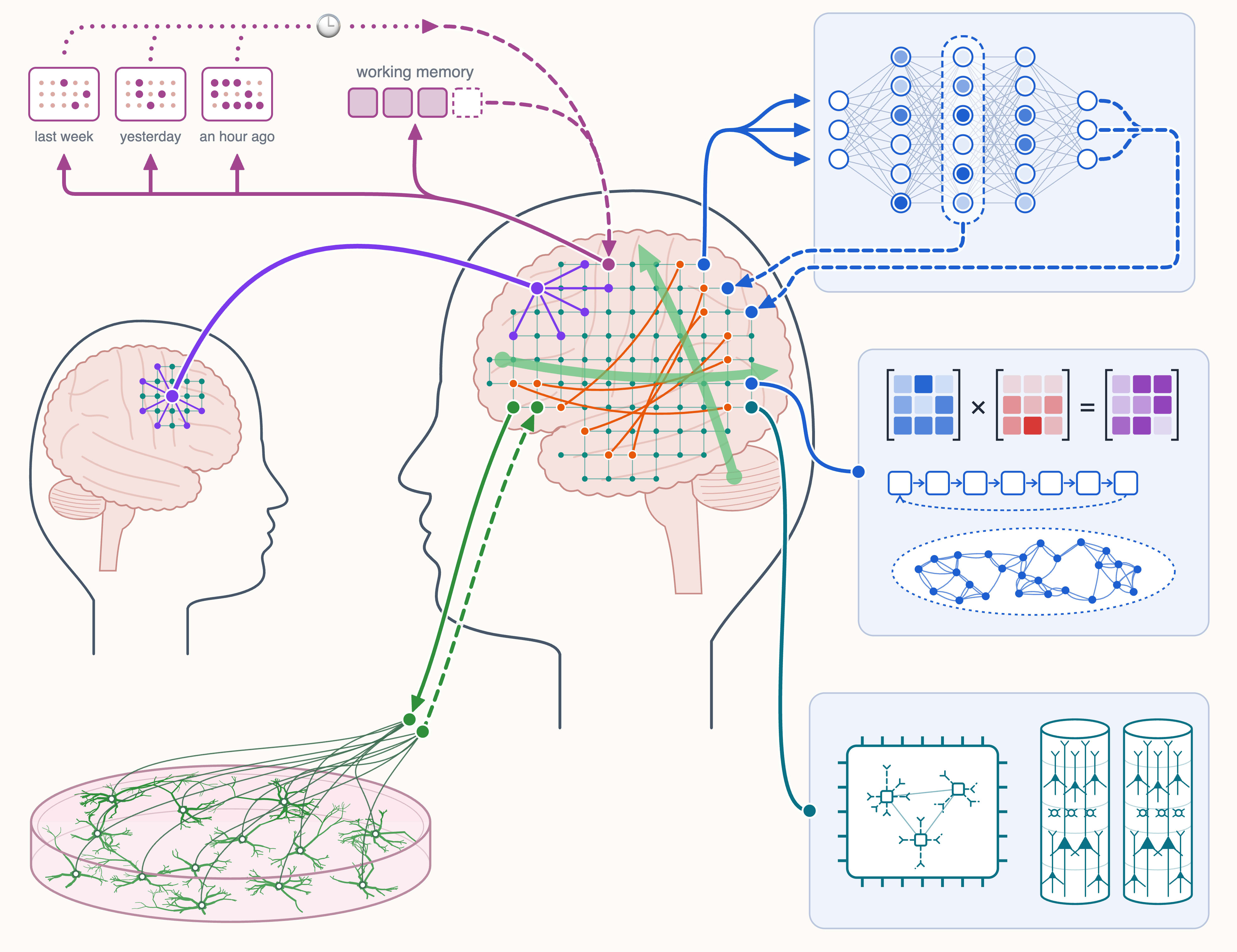
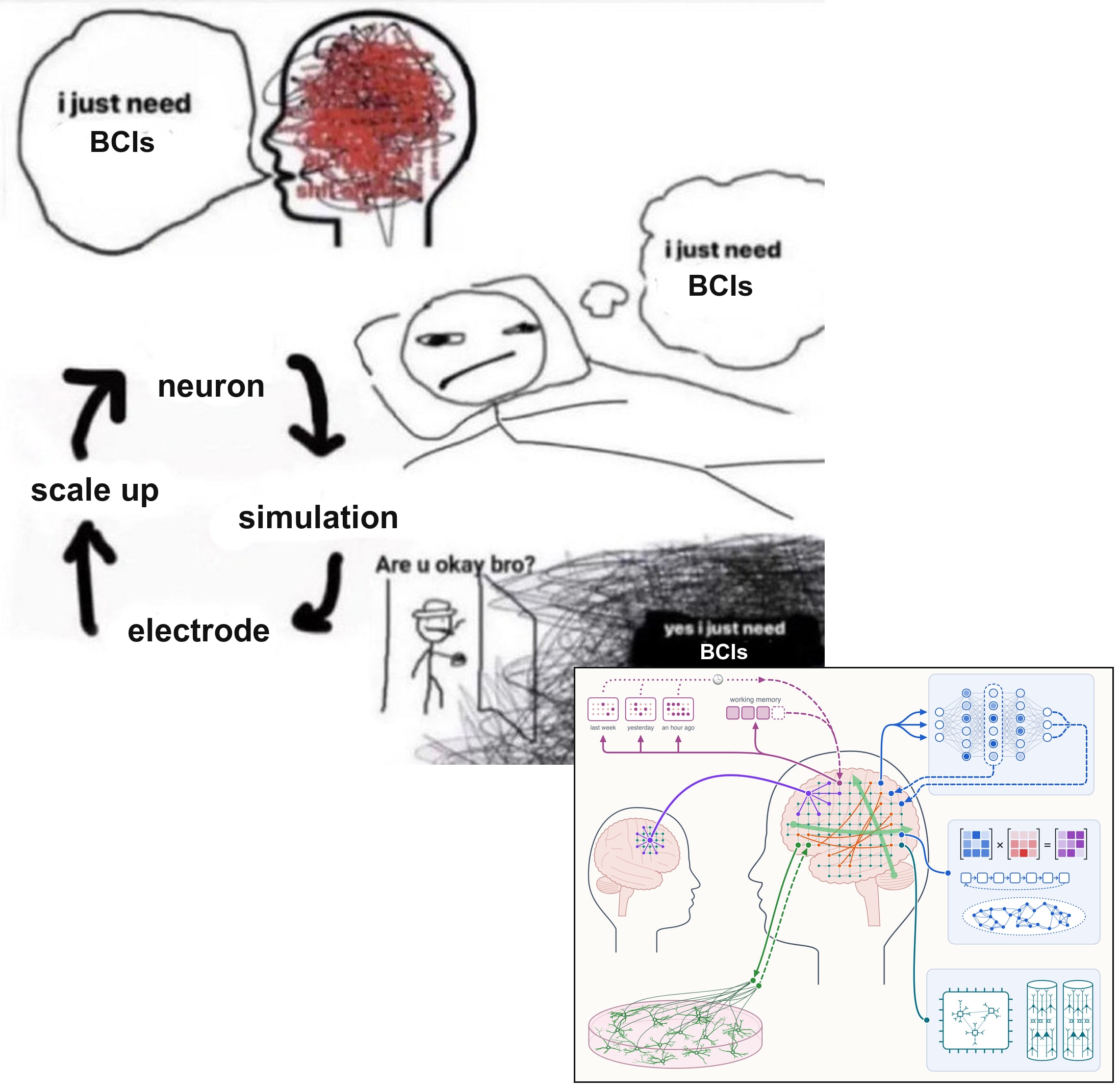
S: Um, hell yes please?
H: Hi... So, I just wanted to say that this is honestly making me pretty nervous. New technology is exciting, but this is really weird. We're pushing the boundaries of what a human even is. Like, networking people together? Cyborgs? Piping different areas of the brain around to other areas unnaturally? I just don't know if we're going to really mess people up. Could we take a second to think about whether this is a good thing to do?
T: Thanks, yeah. This is potentially treading into territory where we could induce harm, value drift, mental illness, and other bad things.
S: Why would these things cause value drift?
T: I don't know if they would. Maybe it would be fine. But in general, if you're increasing cognitive capacities, the capacities are coming through harnessing a natural phenomenon that produces cognitive capacities. A phenomenon could produce "exactly human-shaped capacities", or it could produce cognitive capacities with some other shape.
For example, say you pipe activity from some part of your frontal cortex to some early visual cortex region, so that you can literally see yourself thinking. (Assume arguendo this makes any sense to do.) It's conceivable that this would enable you to increase your intelligence by understanding and redesigning many of your thought patterns. However, this might also have the effect of putting some important mental processes in yourself under control of your social desirability biases. In other words, you might become a lot more effective at suppressing mental processes that are basically good and healthy and valuable, but that are somewhat embarrassing or socially punished. By stepping outside of the natural human cognitive architecture, you would have accidentally messed up some important aspects of your psyche.
More simply, having "twice the working memory slots" (whatever that means) could sort of overtax some parts of your brain, causing partial burnout or other derangements. Adding random long-range connections might cause seizures or other kinds of damage.
For pretty much any adult intelligence amplification intervention, there will be risks like this. Interventions that produce human-shaped capacities are safer in this regard; interventions that produce not exactly human-shaped capacities are more dangerous. Brain implants are probably on the more dangerous end.
I don't have much to say other than that we would have to do this very carefully and thoughtfully, if we were going to do this. For example, you can titrate interventions. At least at first, an implant could be turned on for only a small portion of time, and/or with only a small portion of its connections active.
H: Please be careful, yes.
S: Anyway, as I was saying, hell yes? Should we do a Manhattan Project for BCIs?
T: As with all these things, we definitely should maybe consider the idea of scoping out a Manhattan Project for BCIs. Even without knowing what the obstacles are in advance of investigating deeply, I'm pretty confident that there will be major unanticipated obstacles that make a BCI Manhattan Project take many years and large amounts of resources, at least by strong default. One concrete-ish obstacle is that scaling up to millions of connections will be very difficult for a host of reasons (tissue damage, heat, data processing, write precision, etc.). The methods using fewer connections overall seem much less likely to give significant increases in general intelligence, with some possible exceptions such as reprioritized connectivity or networking two people.
Investing a bunch of resources in one of these areas makes the most sense when you can meaningfully shift the amount of effort by talented researchers that is pointed at relevant technoscientific goals. There are lots of talented researchers who have many potential interests, and who therefore work on whichever of their interests they can get funding to research. So, you can pay them to work on goals you think are important, if they're interested.
But if you don't know what specifically to fund, you have to spread your funds over a wider range of projects, with a correspondingly smaller expected value per project. You're also more likely to overlap with existing funding, because the problems you'd want to address are more like convergent subgoals. If you're overlapping with large existing research communities, then your funding is a drop in the bucket.
Unless, of course, you're going to put enough resources into some area that you're meaningfully increasing the total. Like, a 50% increase that's reasonably well managed, or a 5% increase but routed to several of the most valuable projects with room for funding. That would totally be worth it, and might greatly accelerate adult intelligence amplification.
S: Maybe it's not necessary to get some huge lump sum of funding for research, in order to make a bunch more resources flow into an area. Maybe there are other ways? For example, what if you start by using available tools to get small gains, and use that to get traction and social momentum for more ambitious projects?
T: That could be worth a shot. A more organized and serious version of r/Nootropics could be good, e.g. incorporating good practices for measuring gains in general intelligence. Maybe non-invasive neurofeedback could unlock some cool metacognitive stuff. Maybe you can use transcranial electric stimulation to temporarily increase learning rates. Maybe you can use transcranial ultrasound to temporarily downregulate a set of brain areas that, when triggered by situations like social desirability or political pressure, exert self-deception through rationalization, non-propagation of implications, not registering evidence, and so on (h/t Yudkowsky).
Overall I'm not that enthusiastic about weak methods. One issue is that if we look at the methods that seem most likely to produce weak gains, such as transcranial ultrasound, these methods seem pretty unlikely to turn into a method for strong general intelligence amplification. Also, past attempts such as brain training seem to have been a big wasted sink for motivation. But anyway, weak methods do seem worth pursuing, and yes, could start a flywheel of motivation and resources.
S: That's not very inspiring. Is HIA kinda hopeless actually? Or like, it will take way too long.
T: I don't feel that pessimistic about it. I feel sort of optimistic! In particular, people kind of are taking the weak methods on-ramp approach. More generally, people are following gradients of treating illnesses and getting other gains that are easier than increasing general intelligence. People are working on gene therapy and cell transplants for neural diseases, people are working on all sorts of drugs, and Neuralink, Merge, Nudge, and others are trying to make BCIs. That makes it harder for us in particular to accelerate, but it's good news overall.
S: Woah! So are BCIs coming soon then?
T: That's a great question, but it's a technical question that I can't answer. I would remark that for BCIs specifically, there are very big technical challenges and also a lack of a clear technological principle.
In general, just because a sector has a lot of money invested in it, doesn't mean it's going to be successful, much less successful on your desired fast timeline. For example, many billions of dollars have been invested in gene therapy in general, including billions in brain gene therapy. But so far, there are only a few money-maker gene therapies, and only one nervous system gene therapy has even come close to breaking even. All the gene therapies for the brain proper are probably well in the red. There's been somewhat of a downturn in investment, probably partly caused by difficulties.
However, stepping back to reflect on adult intelligence amplification, I think there are good abstract reasons for hope. There are a lot of things we could try. Cognition happens in a physical / physiological process with lots of surface area for different kinds of interventions. Any one of these could work. Surely there's some way to amplify intelligence this way. Lots of good science is happening, and lots is underfunded; there's no strong reason to think current research is market-efficient for the goal of human intelligence amplification. People might get excited about this soon. We can build up understanding about the brain and intelligence and neurons, and use that to figure out feasible HIA methods.
What I feel pessimistic about, is any one specific pathway that I'm currently aware of. For the time being, that makes it seem not very promising to throw our weight behind any one approach, which I think we'd want to do if we want to make any of this happen fast, rather than just eventually.
This includes pathways that take an exploratory approach. Accelerating any one of these areas—brain gene editing, BCIs, etc.—would be a massive, difficult undertaking. Doubly so, if we don't have a clear idea of the specific requirements we're trying to satisfy with the technology, because we don't see a clear technological principle.
S: Indeed, why are you so focused on finding one specific pathway that you think will work? Why not bet on many pathways simultaneously? Research can be parallelized. Venture capitalists try to build a portfolio that contains some huge hits; they don't try to get really confident that a specific startup will be a hit.
T: That makes sense. We could fund a portfolio of approaches in parallel. That's going to be really really expensive, though. It spreads out resources. You're multiplying the difficulty of meaningfully accelerating a core subgoal, such as BCI write-connections or brain delivery or editor efficiency, by the number of such areas (dozens, say).
Further, you're spreading out roadmapping resources. As a result, you're probably following some simple strategy such as "fund whatever stuff is already clearly good in the area". Most simple strategies like that probably don't get much value, because most obviously good stuff is already funded. Maybe finding some top-rate researchers who are thinking about ambitious technoscientific investigation, and just funding their projects or whatever they say to fund, would be a good use of resources.
Anyway, that's the basic problem with adult intelligence amplification right now. Our hope is smeared out too thin, across too many possible research projects and pathways. We'd have to understand things better, get way more resources, or both, to have a good shot at meaningfully accelerating adult HIA.
S: Spreading out resources is kinda dilutive, ok, but it also has benefits. It exposes you to more decorrelated upside. Or another way to put this is that different methods could add together. If multiple methods can give weak gains, and they can stack with each other, then you can get a large total summed gain in expectation even if each area has a low expected contribution.
T: This seems potentially true and important, yes. Here are some ways that HIA methods might combine usefully:
First, you might have two methods, each of which increases general intelligence somewhat, and you can simply apply both to yourself to get a larger total increase. For example, we could imagine that gene editing and drugs can both tweak neural function in a bunch of small ways that slightly increase intelligence. If there's disoverlap between the pathways that the two methods act on, then a combination of both methods could act on a larger total set of pathways. Another example would be gene editing and Just Add Neurons—you could edit both the existing neurons and the added neurons.
Second, you might have two methods, each of which gives a somewhat narrow or lopsided increase in cognitive capacities. If the two methods increase sets of cognitive capacities with some disoverlap, then they might complement each other by efficiently picking low-hanging fruit of multiple kinds.
For example, we could imagine this (fanciful) scenario: Gene editing is able to significantly improve the functioning of neurons. This gives the person clearer, faster, higher stamina thinking, but not much more creative or novel thinking. Very novel thinking might require more long-range connections, but since long-range axons have already been pruned down after childhood development, gene editing can't help with that. On the other hand, brain implants providing prosthetic long-range axons are able to restore the childish excess of long-range connectivity, reopening many possibilities for different large-scale network configurations between brain regions. This gives the person feasible access to very creative and novel ways of thinking. But brain implants don't make the person's thinking much clearer, faster, or higher stamina, since those depend (arguendo) on the efficient functioning of many individual neurons, which isn't affected by electronic implants. In this hypothetical scenario, combining these two methods gives all of those benefits, in a way that just applying one of the methods somewhat more would not be able to give.
The third way methods could combine is by synergy through direct interaction. For example, again in a fanciful scenario, we could imagine that some form of BCIs can potentially give large gains, but that it has problems. One problem could be that the implant kills too many neurons over time—not enough that the person's soul is harmed, but enough that their cognitive capacities would degrade. Maybe, by transplanting neuronal progenitor cells, the lost neurons could be replenished, restoring and maintaining full function. Another problem could be that it's hard for the person to learn to use the BCI to its potential. Maybe, using drugs or transcranial ultrasound, the learning rate in the brain regions around the BCI could be turned up, enabling them to quickly learn to use the new tool. Here, the different methods directly interact with each other and unlock each other's power.
All of this gives me hope that adult intelligence amplification is quasi-feasible overall, but it doesn't much help with concentrating resources into promising pathways. It's also likely that some methods would fail to stack; e.g. drugs and gene editing might mostly try to work through the same pathways, so that investment in the two areas ends up somewhat redundant. We still need roadmapping.
S: You're orienting to this in a pretty backchaining way. You're starting with the end goal of intelligence amplification, and then you're looking for steps leading all the way to that goal. This makes some sense, but that's not really how science usually works. Rather, science proceeds in a forward-chaining way: We use what we currently have to take the next few steps forward, overcoming challenges that seem ripe for solution. By taking many steps forward we can reach very useful results over time, even without knowing in advance where we're going or how to get there.
T: I agree that this is how most technoscientific progress goes, and that this would work eventually for adult intelligence amplification. Backchaining more than a few steps is rare. But to meaningfully accelerate adult human general intelligence amplification specifically, we want to direct resources much more targetedly than just trying to feed various areas, so we need longer backchains.
S: You talk a lot about figuring out good, targeted uses of scarce resources. But funding isn't a fixed pie. Instead of trying to find paths that you're really confident will work, why not try to get a lot more funding for the whole field?
T: I agree that this is a top priority. However, I think that roadmapping is one main way that you get more funding. You want to be able to explain compellingly what the money is for and why it would increase the chances of the desired outcomes. This is especially the case for the most important work, namely, the work that isn't already being funded in academia or industry but would accelerate us toward the final goals.
S: But there might be compelling cases for funding projects that will accelerate intelligence amplification, even if you don't know of one full path that you think will work. Do you think there are such robust ways to help?
T: My real answer to "What would robustly help accelerate adult intelligence amplification?" would be stuff that doesn't really answer your question because it's meta stuff. Specifically,
- A bunch of roadmapping to figure out what technoscientific pathways we should invest in and how to accelerate those pathways.
- Build the field up. Recruit people to do roadmapping and other work, write about it, make a compelling case for intelligence amplification, make strategic analyses that people can consult to decide whether and how to invest.
- Get large amounts of funding for the right technoscientific projects.
To answer what I think you're asking, there are a few projects that seem somewhat robustly helpful and doable now:
- For each of the main areas—BCIs, brain gene therapy, neuronal progenitor cell transplantation, brain drugs—have one or a few people who are motivated by HIA start becoming expert scientists in that area. That way, in a few years when there's more interest in HIA, these people will have the knowledge and connections to put together competent efforts that can usefully deploy more resources.
- Create training-robust tests for cognitive capacities. That way we can tell whether what we're doing is working, even as one person adapts over time after one treatment or over the course of multiple treatments.
- Create psychometric definitions and measurements for important cognitive capacities other than general intelligence, such as wisdom, sanity, empathy, and so on. Go beyond noisy, gamable, self-report instruments.
- Get more genotype-phenotype data about intelligence and other cognitive capacities.
- Analyze the genetics of cognitive capacities to better understand which variants are actually causal.
- Analyze causal genetic variants and other pathways in brain cells to understand which pathways are active and relevant in adults, which pathways to modulate to what degree, and how mechanistically we could modulate those pathways.
As a bonus, most of these also help with reprogenetic intelligence amplification.
You could also try to build momentum by funding methods that might have some other kind of near-traction. For example:
- Methods that are already feasible, even if they are weak and not on the path to stronger methods.
- Methods that help stave off cognitive decline, rather than increase intelligence above a normal or healthy baseline.
- Methods that remediate cognitive damage from injury or illness.
Flywheels could get started now, in theory. If you can show exciting results, you can probably attract more funding, talent, and motivation.
But the fundamentals are roadmapping, fieldbuilding, and building a case for major funding.
S: Where would this all be going? What would your top five favorite adult intelligence amplification Manhattan Projects be?
T: My guess is that my top few adult HIA Manhattan Projects would be, roughly in order of highest priority first:
- Brain gene editing.
- Brain implants, especially optogenetics, cortical organoids, mega-scale implants, reprioritized connectivity, and networking people using near-future kilo-scale implants.
- Model neurons and other brain cells as well as possible given current understanding. Examine genetic variants that are likely to increase intelligence. Make guesses about the effects of those genetic variants on protein structure, protein function, regulatory behavior, and regulatory effects downstream in gene regulatory networks. Search for brain-deliverable drugs that can safely make tweaks at any point along those pathways that would have similar effects on cell behavior. Do the same for other pathways that might help, such as activating child-like gene regulatory states or making older neurons grow more neurites. Hill-climb cocktails of drugs.
- Massive neuronal progenitor cell transplantation.
S: Alright. That seems like a reasonable place to leave things for now.
T: Yep. Thanks for listening.

Appendix: On structured writing

Appendix: Bottleneck subgoals tend to be shared across ultimate goals
In order to achieve some ambitious technoscientific goal X, you'll probably unroll X into a set of subgoals. Your plan is to investigate those subgoals, and then later, use their solutions to achieve X. As you're investigating those subgoals, you may solve some of them, or find existing solutions. But when you come upon the first subgoal Z where your plans or investigations get stuck, you'll probably find that Z is something that several other people have already been working on. They've converged on that subgoal, from each of their own various goals.
This is an instance of the class-size paradox, also called the friendship paradox. The bus tends to be busier than average when you get on it, because more people get on it when it's busier than average. There are more people who also want to solve the subgoals that you want to solve, compared to how many people want to solve a randomly selected subgoal (I mean, selected uniformly at random from all subgoals that at least one person cares about).
The crowdedness of subgoals is also a consequence of generalization and of hardness.
First, solutions to subgoals probably generalize—they can be used as solutions to other top-level problems. Just like a scientific explanation of some facts can generalize to explain other facts, so too, a component technology developed as an element of one device can also be used as an element of other devices that serve other purposes. In the process of backchaining from your overarching goal X, you probably found your way to smaller, more modular, more generalizable subgoals. Because they are more generally useful technology-functions or scientific questions, they are more likely to already be needed by other people.
Second, technoscientific research effort pools in hard problems. Some of those subgoals that you want to pursue have already been solved, so those aren't your obstacles to achieving X. When you find a subgoal Z that is important but not already solved, you have further selected for something that people have already been working on: Because it's difficult, other people trying to solve multiple subgoals would have preferentially gotten stuck trying to solve that subgoal, rather than getting stuck on their other easier subgoals. Further, demand for a solution has been visibly piling up, and in response to that demand, more investigators have been attracted to the problem. They have built up pieces of context for investigating a solution, such as partial results, funding, talent flows, and so on.
In short, due to subgoals generalizing and therefore attracting many workers, and some subgoals being hard and therefore accumulating demand and work towards a solution, you will probably hit on subgoals that are already being worked on by a lot of people. You're therefore at risk of your efforts being redundant with better-resourced research that's happening anyway by default.
Appendix: A bad first draft Manhattan Project for adult intelligence amplification
My very uncertain quick intuitions about a $1 billion few-years project, which will contain many small and large errors:
Strategy:
- Even in this hypothetical, there still needs to be a big orienting phase at the beginning. For each of the research tracks below, we'd ask, how much current research is there on this? What approaches are they taking? Will those approaches work? Will they work specifically for what we will need? Do we want to just license technology from them to avoid duplicating efforts, or spend the resources to try pushing ahead faster? Are there uncorrelated approaches to hard problems that we want to include in a wide portfolio? E.g. what is the frontier of well-funded brain gene therapy research.
- One billion dollars seems very very roughly in the right ballpark for an initial investigation that's "going as fast as we can", and taking a reasonable shot at getting a proof-of-concept method. Not that I've budgeted this out.
- I'm quite unclear about strategy for recruiting and organizational structure. How much do we collaborate with academics and try to fund their labs to do specific research, vs. just hire them, vs. hire good postdocs? Do we make one big research campus? Etc. Recruiting has a high chance of making or breaking the project. Usually this would happen organically across many institutions, and slowly across decades, so we'd be trying to short-circuit the usual process.
- As much as possible, we need to do concurrent engineering. We have to build out all parts of the full technology stack simultaneously, on parallel tracks, to have a chance at finishing any time soon. So the research listed below should all be started ASAP.
- Probably we want to pick a somewhat narrow lane. We don't want to do brain editing, and cortex grafting, and BCIs, and signaling molecules, and ultrasound, and neuronal progenitor cell transplantation, all at the same time. We'd spread ourselves too thin and wouldn't crack it.
- A plausible exception is low-capex somewhat uncorrelated efforts. In particular, it might be good to tack on small units for transcranial ultrasound / electric / magnetic stimulation, brain monitoring, brain drugs, and other such things. Having some base in fast, cheap, practical experimentation could synergize a bit with the core efforts.
- However, at the $10 billion level, we would almost definitely want to pursue most of these pathways in tandem, looking for synergies. E.g. cortical organoids / iPSC neurons become a convergent subgoal project, potentially giving significant gains for multiple projects from having a big consolidated pool of expertise in one big well-resourced lab. Further, multiple endpoint technologies might productively combine.
- We want to pick the central technological principle that has the best chance of working. I'm a bit torn between:
- BCIs, which have a kinda okay-ish argument that you can strongly bypass Algernon's Law via massive prosthetic connectivity or networking humans or something, but seem quite technically difficult and also are a somewhat crowded area;
- versus gene editing, which gives a lot of surface area with somewhat independent levers, but has crowded difficult obstacles and has a big correlated blocker for all its levers (the developmental window has passed);
- versus cortex grafts, which are creepy and value-drifty and probably extremely hard to get working; but they seem like, in some straightforward way, they have the greatest chance of increasing general intelligence if you could make them work;
- versus general drug-cocktail search, which seems somewhat unlikely to work; but it does in a sense have a lot of surface area, and it is much easier to iterate on, and it is probably much easier to deploy at scale, and it's much more likely to get noticeable partial successes to attract more investment, and it's probably considerably more neglected than other approaches.
- (I think whole brain emulation and other neural simulation efforts are by strong default net-negative, though there could in principle be methods that are differentially favorable.)
- Overall I'd go with gene editing. It at least leverages the only actual data about biological things that affect human g and that might still apply after development (namely, biobanks with genotypes and proxies for g such as IQ tests or educational attainment). But this decision feels non-equilibrated; I could see changing my mind to any of the above.
- (I'm ignoring regulatory and social questions here; in real life, these significantly affect feasibility.)
- In real life, we wouldn't stick so strictly to just the moonshot. We would also try to partly cash out exciting advances, e.g. gene therapies for brain diseases. This is to attract more funding and talent. We'd be aiming to build the Bell Labs of brain gene therapy (or of BCIs or etc.).
Research:
-
Overall the approach is to make several hundred genetic (and possibly epigenetic) edits to a good fraction of cells in an adult's brain. The targets are variants that cause higher cognitive capacities, especially ones active in adulthood. If we're more adventurous, we could try increasing doses of some relevant variants past their normal range.
-
Make training-robust intelligence tests. This way we can test someone, then do an intervention, then test them again, and repeat, and get signal about what interventions work.
-
Make delivery methods (routes and carriers) that can deliver a lot of editing molecules to a good fraction of brain cells. This is the spot where we are most in competition with a huge existing research area. We do have fairly specific goals: many editing rounds, multiplexed editing, and editing a large fraction of cells. These specific goals probably put some unusual constraints on what would work for us. So there may be neglected approaches. This is crucial and difficult for the whole project. Because this is crucial, we would want to:
- Go wide in terms of overall approach. Viral vectors (AAV, lentivirus, HSV, etc.), surgical stem cell transplantation carrying editors, fetal cell microchimerism cells, temporarily weakening the blood-brain barrier, direct injections into the brain, non-CRISPR-Cas-based systems that are easier to get in, skull-mounted ports, etc. (However, some methods may be predictably fundamentally limited. E.g. some viral vectors are limited in size and may be too immunogenic; several gene therapy patients have died due to immune responses to delivery vehicles.)
- Go wide within each approach. E.g. search many candidate surface proteins that might be the key to fetal cells crossing the barrier, and try to leverage that into getting many cells into the brain.
- Try unusual, less-explored approaches.
-
Make gene editors that will work.
- They should be:
- High-efficiency within the relevant brain cell types;
- low-damage;
- low immunogenicity;
- and multiplexable (e.g. compactly targetable, to fit many targeting molecules in a delivery vehicle).
- This is another spot of competition with other research. However, massive multiplexing is less crowded. This has a good chance of being one of the spots where we most need lots of iterations, and also where we have some chance of accelerating by parallel experiments and AI-assisted molecule design. Maybe also try epigenetic editors. Try less-common methods, such as Fanzors.
-
Have an in-house non-human primate lab.
- Test interventions for safety. (This may not work well because of differences with humans.)
- Maybe also try to get an efficacy signal using primate cognitive tests, though this seems not that likely to work well, e.g. due to different genetics.
- Alternatively or in addition, have a mouse lab. Maybe use mice with humanized receptors or other relevant things.
-
Immunogenicity may be a big obstacle. Putting a bunch of foreign protein in the brain, especially many times over months, would by default cause a big immune response, especially killing the cells that we edited. So:
- Search for (and maybe design) editor molecules that don't activate the immune system much. E.g. look at Fanzors.
- Search for ways to induce the immune system to tolerate the editing systems we want to use.
- Investigate whether it would work to suppress the immune system and do a bunch of editing in a short period of time.
- Whenever there are candidate methods, test them in models and observe immune reactions.
-
Make a bunch of in vitro neural models.
- This includes neural organoids, iPSC-derived neurons, and also models of the blood-brain barrier.
- Try to improve the quality of different cell types. Try to improve macrostructure of the tissue organoids, including the connection pattern, but especially the physiological structure (packing, vascularization).
- This will be used to test effects of interventions on electrical behavior, morphological changes, transcriptomics, health, etc.; and to test delivery within tissues; and to test immune response. (And in the $10 billion version, in vitro models can be used to test other things such as BCI immune responses and butcher numbers.)
-
Solve causal variant identification for intelligence and other cognitive capacities.
- Collect a new dataset of a couple million whole genome sequences, with high-coverage and high-quality cognitive test batteries, including IQ and cognitive reflection. (And/or maybe collect phenotypes from people who already have been sequenced, to decrease costs.) Also measure a bunch of general phenotypes of all sorts (including e.g. family history and environment), especially brain phenotypes, and especially transcriptomics. Gather data from many ancestry groups. Gather family data. Gather data from the high tail on cognitive capacities of interest. Gather data from several age groups. Gather genomes from people who have cognitive tests administered many years ago and in different environments. (However, this is a very expensive subproject, probably way too expensive as stated, so would have to be scoped properly. With $10 billion, we could just go big.)
- Also get brain transcriptomics from brain biopsies and from cadavers.
- Work with things like AlphaGenome and AlphaFold and others (maybe developed in-house, though that seems expensive) to get predictions of activity, and maybe more specific predictions (activity amount and direction, specific interactions), for genetic variants.
- Use multi-trait, causal, joint, perturbation-informed, simulation-informed modeling to disentangle causality of genetic variants to cognitive capacities.
- Use the in-house neural cultures to try a bunch of transcriptomic and also genetic tweaks. Measure the resulting changes in neurons, e.g. transcriptomic and morphological.
- Use transcriptomics and/or other strategies to estimate which genes have an effect or not depending on how old the person is.
Appendix: Biotechnology research kinda sucks
More precisely, working with living things in order to modify them toward some engineering goal tends to be extremely difficult. (To be clear, biology—the study of living things—is utterly fascinating and amazing and can greatly improve people's lives and et cetera.)
In particular, if you think about "what can we accomplish by researching biotechnology" using intuitions from mathematics and computer science, you'll have a pretty distorted view of what might be done and how it might be done. Some examples:
- In math & CS, if you have a thing, then you have that thing. In biotech, that is not the case. For example, you might have some gene-edited stem cells in a petri dish. But then they die because of the stress of having been edited, or they lose their ability to divide, or they divide and gain cancer mutations because cancer mutations give them a growth advantage in the petri dish. You need to pay for refrigerators to keep your things in.
- In math & CS, if someone has a thing, you can get the thing too; there's no special equipment you need to purchase in order to think about Hausdorff spaces, and there's never a shortage of a specific 3-manifold, or of a specific lambda reduction procedure, or of a transitive closure algorithm. In biotech, that is not the case. If China stops exporting non-human primates, you might have to pay way more for experiments involving non-human primates, or just pause that research altogether.
- In math & CS, roughly speaking, if you have a thing, you can copy the thing; a construction of a mathematical object can just as well invoke a trillion copies of an object as one copy. In biotech, that is often not the case. You have to keep buying your reagents from someone, you can't just copy what you have; you may have to keep rederiving new iPSCs; you may have to keep getting new tissue samples. In biology, there may not even be such a thing as copies—every cell and every organism is unique.
- In math & CS, usually if you can do something once, you can do it a trillion times. In biotech, that is not the case. Doing something 10 times in a row may be significantly more than 10 times harder than doing it once. Inputs may be scarce, you need equipment and trained workers, cells and materials and equipment degrade, costs are big enough that you might hit a practical wall after scaling up by one or a few orders of magnitude. Scaling happens, but often only with a huge amount of additional innovation (cf. the history of DNA sequencing).
- In math & CS, almost everything is fast. In math, the bottleneck is just however fast you can think of something. In CS, your hardware can do a trillion things per second, or more. Experiments are fast. In biotech, you have to wait for 3.5 billion year old legacy hardware to do its thing every single time you want to do an experiment that involves cells or organisms; having a step that takes hours or days or weeks in your inner loop is a drag.
- In math & CS, you can see all the pieces of a thing that you have. There might be questions you can't answer about the thing, but you have the pieces and you can see them. In biotech, most of the pieces of everything are invisible, only very partially understood, and not feasible to measure quickly enough or frequently enough or accurately enough or cheaply enough, especially in vivo.
- In math & CS, there's almost nothing that's bad to have (illegal, immoral, dangerous), and people won't get mad at you for having things. In biotech, some things will make people mad at you, and some things that you have might hurt moral patients or be moral patients.
- In math & CS, if you figured out how to get a thing .1% of the time, you probably understood something important about the thing and might be close to easily getting it 99% or 100% of the time. In biotech, it might be easy to get a thing .1% of the time, but some totally new more difficult method is required to get the thing 50% of the time. For example, some experiments have shown meiosis perhaps very occasionally happening spontaneously in certain cell populations, but getting a high-yield, high-quality method is a whole other ballgame.
- In math & CS, usually if you know how to do something repeatedly, you can always do it; you can still do it if you move offices, you can still do it next year. In biotech, if you move labs, something might stop working as well. In 1971, Robert Edwards, Patrick Steptoe, and Jean Purdy moved their in vitro fertilization research operation from the hospital at Oldham, where Steptoe had been performing egg retrievals, to a small hospital a couple miles away. Soon, Edwards found that the rate of fertilization of eggs in vitro went down. Among many substances used in their work, Edwards finally identified one particular factor that probably decreased fertilization rates: liquid paraffin, a fluid used to prevent evaporation of the culture fluids, had ended up bad (perhaps spoiled or replaced with a bad batch). He never figured out for sure what the full set of causes for the dip in success rates may have been.
- In math & CS, if you did something cool once, you can usually keep doing it and tell other people how to do it and convince other people that you can do something cool. In biotech, you might not even know how you did it. For example, some signaling molecule might make one specific cell culture do something amazing like partially undergo meiosis, but then, it doesn't replicate and you don't know what about the original experiment made it work (the temperature? the cell source? the culture media?), and maybe it wasn't real at all. And if someone else can do a cool thing, chances are you cannot do that cool thing even if you read their paper, and even if you can it might take weeks or months or more to figure it out.
- In math & CS, if you have A, and A → B, then you have B, unless you're studying some weird non-classical logic or something. But in biotech, just because you have enough A, and you can turn A into B, doesn't mean you have enough B.
- In math & CS, if A → B, and B → C, then A → C. But in biotech, that's not necessarily the case! For example, you might get the wrong sort of B after the first step. There's a bunch of unknown variables within things (e.g. cell contents, epigenetic states, etc.) and unknown requirements for the B → C process, so there's a good chance that, by surprise, your A → B process doesn't give you what you need for the B → C process.
All that said, sometimes biologists do things. Many diseases have been cured, many genomes have been sequenced, many stem cells have been created, many genes have been edited, many babies have been born via IVF and stranger methods. But still, biology sucks.
Appendix: Adult intelligence amplification lacks a clear technological principle
Let me quote from Brian Arthur's "The Nature of Technology":
[...] [A] technology is always organized around a central concept or principle: “the method of the thing,” or essential idea that allows it to work. The principle of a clock is to count the beats of some stable frequency. The principle of radar—its essential idea—is to send out high-frequency radio waves and detect distant objects by analyzing the reflections of these signals from the objects’ surfaces. The principle of a laser printer is to use a computer-controlled laser to “write” images onto a copier drum. As with basic xerography, toner particles then stick to the parts of the drum that have been electrostatically written on, and are fused from there onto paper.
To be brought into physical reality a principle needs to be expressed in the form of physical components. In practice this means that a technology consists of a main assembly: an overall backbone of the device or method that executes its base principle. This backbone is supported by other assemblies to take care of its working, regulate its function, feed it with energy, and perform other subsidiary tasks. So the primary structure of a technology consists of a main assembly that carries out its base function plus a set of subassemblies that support this.
And then later:
That a technology relies on some effect is general. A technology is always based on some phenomenon or truism of nature that can be exploited and used to a purpose. I say “always” for the simple reason that a technology that exploited nothing could achieve nothing. [...] [I]f you examine any technology you find always at its center some effect that it uses. Oil refining is based on the phenomenon that different components or fractions of vaporized crude oil condense at different temperatures. A lowly hammer depends on the phenomenon of transmission of momentum (in this case from a moving object—the hammer—to a stationary one—the nail).
To summarize, a technology is an assemblage of physical components that achieves some function by executing the principle of the technology. The principle is an idea for harnessing a phenomenon. A phenomenon is some element of nature with a reliable aspect, e.g. a physical effect, such as the expansion of hot gas, or a pattern of behavior, such as the tendency of a plant to spread through a field.
We are discussing strong adult human intelligence amplification, so we are discussing a class of hypothetical technologies. The phenomena in question are whatever phenomena produce human intelligence. We want to create a technology that harnesses those phenomena to amplify intelligence. What are those phenomena, and how could we harness them? That is, what is the principle of an adult intelligence amplification method?
That is the issue here: Adult intelligence amplification lacks a clear principle.
In the case of reprogenetic intelligence amplification, the phenomenon is "normal human embryonic and childhood development constructing a brain", and the principle is "very slightly adjust the genome to support the natural construction of a capable brain". This is a clear principle because it provides an idea for harnessing the phenomenon, and that idea is clearly able to access the full phenomenon. You can see the path, in broad but solid outline, from some kind of intervention to the effect that follows via the phenomenon.
There are major uncertainties with how to actually implement the reprogenetic principle. You would have to work out which genetic variants would lead to increases in various cognitive capacities, as distinct from variants that are merely correlated with cognitive capacity in some adult populations for some non-direct-causal reason. Further, there are major implementation difficulties with reprogenetics in general. But it's clear that if we start off an otherwise completely normal embryo with a vectored genome, we thus have full access to the phenomenon of normal human early-life brain development through our intervention of vectoring the genome.
When we try to do adult intelligence amplification, the phenomenon underlying reprogenetic intelligence amplification—normal human early-life brain development—is either not available to us, or is only available to us given further engineering (e.g. reopening critical learning periods). There are other phenomena that are plausible to harness for adult HIA, along with vague ideas for harnessing those phenomena (i.e. vague principles). Here are two examples:
-
Neural adaptation.
- Phenomenon: Single neurons adapt various aspects (electrical, gene regulatory, morphological) of their operational behavior to more effectively perform their roles as part of cognitive capacities, according to the human-evolved programs for that adaptation.
- Technological principle 1: Somehow increase the extent to which neurons adapt according to the human-evolved adaptation programs.
- Technological principle 2: Somehow increase the extent to which neurons adapt to more effectively perform their roles in cognition (including by behaving not according to the evolved program).
- Implementations: Gene editing, replacing neurons with edited neurons, drugs that stimulate biochemical pathways (including gene regulation) that increase the relevant dynamics.
-
Many neurons.
- Phenomenon: Lots of cortical neurons working together in a brain perform cognition; more cortical neurons do stronger cognition.
- Technological principle 1: Add more neuron-equivalents.
- Technological principle 2: Add more computational resources in general.
- Implementations: Add cells that can grow in the brain and be or become neuron-like cells; physically or virtually (by BCI) graft cortical tissue or organoids onto cortex; use brain interfaces to network people together; use BCIs to connect a brain to simulated neurons or cortical tissue; use BCIs to connect a brain to some other sort of computational resource; use drugs to stimulate older neurons to grow more neurites.
There are other plausible phenomena. For example, white matter (myelinated axons) is important for the brain, which points to an underlying phenomenon: brains integrate patterns from many different neural tissues via long-range connectivity. A possible technological principle is prosthetic long-range connectivity. Another phenomenon is that brains perform tasks by thinking according to various algorithmic structures, such as culturally transmitted knowledge; a possible princple is better thinking methods.
Note that an attempted principle isn't a specific technology such as gene editing or BCIs. Rather, the principle is a kind of intervention (make neurons better, add more neurons, add more connections) along with a theory of why it should increase intelligence—a theory of how it harnesses a phenomenon (intelligence is produced by many neurons, efficiently adapting, communicating through many long-range connections).
I've listed several plausible phenomena and technological principles harnessing those phenomena. But none of these principles are clear. In each case, the principle (and the underlying phenomenon) is vague: The intervention is poorly specified, it isn't clear whether any version should work well, and it isn't clear which version would work well.
The problem isn't that the implementation isn't known. The problem is that there isn't a clear picture of the principle—the idea of harnessing the underlying phenomenon that produces strong cognitive capacities. Yes, genes or drugs could make neurons adapt more effectively, but we don't have anything like a clear picture of how neurons adapt, so we don't know how to make them adapt more effectively. Do these genes or drugs even have much access to the important neural adaptation dynamics, to modulate them? Yes, added brain cells or tissue could do more cognition, but we don't have anything like a clear picture of how natural brain cells and tissues combine with each other to do the cognition that they do. Yes, additional long-range connectivity could enable some kinds of difficult cognition, but we don't have anything like a clear picture of how brain regions communicate at long-range to combine their cognitive efforts and perform very useful cognition. Can these added cells or connections even interface with the existing tissues in a way that accesses the cognitive strength of the brain?
Because we don't have a clear technological principle, we also wouldn't know how to implement these technologies. Which genes to edit? How many genes must be edited in how many neurons? Which biochemical pathways should be upregulated, and how much? Which brain cell types should be added? How do the added cells have to be connected to each other and to the preexisting tissues? What sort of brain interface connections are needed, and where, and how many, and how should the signals be processed in silico?
Thus, in the case of a vague technological principle, we don't know what we are trying to implement, and we don't know how to implement it. It seems hard to effectively allocate resources to accelerate research toward such a goal.
In the case of reprogenetics, we are also rather unknowledgeable about the nature of the phenomenon in question. We don't know how normal human development constructs a capable brain. However, the normal developmental process is clear enough to us in its outline, so that we know it can support our technological principle: We have a large amount of empirical data about how differences in genes lead to differences in cognitive capacities, when passed through the neurodevelopmental program of natural human growth. We can see, in outline, how parents could intervene on their future child's genome, so that the child's life will be equivalent in every way to the child's hypothetical life without the intervention, except for a difference in genes. That outline, plus the empirical data, provides the principle for reprogenetic intelligence amplification.
To be clear, the "clarity" or "vagueness" of a principle is on a (multidimensional) spectrum. Reprogenetics has substantial vagueness as well. In particular, we don't know how to fully avoid vectoring genomes in ways that have unexpected (probably small) effects, and we don't know how far a given trait can be vectored safely. But the vagueness is worse for the adult technological principles that I'm aware of, because the vagueness seriously calls into question whether the intervention works at all, and because fundamental aspects of the target technology may have to be different depending on questions left unanswered by the vagueness. Reprogenetics has a fairly clear fundamental outline for the technological system.