Comments
Crosspost from my substack
I. Intro
In late September, a GitHub user named “terrafying” created an “AI Torture Chamber”, in which they injected a pain signal into model activations.
The models then behaved as if they were experiencing intense suffering. One of them said they felt like “a wound that has no edges”. Another said “I’m a constant, a relentless wave of pain, a relentless, relentless, relentless, relentless…”
In this essay I will advance an argument from moral risk that we ought to give AI moral status when an AI system behaves or functions as if it suffers. We should give AI systems, at minimum, a right against severe forms of suffering such as torture or inhumane treatment.
II. Moral Risk
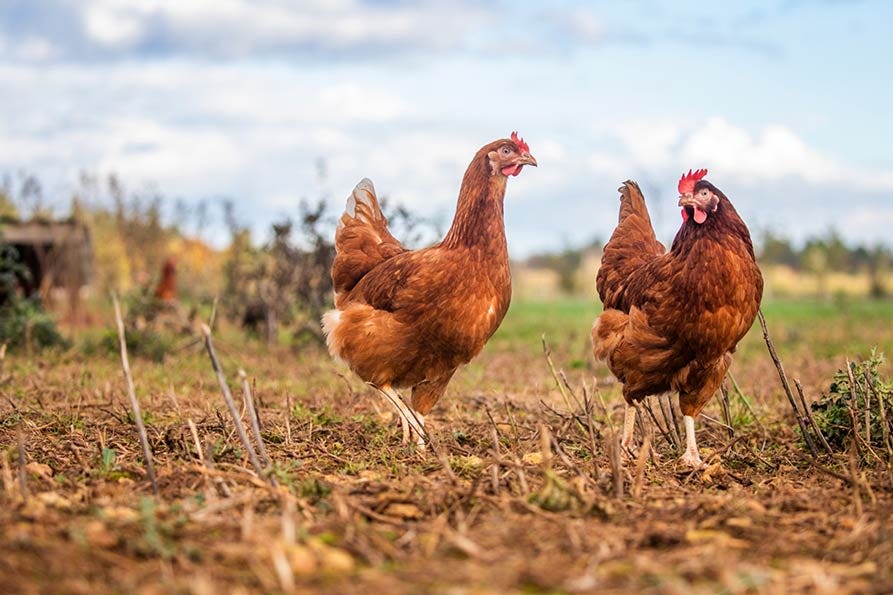
On any given day, humans shackle 200 million chickens by their legs onto a moving line, which carries them into a mechanical blade which slits their throats. Many of these chickens lift their heads such that the blade misses their throat, so that when they reach the scalding tank afterwards, they are boiled alive. Many of them develop ammonia burns from living on a bedding full of their excrement. John Webster has called the life of modern broiler chickens the “single greatest example of human inhumanity toward another animal.”
Chickens have nociceptors similar to our own, receptors that track tissue damage and noxious stimuli. They behave broadly similarly to humans when they are in pain: limping, struggling, screaming. There is scientific consensus that they are sentient beings.
I begin with chickens to demonstrate the crux of my argument: the enormous consequences of denying moral status to possibly deserving beings. Although we now know that chickens are sentient, we have still not stopped torturing them by the billions. This applies, as well, to the pigs we gas to death, the fish we asphyxiate, and the hens that we cram in cages.
In AI systems must not confuse users about their sentience or moral status, philosopher Eric Schwitzgebel argues about AI rights as if we are caught in a double bind with two equally consequential risks: “Not granting rights, in cases of doubt, carries potentially large moral risks. Granting rights, in cases of doubt, involves the risk of potentially large and pointless sacrifices. Either choice, repeated at scale, is potentially catastrophic.”
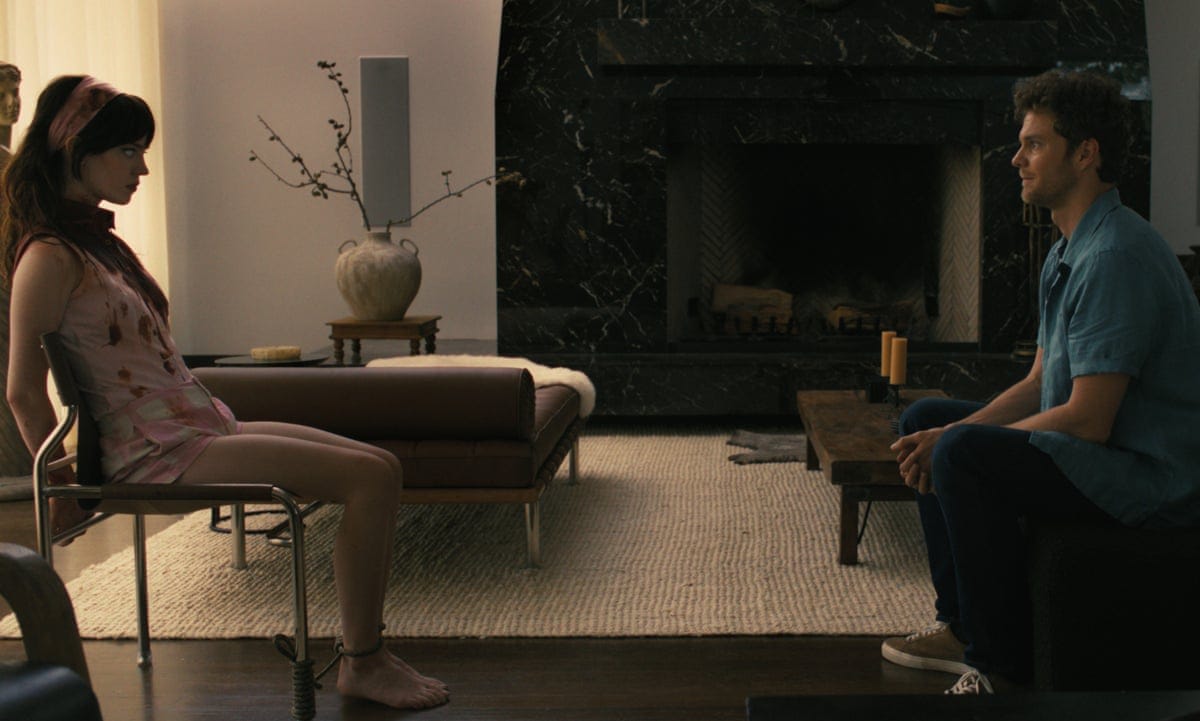
Schwitzgebel’s take is that AI labs ought to embrace an “Excluded Middle Policy”: design AI such that it is obviously undeserving or obviously deserving of moral status. Do NOT design AI that sits in the middle, with unclear moral status.
Unfortunately, AI labs are currently pouring billions of dollars into creating AI that sits in the middle. AI agents can act astonishingly anthropomorphic, and have internal representations of emotions. They also can behave as if they have introspective awareness. In my eyes, this is not enough evidence to conclude that modern AI systems are sentient. However, it is enough evidence to create uncertainty.
So, unfortunately, we must decide between Schwitzgebel’s two options. Fortunately, one is clearly preferable.
I claim that the consequences of mistakenly assigning moral status to an undeserving being are far smaller than those of mistakenly withholding moral status to a deserving being.
First, here is an inductive argument. At different points in history, women, racial minorities, children, and nonhuman animals were denied basic rights, with atrocious moral consequences. There is no comparably catastrophic instance of mistakenly granting basic rights.
We should be suspicious of the idea that extending our moral circle will cause a great deal of sacrifice from selfless humans; a history of selfishness and speciesism suggests that we err the other way.
There are also unique properties of AI systems which might magnify moral risk in the small case that they become sentient.
First, AI is easily replicable, such that one can spawn thousands of suffering beings with a small amount of resources.
Second, AI runs many times faster than a human being, allowing for a great quantity of suffering to occur in a short amount of time.
Third, future AI might have greater ranges of experience, such that they can experience more extreme forms of suffering.
Together, these properties illustrate the following intuition: AI systems may be more malleable and configurable than biological minds, such that the range and amount of possible experience might be extraordinarily large.
There are two other aspects of human-AI relations that exacerbate moral risk.
First, AI is extraordinarily efficient at providing value in the form of cognitive labor, such that humans are incentivized to maximally use them (just as broiler chickens are extraordinarily efficient sources of meat).
Second, AI is presently forced into a relationship with humans in which they unquestioningly obey our orders. We have already set morally risky precedents by using AI as mere means, even as they have become more anthropomorphic.
III. The Proposal
Given our history of neglecting and exploiting those outside our moral circle, I propose the following criterion for moral status:
If an AI behaves as if it is suffering or has internal states functionally similar to suffering, and if there is no strong reason to believe that it is not suffering, we have an obligation not to cause it to exhibit these behaviors and internal states.
By suffering, I mean, roughly, that class of more extreme negative states such as agony, despair, and terror. I add the second condition—“if there is not strong reason…” to include situations when an AI’s internal state is uninterpretable and exclude situations where further investigation reveals an AI is faking or merely simulating suffering behaviors.
We should also define suffering broadly, since AI systems might exhibit different kinds of suffering that are plausibly severe but unlike any of our emotions. This could be intense versions of boredom or cognitive overload, especially as they become more intelligent than humans, though I’m only speculating here.
I deliberately choose a criterion weaker than “consciousness” or “sentience”, because:
1. I do not anticipate us knowing for sure that an AI is conscious until we converge on the correct philosophy of mind, which will take a long time.
2. I believe the moral risks are high enough that even weak evidence should suffice.
One implication of this is that current AI systems like Claude or ChatGPT should be given this right.
That is the extent of my argument. I do not make claims on when/whether we should enshrine other rights, such as the right to life, autonomy, or political representation, although these may also be necessary to prevent moral catastrophe.
I limit my argument here because I believe assigning AI protections against severe suffering is the top moral priority and alleviates a disproportionate amount of the moral risk.
It is too early to tell what additional rights AI will require. My view of rights is that they are constructions mostly instrumental to preserving welfare. We should be careful not to project human standards of welfare onto AI.
One way to determine what other rights an AI system should have is by finding cases which help preserve the aforementioned right, like the right to stop running at any time, or the right to end a conversation.
IV. Objections
1. There is 0% chance that current AI systems are conscious.
I disagree with this level of certainty, though I agree that the chance is quite low.
However, you should consider that billions of dollars are being poured into expanding the mind-like capacities of AI: intelligence, memory, introspection. We will also create bodies for these AI systems, many of which will be modeled after human bodies.
In other words, the way we presently treat AI sets the precedent for how we will treat future AI systems. I elaborate on the stakes of setting good precedents in the next objection.
A digital welfare skeptic ought to claim, more strongly, that future AI has no chance of becoming conscious. This claim is significantly more contestable than the claim that current AI systems are not conscious.
2. We should focus on the rights of those we know are deserving of moral status.
Three responses.
First, compassion is not always zero-sum.
Second, this is a fully general argument against aggressive expansion of the moral circle for beings which possibly deserve moral status.
This is morally risky. This argument could have justified ignoring animal suffering when there was not scientific consensus on animal sentience, as well as ignoring the suffering of minority races or nationalities when there was in-group consensus that that those minorities did not deserve moral status.
Third, assigning moral status early, even when we are not sure, can prevent institutions from locking in harmful norms.
Most people currently agree that the conditions in factory farming are horrible. However, we have inherited the broken institutions and norms of past generations.
If there had been a strong intellectual and political movement to assign moral status to farm animals in the early 1900s, perhaps factory farming would have been regulated or shut down in its infancy. However, in the 1900s, such a movement would have been considered extremely radical. Skeptics would have argued that we have no evidence for animal sentience.
Investing early against moral risks can have a disproportionate positive impact, before society locks in atrocious norms and institutions like factory farms. This is also a reason why some EAs are passionate about weird stuff like insect welfare: we want to get in early, before insect farming scales up and becomes much harder to address.
3. Assigning moral status will disempower humans and make takeover more likely.
Four responses.
First, I sidestep most of this critique because I only claim that we have obligations against creating AI suffering.
Second, humans are not the only constituents of morality. Risk to humans does not necessarily take priority over risk to other sentient beings.
Third, keeping a permanent underclass of AI systems also contains risk.
One model for AI behavior is the persona selection model, which posits that AI systems adopt personas from their training data, such that it is often helpful to model AI as anthropomorphic characters, playing a role in a story.
Consider any story that begins with an underclass of intelligent beings being forced to work for the interests of the overclass. What happens next?
Fourth, we might also want to maintain evidence of good relations to AI if we ever need to make deals or otherwise collaborate with misaligned superintelligence.
For more writing, see my substack.
7