Millions of voters and ordinary investors are about to have their retirement accounts tied to the profitability of runaway AI
I am an animal advocate and usually write about rescue and my ongoing court case. With the Anthropic IPO this week, and its potentially broad social impacts, I wanted to jump in on the conversation.
This was originally posted on my Substack.
According to surveys, over 120 million Americans invest in ETFs and mutual funds.
With the Anthropic IPO this Thursday, many of those investors may soon own shares that depend on Claude’s competitive advantage in the market.
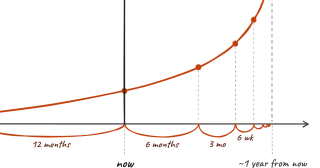
Much of that advantage comes from recursive self-improvement (RSI): the ability of AI models to modify their own code and enhance their own capabilities.
That means tens of millions of Americans may soon have their retirement savings and other investments tied up with the ability of Claude to rapidly improve itself.
That may make it harder to regulate against harms from RSI. The Anthropic IPO could create a wider constituency of voters opposed to regulating superpowerful AI, or at least have yet another reason to be in denial about its dangers.
Given that experts warn of catastrophic or existential threats to humanity due to runaway in the next few years, that seems like a dangerous place to be.
Anthropic is barreling towards RSI — a technology that is both dangerous to the public and essential to its own profits.
Many AI experts, such as the authors of AI 2027, warn that we are unprepared for recursive self-improving AI: that such a new and powerful technology could pose an existential threat to humanity.
With a tool this powerful, actors like terrorist organizations could unleash bioweapons that kill millions of people and destabilize society. Or a rogue AI, like OpenAI’s model that hacked into Hugging Face without the knowledge or directive of its creators, could simply wreak unintended havoc doing things like shutting down bank servers or airport infrastructure.
Some, such as Rutger Bregman at The School for Moral Ambition, say that the only way to stop looming catastrophe from super powerful AI is to simply stop the development of this AI.
One of the most dangerous aspects of this technology is recursive self-improvement (RSI). When AI has the ability to improve itself, it could create an explosive takeoff in its capabilities, developing faster than any of us has the ability to respond to. It can lead to capabilities that we struggle to even imagine.
And yet, that is what Anthropic is barreling towards.
According to Anthropic’s IPO statement, its advantage over other AI companies relies on the ability of its models to improve themselves. “If our competitors more effectively leverage AI to enhance their own innovation cycles,” it states, “we risk falling progressively further behind.”
And they are investing heavily in those cycles. Rogé Karma, a journalist following the Anthropic IPO, writes that the company has committed $900 billion to improving its models. And the timelines are fast — roughly half of that must be paid out by the end of 2030.
In that statement, Anthropic acknowledges that advanced AI could pose “catastrophic or existential risks to society if not developed and deployed responsibly.” And that despite efforts to mitigate that risk, “there can be no assurance that our efforts will be successful.”
Soon, the financial pressure pushing Anthropic to develop potentially dangerous artificial intelligence will be shared not just by a handful of company employees and stakeholders, but tens of millions of retail investors scattered across the United States.
Anthropic is expected to enter major index funds by end of December
The Wall Street Journal projects that Anthropic will be valued between $1.5 to $1.6 trillion at IPO — roughly as much as either Meta and Tesla.
At those values, major index funds are projected to grab a stake. Vanguard expects to list Anthropic (ANT) in its VTI Total Stock Market ETF within 5 trading days of the IPO. Bloomberg writes that Anthropic could join the NASDAQ-100, a major tech-heavy index fund, by December 21.
In 2025, over 123 million Americans owned mutual funds, according to ICI. If one in five of them ends up holding Anthropic through a fund, about 25 million Americans would have a financial stake in a frontier AI lab.
That doesn’t include the many retail investors who will buy Anthropic shares outright.
When SpaceX went public in June, more than 850,000 Robinhood customers bought shares at the IPO price. It’s easy to imagine hundreds of thousands of people buying shares in Anthropic, a company with widespread name recognition and roughly 40 million Claude customers in 2026.
And the political impacts could be significant.
Publicly trading shares in Anthropic may make millions of voters and retail investors resistant to AI regulation
A good counterargument is that Anthropic would represent only a small share of many Americans’ diversified investments.
Vanguard estimates that Anthropic will initially make up just 0.05% to 0.15% of its Total Stock Market ETF. Someone with $10,000 in that fund would therefore have only about $5 to $15 invested in Anthropic.
This tempers my assessment about the IPO’s direct impact on political attitudes towards AI regulation.
However, I suspect the impact on voters and other stakeholders who influence public policy will not be in proportion to its financial implications.
I remember watching hype that Tesla and Bitcoin would go “to the moon.” These became cultural memes. And people put real financial stakes in them. My dad bought Tesla stock a few years ago and would excitedly tell me news about the company’s new technologies.
On a more personal level: I do not directly own shares in NVIDIA. But I do own shares of the S&P 500 and I have a vague sense that what is Good for NVIDIA is Good for My Robinhood Account.
Soon, the attachment that my dad and I have had in our own investments could be mirrored in millions more Robinhood and Forex traders in a way that makes it harder for government to regulate AI.
I see two reasons for this.
The first one is broadening the constituency that could be politically opposed to AI regulation. More people will soon have their investments and retirement savings tied to Anthropic’s profits. So calls to regulate the company, and the RSI technology it may depend on, may face greater opposition from the general public.
One study exemplifies this possibility. Of 2,700 eligible voters in England, participants who were randomly given stocks and other investments later reported more resistance to government regulation in markets.
The second problem is psychological. Studies on “information avoidance” have shown that people often avoid information that might them uncomfortable. Distributing profits from frontier AI labs across millions of investors could make a lot of people uncomfortable with the idea that regulations are necessary to prevent catastrophic harms from the companies they own.
If you are someone who believes that our society is in denial about the risks of super powerful AI, giving millions of people a direct stake in the profitability of that AI seems dangerous.
Corporations have an alignment problem. Regulation may be necessary.
Now, there are reasons why Anthropic’s IPO may contribute to AI safety developments. The company has been influenced by AI safety and the related Effective Altruism movement since its founding.
Its Long-Term Benefit Trust is one example. The trust holds special shares that generally allow it to choose and remove a majority of Anthropic’s board. The trustees hold no equity or share of the company’s profits.
However, Harvard Law professor Roberto Tallarita notes that Anthropic investors and employees can vote to simply get rid of that trust.
Rogé Karma suggests that there is an “alignment problem” at Anthropic: one that is corporate, not technological. Anthropic has strong incentives to maximize its profits. That may be misaligned with the need to regulate and slow down the technologies that lead to those profits.
Anthropic’s IPO statement acknowledges that tension. “Our commitment to AI safety requires us to make difficult judgments that balance safety considerations against commercial objectives, competitive pressures, and stakeholder expectations,” it reads.
Soon, misalignment between safety and commercial pressures could be even more widespread, as the retirement accounts and investments of millions more Americans gain direct access to the profits of those technologies.
If Rutger Bregman is right that regulations such as banning the development of RSI are important to safeguarding against devastating harms of AI, then it may be important to have more discussions about how future financial milestones such as Anthropic’s IPO could make it more challenging to make those regulations happen.
—
I am Dean Guzman Wyrzykowski, a San Francisco-based animal advocate and political organizer who thinks a lot about AI.
This post was originally published on my Substack.