Wild Animal Initiative’s mission is to accelerate science that helps wild animals — a vast and neglected moral priority. Our strategy focuses on field-building: generating new welfare-relevant knowledge, growing the global community of researchers, and directing more resources toward wild animal welfare science (WAWS).
Thanks to institutional funders and individual donors like you already closing the gap for next year, we have covered our basic budget for 2027. This means additional funding now has high counterfactual impact: It would go entirely toward projects that likely won’t be possible otherwise.With an additional $1M to $4.6M beyond our basic budget in 2027, we could accomplish a range of even more ambitious plans, enabling high-leverage projects such as a more impactful version of our fellowship program, an endowed professorship, and additional formalized partnerships with universities.
Your support helps us unlock these ambitious projects that are not yet funded — all toward accelerating the growth of the field and ultimately reducing wild animal suffering at scale.
Please note our current estimate of $1M to $4.6M is slightly adjusted from the RFMF we drafted with Rethink Priorities earlier this year.
Please note: The button above links to our regular website donation page. If you plan to give a large gift, you may prefer to give through every.org, which charges us much less in processing fees. If you’d like to give through a channel other than our website or every.org, please contact us.
Updates since last year's post
We’d like to briefly share updates on the status of the items we listed as priorities in last year’s Marginal Funding Week post.
Maintaining our usual programs: Achieved.
Hiring a new member of our Services Team: Achieved.
Institutionalizing wild animal welfare at universities: One partnership has been formalized, and a few others are in development.
Hiring a Foundations Relations Manager: We decided to prioritize hiring a Philanthropy Officer instead. The Philanthropy Officer hiring round is currently active, with an expected start date of January 2027 for the new hire.
Accelerating rodent contraception R&D: After extensive coordination with allied organizations, we identified what science needed to be done and how best to do it. We were proud to see former Strategy Director Mal Graham leave WAI to start up the Wildlife Technology Fund at RenPhil: A new fund designed to solve technology research gaps exactly like these. WAI will continue to be involved in the research portions of the rodent contraception project, now led by the WTF (yes, that acronym was intentional on their part!).
Why give to Wild Animal Initiative?
Wild Animal Initiative (WAI) is a US-based nonprofit organization that works internationally to accelerate science that helps wild animals, one of the most neglected groups in people’s moral circles. With so much unknown about what wild animals' lives are like and what conditions allow them to individually thrive, we don’t yet know the best scalable ways to help them. But as we bring more researchers into the field and they advance our understanding of wild animal welfare (WAW), we can start to close those knowledge gaps and identify interventions that are both safe and maximally effective. Advocates — for example, the Center for Wild Animal Welfare — will then apply these research insights to lobby for policies and practices that are scientifically shown to likely be net-positive for wild animals as a whole.
Some areas of wild animal welfare research will advance more quickly than others. Similar to other social movements, this progress will take years, and we expect failures along the way. But eventually we’ll see the change we envision: A world where research informs decisions that affect wild animals, with consideration for their welfare.
For more, we recommend the 80,000 Hours Podcast episode produced in 2024, in which our Executive Director Cameron Meyer Shorb was interviewed. Specifically, the chapters “Can we even help animals without unintended consequences?” (starts at 1:13:20), “Future promising interventions” (starts at 2:21:58), and “What’s the long game for wild animal welfare?” (starts at 2:27:46)
Our field-building strategy has been working, and it’s ready for the next phase.
We define success by growth in three areas: new knowledge about wild animal welfare, resources being directed to the field, and the growth of the global wild animal welfare research community.
As of this year, the researchers on our staff have published 15 peer-reviewed journal articles, which have collectively been cited 192 times, and we have presented our research or led workshops at more than 70 scientific conferences. We have awarded grants to 96 research teams to produce new insights relevant to wild animal welfare. Our staff and grantees are developing best practices for validating welfare indicators, with 21 indicators currently under investigation, and related publications anticipated in the next one to two years. Our online community of researchers, students, and professionals in other relevant industries has grown to more than 700 members.
In addition to those measurable outputs, we are seeing qualitative feedback loops that indicate our community-building work is having the effect we have hoped for:
WAI co-organized the 2025 meeting of the United Kingdom’s Animal Welfare Research Network, with approximately a third of the conference dedicated to wild animal welfare. We took a similar approach with the Spanish-language equivalent, RedCIBA, this year, and have been invited to sponsor themed sessions at several other conferences. WAI’s staff researchers have organized workshops and sessions at many other conferences over the years; what is new is the scale of our involvement and the fact that we are being invited.
WAI’s Research Team was invited to curate a special issue of the journal Integrative and Comparative Biology (ICB), focused on wild animal welfare. This is an important opportunity and a field-building milestone; the editors noticed WAI’s research and thought that wild animal welfare would be a compelling theme for their academic community.
Collaborations are emerging organically among WAI grantees, as well as concrete interest in establishing WAWS academic institutions. Within the next six months, we expect to support the launch of the first academic center dedicated to the ecological dimension of wild animal welfare, spearheaded by a cluster of WAI grantees and benefiting from university co-funding. This will complement the NYU Wild Animal Welfare Program, which focuses more on policy analysis. Earlier this year, we also made a grant to Scotland’s Rural College (SRUC) to develop a standalone wild animal welfare module that would connect students from their animal welfare and conservation MSc programs, as well as create a wild animal welfare scholarship and fund small student research projects in wild animal welfare.
As of this year, we’ve seen a turning point in the trajectory of the field: We are now moving into a phase designed to consolidate effort and encourage more projects to build on each other, enabling the field to make faster progress towards answers to key questions and potential interventions. For more, see our forum post from August 2026: “WAI is starting Phase 3 of field-building for wild animal welfare science.”
Field milestones in 2027 and beyond
Our basic budget for 2027 is $5.5M. We’ve seen a pivotal level of enthusiasm for wild animal welfare field-building this year, and thanks to those foundations and individual donors who have supported us, our basic budget for next year is already covered.
That doesn’t mean there’s any less of an opportunity to make a significant impact with a donation to Wild Animal Initiative right now.
In 2027, we will continue our regular programs of Grants, Research, and Services (capacity-building), and we will also make progress toward three key milestones for the field. Additional funding will allow us to achieve these milestones faster, more securely, or on a larger scale.
Read on to learn about the milestones (all expected by 2030 if funding continues, and if AI timelines* don’t dramatically affect our three-year plan), and then to find out which activities we would put additional funding toward next year to get closer to achieving these milestones.
Milestone 1: Field roadmap
We will coordinate the development of a field roadmap for wild animal welfare science. This will set an ambitious agenda for the field’s next decade. Modeled loosely on NASA's Decadal Surveys, it will involve convening a steering committee of experts from different specialisms within wild animal welfare science, soliciting whitepapers outlining multi-stage research programs, and running workshops and sessions at relevant conferences to gather input on the field’s priorities. The expert panel will evaluate proposed research programs and objectives in terms of factors like scale and tractability. This will culminate in an agenda that pursues impactful wild animal welfare research and interventions, but has broad support from wild animal welfare scientists in terms of what exactly to prioritize and how to reach those objectives.
We are currently laying the foundation for this through supporting the development of a wild animal welfare “horizon scan” survey, led by researchers outside of WAI. The horizon scan combines the judgement of an expert panel with broad community input to identify knowledge gaps, opportunities and hazards for the field to consider. We are also developing an internal research agenda by working backwards from plausible welfare interventions, and our new grant types select for projects with a plausible pathway to informing welfare interventions.
Milestone 2: Institutional partnerships
These may be academic programs, field courses, research centers, a professional society, etc. The purpose of formalizing the types of institutions is to enhance the field's reputation and reach by establishing structures for coordination outside WAI. This allows for specialization (e.g., one research center might specialize in a particular taxonomic group or family of methods; academic programs might vary in their philosophical leanings), potentially helping to generate new ideas and unlock new audiences for WAWS as a field and movement.
Establishing WAWS institutions — especially ones formally situated within universities — may also help bring in mainstream (e.g., government) funding for the field, since it both establishes legitimacy for the field as a whole and makes it in the university’s interest to talk up the value of wild animal welfare science.
We are already finalizing a formal partnership with Liverpool John Moores University (LJMU). Several other universities in our network have so far emerged as promising candidates for additional partnerships, based on the number of wild animal welfare researchers based there, and the type of research and education they produce.
A key challenge of wild animal welfare science is interdisciplinary collaboration. Ecologists and animal welfare scientists tend to go to different conferences. A conference dedicated to wild animal welfare science would be extremely valuable in fostering dialogue and collaboration between interested scientists from these disparate disciplines, aligning on the goal of understanding and improving wild animal welfare. If such a conference can be sustained over the years, as with other fields, it will be a key institution for showcasing the field's scope and priorities, and promoting a sense of identity and community that is important for attracting and retaining scientists in the field.
Launching the conference will depend on a strong WAWS identity among researchers, and on people and institutions capable of hosting a multi-day event. The conference will be organized by a committee of WAI staff and external collaborators selected from people who have demonstrated interest and aptitude through other WAI activities.
*AI timelines We have considered the potential effects of short AI timelines on our strategy in depth, and concluded that field-building is still the best approach we can take toward improving wild animals’ lives at scale. We are planning a Forum post entirely dedicated to explaining our thinking on this, expected in early 2027. For now, please see Mal Graham’s 2025 post: “Transformative AI and wild animals: An exploration.”
Room for more funding
Beyond our confirmed plans for 2027, we can absorb an additional $1M to $4.6M to stretch into even more ambitious plans. All of these plans connect to the field milestones by strengthening talent pipelines, expanding research communities, and increasing the body of WAWS knowledge that has been produced.
In order of priority, an additional $1M beyond our basic budget would fund:
Ambition
Impact
Hiring 5 research staff (compared with 2 research staff in our basic budget)
Producing more papers; presenting research at more conferences per year; creating more opportunities to guide the field’s research priorities
Supporting up to 4 research fellows per year (compared with 2 fellows in our basic budget)
Doubling the number of fellows we currently plan to support, and therefore doubling the number of aligned fellows advancing their WAWS careers
Presenting research at up to 12 conferences (compared with 8 conferences in our basic budget)
Expanding our outreach to adjacent fields by 50%
Supporting up to 10 meetups self-started by grantees themselves (compared with 3 meetups in our basic budget)
Making community-building opportunities more accessible by supporting meetups in more locations; allowing grantees to build on their established collaborative relationships by meeting more frequently
Sponsoring whitepapers from more research teams on more priorities
Deepening the Field Roadmap and increasing its usefulness as a foundational resource for the field
Our estimated maximum operational capacity would allow for everything listed above, plus the additional plans below, again listed in order of priority. This maximum version of plans is estimated at $4.6M.
Ambition
Impact
Supporting 2 additional fellows per year (in addition to the 4 fellows that would have been funded already), and hiring a dedicated fellowship coordinator
Adding more fellowships while also hiring a coordinator to increase the effectiveness of the fellowship program by hosting meetups, arranging training opportunities, ensuring coordination with academic institutions, etc. This will help foster the fellows' long-term engagement with the field and improve their interdisciplinary skills required to excel in wild animal welfare science.
Hosting an open call for proposals specifically for whole university programs, not just individual researchers
Expanding partnerships beyond just the universities we’re in conversation with now; incentivizing both researchers and administrators to think about how their institutions could integrate WAW
Founding an endowed professorship
Durably institutionalizing wild animal welfare as a priority and establishing a cornerstone for other major university partnerships, like research centers and degree programs
Stakeholder grants: A fund to compensate local authorities, businesses, and landowners for research access and participation
Accelerating the pace at which research moves toward interventions that are ready to use
This year, Coefficient Giving resumed funding wild animal welfare organizations, which was pivotal for Wild Animal Initiative’s funding stability. A renewed grant from Coefficient Giving now funds approximately 50% of our anticipated budget needs for 2026-2029. Still, none of the ambitions outlined in the tables above are funded yet. They won’t happen without new funding beyond what we’ve already secured for 2027, so our activities are highly responsive to funding on this margin. A donation before the end of 2026 directly affects how much we can do to advance science for wild animals in 2027.
When you donate to Wild Animal Initiative, you’re investing in a better future for wild animals. We welcome you to contact us if you have any questions.
Animal Charity Evaluators has recommended Wild Animal Initiative every year since 2020. View our 2025 evaluation, including a cost-effectiveness analysis of our work.
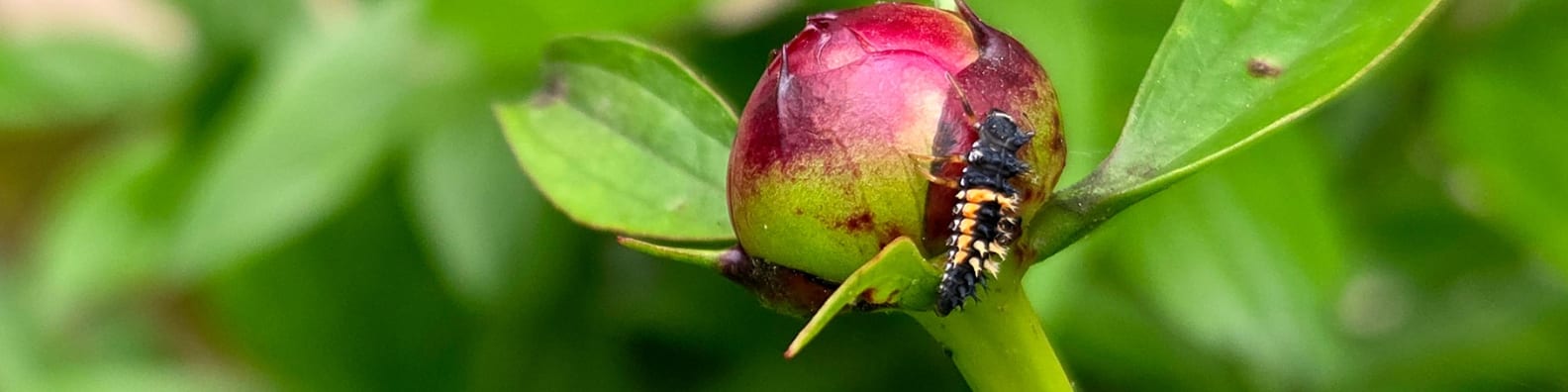
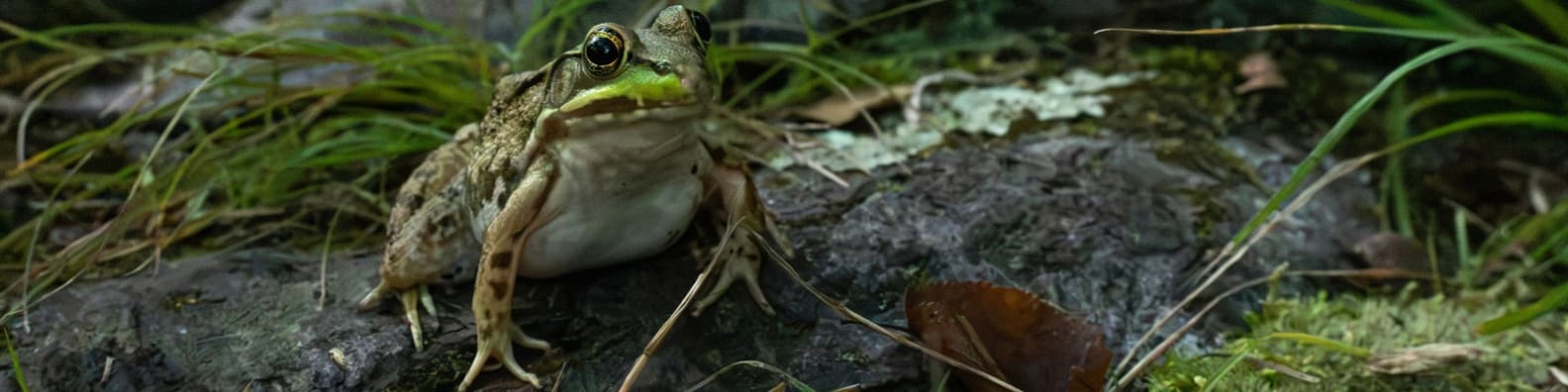
All photos by Jacie Woznicki, Visual Communications Specialist at WAI.
Note: This post was crossposted from Planned Obsolescence by the Forum team, with the author's permission. The author may not see or respond to comments on this post.
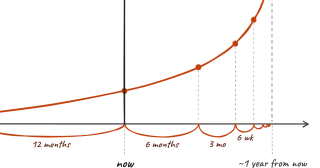
Subtitle: If acceleration compounds, the naive extrapolation implies superintelligence within a year
This post discusses a public METR report on AI R&D acceler...
TL;DR:
* When we started Rethink Priorities (RP) in 2018, our mission was, simply put, to close the knowledge gaps that stopped people from improving the world as much as they could. That hasn’t changed much, but the landscape we’re doing it in is shifting.
* In 2027, we plan to grow our core GHD, Animal Welfare, and Worldview Investigations teams to take on emerging priorities across causes, including those that the forthcoming transformative AI is creating.
...
This was cross-posted from the Animal Charity Evaluators blog.
We update our list of recommendations annually. This year, we announced our recommendations on November 10.
Most people who care about animals arrive at the same impas...